
Sign up to save your podcasts
Or



Anti-Racist Psychotherapy & Racial Trauma Recovery with David Archer LMFT
In this episode of the How We Can Heal podcast, host Lisa Danylchuk interviews psychotherapist David Archer, a specialist in trauma therapy and an advocate for LGBTQ, Black, Indigenous, and people of color. They delve into David's transformative journey from software engineering to trauma therapy, his development of the rhythm and processing approach, and the philosophy behind his books on anti-racist psychotherapy and healing racial trauma. They discuss the healing power of integrating joy, gratitude, and cultural resources into therapy, and how David's creative remix of therapeutic concepts parallels the innovative spirit of hip hop.
00:00 Introduction to Season Four
00:52 Meet David Archer: Advocate and Author
02:38 David's Journey to Trauma Therapy
08:14 Developing Rhythm and Processing
13:08 Exploring Racial Trauma and Healing
34:42 Memory Reconsolidation and Hip Hop
40:31 Exploring EMDR Therapy and Racial Trauma Recovery
42:09 The Art of Healing Through Hip Hop
43:12 Challenging Deficit Models in Education
43:40 Reframing Trauma and Creating New Narratives
45:00 The Role of Art in Therapy
48:33 The Importance of Gratitude in Healing
56:03 The Need for More Anti-Racist Therapists
01:03:51 Personal Reflections and Future Musings
01:10:34 Concluding Thoughts and Gratitude
Learn more from David Archer:
Transforming Complex Trauma: Reflections on Anti-Racist Psychotherapy (https://amzn.to/3TjRf4z)
Audiobook (https://www.amazon.ca/Transforming-Complex-Trauma-Reflections-Psychotherapy/dp/B0D5F8FWJB/
Website: https://archertherapy.com
Support the show
Deb Dana LCSW on Polyvagal Theory and Healing Your Nervous System
In this episode of the 'How We Can Heal' podcast, host Lisa Danylchuk converses with Deb Dana, an expert in complex trauma, on polyvagal theory's role in trauma resolution. The discussion unpacks the nervous system's hierarchy, neuroception, co-regulation, and practical insights for therapists and clients. Additionally, personal experiences of managing life's transitions are shared, highlighting self-regulation's importance in fostering stability and societal connection. The episode inspires hope and provides resources for trauma recovery and nervous system management.
00:00 Introduction to the How We Can Heal Podcast
01:13 Meet Deb Dana: Polyvagal Theory Expert
03:32 Discovering Polyvagal Theory
05:52 Understanding the Nervous System
09:30 The Importance of Co-Regulation
13:59 Navigating Trauma Responses
17:46 Dorsal Vagal and Dissociation
21:19 Blending States and Trauma Recovery
34:01 Yoga for Trauma: Training Program
39:40 Therapists and Polyvagal Theory
40:11 Therapeutic Presence and Nervous System Communication
40:30 Clinicians' Experiences and Client Outcomes
40:59 Understanding Nervous System Responses
42:50 The Power of Small Changes
43:18 The Role of Patience and Persistence
44:19 The Impact of Therapy Over Time
45:01 Navigating Nervous System Reorganization
46:56 Challenges in Therapy and Protocols
53:19 The Importance of Glimmers
57:44 Balancing Trauma and Positive Moments
01:07:12 Debunking Polyvagal Theory
01:11:21 Resources and Final Thoughts
Support the show
Exploring Deep Brain Reorienting and Neurofeedback with Dr. Ruth Lanius
In this episode of the 'How We Can Heal' podcast, host Lisa Danylchuk returns from parental leave to engage in an enlightening discussion with Dr. Ruth Lanius, a leading expert in the field of trauma and dissociation. Dr. Lanius explores her groundbreaking work on the neurobiology of PTSD, particularly focusing on Deep Brain Reorienting (DBR) and neurofeedback as therapeutic modalities. She elaborates on how DBR targets the subconscious brain, helping to stabilize emotional responses and improve trauma reactions. Dr. Lanius also shares insights from her studies on the impact of trauma on the brain and therapeutic outcomes, highlighting remarkable patient recoveries and ongoing research. The episode underscores the importance of tailored approaches in trauma therapy and celebrates resilience and recovery.
00:00 Introduction and Welcome Back
00:51 Introducing Dr. Ruth Lanius
04:00 Exploring the Subconscious Brain
07:34 Deep Brain Reorienting: A New Approach
14:01 Clinical Insights and Patient Experiences
20:23 Challenges and Considerations in Trauma Therapy
28:18 Feeling Stuck as a Clinician
28:36 Yoga and Trauma Recovery
29:16 Introducing Yoga for Trauma Online Training
30:44 Exploring Neurofeedback for PTSD
34:59 Alpha Neurofeedback and Its Effects
36:59 Personal Experiences with Neurofeedback
40:31 The Art of Trauma Therapy
42:11 Ruth's Journey into Trauma Research
45:29 Intergenerational Trauma Studies
46:17 Finding Hope in Trauma Work
48:04 Closing Remarks and Resources
Support the show
We’ve reached the final episode of season 3. Together with the help of my partner Alex, we’re answering listener questions, recalling some of the most important things we’ve learned from our guests about dissociation and trauma, and discussing some of our favorite moments from the past season.
For full transcript: https://howwecanheal.com/podcast/
This episode was produced by Bright Sighted Podcasting.
Support the show
Across the world, hypnosis is often misunderstood and treated like a gimmick. It’s used for entertainment at shows, overly dramatized in television and movies, and we rarely learn the power it has to help us access our own inner wisdom. Our guest today, Wendy Lemke, has been using hypnosis for decades to support people recovering from trauma in accelerating their healing. Wendy is a licensed psychologist with over 30 years of clinical experience. She now trains, offers consultation, and runs her own practice, Lemke Counseling & Consulting. Wendy is an American Society of Clinical Hypnosis (ASCH) certified approved consultant, an active member and former Vice President of the American Society of Clinical Hypnosis (ASCH), and an active member of the Minnesota Society of Clinical Hypnosis (MSCH). Wendy is a sought-after presenter for her engaging style and expertise in the fields of clinical hypnosis, ego state therapy, and trauma-related disorders. Wendy is known across the globe for her clinical and teaching skills. Listen as she shares her passion and clinical hypnosis knowledge with us in this episode of How We Can Heal.
RESOURCES:
More about Wendy Lemke:
https://www.wendylemke-psy.com/about
For full transcript: https://howwecanheal.com/podcast/
This episode was produced by Bright Sighted Podcasting.
Support the show
In the world of trauma recovery you can be an expert, and still find it challenging to navigate your own trauma recovery. In today’s episode Guy Macpherson shares his personal path through earning a doctorate in clinical psychology, treating early psychosis, and sharing expert insights on trauma and healing through his podcast. With all the training and knowledge he has gained, Guy shares that authenticity, connection and “humanness” lay at the heart of healing. He shares how challenging it can be to recognize your own experience of trauma and dissociation. He also shares how, through his own personal experience, he learned that things like bullying and divorce can be traumatic.
In 2014 Guy founded The Trauma Therapist Project to raise awareness of trauma, and create an educational and supportive community for new trauma workers. Now, the associated podcast has hundreds of episodes and an audience in more than 160 countries. As Guy explains, a determined approach to help trauma victims can go a long way, regardless of a therapist’s level of experience.
Support the show
Why is dissociation so hard for even mainstream psychologists to understand? How can we better diagnose Dissociative Identity Disorder (DID). Our guest, Dr. Simone Reinders, helps us explore the answers.
Dr. Reinders is a leader and international expert in the neurobiology of dissociation. She was the first to provide evidence that DID is related to early traumatization, and her research has been pivotal in our understanding of it. As a Senior Research Associate & Lecturer at the Department of Psychological Medicine in the Institute of Psychiatry, Psychology & Neuroscience at King's College London, Dr. Reinders has shown that DID and post-traumatic stress disorder share neurostructural biomarkers. We also talk about how Dr. Reinders’ work can aid the diagnosis of DID, which also points to how machine learning could assist in the diagnostic process.
Resources:
Bio Kings College: https://kclpure.kcl.ac.uk/portal/a.a.t.s.reinders.html
Article: https://www.maudsleybrc.nihr.ac.uk/posts/2020/december/dr-simone-reinders-on-how-brain-imaging-unravels-theory-on-trauma-based-causes-for-dissociative-identities/
For full transcript: https://howwecanheal.com/podcast/
This episode was produced by Bright Sighted Podcasting.
Support the show
Disassociation comes in different forms and affects people in different ways. Our guest, Kathy Steele, has been treating people suffering from disassociation since the 1980s.
Kathy is a Past President and Fellow of the International Society for the Study of Trauma and Dissociation (ISSTD), and has also served on the Board of the International Society for Traumatic Stress Studies (ISTSS). She even helped develop treatment guidelines for Complex Posttraumatic Stress Disorder.
Her vast work has earned her a number of awards, and has led to her becoming a sought-after consultant, supervisor, and international lecturer on topics related to trauma, dissociation, attachment, and psychotherapy.
Kathy shares her humor, compassion, and vast experience with us in this episode.
Resources:
https://www.kathy-steele.com/
For full transcript: https://howwecanheal.com/podcast/
This episode was produced by Bright Sighted Podcasting.
Support the show
Cultural betrayal can have a painful impact on entire groups of people, but there are ways to overcome it. In a continuation of a conversation we started with Dr. Jennifer Gómez, we dive into the concept of “DreamStorming”, and explore the bigger picture of cultural, racial, and gender privileges. At the end, just when we thought we were finished, our producer Christine sparks up a passionate debate on how the U.S. Supreme Court's overturning of Roe v. Wade is a powerful example of cultural betrayal for many women. Please listen to our previous episode with Dr. Gómez, if you haven’t already. Dr. Gómez developed Cultural Betrayal Trauma Theory as a tool for examining the impacts of discrimination and inequality in the wake of trauma. As an Assistant Professor at Boston University in the Clinical Practice department and as a faculty affiliate for the Center for Innovation in Social Work & Health, Dr. Gómez has made tremendous contributions to trauma therapies. She’s a black feminist trauma researcher and race scholar dedicated to understanding the effects of physical, sexual and emotional trauma in diverse and marginalized populations. Check out some of her published work below.
Resources:
Dr. Jennifer Gómez's site: https://jmgomez.org/
Her book: https://www.apa.org/pubs/books/cultural-betrayal?tab=1#
For full transcript: https://howwecanheal.com/podcast/
This episode was produced by Bright Sighted Podcasting.
Support the show
From the publisher's feed
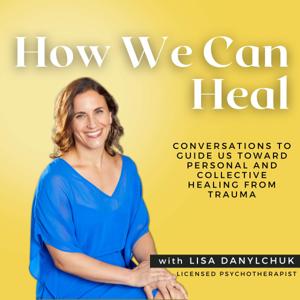
A podcast to share deep conversations about How We Can Heal from life’s toughest circumstances.
46e25130-c4e4-11f0-b994-d9ed1c1b3183

43,324 Listeners

2,520 Listeners

1,661 Listeners

116 Listeners

1,849 Listeners