
Sign up to save your podcasts
Or

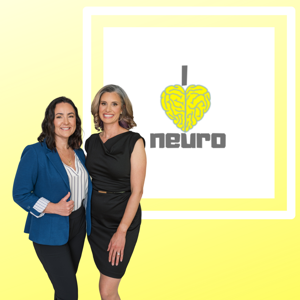


How much are you challenging the older adults you work with What biases do you have about someone when you see their age or comorbidities? Are they limiting how much you push them? Have you ever thought about the consequences of not pushing someone enough?? On today's show we interviewed Dr. Dustin Jones, PT, DPT, GCS about his approach to working with aging adults and how it challenges the norm. He was working in skilled nursing facilities and seeing nearly everyone with the same exercises and plans of care despite varying abilities. This led to a desire to change the approach to care to be about determining what is really possible for aging adults and questioning why we only reserve more challenging work for those who are younger.
In the episode Dustin explores how many therapists make assumptions (often ageist) about what someone is able or not able to do that isn't backed up by research. He discusses the fear that something could go wrong when you challenge an older adult and challenges you to consider what could go right. If you approach it the right way, honoring their system and giving time to adapt, older adults have so much to gain by doing heavy lifting and strength training. The bigger risk for this population is actually to underdose them. People who are stronger and more fit have an ability to overcome more illnesses and stay independent longer. We discuss how to have conversations and set expectations for hard work outs that could lead to soreness or even orthopedic flare ups and how this is actually less risky as a consequence of pushing someone than the alternative outcomes that can happen is they aren't as strong as possible, such as illnesses and chronic conditions from being sedentary.
Keys to success with a fitness forward approach include ensuring the exercises are aligned with the patient's primary goal. If they have pain, address that first but still have the conversation about where you're going. Keep tying the exercise approach back to their independence and functional goals, and help them see the connection. Make sure they know the worst thing they can do is stop. Assure them to keep coming back so you can help them through it.
Dustin runs StrongerLife, a gym for people over 55 and teaches Modern Management of the Older Adult as part of the Institute of Clinical Excellence, or PT on ICE.
Learn more about Dustin and StrongerLIfe at www.StrongerLifeHQ.com
Modern Management of the Older Adult - PTonICE.com
@mmoa.icephysio
@strongerlifehq
Everyone is on their own timeline. For some the notion to start a business doesn't happen until well into their career. For others it happens almost immediately. For some, the slow growth method is right. For others it's full speed ahead. Dr. Han Nguyen, PT, DPT, NCS is a PT who's constantly seeking growth and opportunity. She asks, "what's next?" and continues to strive for more and better. In today's show we had the opportunity to learn about how she set up a multidisciplinary neuro rehab clinic in Saint Petersburg, FL focused on high intensity sessions, creative treatment strategies and team work. Han mentions some very key ways she was able to grow so quickly including being involved in her community. She also discusses the transitions she did from starting out mobile to renting shared space to recently signing a lease of her own. She's learned lessons with hiring, negotiating, and growing her team. She also discusses her model of care and why she decided to be participating with Medicare. She also highlights the importance of understanding who you're here to serve (hint: it's not a diagnosis), getting clear on your messaging and one invaluable investment that has made all the difference. If you're looking for inspiration to start your own thing or you're already doing it, you're sure to take away helpful insights in today's show!
@neubilityrehab
If you're interested in coaching for your neuro biz, schedule a discovery call with Emily Duval Ledger today! https://www.neurocollaborative.com/request-a-discovery-call-neurobiz-1
For an invitation to our NeuroBiz Besties free slack group fill out THIS FORM
Busy-ness and fluctuations are pretty normal when running a business but do you have trouble turning your business brain off? Can you go on vacation without working? Do you know the signs in your body when you've hit your edge? In the world of hustle culture how do you show up differently so you can love what you do and make it sustainable without wanting to burn it all to the ground? If you're finding it difficult to step away from your business, this episode is for you. If you're feeling frustrated because you think you're doing everything right and it's just not working, this episode is for you. If you're snapping at people and cranky and you think it's everyone else's fault, this episode is for you. We've been there too and will provide you with strategies that work for us when we need grounding and a break. Emily Duval Ledger, NeuroBiz coach is here to coach Erin and Claire and anyone listening. You're sure to come away with permission, insight and tactics.
Who wants to talk about a fun topic?! What if learning about Medicare Maintenance Therapy actually was fun and didn't make you fall asleep? Well, that's what you're going to get on today's episode! We sat down with our favorite Medicare Utilization Reviewer, Dr. Robbie Leonard, PT, DPT, CHC to discuss the hot and sticky points about Medicare skilled therapy. We know a LOT of US-based therapists have questions and we're here to help! In today's show we discuss some common misconceptions about using Medicare for therapy so we can help you pass an audit and stay out of trouble!
Some of the topics covered today include:
Medicare's definition of medical necessity and when it does and does not cover services
The only 2 standards under which you can treat - restorative and maintenance and what they each mean
When do to restorative and when to do maintenance and why you should NOT mix the two
The questions you should ask yourself every time you see a patient: Could what I'm doing be provided by a caregiver or technical person that I train? If yes, it should not be billed at all. Unfortunately it doesn't matter whether there is a qualified caregiver available or not.
How you get audited: You can be flagged to be audited because your data profile looks different. If you always use or never use KX you can be audited for being an outlier. You should never stop seeing people just because they've reached the threshold. This can be a red flag!
What you should NEVER say to a patient about their Medicare dollar usage
When it is and is not appropriate to stop providing skilled therapy (hint: it doesn't have to do with where the patient is in their threshold spend!)
How to know if you can provide more therapy to a person who's reached their threshold for the year: evaluations will always be covered!
Why you should not be concerned (or turn away) a patient who has used up to their Medicare threshold or beyond Initial threshold
What about Medicare and cash? If you're providing a covered service you cannot opt out of Medicare as a therapist. You are legally obligated to file a claim.
What does wellness look like then?
What does a reasonable time frame actually look like?
Jimmo settlement CMS
Medicare regulations all US therapists should read: Medicare Benefit Policy Manual Chapter 15, Section 220.2 D
NeuroSpark members find the Parkinson Focus Track call recording with Robbie HERE with additional information covered
Find Robbie at: [email protected]
**Please note, the contents in this episode are for educational purposes and should not be considered legal advice
Do you feel like you're as great a clinician as you could be? Do you know how to apply the evidence in an individualized way? Are you missing anything in your therapy toolbox, if so, do you know what it is? In today's show we were so excited to interview Dr. Oscar Gallardo, PT, DPT, NCS after he won the PT Clinical Excellence in Neurology Award from the Academy of Neurologic Physical Therapy component of the American Physical Therapy Association. Oscar is dedicated to the advancement of physical therapy through many advocacy efforts. He spends countless hours treating patients, mentoring students, residents and other clinicians, and focuses on community wellness. He has transformed many lives in his 20+ years in the field and is definitely someone who will take the profession (and healthcare) further as he continues to devote time, effort and energy to these passions. Any clinician or student will benefit from this in depth discussion of what makes a person a really great clinician so they can overcome barriers, empower patients to overcome their real and perceived barriers, and ultimately find perhaps a lost sense of agency. The insights shared will enlighten clinicians at any stage in their career. Some of the discussion points touched upon in this interview include how to determine what to use in your practice from the evidence when you're stuck between following best practice guidelines and the restrictions faced like resources, patient functional level, other patient/family priorities, and clinical appropriateness for the interventions being suggested. Additionally, we discuss an essential communication tool that can shift power dynamics ultimately leading to better outcomes, understanding of expectations, and satisfaction for patient and clinician alike. Helpful adages like "our discharge plan starts at the evaluation" and "think out loud" will strengthen patient/clinician relationships. Becoming an expert in neurologic therapy goes beyond your clinical skills and the bullet points in the research. Listen to hear how you can elevate your practice right now.
If you're inspired by anything you heard, you can reach out to Oscar in the following ways:
@dr_o.g._theneuropt
In today's show we interviewed Dr. Christina Garrity, PT, DPT, NCS about her vestibular therapy world! She left her clinic job to start a private practice because she found that people were not getting quick or easy enough access to this time-sensitive care. She made it happen while also juggling a busy family life plus teaching in PT programs. Soon she was given an opportunity to become a PhD candidate that she could not turn down. In the conversation we discuss the details of how she started small scale with her clinic, her decision to be a non-participating provider with Medicare and why it was necessary, her vision and mission, and more. Vestibular therapy is a special and important area as the chances of dysfunction increase as the population ages and Christina wants to make sure therapists have the tools to help every single person whether they seem like they have a vestibular problem or not (because some are not so obvious!). We make a special announcement about our future collaboration and how you can grow your confidence when working with anyone with a vestibular condition - especially the cases that confound you! This conversation will be inspiring to any therapist who loves neuro, has a practice, has ever thought about having a practice, loves vestibular, or imagines themselves doing something a little less traditional in their career path.
Learn more about Christina:
Labyrinth Physical Therapy & Wellness www.LabyrinthPT.com
Instagram: @vestibular_neuro_pt
Website: www.LabyrinthPT.com and courses: https://labyrinthpt.com/courses
Sign up for our email list to learn when we're releasing Christina's vestibular course for the aging adult and for our beta launch of the BalanceBesties Vestibular Mentorship Group coming soon! https://www.neurocollaborative.com
In this week's episode we address a listener's question about retropulsion in people with Parkinson's. In the show we define retropulsion then provide a plethora of ideas for you to try with your clients to help them restore their ability to move backwards without falling!
Sit to Stand (STS) and Standing Postural Issues:
Biggest issue: inadequate weight shift forward
Factors contributing: "off" medications, low medication with increased bradykinesia, dyskinesia "on" medication
Postural changes are a cornerstone of Parkinson's Disease (PD)
Perceptual and visual changes, smaller base of support can impact retropulsion
Medication Discussion:
Importance of discussing medications with neurologists
Hard to out-exercise being undermedicated
Treatment Ideas:
Weighted Vest:
Balance Based Torso Weighting
Exaggerate feeling by adding more weight behind or in front
Aerobic Exercise:
Intense, engaged, elevated heart rate
Preferable on treadmill, multi-directional movement
STS Treatment:
Provide a target in front
Encourage body awareness
Challenge on different surfaces to augment error
Use Blazepod for external cues and motivation
Resistance Band Exercises:
At the hips, pulling backward
Secure attachment, various directions
Include targets and external cues
Repetition, variety, dual tasks, eyes closed
Reactive Balance Training:
Backward steps in various positions
Posterior activation in quadruped, walking, tall kneeling, prone
Clock Yourself App:
Use front or back half of the clock for different movements
Compensatory Strategies:
Staggered stance, wider stance
Conclusion:
Encourage problem-solving and empowerment
Highlight the importance of repetition, variety, and external cues
Let us know if you have more questions by sending us a DM @neurocollaborative or posting inside the NeuroCollaborative Professionals Facebook group!
In this episode we have an authentic conversation with our NeuroBiz coach Emily Duval Ledger about goal setting, set backs, expectations and more. In the show we share our big and small goals and words of the year as well as what they mean to us. With goals can come expectations and even an attachment to achieving it. What does it mean if you don't achieve it? Was it worth pursuing or do you feel bad? Join us in exploring the thoughts about setting, pursuing, and achieving goals in the context of running neuro business and in working with neuro clients.
Welcome to the 200th episode!! It's just Erin and Claire on this one. We reflect on how far we've come since we first started the show and what we've learned. We discussed our memory of first (virtually) meeting JJ and our other instructors and where that led us, our favorite memories from the podcast, the amazing people and connections we've made because of having this company, where we're going in 2024 and beyond, and the 10 top most downloaded episodes!
If you want to check out our most popular episodes here they are. Listen to today's show for our memory of why the episode stood out to us!
152
132
136
134
145
138
131
123
140
144
Big shout out to Blazepod, who we are now affiliates for, and can offer you a 20% discount with our link!! If you're in the market for amazing equipment that helps you challenge your clients cognitively and physically you've got to try them out.
Use this link to save 20%: https://www.blazepod.com/neurocollaborative
You do not want to miss this episode!! On today's show we address one of the most popular topics of discussion among therapists - DOCUMENTATION! The aspect of the job we love to hate. It can be so confusing to know what to include, how to justify, how to demonstrate medical necessity, and on and on. Lucky for you we have a PT Sparky who works as a utilization reviewer. Rachel Walker, DPT, GCS, CBIS, CLWT, CCI is here today and can explain it all!
We asked our audience and social media what their biggest struggles were when it comes to documentation and got through as much as we could in the time. Not only do we answer your challenging questions, Rachel also put together a free guide for documenting medical necessity, documenting skilled interventions and providing smart phrase goals you can start using right now to put your mind at ease!
A few topics discussed include:
The must-haves for compliance with documentation
What the specific terms and phrases are that reviewers are looking for
Why being specific about the prior level of function and establishing medical necessity is critical
Which outcome measures are most helpful and which to avoid
How to write assessments that will pass a review including phrases to use and ones to avoid
Spontaneous recovery vs skilled therapy
What constitutes the need for skilled therapy and what doesn't
How to document for skilled maintenance
What maintenance therapy means and who qualifies
What the key points are for documenting when the patient's status is either maintaining or declining
Why not having a caregiver is not a reason for maintenance therapy
What "medical complexity" really looks like (hint: it's not just a diagnosis)
Download your free documentation guide below:
Documentation Guide PDF
Documentation Guide Word doc
Functional Outcome Measure Chart
From the publisher's feed
195 Listeners

109 Listeners
155 Listeners

111,874 Listeners

7,986 Listeners

46,926 Listeners
54 Listeners

37 Listeners

29,191 Listeners
23 Listeners