
Sign up to save your podcasts
Or

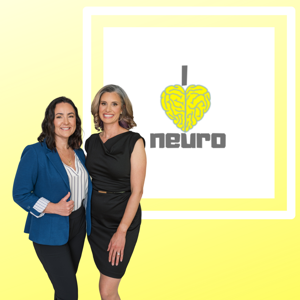


Our recent guest on the I Love Neuro podcast, Chanda Hinton, is doing impactful work to improve healthcare access and quality of care for individuals with disabilities. As the Executive Director of the Chanda Center for Health & Wellness in Denver, Colorado, Chanda leads efforts in both direct service provision and systemic advocacy.
Chanda shared her personal story of living with a spinal cord injury since 1991. She discussed the secondary conditions that often arise and how the medical model can fall short in long-term support. Chanda's experience with chronic pain and reliance on opioids inspired her vision for the Chanda Center - providing holistic, collaborative care through integrative therapies like physical therapy, acupuncture and massage.
For 19 years, the Chanda Center has evolved its approach. It now offers on-site services under one roof, including physical therapy, chiropractic, behavioral health and more. Chanda advocates for Medicaid coverage of these therapies based on her success with them. She works to reduce red tape around physical therapy access through Medicaid as well.
Chanda highlighted the need for improved disability competence among healthcare providers. Biases that disability equals sickness must be challenged. Providers need education and autonomy to respectfully serve individuals. Chanda also emphasized the importance of visibility - on social media and in mainstream representation. This helps normalize the reality that one in four people will experience disability.
Through direct service, advocacy and legislative change, Chanda empowers people with disabilities. She trains providers and works to redefine narratives around both disability and aging. Chanda's courageous and collaborative approach is uniquely improving lives and transforming healthcare systems.
To learn more about supporting the Chanda Center's mission, visit their website at https://chandacenter.org/
LinkedIn: https://www.linkedin.com/company/chandacenter/
Facebook: https://www.facebook.com/chandacenterforhealth/
Instagram: https://www.instagram.com/chandacenterforhealth/
On this episode of the I Love Neuro podcast, host Erin Gallardo sits down with guest Joy Cochran to discuss her business Joy Explorations and an upcoming Parkinson's disease retreat.
Joy started Joy Explorations in 2018 with a goal of empowering older adults and those with neurological conditions through adaptive outdoor activities and movement. She found many of her physical therapy clients were not continuing the activities they enjoyed after discharge. Joy wanted to help people live life to the fullest outside of the clinic setting.
Joy Explorations now offers group classes, one-on-one sessions, and "exploration days" where clients can try kayaking, biking on adaptive trikes, and more. Joy assesses each client's needs and works with them to problem solve challenges in a personalized way.
In September, Joy will host a four-day Parkinson's disease retreat focused on exercise, education, and immersion in healthy lifestyle strategies. The retreat will incorporate kayaking, biking, hiking, and other outdoor activities alongside workshops on managing non-motor symptoms. Joy's goal is to help participants realize they can do more than they think and leave with new skills and friendships.
The podcast provides valuable insights into Joy's process of planning the retreat budget, contracts, and activities. Overall, the episode offers inspiration and practical tips for anyone interested in hosting health and wellness retreats.
Learn more about Joy and the retreat here:
www.joyexplorations.com
https://joyexplorations.mykajabi.com/pd-retreat
@joyexplorations on Instagram and FB
Ever feel stuck between what you want to do and what you feel like you should do? Uh, yes, all the time! How does it feel when you have these ingrained expectations making decisions for you? Usually not so great. And it happens to everyone. So in this episode we talk about why that happens, how to recognize when you're operating in external "shoulds" instead of internal "shoulds", what to do about it. Plus we'll give you permission to be happier AND reach your goals in the way that works best for you. Get resources, examples and experience to draw from and help propel you forward to a life and business led in the exact best way for you.
The Crossroads Between Should and Must by Elle Luna
Full Focus Planner
Okay, so let's address this head on: No one wants to fall. But falls do happen. Especially for people who have trouble with their balance. So wouldn't it be great if when someone did fall, they knew how to roll or land in a way that minimized injury? That's what we're talking about today with physiotherapist Naomi Casiro of NeuroFit BC. She runs one on one and group therapy sessions for people with PD teaching them the fundamentals of controlling their movement and momentum in order to minimize risk.
In the show we'll address:
The actual format and progression of classes/sessions focused on fall training
The method Naomi uses to hone in on what type of falling to treat
What the MOST important factor is when teaching someone how to fall well
What the contraindications are for this type of training
What equipment is needed and how to get started
How to get your clients on board to try this training with you
You can reach out to Naomi and learn more about the fall training courses she teaches for healthcare professionals here:
www.neurofitbc.com
www.neurofitbc.com/courses
Free exercise videos: www.neurofitbc.com/move
There are a lot of reasons you can go into private practice. Most of which have to do with the desire to provide care in a different way than you've seen in your community. But the way you set up your practice can be as unique as you are. One challenging question most neuro clinicians face when setting up their private practice is what to do about Medicare? As policies with Medicare continue to change, many opt to enroll in Medicare as a non-participating provider. This means you work with Medicare beneficiaries to deliver covered services but you bill differently. As a non-participating provider with Medicare you're able to collect up front from patients, submit your claim to Medicare, and Medicare reimburses the patient for the visit (rather than you since you collected your money up front). There are pros and cons about going this route. In this episode we talk to physical therapist Tyler Horton of Synapse Neuro Rehab about his business model and why he decided to become a non-participating provider with Medicare. Tyler has been running his business this way for a few years and helps other neuro business owners who want to become non-participating with Medicare navigate this path.
Website: https://synapseneurorehab.com/
Instagram: @synapseneurorehab
Facebook: https://www.facebook.com/SynapseNeuroRehab/
Join the free slack group, NeuroBiz Besties: https://forms.gle/32hJLWmsEmEW5Vs47
Ever feel discouraged about the care you think you can provide without fancy equipment? Not after you listen to this episode! In today's show you'll learn easy ideas to make maximum impact no matter what setting you're in and what you have available to you. We'll share actual patient stories to give you real examples of strategies to apply in the clinic tomorrow. Making meaningful change doesn't require a big budget. Sometimes the best ideas come from using what you have around you and from working on the priorities of your patient. Which ideas are your favorites?
To attend the live webinar on High-Impact Low-Cost Ideas for the Posterior Chain, register here: https://www.neurocollaborative.com/posterior
Missed the live webinar but want the replay? Email [email protected]
Have you heard exercise is good for people with Parkinson's? Duh! As a listener of this podcast you most certainly have! Do you know how much someone should get their heart rate up to make a difference? What about how to test them to ensure you understand their peak HR? The research on exercise and Parkinson's is booming and we want to give you the best information straight from the source. That's exactly why we invited prominent researcher Dr. Daniel M Corcos, PhD to the show! He's been involved in pivotal research that actually shows exercise can modify the disease progression. No drug test has ever been able to show this, but his research team is getting closer and closer to understanding exactly what type of exercise people with Parkinson's should do and in what dosage to truly modify their signs and symptoms and get back to the activities they love.
In the episode we discussed a current study, SPARX3, which is recruiting and aiming to determine whether high intensity or moderate exercise change PD progression. We discuss the specifics of this study and why the exercise prescription was selected the way that it was, what a cardiopulmonary exercise test is and why it's helpful, how to really measure HR peak, how to get someone up to their HR peak SAFELY and what NOT to do, and resources you must share with physicians in your area!
Reach out to us at [email protected] if you have anyone you'd like to refer to SPARX3 so we can pass your information along to Dr. Corcos. They are recruiting through August 2025.
Journal of PD 2023 "Advice to people with Parkinson's in my clinic: Exercise" - give this article to physicians
Parkinson's: How to Reduce Symptoms Through Exercise by Kristine Meldrum
ACSM guidelines Chapter 11 Edition 11 for PD
https://sites.northwestern.edu/danielcorcos/daniel-m-corcos-phd-biography/
Do you work with people who have pain AND neurologic conditions? In our world it would be rare to find someone who doesn't have at least a few patients or clients who experience pain either as a result of their diagnosis or even pain that is completely unrelated but persists. In this episode we had the privilege of picking the brain of one of the best pain neuroscience educators around, Dr. Adriaan Louw, PT, PhD, senior faculty, pain science director and vice-president of faculty experience for Evidence in Motion. As a leader in the field of pain neuroscience, Adriaan has authored and co-authored over 100 peer-reviewed articles related to spinal disorders and pain science. If you've ever seen him teach at a conference his courses are the ones with the overflowing rooms for a reason: He knows his stuff! And clinicians are hungry for the knowledge and skills that will help people with pain feel better and return to function again. We asked Adriaan the best ways to incorporate pain neuroscience education (PNE) into practice when working with people with complex histories. He discussed the importance of both education and an approach to function as well as how to identify who is ready for change regarding their pain. You'll learn key outcome assessments you should be using for your patients who have pain and how to create a balance of addressing the pain and progressing function in therapy sessions. Assessments like the Central Sensitization Inventory Scale, Fear Avoidance Belief Questionnaire and Pain Catastrophization Survey can help you identify who will benefit the most from PNE. You'll also learn how language matters and which words to use and which words to avoid when describing pain and other medical conditions as they can impact the pain someone is experiencing. We discuss how to approach a person who feels like their pain is completely physical as well as how much time or effort to dedicate to incorporating PNE in sessions vs other activities and with which patients. You'll learn this and so much more in the episode!
Resources mentioned in the episode (Note, some require permission from authors. Links will give you the information needed to request)
Central Sensitization Inventory
Fear Avoidance Belief Questionnaire
Pain Catastrophization Survey
Sticks and Stones: The Impact of Language on Musculoskeletal Rehabilitation
Medbridge courses with Adriaan Louw
whyyouhurt.com free videos for clinicians and patients
EIM courses
OPTP books and resources by Addriaan Louw
Join the NeuroSpark waitlist to be the first to hear when we open again! Dr. Louw will be a presenter inside NeuroSpark in the upcoming quadrimester Summer 2024!
Do you see a gap in the care of individuals that you work with? Sometimes the work isn't done after discharge, am I right? The desire to fill a gap for individuals with spinal cord injury (SCI) is what led 2 PTs and an OT to establish Empower SCI in 2012. Empower SCI is a non-profit dedicated to providing intensive rehabilitation experiences for people with SCI by creating immersive, residential experiences with clinical experts, peer mentors, recreational opportunities, and around the clock support. Empower SCI has a unique and innovative model that is volunteer driven and loved by all who encounter it.
In this episode we interviewed the co-founders, Carrie Callahan, PT, DPT, ATP, Jessica Goodine, PT, DPT, NCS, and Elizabeth Lima Remillard, MS, OTR/L about everything from how it all started to where it's all going. They shared the motivation for starting Empower, what "residential program" means, where and how they operate without a brick and mortar, who qualifies and who doesn't qualify for an intensive, their biggest challenges to running intensives, why they decided to create a nonprofit, their tips for a successful partnership of 3, their new teen program and how you can get involved. Join us for an amazing dive into a life changing program that will inspire you!
Please share this episode and information with anyone you know who might be interested in either volunteering or attending!
To sign up to be a volunteer or participant use this link: empowersci.org/applications
Participants for the upcoming teen program have until June 15, 2024 to apply!
IG @empowerspinalcordinjury
FB Empower SCI
Have you ever felt like there was a disconnect between what the researchers are thinking and what you, as a clinician, are thinking? You're not the only one! The desire to bridge the gap between research and what really goes on in the clinic has been a topic of discussion for decades. We interviewed Dr. Carolee Winstein, PhD, PT, FAPTA about this very topic and what the possible solutions may be. Dr. Winstein, a pivotal figure in redirecting professional focus towards motor control, motor learning and neuroplasticity, shares her transformational journey. When working with individuals with neurologic conditions in the 1990s ("before neuro rehab was a thing," as she laughs) she wondered, why do some people get better and some don't? Her intellectual curiosity propelled her into the sphere of motor learning and control under the tutelage of the esteemed Richard (Dick) Schmidt, PhD, an intellectual leader in motor learning and control and founder and founding editor of the Journal of Motor Behavior.
Accumulating over 34,000 citations, Dr. Winstein stands as a luminary in the realm of neuro rehabilitation, boasting an unparalleled expertise in motivation, motor control, and neuroplasticity. She shares why the practice of neuro rehabilitation must be accompanied by an understanding of the behavioral literature. She provides advice and guidance for the clinician struggling to incorporate the research into practice, a warning about Clinical Practice Guidelines (CPGs), and what types of studies you should actually pay attention to in order to implement emerging evidence. Have you ever felt like your patient population doesn't really match those studied in the research? She addresses that too and provides advice and encouragement about how to shift this disconnect.
Articles mentioned in the interview can be found and downloaded here:
Boyne, et al Optimal Intensity and Duration of Walking Rehabilitation in Patients with Chronic Stroke
Dawson, et al Vagus nerve stimulation paired with rehabilitation for upper limb motor function after ischemic stroke (VNS-REHAB)
Hornby, et al Clinical Practice Guideline to Improve Locomotor Function Following Chronic Stroke, Incomplete Spinal Cord Injury, and Brain Injury
Tsay, et al Five Features to Look for in Early-Phase Clinical Intervention Studies
From the publisher's feed
195 Listeners
109 Listeners
155 Listeners

111,874 Listeners

7,986 Listeners

46,926 Listeners
54 Listeners
37 Listeners

29,191 Listeners
23 Listeners