
Sign up to save your podcasts
Or

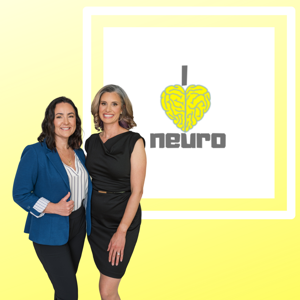


We've got some HUGE things planned for you in 2021! SO MUCH LEARNING we can't wait to share with you all. Have a listen and get excited about what we'll be bringing.
PLUS we share a huge announcement and decision we made and why we decided to do this.
Let the learning begin! Join us for our first free webinar of 2021 on January 21st on Ataxia: https://neurocollaborative.mykajabi.com/ataxia
Our anti-racist action plan for 2021 - Finding a consultant looking for groups who specialize in this to learn how to be inclusive and working with others to listen and learn.
2020 was a huge year of growth for us! Listen as we share some amazing milestones and achievements inside the business and community.
We also share our personal goals and lessons learned from 2020 plus what we’ll be taking with us into 2021.
Anti-Racist action - this year really opened our eyes to the injustices we weren’t cognizant enough of before the events of 2020. We’ve taken steps toward educating ourselves by joining an Allyship program, talking about the topics we’re learning on the podcast, and implementing a plan for the coming year.
We had a talk about treating clients with ataxia in the NeuroSpark Network. Learn about some of our main takeaways from this session for different patients with ataxia. It was really helpful for us and for other participants even in working with patients who don’t have ataxia. We share our own knowledge translation takeaways from the lesson.
Anti-racist action: Keep the allyship work on the forefront. We can walk and chew gum at the same time. This work continues to be very important and should not take a back seat to what else is happening in the world, which can feel like it needs to take precedence. Keep reading, journaling, attending webinars, reaching out to others, and supporting black people and people of color.
Want to learn more about treating patients with ataxia and see what it’s like inside the NeuroSpark Network? Sign up for our free 2-part webinar series happening in January 2021! https://neurocollaborative.mykajabi.com/ataxia
We have a special guest today! Emily Borchers is a neuro PT who specializes in working with people with Parkinson’s at the Parkinson Wellness Recovery (aka PWR!) Gym in Tucson, AZ. The PWR! Gym is a non-profit organization that offers both therapy and group exercise to people with Parkinson’s disease. They also provide education to clinicians and trainers across the country and engage in research.
Emily and the PWR! team recently published a decision making tool to look at what factors go into determining what level of exercise class a participant should be assigned to. She shares the most important outcome measures you should implement in order to make your decision when assigning participants to group classes.
The article is called “A physical therapy decision-making tool for stratifying persons with Parkinson disease into community exercise classes” Published on Nov 5, 2019 in the Journal of Neurodegenerative Disease Management.
If you’d like to reach out to Emily to talk more you can email her at [email protected]
Join us live in the NeuroCollaborative Professionals Facebook group on Dec 15, 2020 at 5:30 pm PST for a full webinar on the decision making tool with videos, examples, and Q&A or catch the replay at https://www.neurocollaborative.com/webinars
Anti Racist action: Understanding “headwinds” and “tailwinds” from the book “The Person You Mean to Be” by Dolly Chugh. Check out the book to learn more salient stories on this concept or look more up on this concept yourself.
Our clients are people, not diagnoses. We have the opportunity to develop long term and meaningful relationships with our clients that are fulfilling both to us and to them. Clients come to you needing guidance, support and YOUR expertise.
Being careful not to treat therapy as “I’m telling you what to do and you have to do it.” Therapy can and should ALSO include a collaborative approach with both sides providing input in order to reach the best outcomes as demonstrated in the OPTIMAL theory of motor learning research by Lewthwaite and Wulf in 2016. Learn how Claire performs wellness assessments and how they differ from physical therapy assessments.
It is extremely important for patient and client autonomy that the individual is included in the process and motivated to achieve the outcomes or else what’s the point?!
If you think you don’t have time or it won’t work to include your patients in the plan of care, try it and you will see your pts will achieve goals in less visits and with less effort from you!
Anti-racist action: Look up “digital black face,” a concept we recently learned about and have accidentally infringed upon by using gifs of black people unknowingly. If you’d like to learn more about it, may we suggest the article here https://news.lib.berkeley.edu/digital-blackface and you can also google this concept to learn more.
Today we interview Jennifer Lazaro, a neuro PT from New Jersey. She shares her experience going from a physical therapist assistant to getting her doctor of physical therapy 15 years later to getting her board certification in neurologic physical therapy and beyond. Jennifer loves research, teaching, treating the neuro population in all settings, being a supervisor to PTs and PTAs, and more. She shares her treatment philosophy which is a blend of movement analysis and movement efficiency through breath awareness. She goes into why patients hold their breath and how it impacts their function. We had a great conversation with her around her areas of expertise, how she gets patient buy-in on breath work, and the future direction of her teaching.
Anti-racist action: Find an anti-racist buddy you feel safe talking to about your thoughts, issues, and questions with and set up regular times to chat. There are topics, statements, and posts all over the place and you may feel like you don’t really have a safe place to express your thoughts. Having a safe ally to share with is a really helpful way for you to learn and grow in this area when you’re nervous you’re going to say something wrong or when you feel like you’re unsure how to navigate this area.
We share lessons to help you become agile and successful in 2021 - learnings from the NeuroBiz Network virtual workshop 2020. .
Think about your ideal work week, goals, dreams. What are you going to do in 2021 to meet what works best for you and your clients? Not sure? Overwhelmed thinking about it? Join us for reflection and discussion and achieve your biggest goals no matter what the year throws at you!
Anti-racist action: Take a moment this week to support a business in your community or volunteer to help underserved people in the area. Donate to the food bank in your area. Google in your area Thanksgiving food bank donations or to volunteer. Could be very critical to help this year for so many reasons.
How you can attract more of your ideal clients to your programs - learnings from the NeuroBiz Network virtual workshop in 2020.
Are you nervous to talk about what you do to people? Do you feel scared to promote yourself? Listen to this episode for practical tips, reflection questions, and opportunities to gain clarity about exactly who you serve, what results they can get by working with you, and how to hone your energy toward helping them vs dwelling in your fears so you actually create the success your heart knows you're capable of creating!
Anti racist action: Next book on the reading list: The Person You Mean To Be by Dolly Chugh, how good people fight bias. The author is a social psychologist at NYU. This book is intended to help the reader stand up for our values and fight for what you believe in.
https://www.amazon.com/Person-You-Mean-Be-People/dp/0062692143
We hosted a virtual workshop for NeuroBiz Network members this month where we worked through a few important areas of wellness business. Today we discuss one of those topics with you that our members found super valuable. Listen to hear our main takeaways and ways you can improve your patient/client outcomes by providing services that address diversity, equity, and inclusion.
In the episode we talk about addressing health inequities in your business/practice by understanding the social determinants of health: the “conditions in which people are born, grow, work, live and age and the wider set of forces and systems shaping the conditions of daily life” WHO. These are what are responsible for health disparities. We can address so many of these in our programs. Learn how to think creatively and collaborate to expand your reach, serve more people, and help all of those in your community little by little.
We highly recommend you listen to episode 28 before listening to this one as it is a follow up to what we discussed in episode 28! Some things will not make sense in this episode if you don’t listen to episode 28 first.
Claire shares an update on how her client with freezing of gait (FOG) has improved already just halfway through her intensive program. She shares updates in his outcome measures and what she determined were the most important aspects of his treatment that are making the difference.
We also discuss a listener question from S about FOG that she is experiencing herself. Her situation is very different than the case Claire has been sharing. She explains the situations in which the freezing occurs. We talk through the important aspects surrounding the FOG that were pointed out in her email question such as where and when it occurs: in stores, with distractions, later in the day. We identify the main points to pay attention to in her freezing situation and what are the main things to work on first to address it.
Anti Racist action: Article from the Journal of Infectious Diseases 2019 Impact of Unconscious Bias in Healthcare How to Recognize and Mitigate It. Has a glossary of terms to help put language around some of the labels. Talks not only about race but also gender identity bias and disparities. Includes strategies to mitigate bias as an individual, organization and both. Must make a commitment to a culture of inclusion vs just diversity training or cultural competence.
https://academic.oup.com/jid/article/220/Supplement_2/S62/5552356
From the publisher's feed
195 Listeners
109 Listeners
155 Listeners

111,852 Listeners

7,983 Listeners

46,920 Listeners
54 Listeners
37 Listeners

29,190 Listeners
23 Listeners