
Sign up to save your podcasts
Or

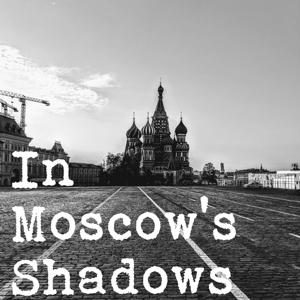


Based on Podcast App listening data
A quick and early episode looking at what roles and goals - if any - Russia has in the current Hamas-Israel war. The bottom line is that Russia was not behind the terrorist invasion, doesn't really know how to respond, is putting out different and even contradictory messages and yet will taken whatever advantage from it that it can.
The podcast's corporate partner and sponsor is Conducttr, which provides software for innovative and immersive crisis exercises in hybrid warfare, counter-terrorism, civil affairs and similar situations.
You can also follow my blog, In Moscow's Shadows, and become one of the podcast's supporting Patrons and gain question-asking rights and access to exclusive extra materials right here.
Support the show
The Russian police are increasingly under pressure. The National Guard is getting into the mercenary game. There is talk (probably empty) of Wagner being reconstituted under Evgeny Prigozhin's son Pavel. These three apparently separate developments all point to the way Putin is not learning the lessons of past mistakes.
In the second segment, another profile of a potential successor to Putin: the fixer-technocrat with the 'Cheshire Cat' smile, Dmitri Kozak.
The podcast's corporate partner and sponsor is Conducttr, which provides software for innovative and immersive crisis exercises in hybrid warfare, counter-terrorism, civil affairs and similar situations.
You can also follow my blog, In Moscow's Shadows, and become one of the podcast's supporting Patrons and gain question-asking rights and access to exclusive extra materials right here.
Support the show
The easy cliche that the Ukraine conflict may become a 'forever war' is a convenient notion for Putin - it may help dismay his enemies, and provides an organising principle for 'late Putinism.' To paraphrase the SF game Warhammer 40,000, in the grim darkness of the present, there is only war.
Yet, of course, no war last forever and, in particular, Russians themselves don't seem to be buying this notion. Even government pollsters suggest only a small minority are really enthused by the war - and not even they embrace the idea of war eternal for it's own sake.
I also indulge myself with the first segment in an occasional series of 'Why Everything Bad is Britain's Fault' (at least as far the Kremlin is concerned).
The Fedorov interview I mention is here.
The podcast's corporate partner and sponsor is Conducttr, which provides software for innovative and immersive crisis exercises in hybrid warfare, counter-terrorism, civil affairs and similar situations.
You can also follow my blog, In Moscow's Shadows, and become one of the podcast's supporting Patrons and gain question-asking rights and access to exclusive extra materials right here.
Support the show
Is Kadyrov dying? If so, who might replace him - and what may this mean for Russia. If Chechnya again becomes unstable, will Putin be faced with a choice of losing in Ukraine or in Chechnya?
In any case, Kadyrov was one of the first and most successful of Russia's 'conflict entrepreneurs,' able to monetise the threat or actuality of war. The invasion of Ukraine is creating a whole slew of new conflict entrepreneurs, who will represent not just a constituency with an interest in continued conflict, but also may be being nurtured as the state looks to find a new support base.
The BBC report I mention is here, and the podcast on the Rosgvardiya and its business empire is episode 11, here.
The podcast's corporate partner and sponsor is Conducttr, which provides software for innovative and immersive crisis exercises in hybrid warfare, counter-terrorism, civil affairs and similar situations.
You can also follow my blog, In Moscow's Shadows, and become one of the podcast's supporting Patrons and gain question-asking rights and access to exclusive extra materials right here.
Support the show
As a way of getting away from the perennial talk of Wagner and the Ukrainian counter-offensive, I look at current stories relating to six individuals - Dmitri Medvedev, Anton Siluanov, Sergei Surovikin, Sergei Sobyanin, Valentin Konovalov and Sergei Aksenov - and what they tell us about today's Russia, Nepotism, statism, warlordism, and the limits of Kremlin power...
The podcast's corporate partner and sponsor is Conducttr, which provides software for innovative and immersive crisis exercises in hybrid warfare, counter-terrorism, civil affairs and similar situations.
You can also follow my blog, In Moscow's Shadows, and become one of the podcast's supporting Patrons and gain question-asking rights and access to exclusive extra materials right here.
Support the show
After looking at Prigozhin last time, this episode I focus on Wagner. Will it survive in Africa (I suspect not), what this may mean for Russia's Africa non-quite-a-strategy, and will we see a 'Wagnerisation' of the Russian military (probably) and society (hopefully not). And why Wagner was like one of the great global football teams...
The podcast's corporate partner and sponsor is Conducttr, which provides software for innovative and immersive crisis exercises in hybrid warfare, counter-terrorism, civil affairs and similar situations.
You can also follow my blog, In Moscow's Shadows, and become one of the podcast's supporting Patrons and gain question-asking rights and access to exclusive extra materials right here.
Support the show
What can we say about the death of Prigozhin (beyond good riddance?). At the risk of overstating the case, I feel this is a watershed moment, and Putin's willingness to turn on his own, at the expense of his own promises, is both symptomatic of deep decay in the system and also something that will further undermine it.
The Sunday Times article I mention is here.
The podcast's corporate partner and sponsor is Conducttr, which provides software for innovative and immersive crisis exercises in hybrid warfare, counter-terrorism, civil affairs and similar situations.
You can also follow my blog, In Moscow's Shadows, and become one of the podcast's supporting Patrons and gain question-asking rights and access to exclusive extra materials right here.
Support the show
Marking the anniversary of the second day of the 1991 August Coup, the day when momentum began to shift away from the hardliners behind the seizure of power, a look at how the Putin regime - the spiritual descendant of those same plotters - is getting jumpy, cracking down on critics left and right and unable to win the loyalty of society.
An aspect of this, which I explore in the second part, is how a Russian policeman's lot is not a happy one, and not only is Russia not the massively-heavily policed society that is often claimed, but that the expansion of the public order forces at the expense of the regular police is something that may come back to bite the Kremlin.
The podcast's corporate partner and sponsor is Conducttr, which provides software for innovative and immersive crisis exercises in hybrid warfare, counter-terrorism, civil affairs and similar situations.
You can also follow my blog, In Moscow's Shadows, and become one of the podcast's supporting Patrons and gain question-asking rights and access to exclusive extra materials right here.
Support the show
He may have just been sentenced to another 19 years, now in a 'special regime colony', but the indomitable Alexei Navalny has just produced a broadside against the 'reformists' of the 1990s - whom he considers nothing of the sort, but instead the architects of kleptocracy and authoritarianism. And it's hard to disagree with that. I go through what is in effect his manifesto, with lots of quotes and also lots of my own marginalia, and conclude by questioning whether Navalny's very purity of purpose may be a problem - and the lessons for the West.
The translation of his article in Meduza is here.
The podcast's corporate partner and sponsor is Conducttr, which provides software for innovative and immersive crisis exercises in hybrid warfare, counter-terrorism, civil affairs and similar situations.
You can also follow my blog, In Moscow's Shadows, and become one of the podcast's supporting Patrons and gain question-asking rights and access to exclusive extra materials right here.
Support the show
Can one draw meaningful parallels between the Soviets' 1979-88 war in Afghanistan, and the Kremlin's invasion of Ukraine? The wars may have been very different, but I would suggest there are ways in which the Afghanistan experience helps inform our understanding of the Ukraine war - and above all, how this will affect Russia politically, socially and economically in the future. The good news is that this is one reason why, just as Afghanistan was the Soviet Union's last war, Ukraine should be Putin's.
If anyone is interested, the 'book of the PhD' is Afghanistan: the Soviet Union's last war (Routledge, 1995), while the later book I mentioned digging into the initial seizure of Kabul is Storm-333 (Osprey, 2021).
The podcast's corporate partner and sponsor is Conducttr, which provides software for innovative and immersive crisis exercises in hybrid warfare, counter-terrorism, civil affairs and similar situations.
You can also follow my blog, In Moscow's Shadows, and become one of the podcast's supporting Patrons and gain question-asking rights and access to exclusive extra materials right here.
Support the show
From the publisher's feed
Russia, behind the headlines as well as in the shadows. This podcast is the audio counterpart to Mark Galeotti's blog of the same name, a place where "one of the most informed and provocative…
Ranked by our users in the last 21 days
1,071 Listeners

764 Listeners
423 Listeners
403 Listeners
143 Listeners

21 Listeners

85 Listeners
491 Listeners

152 Listeners
1,877 Listeners
347 Listeners
474 Listeners
266 Listeners

202 Listeners

1,124 Listeners