
Sign up to save your podcasts
Or

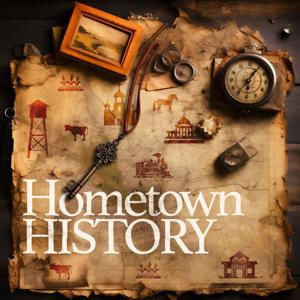

In December 1913, one of America's most acclaimed writers sent his final letter from Chihuahua, Mexico, stating he was heading "tomorrow for an unknown destination." Ambrose Bierce, the 71-year-old satirist and Civil War veteran known for his dark wit and biting social commentary, then vanished without a trace. Despite federal searches and military involvement, no concrete evidence of his fate ever emerged, creating one of America's most enduring literary mysteries.
Born in Ohio in 1842 and raised in Indiana, Bierce developed his sardonic worldview through brutal firsthand experience. As a Union Army soldier, he fought at Shiloh, survived a traumatic head wound at Kennesaw Mountain, and witnessed humanity at its worst. These wartime experiences shaped his unflinching writing style and earned him the nickname "Bitter Bierce." After the war, he built a formidable career in San Francisco journalism, contributing to major publications and establishing himself as one of the era's most influential voices.
His masterwork, The Devil's Dictionary, transformed mundane definitions into sharp social satire—defining love as "a temporary insanity, curable by marriage" and religion as "a daughter of hope and fear, explaining to ignorance the nature of the unknowable." Originally published in parts over 30 years, the compiled edition became a landmark of American literature, later named one of the 100 greatest masterpieces of American writing.
But by 1913, personal tragedy had taken its toll. Both sons dead, divorced, battling asthma and lingering effects from his war injury, the aging writer embarked on a tour of Civil War battlefields before heading south to Mexico's ongoing revolution. His intentions remain unclear—was he seeking one final adventure, planning to join Pancho Villa's forces, or orchestrating his own disappearance?
When the Indianapolis News broke the story nine months after his last letter, federal authorities and U.S. troops were already searching. They found nothing. Theories proliferated: suicide in the Grand Canyon, execution by Villa's firing squad, death by Mexican federal forces mistaking him for a spy, or simply pneumonia in a Texas town under an assumed name. A century later, the mystery remains unsolved.
Timeline of EventsThe Mexican Revolution (1910-1920) was in full swing during Bierce's disappearance, with Pancho Villa leading revolutionary forces in northern Mexico. American journalists and adventurers were drawn to the conflict, but the chaos also made disappearances common and investigations difficult.
Historical SignificanceAmbrose Bierce's disappearance represents one of the great unsolved mysteries in American literary history, comparable to the vanishing of Amelia Earhart or the fate of D.B. Cooper. His case illustrates the romantic allure of the Mexican Revolution for aging American veterans and writers, many of whom saw the conflict as their final chance for adventure or purpose.
The Devil's Dictionary remains his most enduring legacy, influencing generations of satirists and social critics. The Wall Street Journal called it "probably the most brilliant work of satire written in America, and maybe one of the greatest in all of world literature." His Civil War writings, particularly "What I Saw of Shiloh," provide invaluable firsthand accounts of 19th-century warfare's psychological toll.
The enduring fascination with Bierce's fate reflects our cultural obsession with unsolved mysteries and the romantic notion of a writer choosing his own enigmatic ending. Whether he orchestrated his disappearance, died by violence, or simply succumbed to illness in an unmarked grave, Bierce achieved in death what his satirical writing accomplished in life—forcing us to confront the unknowable and the absurd nature of human existence.
His story reminds us that even the most documented lives can end in complete mystery, and that sometimes the absence of an answer becomes more powerful than any resolution.
Sources & Further Reading View all episodes
 By Shane Waters

4.5
136136 ratings
In December 1913, one of America's most acclaimed writers sent his final letter from Chihuahua, Mexico, stating he was heading "tomorrow for an unknown destination." Ambrose Bierce, the 71-year-old satirist and Civil War veteran known for his dark wit and biting social commentary, then vanished without a trace. Despite federal searches and military involvement, no concrete evidence of his fate ever emerged, creating one of America's most enduring literary mysteries.
Born in Ohio in 1842 and raised in Indiana, Bierce developed his sardonic worldview through brutal firsthand experience. As a Union Army soldier, he fought at Shiloh, survived a traumatic head wound at Kennesaw Mountain, and witnessed humanity at its worst. These wartime experiences shaped his unflinching writing style and earned him the nickname "Bitter Bierce." After the war, he built a formidable career in San Francisco journalism, contributing to major publications and establishing himself as one of the era's most influential voices.
His masterwork, The Devil's Dictionary, transformed mundane definitions into sharp social satire—defining love as "a temporary insanity, curable by marriage" and religion as "a daughter of hope and fear, explaining to ignorance the nature of the unknowable." Originally published in parts over 30 years, the compiled edition became a landmark of American literature, later named one of the 100 greatest masterpieces of American writing.
But by 1913, personal tragedy had taken its toll. Both sons dead, divorced, battling asthma and lingering effects from his war injury, the aging writer embarked on a tour of Civil War battlefields before heading south to Mexico's ongoing revolution. His intentions remain unclear—was he seeking one final adventure, planning to join Pancho Villa's forces, or orchestrating his own disappearance?
When the Indianapolis News broke the story nine months after his last letter, federal authorities and U.S. troops were already searching. They found nothing. Theories proliferated: suicide in the Grand Canyon, execution by Villa's firing squad, death by Mexican federal forces mistaking him for a spy, or simply pneumonia in a Texas town under an assumed name. A century later, the mystery remains unsolved.
Timeline of EventsThe Mexican Revolution (1910-1920) was in full swing during Bierce's disappearance, with Pancho Villa leading revolutionary forces in northern Mexico. American journalists and adventurers were drawn to the conflict, but the chaos also made disappearances common and investigations difficult.
Historical SignificanceAmbrose Bierce's disappearance represents one of the great unsolved mysteries in American literary history, comparable to the vanishing of Amelia Earhart or the fate of D.B. Cooper. His case illustrates the romantic allure of the Mexican Revolution for aging American veterans and writers, many of whom saw the conflict as their final chance for adventure or purpose.
The Devil's Dictionary remains his most enduring legacy, influencing generations of satirists and social critics. The Wall Street Journal called it "probably the most brilliant work of satire written in America, and maybe one of the greatest in all of world literature." His Civil War writings, particularly "What I Saw of Shiloh," provide invaluable firsthand accounts of 19th-century warfare's psychological toll.
The enduring fascination with Bierce's fate reflects our cultural obsession with unsolved mysteries and the romantic notion of a writer choosing his own enigmatic ending. Whether he orchestrated his disappearance, died by violence, or simply succumbed to illness in an unmarked grave, Bierce achieved in death what his satirical writing accomplished in life—forcing us to confront the unknowable and the absurd nature of human existence.
His story reminds us that even the most documented lives can end in complete mystery, and that sometimes the absence of an answer becomes more powerful than any resolution.
Sources & Further Reading
37,517 Listeners

8,676 Listeners
1,434 Listeners

3,984 Listeners

960 Listeners

2,654 Listeners
19,271 Listeners

972 Listeners
2,862 Listeners

3,940 Listeners

761 Listeners

32,962 Listeners

4,258 Listeners

87 Listeners

75 Listeners

26 Listeners

61 Listeners

135 Listeners

5,384 Listeners

21 Listeners

2 Listeners

432 Listeners

8 Listeners

3 Listeners

10 Listeners

1,529 Listeners