
Sign up to save your podcasts
Or

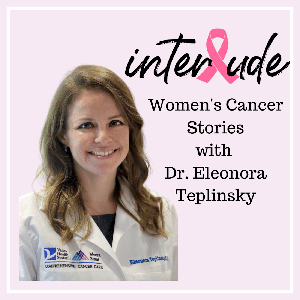


October 15th is Lobular Breast Cancer Awareness Day and today we are talking about lobular breast cancer! In this episode of the Interlude Podcast, I’m joined by Laurie Hutcheson, Invasive Lobular Cancer Patient Advocate & Executive Director of Lobular Breast Cancer Alliance (LBCA). Laurie and her team at LBCA are driving a bus across the country in an effort to raise lobular breast cancer awareness. Lobular breast cancer is the second most common type of breast cancer with rising incidence, is harder to detect, and has a distinct biology (despite treatments clumping lobular and ductal breast cancers together). LBCA stopped to see me on the bus and we were able to record this conversation on the bus! In this episode, we talk all about lobular breast cancer, the need for lobular breast cancer specific research and the incredible work that LBCA is doing to support research, advocacy and education.
Follow Dr. Teplinsky on Instagram @drteplinsky, on TikTok, YouTube, or on any other social media platform. You can also visit http://www.drteplinsky.com.
Books:
Medical Disclaimer: The information provided in this episode is for educational and informational purposes only and is not intended as a substitute for professional medical advice, diagnosis, or treatment. Always seek the guidance of your physician or other qualified healthcare provider with any questions you may have regarding a medical condition or treatment.
In this episode of the Interlude Podcast, I’m joined by board-certified gynecologic oncologist, Dr. Melissa Hodeib, to talk all about gynecologic cancer. September is Gynecologic Cancer Awareness Month and in this conversation, we discuss how to recognize, screen for, and reduce risk from gynecologic cancers while emphasizing patient advocacy and individualized care. In this conversation, we talk about:
*Basics of gynecologic cancer screening
Follow Dr. Teplinsky on Instagram @drteplinsky, on TikTok, YouTube, or on any other social media platform. You can also visit http://www.drteplinsky.com.
Books:
Medical Disclaimer: The information provided in this episode is for educational and informational purposes only and is not intended as a substitute for professional medical advice, diagnosis, or treatment. Always seek the guidance of your physician or other qualified healthcare provider with any questions you may have regarding a medical condition or treatment.
In this episode of the Interlude Podcast, I’m joined by Wren Morrobel, a metastatic triple-negative breast cancer thriver, patient advocate, and creator of Living Our Breast Lives. Wren was diagnosed with early-stage triple-negative breast cancer at just 29 and was diagnosed with metastatic breast cancer one year later. Today, she has been living with no evidence of disease (NED) for six and a half years, which is truly incredible. Wren’s story is one of advocacy, fear, community, and joy. We talk about what it really means to live with metastatic breast cancer—even when scans show no evidence of disease—and the complicated decisions that can come with long-term treatment. Wren shares her experience with treatment, advocating for changes in her care, and navigating the uncertainty that comes with making decisions when there isn’t always data to tell us exactly what to do. Wren has dedicated so much of that time to lifting up others in the metastatic breast cancer community and through her platform and podcast, Wren shares the real, often complicated experiences of living with metastatic disease and works to make sure other thrivers feel seen and heard.
We talk about an incredibly exciting new chapter in Wren’s life: motherhood. After years of hoping, planning, fertility preservation, and navigating cancer alongside questions about her future, Wren and her husband are expecting a baby boy through gestational surrogacy this December. Wren speaks candidly about the joy of preparing to become a mom, but also about the complex emotions that can accompany gestational surrogacy.
In This Episode, We Discuss:
* Wren’s diagnosis with triple-negative breast cancer at age 29 and metastatic breast cancer one year later
Follow Wren on Instagram and listen to her podcast, Living Our Breast Lives.
Follow Dr. Teplinsky on Instagram @drteplinsky, on TikTok, YouTube, or on any other social media platform. You can also visit http://www.drteplinsky.com.
Books:
Medical Disclaimer: The information provided in this episode is for educational and informational purposes only and is not intended as a substitute for professional medical advice, diagnosis, or treatment. Always seek the guidance of your physician or other qualified healthcare provider with any questions you may have regarding a medical condition or treatment.
Bone health is about much more than avoiding fractures later in life—it’s an essential part of healthy aging, cancer survivorship, and overall wellness. In this episode, I’m joined by Dr. Adrienne Bitar, co-founder and co-CEO of Seen Nutrition and a lecturer in food studies at Cornell University, to discuss osteoporosis, bone health, and why women’s bone health deserves far more attention than it receives.
Dr. Bitar is also a lecturer at Cornell University and author of Diet and the Disease of Civilization, a monograph on the cultural history of American diet. She holds a PhD from Stanford University, undergraduate degree from UC Berkeley, and completed her postdoctoral work at Cornell University.
Today, we break down what osteoporosis is, why it’s known as a “silent disease,” how DEXA scans are used to measure bone density, and why waiting until age 65 for screening may be too late for many women. We also discuss the impact of cancer treatments and other cancer therapies on bone and muscle health, when to consider earlier bone density testing, and how DEXA results can influence treatment decisions and long-term survivorship care. Finally, we cover practical, evidence-based strategies you can start today to protect your bones, including calcium and vitamin D, strength training, weight-bearing exercise, balance training, and fall prevention.
Whether you’re approaching menopause, navigating cancer treatment or survivorship, or simply thinking about your long-term health, this episode is full of practical information to help you build and maintain strong bones for years to come.
You can learn more about Seen Nutrition and Seen’s innovative calcium chew at http://www.seennutrition.com or follow Seen on Instagram and other socials @thecalciumqueens.
Follow Seen Nutrition on their website or on Instagram.
Follow Dr. Teplinsky on Instagram @drteplinsky, on TikTok, YouTube, or on any other social media platform. You can also visit http://www.drteplinsky.com.
Books:
Dr. Bitar’s book: Diet and the Disease of Civilization
Medical Disclaimer: The information provided in this episode is for educational and informational purposes only and is not intended as a substitute for professional medical advice, diagnosis, or treatment. Always seek the guidance of your physician or other qualified healthcare provider with any questions you may have regarding a medical condition or treatment.
On today’s episode, I’m joined by Ebonie Michelle, a breast cancer survivor, patient advocate, and founder and CEO of Prowl The LAB. Through Prowl The LAB, Ebonie empowers women and couples to reclaim their health and sexuality as they navigate disease, different-ability, and trauma. Her work highlights the connection between health, intimacy, body image, and overall well-being—topics that are so important, yet too often overlooked in cancer care.
In today’s conversation, we talk about Ebonie’s own breast cancer diagnosis and how it shaped the work she does today. We discuss why conversations about sexual health need to happen earlier and more often, the impact that cancer can have on body image, relationships, and identity, and why survivorship is about so much more than finishing treatment. We also talk about practical ways that patients can begin reconnecting with their bodies after cancer, how clinicians can feel more comfortable bringing up these conversations, and why sometimes simply acknowledging what a patient is going through can make all the difference.
This is such an important conversation for patients, survivors, caregivers, advocates, and healthcare professionals alike. I hope you’ll come away with a better understanding of why caring for the whole person—including their sexual health and overall well-being—is an essential part of cancer care.
Follow Ebonie on Instagram and visit Prowl the LAB for incredible resources
Follow Dr. Teplinsky on Instagram @drteplinsky, on TikTok, YouTube, or on any other social media platform. You can also visit http://www.drteplinsky.com.
Books:
Medical Disclaimer: The information provided in this episode is for educational and informational purposes only and is not intended as a substitute for professional medical advice, diagnosis, or treatment. Always seek the guidance of your physician or other qualified healthcare provider with any questions you may have regarding a medical condition or treatment.
In this episode of the Interlude podcast, I sit down with Sarrah Strimel Bentley. Sarrah was a former Broadway performer and yoga instructor when she was diagnosed with breast cancer at the age of 38 in 2020. She underwent surgery, chemotherapy, radiation, and fertility preservation before making the decision to build her family through surrogacy while continuing long-term endocrine therapy. Today, we talk about it all: navigating fertility and surrogacy after cancer, survivorship, mental health, finding joy in the hard moments, and redefining life after a breast cancer diagnosis. Sarrah shares her recent decision to go alcohol-free and how she’s living fully after cancer. She is also the founder of A Chance For Life, an incredible organization that brings the gift of a total surrogacy journey to young breast cancer survivors and I highly recommend supporting!
Follow Sarrah on Instagram.
Follow Dr. Teplinsky on Instagram @drteplinsky, on TikTok, YouTube, or on any other social media platform. You can also visit her website at http://www.drteplinsky.com.
Books:
Medical Disclaimer: The information provided in this episode is for educational and informational purposes only and is not intended as a substitute for professional medical advice, diagnosis, or treatment. Always seek the guidance of your physician or other qualified healthcare provider with any questions you may have regarding a medical condition or treatment.
In this episode of the Interlude podcast, I speak with Kathy Myers, a long-term breast cancer survivor
Follow Dr. Teplinsky on Instagram @drteplinsky, on TikTok, YouTube, or on any other social media platform. You can also visit her website at http://www.drteplinsky.com.
Books:
Medical Disclaimer: The information provided in this episode is for educational and informational purposes only and is not intended as a substitute for professional medical advice, diagnosis, or treatment. Always seek the guidance of your physician or other qualified healthcare provider with any questions you may have regarding a medical condition or treatment.
Ovarian function suppression (OFS) is a key part of treatment for many premenopausal patients with hormone receptor–positive breast cancer, and is combined with tamoxifen or an aromatase inhibitor. OFS can be achieved surgically by removing the ovaries or medically with GnRH agonists such as Lupron or Zoladex.
At the 2026 ASCO Annual Meeting, a meta-analysis of 15 studies by Pedro Reis et al (Abstract 542) involving more than 4,300 patients compared monthly versus every-3-month GnRH agonist dosing. The findings suggest that every-3-month dosing provides ovarian suppression, survival outcomes, and safety profiles comparable to monthly administration.
However, the study also found that approximately 10% of patients experienced ovarian escape (inadequate ovarian suppression), with rates rising to 31% when ultrasensitive estradiol assays were used. What these findings mean in practice—and whether routine estradiol monitoring should become standard—remains unclear.
In this episode, Dr. Eleonora Teplinsky breaks down the study, discuss how it may influence clinical practice, and explore the ongoing questions surrounding ovarian suppression, estradiol monitoring, and treatment optimization for premenopausal patients with hormone receptor–positive breast cancer.
Links:
Follow Dr. Teplinsky on Instagram @drteplinsky, on TikTok, YouTube, or on any other social media platform. You can also visit her website at http://www.drteplinsky.com.
Books:
Medical Disclaimer: The information provided in this episode is for educational and informational purposes only and is not intended as a substitute for professional medical advice, diagnosis, or treatment. Always seek the guidance of your physician or other qualified healthcare provider with any questions you may have regarding a medical condition or treatment.
In this episode of Interlude, Dr. Eleonora Teplinsky speaks with Crystal Yang and Courtney Delgado, Founders of Perky. Perky is a nurse-led restorative tattoo studio specializing in hyper-realistic 3D nipple-areola tattooing and scar camouflage for breast cancer survivors. With more than a decade of experience caring for the breast cancer community, the Perky team focuses on supporting the woman behind the diagnosis by merging medical-grade aesthetic services with a warm, patient-centered environment designed to promote healing, dignity, and quality of life. Through restorative tattooing, education, and advocacy, they are passionate about helping survivors move beyond simply surviving cancer to truly thriving in the next chapter of their lives. On today’s episode, we talk all about nipple tattooing and what it entails. Although it is not for everyone, nipple tattooing can be empowering for many and help with body image and it is an incredible resource to have available.
Links:
Visit the Perky Website.
Follow Dr. Teplinsky on Instagram @drteplinsky, on TikTok, YouTube, or on any other social media platform. You can also visit her website at http://www.drteplinsky.com.
Books:
Medical Disclaimer: The information provided in this episode is for educational and informational purposes only and is not intended as a substitute for professional medical advice, diagnosis, or treatment. Always seek the guidance of your physician or other qualified healthcare provider with any questions you may have regarding a medical condition or treatment.
In this episode of Interlude, Dr. Eleonora Teplinsky speaks with Dr. Shannon Klingman, an OB-GYN, founder of LUME Whole Body Deodorant, lobular breast cancer survivor, and advocate. Lobular breast cancer is the second most common type of breast cancer—and it’s on the rise. It behaves differently than ductal breast cancer and despite its growing prevalence, has historically received far less research attention. Dr. Klingman recently made a historic $1 million donation to the Lobular Breast Cancer Alliance for lobular breast cancer research, a donation that I know will be transformational. On today’s episode, we talk about lobular breast cancer, advocacy, her work and how she is focusing on optimizing health and wellness after her breast cancer diagnosis.
Links:
Follow Dr. Teplinsky on Instagram @drteplinsky, on TikTok, YouTube, or on any other social media platform. You can also visit her website at http://www.drteplinsky.com.
Books:
Medical Disclaimer: The information provided in this episode is for educational and informational purposes only and is not intended as a substitute for professional medical advice, diagnosis, or treatment. Always seek the guidance of your physician or other qualified healthcare provider with any questions you may have regarding a medical condition or treatment.
From the publisher's feed
Ranked by our users in the last 21 days

21,054 Listeners
47 Listeners

11,960 Listeners

111,809 Listeners

8,893 Listeners

369,425 Listeners

33,570 Listeners
55 Listeners

6,226 Listeners

46,884 Listeners

15,412 Listeners
2,780 Listeners

15,920 Listeners

31 Listeners

12,459 Listeners