
Sign up to save your podcasts
Or



Based on Podcast App listening data
You don't have to wear a badge to fight for the people who do. Kim Pastore, founder of the Jorge Pastore Foundation, lost her husband Jorge, an Austin PD SWAT officer, in the line of duty in 2023. What she built in the aftermath, in a remarkably short amount of time and entirely from the outside looking in, is one of the most honest, boots-on-the-ground efforts to close the training gap facing law enforcement in this country. This conversation is long overdue, and it goes deep.
Kim and I trace the full arc: from Fort Lauderdale, a karate school, and a firefighter-paramedic who couldn't shake the pull of tactical law enforcement, all the way to Austin, COVID, defund protests, a SWAT career, a line of duty death, and a foundation that is now putting officers through world-class training from Texas to New Jersey to Alabama and beyond. What you'll hear is not a polished nonprofit pitch. It's a real conversation about what it costs to build something like this, what the obstacles actually are, and why the people doing the most important work are often the ones getting the most pushback.
The training gap is real, it's leadership-driven, and it's fixable. Kim breaks down exactly why consistent, valuable training is so hard for patrol officers to access, what the foundation is doing to solve it one class at a time, and what a model built on radical transparency with donors actually looks like in practice. If you have ever wondered where your money goes when you give to a law enforcement nonprofit, this episode answers that question with specifics.
And then the conversation goes somewhere even heavier: the line of duty death notification process, the wife's perspective no one in the room has ever heard, and why leadership at every level needs to have a plan in place before the worst day happens. Kim has spoken at law enforcement conferences across the country on this, and the lines that form afterward tell you everything about how much the community needed someone to finally say it out loud.
In this episode:
• The single biggest obstacle to consistent law enforcement training is leadership: training needs to be built into the work week as a mandatory, funded part of the job rather than something officers fund themselves on personal time and PTO.
• The Jorge Pastore Foundation operates on a radical transparency model with donors: instead of a general donation bucket, Kim presents a specific training, names the cost, and lets donors sponsor individual officers so they can see exactly where every dollar went, including photos afterward.
• Free training has a hidden cost: the foundation learned early that charging officers even a small amount creates buy-in and accountability, making the training more effective and the commitment more real.
• Eric Wise of Cornerstone Performance and 303 Solutions is now tasked with seeking out the smallest, most underserved agencies, including departments in Alabama and rural Texas, that receive little to no firearms instruction whatsoever.
• The foundation's training calendar for 2027 is already being built out by genre, with categories covering pistol, rifle, CQB, and critical response training, mapped to the companies and regions best suited to deliver them.
• Kim's line of duty death best practice protocol, developed with John Becker and peer support resources, gives departments a four-page checklist covering who notifies, what is said, how support officers are assigned, and how outside resources are used, addressing a gap that exists in most agencies.
• The foundation's regional expansion model mirrors what has been built in Central Texas: Humble Warrior Games and legacy matches in new regions, with money raised locally going back into local law enforcement training, structured almost like a franchise that gives communities a vehicle to honor their own fallen officers.
Chapters:
0:16 The Capable Standard: Scott's new free email, the Brief
2:25 Introducing Kim Pastore and the Jorge Pastore Foundation
3:48 Kim's origin story: Fort Lauderdale, karate, and Austin
8:05 The foundation's mission, pillars, and how it started
22:20 The biggest obstacle: why patrol officers can't get training
35:39 Working with instructors: logistics, facilities, and costs
41:33 Donor transparency: where the money actually goes
58:17 Speaking at conferences: the wife's perspective on line of duty death
1:07:56 What civilians don't understand about a SWAT incident
1:12:25 Jorge Pastore's final call: bravery, protocol, and the debrief
1:25:55 Line of duty death protocol: fixing the gap in every department
1:52:59 Where JPF is headed: regional expansion and how to get involved
Mentioned:
Kim Pastore — Founder of the Jorge Pastore Foundation, guest on this episode, who built a law enforcement training nonprofit after the line of duty death of her husband Jorge Pastore in 2023.
Jorge Pastore — Austin PD SWAT officer and husband of Kim Pastore, killed in the line of duty in 2023 during a hostage rescue call; namesake of the Jorge Pastore Foundation.
Eric Wise — Founder of Cornerstone Performance and 303 Solutions, a full-time firearms instructor tasked by the foundation with finding and training the smallest, most underserved law enforcement agencies.
Jake Labhart — Founder of In Extremis Performance, mentioned for his movement-based training work that Kim believes should be in every police academy.
Shane Foster — Founder of Guild Solutions Group, described as one of the interconnected training professionals working with the Jorge Pastore Foundation.
Chuck Pressburg — Owner and lead instructor of Presscheck Consulting, whose courses the Jorge Pastore Foundation sponsors officers to attend through a direct donor-to-training-company model.
Tommy — Associated with the sub second guys, working to deliver four-hour training blocks to law enforcement officers who can't get more time approved.
John Becker — The person who first encouraged Kim to share the wife's perspective on line of duty death notification publicly, connecting her to speaking opportunities at tactical conferences and helping develop the debrief format she now presents.
Anthony Coley — Organizer of the Legacy match and PCSL matches, described as a daily collaborator with Kim in expanding competitive shooting events for law enforcement across the country.
I sat down with Sean Bonilla, founder of Ready and Able Defense and a law enforcement officer who came up through the fight world, and we dig into a question that doesn't get asked enough: are you even cleaning up your house before you try to fix it?
Sean lays out a framework that cuts through the noise, starting with the one thing competitive fighting taught him that most cops never get: frequency of consequence. When you fight, you feel the cost of skipping training. In law enforcement, you can go years without that wake up call, and that gap is where complacency lives. The conversation moves from there into how to actually structure team training, why bringing in a third party before you have consistent SOPs just adds mud to a muddy plate, and why the frontline supervisor is the most important training role in any agency.
This one is not about gear, and it is not about tactics. It is about the process of building people who think, move predictably, and keep getting better. Whether you are a TL, a shift sergeant, a new patrol officer trying to spark something in your squad, or just a serious practitioner trying to get the most out of your range time, there is something here that is going to make you rewind the tape and take notes.
Sean is the same guy in person as he is online: organized, patient, genuinely invested in the people he is talking to, and blunt enough to call out the problems without making it personal. That comes through in every minute of this conversation.
In this episode:
• Fighting creates frequent, high consequence feedback loops that law enforcement rarely replicates naturally, and that infrequency of real testing is the root cause of complacency, not laziness or bad character
• Before bringing in a third party instructor, a team must first have consistent, written SOPs and TTPs so that outside training reinforces the foundation rather than layering confusion on top of an already dirty plate
• The frontline supervisor is the most critical training position in any agency: one sergeant who pays out of pocket, shows up, and brings his whole shift along does more for culture than any top down mandate
• Confusing preference with policy is one of the most damaging things an instructor can do: if two instructors are contradicting each other on how to run a structure, the new guy has nowhere solid to stand
• Predictability is the actual goal of team training, not novelty or complexity: if your guys cannot predict what each other will do, you have not earned the right to complicate the problem yet
• The debrief is where the real teaching happens: pulling the answer out of the student instead of telling it to them forces the brain to work harder, sticks better in long term memory, and leaves the person knowing they can succeed, not just that they failed
• Setting the expectation that missing is part of training and that 100 percent speed must be tested regularly removes the fear of failure that keeps shooters locked into safe, slow, improvement resistant habits
• Identifying the deficiency first and then constructing a specific plan to address it applies equally to a two person private lesson, a SWAT team training cycle, and a sales organization, the process is the same at every level
Chapters:
0:01 Intro: The Capable Standard and The Brief
2:33 How Scott Found Sean and Why He Wanted This Conversation
6:40 Sean's Background: Fighting, Faith, and the Road to Law Enforcement
8:45 What Fighting Taught Sean That Law Enforcement Can't Replicate
19:32 Military Rejections and the Persistence That Led to a Badge
23:44 Full Circle: Working for the Department That Once Arrested Him
40:31 Early Exposures, Academy Culture, and the Gap Nobody Talks About
50:50 Why the Frontline Supervisor Is the Most Important Training Role
1:38:18 SOPs, Consistency, and Not Confusing Preference for Policy
1:58:27 Earning the Right to Complicate: Building Predictability First
2:10:05 Debriefing the Right Way: Extraction Over Instruction
2:30:24 Where to Find Sean and Ready and Able Defense
Mentioned:
Sean Bonilla — Guest on this episode, founder of Ready and Able Defense, law enforcement officer, MMA fighter, and firearms trainer based in South Florida.
Chris Kuras — Scott's original connection to South Florida, runs Good Dude Concepts and provides CQB training, which brought Scott down to the area for this episode.
Zack Harrison — Referenced by Scott as a recent Iron Sights guest whose conversation about early exposures and training investment directly connected to themes in this episode.
Chris Palmer — Scott credits him with introducing the phrase 'knee jerk reaction machine' to describe how law enforcement agencies respond reactively to critical incidents.
Ryan Nichols doesn't talk about what his team used to do. He talks about what they're doing right now, why they do it that way, and exactly how they got there. That's rare. I sat down with the Austin PD SWAT team leader after months of back channel conversations, TTPOA matches, and a long overdue calendar alignment, and the result is one of the best practitioner conversations yet.
You'll hear how a 21-officer full-time team turned a reserves program into a defined developmental pipeline, built a codified amendment process so team members can formally challenge tactics without blowing up training days, and drove a culture where teammates train in secret because they want to be better, not because they have to. Ryan walks through the entire selection architecture, the hit-factor scoring system that replaced a gameable qual, and the logic behind measuring everything from operations attendance to PT scores before anyone gets a shot at the full-time team.
Beyond the SWAT structure, Ryan lays out the blueprint for the off-duty BJJ compensation program he designed from scratch, including how he navigated the city attorney, the liability question, the tracking mechanism, and the executive presentation, all without anyone above him doing the work for him. It is a masterclass in being the one person willing to carry a problem from idea to yes. The same framework applies whether you are pitching a department, a commander, or your dad for the car keys on a Friday night.
The episode closes with a full breakdown of the SWAT Team Leader School Ryan and his teammates run through TTPOA, including who it's for, what five days actually looks like, why the curriculum materials go home with every student, and how one regional team used what they learned to execute a hostage rescue they say they would not have been ready for six months earlier. If you want to know what separates teams that evolve from teams that just argue about tactics or talk about being ready, this is the conversation.
In this episode:
• The part-time Gold Team is not a reserve unit, it is a scored developmental pipeline: applicants are tracked on operations coverage, training attendance, PT scores, and hit-factor firearm assessments, and the most ready person on that specific day gets the full-time vacancy, regardless of seniority
• Ryan's team replaced a gameable qual with an objective hit-factor test scaled to role: 4.5 for part-time, 5.5 for full-time, and 6.5 for firearms instructor, so expectations stair-step with responsibility instead of staying flat
• The amendment process gives every team member, including day-one guys, a formal path to recommend a tactic change: vet it with an experienced member, test it in a controlled environment separate from training days, document the result, and then either adopt it with a mandatory train-up or record why it was rejected so future members know
• The off-duty BJJ compensation program pays officers one hour of overtime plus one hour of comp time per session, attaches to a broad approved-gym list with no agency contact with the gym, and requires only a photo at the gym and a fillable training log, making the cost zero when no one shows up and efficient when they do
• Running scenarios for your entire training day is the equivalent of scrimmaging every practice: Ryan's team leader school dedicates a full day to breaking tactics into component skills, running half the class on firearms while the other half runs entries, and then swapping, so no one stands around between reps
• Sharing is the operating model: the team leader school gives students the lesson plan, grading rubrics, and all supporting materials for every subclass taught, including the firearms assessments, so agencies can run the content on their own with their agency name on it
• To pitch a big program to executive staff, walk in with answers to every objection before they can ask: identify the liability question, the tracking question, and the value proposition yourself, pre-answer each one, and force the conversation past the surface layer to the real reasons a no might happen
• Austin PD is actively recruiting laterals through a condensed academy starting in April, with immediate eligibility for SWAT school after FTO rather than the standard two-year wait, and pay bumping to the six-year step at graduation
Chapters:
0:01 Intro: The Capable Standard and The Brief
2:25 Guest Intro: Ryan Nichols and the BRB Gift
4:37 Ryan's Background and the Road to SWAT
6:04 Austin PD SWAT: Team Structure and Agency Overview
15:10 Competitive Shooting as a Culture Driver on the Team
24:21 Selection Metrics and the Objective Firearms Test
27:04 The Gold Team: A Developmental Pipeline to Full-Time
42:09 Op Tempo: Warrants, Barricades, and the Rapid Warrant Service
56:56 Solving the DT Problem: The Off-Duty BJJ Program
1:36:31 The Amendment Process: How the Team Affects Change
1:48:43 The SWAT Team Leader School: Origins and Curriculum
2:19:55 Lateral Academy and SWAT Recruiting Opportunity
Mentioned:
Ryan Nichols — Austin Police Department SWAT team leader and guest on this episode, discussed team culture, selection processes, training methodology, and the SWAT Team Leader School he co-developed.
Chris Kuras — Founder of Good Dude Concepts and maker of the BRB breacher bar, mentioned as a friend and resource who provided the BRB gifted to Ryan during the episode.
Matt Pranka — Instructor and content creator whose videos the team shares in their group chat to reinforce the culture of hard-skills excellence.
This time I sit down with Zack Harrison, founder of Ascension Training and Consulting, and the conversation goes exactly where you'd hope: deep, honest, and unfiltered. Zack's name had been popping up for years across ranges and in conversations with law enforcement officers, always attached to the same kind of feedback. This guy cares. He slows down and makes sure you understand the why.
Zack walks through the whole arc: growing up, the call of service after 9/11, navigating the 18 X-ray pipeline into Special Forces, deploying to Afghanistan in the early years of the war, and then making the gut-wrenching decision to step away after a decade in. The transition wasn't clean. There were real and unexpected challenges and no plan waiting on the other side. What came out of it was a training company built on the same principles that made him effective in uniform: know your curriculum cold, show up prepared, and never let a student leave without understanding the why behind everything.
The back half of this episode is where it gets really good. We dig into the real friction points in law enforcement training culture: the failure to share lessons learned across agencies, the emotional attachment to tactics that blocks honest evaluation, the cop out of 'we can't do what you guys did,' and the uncomfortable truth that commitment, not resources, is often the actual limiting factor. We talk about what separates the people that elevate themselves with from the ones who stay exactly the same year after year, and why piecemealing instructors works for shooting but absolutely does not work for tactics.
This is one of those Iron Sights conversations that earns a second listen. Whether you are in law enforcement, transitioning out of the military, or just trying to understand what serious training culture actually looks like, Zack Harrison is exactly the kind of practitioner this show exists to put in front of you.
In this episode:
• The 18 X-ray pipeline explained.
• Why Ascension's curriculum starts with a diagnostic on day one.
• The cop out of 'we can't do what you guys did': Zack argues this is usually a protection mechanism for an underlying skills gap, not a genuine policy concern.
• One battle drill, not two speeds: Ascension training philosophy and methodology.
• Why piecemealing tactics instructors backfires: Zack contrasts a team he has worked with for five years against teams that swap companies every time leadership changes, and explains why continuity of instruction builds SOP integrity that a rotating cast of trainers cannot
• Commitment as the real variable: the officers who are genuinely capable all made personal sacrifices of time and money beyond what their agency provided.
• Teaching people how to teach is the missing investment: both agree that a fraction of the budget spent on ammo or equipment, redirected toward instructor development, would produce compounding returns across an entire department's capability
• Standards are what make trust possible: shooting standards, PT standards, and tactical standards give teams an objective frame to evaluate themselves honestly rather than defending the baby when it's ugly
Chapters:
0:01 Intro: The Capable Standard teaser
2:25 Episode opens: introducing Zack Harrison
3:02 How Scott and Zack connected at TTPOA
10:40 Ascension Training and Consulting: what they do
15:22 Zack's background: Richmond to the 18 X-ray program
21:12 Breaking down the 18 X-ray pipeline
28:49 Transition out of the Army: the hard truth
44:12 Military vs. law enforcement: the 'you can't do what we did' myth
57:50 One battle drill: why Ascension teaches one aggressive standard
1:13:13 Five years with one team: the case against piecemealing
1:30:25 Academy training culture and changing the system from within
2:01:40 Ascension's future: West Coast, Texas, and what's next
Mentioned:
Zack Harrison — Owner and founder of Ascension Training and Consulting, former 18B Green Beret and SMU operator, and the primary guest of this episode.
Matt Pranka — Was on the live TTPOA podcast with Scott Howell and fielded questions from the audience alongside Brandon Hernandez.
Brandon Hernandez — TTPOA figure who Zack Harrison recognized from the live podcast recording at the TTPOA conference.
Kim Pastore — Referenced as 'Kim Pastore from the Jorge Pastore Foundation,' credited alongside TTPOA for the hard work of making the TTPOA conference event happen.
Tom Spooner — Described by Zack Harrison as a friend whose quote about drinking reflected Zack's own experience; Tom was also involved in training that helped Zack transition into the private-sector training world.
Kyle Lamb — Described by Zack Harrison as 'the godfather of this whole industry,' credited as a pioneer in both gear and firearms training.
Join the waitlist: https://thecapablestandard.com/waitlist
I sat down with four veteran tactical professionals at the National Tactical Officers Association Conference in Nashville to have the conversation that needed to happen two days after that 2022 NTOA position paper on no-knock warrant service dropped.
At the table: Steve Mescan, Director of Training and Education for the NTOA and a 27-year Pittsburgh Bureau of Police SWAT veteran. Chris Eklund, NTOA senior instructor and retired training coordinator and team leader from the Orange County Sheriff's Office in Florida. Matt Smith, Senior Corporal and 21-year SWAT operator with the Dallas Police Department. And Brandon Hernandez, longtime SWAT team leader, TTPOA Region VII Director, and the guy who first wanted this conversation to happen. Between them, these four men have run thousands of warrant services, trained countless officers across the country, and lived every part of this debate from the inside.
What unfolds is one of the most direct and nuanced conversations the Iron Sights Podcast has ever hosted. The group tears apart why the word 'dynamic' means something completely different depending on which team, which region, or which instructor you learned it from. They dig into why the Dallas SWAT data on officer-involved shootings tells a story that the position paper never addressed, and how and why teams across the country interpreted and responded to the position paper in the way they did. Most importantly, they agree on more than they disagree, and that agreement points to the real problem: terminology confusion, broken communication chains, and agencies running operations outside their actual capability with nobody willing to say the hard thing.
This episode is essential listening for anyone inside law enforcement, for the civilians and professionals who want to actually understand the job, and for anyone who has ever watched a news story about a warrant service and assumed they knew what happened. You didn't have the context. Now you will.
In this episode:
• A 'no-knock' warrant is a judicial exception obtained by an investigator, not a tactic: it gives a team options but does not dictate how entry is made. Teams can and should still announce presence, purpose, and authority even when holding that exception.
• The word 'dynamic' has no universal definition across U.S. SWAT teams: some teams use it to mean speed-surprise-violence-of-action with no processing, while others use it to mean continuous deliberate movement with throttle control, and the same team will sometimes split on the term mid-operation.
• The Dallas SWAT team data inverts the assumption that dynamic entry is categorically more dangerous.
• The NTOA position paper was intended to address teams running no-knock exceptions as a direct trigger for immediate silent entry, a practice seen causing 'biblical disasters' nationally, but the marketing and framing created a blanket interpretation that affected capable teams who were never the intended audience.
• A centering step, a threshold assessment, a center step, and pie-ing the door can all describe the same physical movement at different speeds: the failure is not in the movement but in instructors teaching the label without teaching the 'why,' leaving officers to follow a tick list instead of solving the actual problem in front of them.
• Selection is the upstream problem nobody wants to address: tactics get watered down or abandoned not because the tactic is wrong but because leadership refuses to have the hard conversation that a specific operator or team is not capable of executing it safely.
• The LEOKA data used to support arguments about entry method risk is so vague and inconsistently reported, with a five-percent response rate on NTOA member surveys, that drawing hard-line scientific conclusions from it is inherently problematic, and both sides of this debate are operating with incomplete data.
• Announcing presence, purpose, and authority on every warrant, even with a no-knock exception in hand, is compulsory.
Chapters:
0:01 Pre-roll: The Capable Standard and The Brief
1:33 Show intro and mission statement
2:25 Nashville NTOA Conference context and guest introductions
4:59 Steve Mescan bio: Pittsburgh SWAT to NTOA Director of Training
6:44 Chris Eklund bio: Orange County SO to NTOA senior instructor
9:49 Matt Smith and Brandon Hernandez introductions
14:03 What the NTOA is, what it does, and how it fits into LE
24:51 Content without context: how social media distorts incident debriefs
27:44 Terminology breakdown: no-knock, dynamic, and why words matter
30:13 What 'dynamic' actually means across different teams and regions
33:01 Deliberate vs. dynamic: centering steps, threshold assessments, and the tick-list trap
49:29 Selection, capability, and the hard conversation nobody wants to have
Mentioned:
Steve Mescan — Director of Training and Education for the NTOA and retired 27-year Pittsburgh Bureau of Police SWAT operator, appearing as a guest at the NTOA Nashville conference.
Chris Eklund — NTOA senior instructor and retired Sergeant and SWAT training coordinator from the Orange County Sheriff's Office in Florida, appearing as a guest at the NTOA Nashville conference.
Matt Smith — Dallas Police Department Senior Corporal and 21-year SWAT operator who provides Dallas-specific data on warrant service outcomes and challenges the framing of the NTOA position paper.
Brandon Hernandez — Garland Police Department SWAT team leader and TTPOA Region VII Director who initiated the conversation and pushes back on how the NTOA paper affected capable teams.
John Kolman — Founder of the NTOA in 1983, described as having written approximately 200 letters with his wife to gauge interest in a national tactical officers organization.
Ron McCarthy — Deceased LAPD SWAT pioneer and one of the NTOA's original figures, credited with both advocating for hostage-rescue-style tactics as a readiness tool and later raising early concerns about risk mitigation in their application.
Join the waitlist: https://thecapablestandard.com/waitlist
Jabo Long is a 25-year law enforcement veteran, Director of Training at Guild Solutions Group, and one of the most honest voices in law enforcement. The conversation kicks off right after the Guild team wraps a breaching course in Sacramento, and the energy from the classroom and range is still in the room. If you've ever wondered what it costs a cop to show up, stay sharp, and keep their humanity through a career that was never designed to protect it, this episode is for you.
Jabo does not sugarcoat it. He walks through going from a kid who told his academy class he wanted to drive fast and kick ass, and into SWAT nearly losing his spot because he couldn't shoot, to an instructor who eventually had to unlearn everything he thought made him good at the job. The through line in all of it? The failure process. The ego that has to die before the real growth starts. And the identity crisis that waits for almost every cop, operator, and first responder on the back end of a career they gave everything to.
The conversation goes deep on culture, and what it actually takes to change one that has calcified around unacceptable behaviors that everyone stopped questioning. We talk trust, tribalism, accountability, physical fitness standards, and why law enforcement as an institution keeps setting its people up to struggle.
If you're in law enforcement, military, or any performance culture where identity gets tangled up in a patch or a title, this one is going to land. Jabo says the quiet part out loud: what you did is not who you are. And that cuts both ways.
In this episode:
• Jabo failed his first SWAT weapons qualification in front of the whole team, was declared non-deployable, and had to fix himself alone because the culture at the time treated any weakness like blood in the water. The breakthrough came from removing the target entirely, focusing on the sensations of the process rather than the outcome, and letting go of the performance anxiety by training on the berm with his eyes closed.
• The 'what you did is not who you are' principle runs in both directions: it applies to elite operators who define themselves by a single career achievement AND to people who cannot forgive themselves for past mistakes. Jabo uses this explicitly in his resiliency programs.
• Jabo's framework for culture: a culture is a group of people with agreed-upon acceptable and unacceptable behaviors, and unacceptable behaviors that go uncorrected become acceptable behaviors. He applies this to law enforcement agencies, SWAT teams, and even to himself, noting he accepted behaviors from himself for years that he now considers unacceptable.
• On changing a culture: the people most resistant to change are the ones most comfortable with how things are. Jabo's practical answer is to bring the group back to WHY, and to install a formal process for presenting new ideas so that feedback can be reviewed, discussed, put to bed, and moved past, rather than recycled endlessly.
• The 'blind spot buddy' principle from two-man patrol cars: when you are driving with lights and sirens, you trust your partner to clear what you cannot see. Jabo argues that same trust is the exact thing missing in most law enforcement cultures, and that you cannot have genuine accountability or culture change without it.
• Duration does not equal dedication. Jabo's line: just because you managed not to get fired for twenty-five years does not mean you were awesome. He uses this in classes to challenge the assumption that tenure is the same thing as competence or commitment.
• On physical fitness standards in law enforcement: Jabo's position is that when you take the oath, your body becomes a tool of the public you serve. He draws a straight line from a cops physical readiness to their ability to perform life-saving duties, and argues that unions pushing back against voluntary fitness tests are moving in exactly the wrong direction.
• The facilitator vs. instructor distinction: Jabo does not call himself an instructor. He calls himself a facilitator for learning, whose job is to arrange the date between the student and the learning. The measure of success is not whether he taught well, it is whether the student eventually knows more than he does.
Chapters:
0:01 Intro: The Capable Standard and The Brief
1:45 Iron Sights intro
2:51 Setting the scene: Guild Solutions Group in Sacramento, CA
5:40 Jabo's background in his own words
10:06 Entry into law enforcement and early patrol
21:24 Defining moment: losing a friend and growing up fast
23:32 SWAT selection, shooting struggles, and learning to fail
35:19 Identity, ego death, and life after the badge
44:03 Setting new cops up for long-term success
54:54 Physical fitness as professional responsibility in law enforcement
1:06:13 From operator to facilitator: the coaching philosophy
1:38:17 Culture change, trust, and the blind spot buddy
Mentioned:
Shane Foster — Founder of Guild Solutions Group, whose Iron Sights episode had just been released when this conversation was recorded, and whose approach to flat organizational culture and the 'all ins, not ins, and half ins' framework Jabo references throughout.
Rich Diviney — Author of 'The Attributes,' recommended by Jabo for its concept of human attributes as dials on a mixer, specifically to explain how traits like compartmentalization that help cops on duty can hurt them at home.
Sean Silvers — Described by Jabo as one of his heroes and one of the lead instructors at Guild Solutions Group, credited with coining the 'all ins, not ins, and half ins' framework and the phrase about going from probable cause to prosecution.
Josh Hood — Former teammate of Jabo's and now a published author, credited with the line 'knowledge is knowing that a tomato is a fruit, experience is knowing it would taste like shit in a fruit salad.'
David Allen — Owner of MBS Fitness, the gym where Jabo trains back home, given a shout-out in the context of clients expecting ten years of results without ten years of process.
Join the waitlist: https://thecapablestandard.com/waitlist
Live on the floor of the Texas Tactical Police Officers Association conference in Round Rock, Texas, April 2026, we've got another full crew around the table: Chris Kuras of Good Dude Concepts, his partner Franco, Kevin Selent from Rogue Targets, and Tom Marchitto of Sub Second. Before a single product gets mentioned, the conversation lands exactly where Iron Sights always does: the people solving problems that their agencies were never going to solve for them, doing it on their own dime, on their own time, while still actively serving on agency teams at multiple capacities.
The session digs into three specific problems and the products born out of frustration with each. Kevin Selent breaks down why every conventional paper target on the market may be presenting PID flaws in training, and how Rogue Targets' real-model, background-free, anatomy-based silhouettes force genuine processing speed under stress. Tommy Marchitto traces Sub Second from Jeff Thompson sewing belts in the barracks of 7th Group all the way to the patrol-focused Exigent Response course that exists because body cam footage kept showing the same training deficiencies over and over. And Chris Kuras walks through the full origin of the BRB, from cutting targets with a knife in a dark abandoned mall, to a year of garage prototyping, to a real-world vehicle rescue that saved two small children.
Running underneath all of it is a trend that keeps pulling back to the surface: the shift happening right now in the law enforcement training space, where officers still on the job are refusing to wait for agencies to catch up, are sharing curriculum instead of hoarding it, and are building collaborative networks, not competing fiefdoms. The conversation covers processing speed, training time lost to bad setup, the politics of progressive use-of-force policies, what game film from other agencies actually teaches, and why rising tides lift all ships.
In this episode:
• Conventional paper targets have borders and backgrounds that let shooters see the target before fully processing PID, risk assessment, and the processing speed required for both.
• Rogue Targets uses real-model casting calls to produce subjects in multiple positions, skin tones, clothing colors, and threat postures, including seated and ground-level targets, because real warrant service is three-dimensional and bad guys aren't brown cardboard standing in the center of a white wall
• Sub Second originated when Jeff Thompson started sewing belts in the barracks of 7th Special Forces Group; the name came from a sub-second draw on the range that day, and the company evolved from common tactical belts to a patrol-specific belt with full MOLLE and no D-ring after agencies pushed back on the buckle
• The BRB mounting solution places the bar on a rare-earth magnet behind the pistol on the belt rather than on the vest, solving two problems at once: spalling risk from solid metal against soft armor, and the practical reality that patrol officers need both hands free to breach and then immediately transition to a primary or secondary weapon
• Exigent Response for Patrol course was titled deliberately to get past administration, because the phrase 'hostage rescue for patrol' got rejected outright at multiple agencies, even though the actual content is about giving patrol officers the minimum viable skill set to act in the minutes before a team arrives
• A neighboring agency incident where a female was stabbed over 100 times validated the BRB in the field: an officer on a regional part-time team used the BRB to break and rake a rear window and pull two small children to safety before the suspect could reach them
• The collaboration model running through Good Dude Concepts, Rogue Targets, and Sub Second is explicit: open-source problem solving, no gatekeeping of curriculum, cross-promotion on social media, and a Good Dude scholarship fund where revenue is redirected to sponsor officers to attend training classes
• TTPOA stands apart from other law enforcement conferences because the vendors are also the instructors on the live training days, meaning officers are being trained on products by the same people who designed them from field experience, not by admin staff checking a procurement box
Chapters:
0:01 The Capable Standard: Scott's new project
1:51 Iron Sights intro
2:34 Live at TTPOA: setting the scene
3:52 Chris Kuras and Good Dude Concepts
4:54 Franco intro: SWAT and canine handler
5:54 Kevin Selent and Rogue Targets
7:30 Tommy Marchitto and Sub Second intro
33:47 Why conventional targets may not be optimal in the shoot house
37:38 How Rogue Targets was born
55:55 Sub Second origin story
1:00:17 BRB mounting solution and spalling problem
1:41:39 Where to find everyone and closing shoutouts
Mentioned:
Chris Kuras — Owner of Good Dude Concepts, full-time SWAT officer and instructor in South Florida, creator of the BRB breaching tool.
Franco — Police officer on SWAT and canine handler in South Florida, colleague of Chris Kuras who attended TTPOA to help with the Good Dude Concepts booth.
Kevin Selent — Owner of Rogue Safety Group and creator of Rogue Targets; DHS federal SWAT team member based in Miami with over 16 years on a federal tactical team.
Tom Marchitto — Patrol sergeant, K9 handler, and part-time SWAT member from Connecticut, member of the Sub Second team alongside Jeff Thompson.
Jeff Thompson — Founder of Sub Second, who started sewing tactical belts in the barracks of 7th Special Forces Group.
Devin — Attending TTPOA to help staff the Sub Second booth while Jeff Thompson managed a warehouse move.
Kim Pastore — Founder of the Jorge Pastore Foundation, credited with pulling together the Iron Sights recording setup at TTPOA.
Paul Costa — Firearms instructor at Achilles Heel Tactical, cited as an example of an instructor whose delivery of information is as instructive as the shooting content itself.
Craig Douglas — Founder of ShivWorks, praised for his instructor development style and the clarity with which he delivers information.
Scott Oates — Appeared alongside Craig Douglas and Brian Frias at the Combative Summit episode Scott recorded about how to deliver training information.
Brian Frias — Appeared alongside Craig Douglas and Scott Oates at the Combative Summit; BJJ black belt and ShivWorks instructor.
Tony — Friend and trainer in South Florida who connected Kevin Selent with Chris Kuras by suggesting Kevin Selent call Chris on the day he was testing his first targets.
Live from the 2026 TTPOA conference with the TTPOA Podcast hosts and Anthony, a nine-year law enforcement veteran, SWAT officer in the Houston area, and founder of In The Black. From getting washed out of combat controller selection at basic training, to walking mail routes, to finding his lane in USPSA competition and eventually building a coffee and tea brand out of his garage, Anthony's brutally honest story is proof that the American dream is still very much alive for guys willing to do the dumb, hard, embarrassing work it takes to figure things out.
The conversation goes deep on what challenges law enforcement training, and Anthony doesn't pull punches. Teaching cops to show clear on an imaginary 50-yard line instead of building critical thinkers, spoon-feeding answers during shoot house runs, and confusing range safety with officer competence are all on the table. Anthony and the crew break down why that approach is not just inefficient but potentially dangerous, and what it looks like when a team actually commits to changing the culture.
But this episode is just as much about building something outside the badge. Anthony talks through the full origin of In The Black: starting with loose-leaf tea because nobody in the tactical space was doing it, pivoting to coffee after burning batch after batch on a home roaster, and finding his name in Jeff Cooper's color code system applied as dark humor during a brutal SWAT selection process. The creative energy behind the brand, the viral video that crossed a million views, and the role his wife plays in keeping the whole operation from burning down are all fair game.
If you have ever felt the pull between the job you were trained for and the thing you want to build, this one will hit home.
In this episode:
• Anthony explains why law enforcement departments training officers to 'show clear on the line' instead of building critical thinkers is not just inefficient but actively dangerous: when a real incident happens and officers are isolated during the investigative process, they realize they were never taught how all the pieces connect.
• The speed-accuracy balance in USPSA competition directly translates to tactical work: running reloads between positions rather than standing static on a line mirrors the reality of nearly every officer-involved shooting video in existence.
• Anthony's framework for teaching firearms is simple: make guys uncomfortable, show them exactly where the discomfort came from, then repeat the basic stuff far more times than anyone thinks is necessary before adding complexity.
• In The Black got its name from Jeff Cooper's color code system, specifically the unofficial fifth color 'black' that Anthony's SWAT team used to describe going full chaos mode during selection, turning a symbol of failure into a brand built on humor and self-awareness.
• The coffee line launched after Anthony burned every single home-roasted batch trying to listen for first and second crack while being partially deaf from years on the range, eventually outsourcing to a specialty roaster, where flavor profiles are locked into a system so he just pushes a button.
• Anthony's viral million-view video was built on three things: a French competitive shooter doing something bizarre on the range, Moe in a skin-tight shirt matching the moves shot for shot, and a Roxbury song edit that made it look like ballroom dancing with zero hits on target.
• The leadership problem Anthony identifies in law enforcement is a status play: people in senior positions avoid hard decisions because they are protecting their next promotion, which cascades all the way down to the individual officer who never gets pushed to think critically.
• Running In The Black entirely from his house while working full-time in law enforcement means Anthony wears every hat, from packaging and heat-sealing bags on a scale like a drug dealer to using ChatGPT to code the website, with his wife as the one constant 'yes' behind every idea.
Chapters:
0:01 The Capable Standard: intro and waitlist pitch
2:25 Live at TTPOA: setting the scene
3:36 Introducing Anthony and In The Black HQ
4:41 Anthony's background: military, mail routes, and law enforcement
11:19 Finding the shooting journey through TTPOA and USPSA
18:41 Training culture, critical thinkers, and what real firearms instruction looks like
28:39 Why siloed training fails officers when it matters most
38:39 Joining In Extremis Performance and developing as an instructor
45:04 The origin of In The Black: tea, coffee, and the entrepreneurial leap
53:49 The meaning behind the name: Jeff Cooper's color code and SWAT humor
56:18 The viral videos, creative process, and social media presence
1:07:05 Building a business from home, wearing every hat, and the support system behind it
Mentioned:
Jake Labhart — Founder of In Extremis Performance, described as a brainiac on human movement and a doctor who invited Anthony to come on as an instructor, and introduced Scott to the TTPOA community.
Gabe Rivera — Instructor and active LEO who competed at the match the day of recording and was referenced for shooting 500 rounds at steel on the last day.
Brandon Hernandez — Referenced as the person Jake Labhart texted when making introductions, described as wearing a sequin motorcycle helmet when Scott Howell first met him upstairs at the Kalahari.
Ben Stoeger — Referenced as a competitive shooter so mechanically consistent that Anthony describes him as 'not human' and 'a robot' after watching him shoot.
Jeff Cooper — Originator of the color code system of situational awareness, specifically the white, yellow, orange, and red levels that Anthony's department extended with an unofficial 'black' designation.
Kim — The only American to attend tea college, located in the Houston area, who became Anthony's tea supplier and mentor for the loose-leaf side of In The Black.
Dana — Anthony's wife, whose coffee preference was narrowly his number two pick in the taste test and whose unwavering support he credits as the foundation of everything he is building.
Rebecca — Person in the fitness industry getting into the tactical world, mentioned walking by during the recording at the TTPOA conference.
Joel — Person in the fitness industry getting into the tactical world, mentioned walking by during the recording at the TTPOA conference.
Preston — A Texas LEO Anthony has long looked up to as one of the guys getting after it in the competitive space.
Sal — A Texas-based LEO Anthony trains with and who appeared in an In The Black HQ viral video wearing a wig while doing a skit.
Kolton — A Texas LEO Anthony looks up to, mentioned alongside Preston as someone he was surprised to be invited alongside when Jake Labhart brought him into IEP.
Matt — Anthony's videographer and editor for In The Black content, referenced both in the context of the video production process and as someone Anthony texts with random creative ideas.
This is a conversation about the gap between checking the box and being genuinely competent and confident when it counts. Bryan Williams, Chancey Pogue, Matt Pranka, and Dustin Mowery walk through the real roadmap: why the stigma against competition shooting is rooted in ego and not evidence, why the qualification score is one of the most useless metrics in law enforcement, and what training in isolation actually means when you strip away the buzzwords and get honest about the work.
Dry fire is the thread running through the whole episode, and not in the vague, post-it-on-Instagram way. You'll hear what to focus on, how long to go, when to stop, how to marry it to live fire when you only have 50 rounds to your name, and why grip and vision are the only two things that matter until you have truly mastered them. The principles are simple. The work isn't. But if you understand why you are doing it, the framework and roadmap becomes clear.
If you've ever said, "I can't do that at my agency" or "I'm not trying to be a GM," this episode is specifically for you. The guys lay out exactly what it looks like to start wherever you are, eliminate the excuses, and build the kind of skill that holds up when everything is moving fast and the stakes are real.
In this episode:
• Law enforcement qualifications are a box to check, not a measure of skill: shooting at seven yards on a line with no time pressure is not a test of your ability to run a gun under stress, and anchoring your identity to that score is actively holding you back
• The stigma against competition shooting comes from ego, not evidence: the best shooters in the world are practical shooting competitors, and the 'targets don't shoot back' argument falls apart the moment you realize no targets on any LE range shoot back either
• Peer pressure inside a ranked department is a more powerful culture driver than any mandate: when officers can see exactly where they rank in ability, the bottom of the stack starts climbing, and culturally the whole group shifts upward over time
• Grip and vision are the foundation that everything else is built on: if those two things are not dialed in, every rep of dry fire and every round of live fire is reinforcing a flawed pattern, not building a better one
• Dry fire sessions should be short, focused, and honest: when your grip pressure, visual discipline, or mechanical consistency starts to degrade, that session is over for that task, point of diminishing returns is real and ignoring it means taking steps backward
• A 10 to 1 dry fire to live fire ratio maximizes limited ammo: settle grip and vision in dry fire first, then test it live, do not use your 50 rounds to figure out things that cost you nothing to figure out in your living room
• Chancey's recruit class averaged 98.6 out of 100 on their qualification after eight weeks of structured dry fire with zero live rounds fired beforehand, two 30 minute sessions per week, no fancy facility required
• Visual discipline and visual control are the two principles that govern the vision side: use the right aiming scheme for the distance and difficulty at hand, connect to the exact spot on the target you need to hit, and do not over confirm or under confirm, no more and no less
Chapters:
0:56 Welcome to TTPOA 2026 in Round Rock
2:17 Guest introductions around the table
3:57 Setting the stage: what is wrong with LE firearms training
11:05 Breaking the stigma against practical/competition shooting
14:22 Why the qualification score is a broken measuring stick
20:55 How practical shooting culture spreads inside departments
28:36 The ego reset: your first match is supposed to hurt
40:19 Training in isolation: what it actually means
47:57 Building the dry fire habit: capturing time wherever you can
1:05:40 Chancey's recruit dry fire protocol and the 98.6 average
1:28:46 Making the most of limited ammo: the 10 to 1 rule
1:37:34 Wrapping up: grip, vision, and the two principles that never change
Mentioned:
Bryan Williams — Nearly 39-year law enforcement veteran, former police chief in Central Texas, one of the first five USPSA Grand Masters in the nation and the first in Texas, joins the roundtable at TTPOA 2026.
Chancey Pogue — Lieutenant over the weapons range and all reality-based training at a large North Texas agency with approximately 2,000 officers, credited with implementing practical shooting and a structured recruit dry fire program.
Matt Pranka — Owner of X-Ray Alpha, retired Army Special Operations background, USPSA competitor for about 13 years and GM, has spent six years working to bring practical shooting and competition-style training to law enforcement and military.
Dustin Mowery — Retired Ohio police officer with 27 years of service, helped introduce practical shooting to his department's firearms unit around 2019 after connecting with Matt Pranka, now teaches classes independently and with Matt.
Kim Pastore — Described as a runaway train working tirelessly through the Jorge Pastore Foundation to get the right coaches in front of law enforcement and raise money to send officers to training for free.
Ben Stoeger — Referenced as having done more for the practical shooting training world than anyone, praised for his ability to reverse-engineer classifiers, self-teach to a GM level, and present foundational concepts in the simplest and most effective way.
Jerry Barnhart — Legendary practical shooter Bryan Williams saw run stages at the nationals in Reno in the nineties, described as a beast whose performance was a formative, eye-opening demonstration of what is possible with a handgun.
Sean Griffith — Described as a world-class shooter who teaches more cops on a day-to-day basis than almost anyone through the entity he works with, called out as a heavy lifter at the TTPOA match.
Gabe Rivera — High-level shooter whose dramatic skill improvement since 2019 is highlighted as an example of the hockey-stick trajectory possible with focused training; was about to appear in the booth after the roundtable.
Adrian Yun — High-level shooter praised alongside Gabe Rivera and Clay for the rapid skill development they achieved, also noted during the match for his grip awareness and in-stage self-correction.
Clay B — High-level shooter nicknamed 'speed demon,' noted for shooting with the wrong hand and called out as one of the heavy lifters whose improvement since 2019 is remarkable.
Jay — Person Chancey met who was highly skilled at shooting without ever having competed, described as someone whose natural drive and desire to improve explained everything about how he got that good.
In this episode of Iron Sights, Scott sits down with Anthony Coley of Aegis Consulting at the Texas Tactical Police Officers Association Conference in Round Rock, Texas to unpack one of the most detailed, honest, and actionable roadmaps for changing firearms culture at the agency level you will ever hear.
Anthony walks through everything: the professional class taker problem, how competition shooting cracked open his understanding of real-world performance, and why getting bit by the PCSL bug turned into a mission to drag as many officers with him as possible. He does not pull punches about the resistance he faced from inside his own firearms unit, the admin conversations he had to be fully loaded for, and why good enough has never been good enough to him. This is the debrief you wish you could have with the guy quietly grinding in the background of every department while everyone else is doing the bare minimum.
And then Kim Pastore Pastore walks in. The founder of the Jorge Pastore Foundation joins Scott and Anthony live on the floor to drop a major announcement: Anthony Coley is officially the Foundation's new Director of Training. The conversation that follows is equal parts raw and inspiring, built on a shared belief that the ripple effects of good training touch officers and families in ways you will never fully see. The legacy match, the PCSL monthly shoots at Texas Shooting Academy, the nationwide reach: it is all coming. And this episode is where it starts.
In this episode:
• The professional class taker trap: Anthony explains how taking course after course without deliberate instructor-mode observation turns into diminishing returns, and how flipping that lens into instructor development makes every class exponentially more valuable
• Competition as a gunfight simulator: Anthony breaks down hit factor math from his first match, showing exactly why a slower shooter with cleaner hits still loses to a faster shooter with acceptable hits, and why that calculus maps directly to real threat encounters
• The survey before the pitch: before approaching administration, Anthony personally talked to every officer in the agency one on one, built a spreadsheet of who had red dots, who had zero formal training on them, and compiled case law on liability before walking into the chief's office armed with an answer for every possible question
• The cookie cutter problem in firearms instruction: Anthony's baking analogy makes the case that a single teaching method guarantees you will always produce students missing an arm, and that instructor development means accumulating 20 different ways to explain the same concept
• Inside the Red Dot class: 400 rounds, five hard-fought hours, aggressive trigger manipulation drills starting cold with zero classroom warmup, self-diagnosis doubles, and a final volley at 25 yards where exhausted officers shoot the best groups of their lives
• Building up instead of down: Anthony explains why he went to line-level officers first, then patrol shift lieutenants, then commanders, then administration, so that demand for training was already visible before he ever made a formal ask
• The Legacy Match origin story: a customer service mistake on an optic plate, a single giveaway stage, 24 brands cold-called into donating prizes, and a sold-out 100-person law enforcement only PCSL match that spawned a monthly series at Texas Shooting Academy in Florence, Texas
Chapters:
0:03 Episode intro and Scott's mission statement
0:59 Setting the scene: TTPOA Conference
1:26 Introducing Anthony Coley and Aegis Consulting
2:20 Anthony's background: CHP, Texas, canine, and the training gap
5:20 The professional class taker problem
9:08 Getting into competition shooting
12:25 Competition as a gunfight simulator: hit factor explained
15:35 Confidence, competency, and isolating deficiencies through competition
22:32 How the Legacy Match started by accident
26:23 Anthony's backstory: broken leg, CHP academy, and training mentality
56:07 Building the case for agency red dot training
1:28:04 Kim Pastore joins: announcing Anthony as JPF Director of Training
Mentioned:
Anthony Coley — Guest, law enforcement officer, canine handler, PCSL competitor, firearms instructor, and founder of Aegis Consulting, announced as the Jorge Pastore Foundation's Director of Training during this episode.
Gabe Rivera — Active California LE SWAT officer and instructor at Mindset Tactical Solutions, credited with introducing Anthony to the term 'professional class taker' and referenced as an upcoming guest on Iron Sights.
Rick Crawley — Founder and chief instructor of Achilles Heel Tactical, whose dinner conversation pushed Anthony to stop waiting and start shooting competitions immediately.
Dave Mehulma — Instructor from Slick Training Solutions who taught the intro to competitive shooting class where Anthony was first invited to shoot a live match.
Kim Pastore — Founder of the Jorge Pastore Foundation, who surprised Anthony on air to announce his appointment as Director of Training for the foundation.
Jorge Pastore — Austin PD SWAT officer killed in the line of duty whose legacy inspired the foundation; Anthony had made an Instagram post honoring him that first connected him with Kim Pastore Pastore.
Paul Costa — Contact who connected Anthony with Ron from Walther, helping secure demo guns for the agency demo day that eventually snowballed into the Legacy Match.
Jordan — Owner and representative of Ryze manufacturer, whose accidental shipment of a wrong optic plate sparked the idea for Anthony's first competition giveaway stage.
Aaron — Owner of Texas Shooting Academy, described as a big three-gun and competition shooter, who signed up for the Legacy Match and whose facility hosts the monthly PCSL matches.
Eric Foss — Associated with Howitzer, running competitions and working alongside Gabe Rivera to give back to the law enforcement community in Southern California.
Rafael — Prior Iron Sights guest from Northern California who competed at a Howitzer match and performed very well, helping spread competition culture in his region.
From the publisher's feed
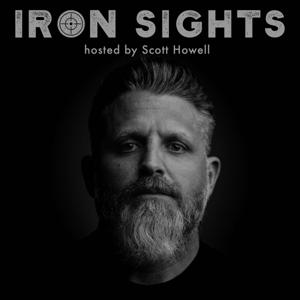
Welcome to Iron Sights podcast hosted by Scott Howell. This podcast candidly seeks to create opportunities and deliver impact by sharing the experiences and wisdom of successful entrepreneurs and…
Ranked by our users in the last 21 days
30,714 Listeners
11,022 Listeners
6,476 Listeners
46,076 Listeners
3,287 Listeners
2,407 Listeners
1,285 Listeners
2,897 Listeners
663 Listeners

351 Listeners
590 Listeners
329 Listeners
135 Listeners
51 Listeners

160 Listeners