
Sign up to save your podcasts
Or

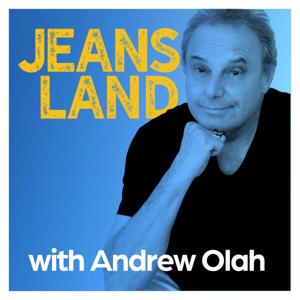


What does it take to rebuild an industry? Maybe it starts with teaching someone how to make a pair of jeans.
In Episode 92, Andrew is joined by Maurice Malone, a pioneering denim designer, entrepreneur, and one of the original figures in American streetwear. With more than four decades in the business, Maurice has seen just about everything. And he's certainly done a few things differently along the way.
His story begins in Detroit, where a teenager with ambitions of becoming a Hollywood special effects artist found himself making hats in his mother's basement. One thing led to another, and before long, he was selling clothes, building brands, promoting hip-hop events, and helping shape a streetwear movement that would eventually become a global industry.
There's plenty of history here, including Detroit's legendary Hip Hop Shop, the early days of urban fashion, New York Fashion Week, and the remarkable rise, disappearance, and reinvention of the Maurice Malone brand.
But Maurice isn't particularly interested in living in the past.
Today, he's behind Williamsburg Garment Company, a Brooklyn-based denim brand and manufacturing operation specializing in American-made jeans, custom fits, alterations, and small-scale production. He's also building something rather unusual: a destination for people who genuinely love denim, where shopping, manufacturing, education, and community all come together.
And then there's Denim Workshop, his ambitious nine-week program teaching people how to actually make jeans, from digital pattern-making to working with industrial sewing machines.
Andrew and Maurice explore what happened to American denim manufacturing, why finding skilled workers has become so difficult, what the Japanese denim industry gets right, and why today's explosion of independent brands might create an unexpected opportunity to bring production back home.
They also look at the changing retail experience, the importance of craftsmanship, and why a good pair of jeans should be about more than a label.
What's particularly refreshing about Maurice is that after more than 40 years, he's still learning, experimenting, and coming up with new ideas. And now he's determined to pass that knowledge along to the next generation.
It's a fascinating journey through hip-hop, fashion, entrepreneurship, and the evolution of American denim, with someone who helped shape the industry and continues to challenge what it can become.
More than anything, it's a story about experience, reinvention, and the importance of passing knowledge on to the next generation.
Maurice Malone
Founder, Williamsburg Garment Company
Founder, Denim Workshop
Williamsburg Garment Company | Maurice Malone | Denim Workshop
Please follow us on: Instagram, Facebook, and LinkedIn.
Who says the denim industry can’t have a little more fun?
In Episode 91, Andrew is joined by two longtime friends and familiar faces in the denim world, Erin Barajas and Amy Leverton. Between the three of them, there are decades of industry experience, plenty of stories, and a shared appreciation for the wonderfully unusual people who make this business what it is.
Amy, founder of Denim Dudes and one of the industry’s leading trend forecasters, has spent more than 20 years exploring the intersection of denim, design, and culture. Erin, a former journalist and Kingpins veteran, has built a career around storytelling, creative programming, and bringing people together.
Now they’ve joined forces to create Here|After, a fresh approach to industry events in Los Angeles that combines trend forecasting, unexpected ideas, great speakers, and something the industry could probably use more of: genuine inspiration.
Andrew takes them back through their unconventional careers, from Erin’s early days covering denim in Los Angeles to Amy’s introduction to the industry at Cone Mills. They talk about taking risks, finding opportunities in unexpected places, the role of AI in trend forecasting, and why the creative side of fashion sometimes gets lost in the business of making clothes.
But the real excitement is what they’re building next.
With Here|After Market launching in 2027, Erin and Amy are betting that Los Angeles still has plenty to offer the denim world, particularly a new generation of independent designers and brands doing things their own way.
Andrew knows firsthand how difficult the LA market can be, and he’s delighted to see two people he knows and respects taking on the challenge.
It’s a lively, funny, and refreshingly optimistic episode about friendship, creativity, taking chances, and remembering why we fell in love with this industry in the first place.
Erin Barajas
Co-Founder of Here|After, Communications & Marketing Consultant
Instagram
Amy Leverton
Founder of Denim Dudes, Co-Founder of Here|After
Instagram
Please follow us on: Instagram, Facebook, and LinkedIn.
What if some of the things we think we know about cotton aren’t quite what we’ve been told?
In Episode 90, Andrew welcomes Terry Townsend into his Houston home for a rare in-person episode of Jeansland. And when you put two people with decades of experience in the cotton industry together, there’s plenty to talk about.
Terry is an agricultural economist who spent 27 years with the International Cotton Advisory Committee (ICAC), including 15 years as its executive director. A former USDA cotton analyst, author, and longtime advocate for natural fibers, Terry brings an extraordinary depth of knowledge about the economics, production, and global trade of cotton.
Andrew and Terry challenge some of the industry’s most persistent assumptions about organic cotton, water use, pesticides, and the way natural and synthetic fibers are compared. They examine life cycle assessments, the complicated origins of recycled polyester, and why some environmental claims deserve a closer look.
There’s also a fascinating trip around the cotton-producing world, from Afghanistan and Brazil to China, Africa, and Central Asia, with plenty of surprising statistics along the way.
And one particularly interesting question: Could cotton eventually follow wool’s decline?
It’s an episode about agriculture, economics, technology, global trade, and the importance of understanding the numbers behind the materials we use every day.
Because in an industry full of sustainability claims, sometimes the most useful thing we can do is question what we think we know. And if you think you know cotton, Terry might just give you a few reasons to think again.
Terry Townsend
Agricultural Economist & Cotton Industry Consultant
Former Executive Director, International Cotton Advisory Committee (ICAC)
Cotton Analytics | LinkedIn
Please follow us on: Instagram, Facebook, and LinkedIn.
What does the future of denim look like through the eyes of someone who spent a lifetime helping shape it?
In this revisited episode, Andrew sits down with Adriano Goldschmied, the legendary designer, entrepreneur and innovator known throughout the industry as the “Godfather of Denim.”
Their discussion moves quickly from the state of the denim business to a much bigger question: where does it go next? Adriano talks candidly about too many mills chasing too little demand, relentless pressure on prices, changing consumers, and why the industry may need to stop thinking about constant growth and start thinking about simply doing things better.
Then they start imagining. Luxury denim made from silk and merino wool. Cotton created through biotechnology. Indigo derived from sugar cane. Digitally printed denim that could dramatically reduce water, inventory and waste. And a future where denim becomes less of a product category and more fully integrated into fashion.
Following Adriano’s passing in April 2026, we wanted to revisit this episode and the ideas, curiosity and unmistakable passion for denim he shared with Andrew.
Because even after a lifetime in the industry, Adriano wasn’t particularly interested in looking backward.
He was still imagining what denim could become.
Originally released as Episode 12 on March 12, 2025.
Please follow us on: Instagram, Facebook, and LinkedIn.
For decades, the fashion industry has been auditing its supply chain. So why are so many of the same problems still there?
Twenty-one years ago, a jeans factory Andrew was working for faced allegations of serious labor abuses. Orders were disappearing, the accusations were mounting, and he didn’t know what to do. He reached out to Auret van Heerden at the Fair Labor Association in Geneva. That meeting changed Andrew’s life.
In Episode 88, they meet again. Auret’s extraordinary career stretches from the anti-apartheid movement in South Africa, where he was detained without trial for 289 days, to the International Labour Organization and thirteen years with the Fair Labor Association. Together, they cover remarkable ground across more than three decades of global sourcing.
Audits and human rights. Cotton and synthetics. ESG. Forced labor. Contract sanctity. Governments and NGOs. And the increasingly complicated relationship between the people buying things and the people actually making them.
Auret was there as many of the systems we now call social responsibility were being built. Some worked. Others didn’t. One important voice, he argues, was too often missing from the beginning: the supplier.
Andrew and Auret look at audit fatigue, transactional sourcing, the outsourcing of risk, and why demanding better standards without giving suppliers the means or incentive to achieve them may be part of the problem.
After decades of audits, standards and initiatives, maybe we don’t need another system.
Maybe we need to fix the relationships inside the one we already have.
Auret Van Heerden
Founder & CEO at Equiception Business and Human Rights
LinkedIn
Please follow us on: Instagram, Facebook, and LinkedIn.
Usually, there isn’t much to laugh about in our industry. But on September 13, funny arrived at New York Fashion Week.
A PETA protest disrupted the COS runway show. CFDA CEO Steven Kolb stepped in, things got physical, the video went viral, and five days later Kolb resigned.
But that’s really where this episode begins.
In Episode 87 of Andrew’s Take, he looks beyond the spectacle to what PETA was actually asking for.
PETA was there protesting the treatment of sheep in the wool industry. There are serious questions worth asking about how animals are treated and how our materials are produced. But PETA isn’t asking for better wool. It’s asking for no wool.
And once you follow that argument through, the numbers get very big, very quickly. The UN estimates livestock supports the livelihoods of approximately 1.3 billion people worldwide, while roughly 600 million people depend at least partly on aquatic food industries.
Andrew takes the protest beyond the runway and asks what happens when an ethical position meets the reality of a global economy. Wool is only the beginning. Leather, food, fishing, livestock, dairy, silk, down, and other animal-derived products quickly enter the picture.
Protesting is easy. What happens if you actually get what you’re asking for?
Please follow us on: Instagram, Facebook, and LinkedIn.
What actually happens when an old pair of jeans goes into a collection bin?
In Episode 86, Andrew is joined by Jennifer Wright, professor and researcher at Fanshawe College in London, Ontario, whose work explores what really happens to textile waste after we’re finished with it.
Jennifer takes Andrew through the surprisingly complicated journey of discarded clothing, from sorting and resale to overseas markets, recycling, and the growing challenge of garments that have become increasingly difficult to take apart.
They also explore some unexpected possibilities for textile waste, including Jennifer’s research into pyrolysis, a process that uses intense heat without oxygen to transform discarded textiles into char. Already used with other waste materials, Jennifer and her research partners are exploring what happens when clothing becomes the raw material.
But underneath all the technology and new approaches is a much simpler question: Are we making more clothing than any recycling system could ever realistically handle?
Sometimes the problem starts long before something reaches the recycling bin.
Jennifer Wright
Researcher, Fashion and Apparel Sustainability and Circularity
Fanshawe College
LinkedIn
Please follow us on: Instagram, Facebook, and LinkedIn.
My daughter introduced me to a company in New Jersey with an unusual kind of employee. It works outdoors, eats continuously, and never reads a sustainability report.
It’s a goat.
Across the U.S. and Europe, goats and sheep are being put to work clearing invasive plants, managing difficult terrain, and even helping create natural firebreaks. No herbicides. No heavy machinery. And what they eat comes out the other end as fertilizer.
Of course, natural doesn’t automatically mean environmentally perfect. The real question is whether it works better, costs less, and produces measurable results.
And that’s where the goats become a lesson for our own industry.
Across cotton, denim, and sustainability, we’re constantly rediscovering old practices, renaming them, and presenting them as innovation. Sometimes that’s just marketing. Sometimes it really is a better way of doing things.
Maybe innovation doesn’t always mean inventing something new.
Please follow us on: Instagram, Facebook, and LinkedIn.
Angie Furlong has spent more than four decades designing clothes, building teams, traveling the world, and learning the industry from the inside out. Some things in fashion can only be learned by understanding how they’re made.
In Episode 84, Andrew is joined by designer and creative director Angie Furlong, whose career has taken her from Guess and Esprit to Lucky Brand, J Brand, True Religion, Sundance, and beyond.
Angie came into denim at a remarkable moment. At Guess, she learned by working directly with mills, pattern makers, sewing rooms, dye houses, and laundries. At Esprit, she entered an entirely different world, traveling to Hong Kong, developing collections internationally, and watching the industry begin its shift toward global production.
Andrew and Angie look back at the rise of premium denim in Los Angeles, the experimentation that made the city a center of the denim world, and what happened as manufacturing moved offshore and designers became increasingly separated from the people actually making their clothes.
They also look at what comes next: AI, vintage and resale, repurposing, mentoring young designers, and why technology can be an extraordinary tool, but only if you understand the craft behind what you’re asking it to do.
After more than 40 years, Angie says she would choose this industry all over again. Her concern is what the next generation may be losing along the way: the technical knowledge, curiosity, and understanding of how something actually gets made.
Angela (Angie) Furlong
Design Leader & Creative Director
LinkedIn
Please follow us on: Instagram, Facebook, and LinkedIn.
I read an article about basketball this weekend that made me think about denim. Strange, I know.
The argument was simple: we’re seeing more basketball and understanding less of it. Highlights, hot takes, 30-second explanations. Why understand the game when somebody can just tell you who won?
I think our industry has developed the same problem.
We talk constantly about sustainability, circularity, regenerative agriculture, transparency, regulations, cotton, polyester, indigo. We publish enormous reports and thousands of pages of data. But who is actually reading them? More importantly, who understands them well enough to ask the next question?
It’s much easier to remember that cotton uses too much water, recycled polyester is sustainable, or an indigo process is “clean.” Two seconds. Done. Now we have an opinion.
We’ve created our own version of ESPN. We like the highlights, not the game.
And that worries me, because you cannot improve what you don’t understand.
Please follow us on: Instagram, Facebook, and LinkedIn.
From the publisher's feed
This is why I do this. Jeansland is a podcast about the ecosystem in which jeans live. There are an estimated 26 million cotton farmers around the world, and about 25% of their production goes into…
https://jeansland.co/

21,796 Listeners

10,895 Listeners

26,168 Listeners

9,653 Listeners

30,097 Listeners
434 Listeners

111,800 Listeners
575 Listeners

12 Listeners

16,321 Listeners

14,322 Listeners
16 Listeners

1,225 Listeners

3,426 Listeners

9 Listeners