
Sign up to save your podcasts
Or

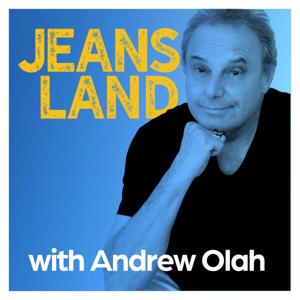


In 1975, Joel Carman opened Over the Rainbow with $2,000, a love of jeans, and no idea what he was doing. Fifty years later, Joel and his family run one of the longest-standing independent denim retailers in North America.
Andrew sits down with Joel and Daniel to talk about what it takes to survive five decades in retail—from the early days when Joel was making $15 a day and driving a cab at night, to the decision to go premium in 2000, and how the internet became their best marketing tool without killing the store.
Joel explains why venture capital is a bigger threat to denim than athleisure, why integrity matters more than cashing in, and what it means to stay a student of your industry even after 50 years. Daniel shares how they’ve stayed relevant by evolving every decade, hiring people smarter than them, and treating the business like it’s never just a job.
They also talk about fitting Sylvester Stallone, why European brands often fail in North America, and the jeans they actually wear.
A conversation about legacy, family, and what happens when you love what you do more than the money it makes.
Joel Carman
Founder, Over the Rainbow
Over the Rainbow, Instagram
Daniel Carman
Partner, Over the Rainbow
Over the Rainbow, Instagram
Please follow us on: Instagram, Facebook, and LinkedIn.
If a corporation were a person, what kind of person would it be? Andrew revisits the 2003 documentary The Corporation, which diagnosed the modern company as a psychopath. No empathy, no remorse, no conscience. Just profit with zero regard for human cost.
He applies that lens to denim. Chasing cheaper wages. Blue-washing sustainability while underpaying the people who make the jeans. The 2020 sequel's message? The corporation hasn't changed. It's just evolved from overt sociopathy to charming manipulation.
🎧 Listen now at jeansland.co
#JeanslandPodcast #DenimIndustry #SupplyChain #EthicalFashion #Jeansland
Please follow us on: Instagram, Facebook, and LinkedIn.
James McKinnon runs a 72-year-old family textile business in South Carolina. He's third generation. He sits on the Cotton Board, advises the USDA on cotton standards, and he'll tell you straight up that U.S. textiles are fighting some incredibly strong headwinds.
But he also thinks it's a fight worth fighting.
In this conversation, Andrew and James dig into what it takes to keep American textile manufacturing alive. They talk about supply chain innovation, why sitting on your hands expecting last year's playbook to work won't cut it, and the story of making a yarn-dyed flannel shirt entirely in the U.S. with American Giant. Most people said it was impossible. Turns out, it just took the sheer force of will to do it.
They also get into sustainability, the role of U.S. cotton in a global market, certifications that actually matter versus ones that feel like rubber stamps, and why the next generation should still consider textiles as a career. James doesn't sugarcoat the challenges, but he's clear about the rewards. The people you meet, the places you go, the connections that come with this industry don't show up on a balance sheet, but they matter.
There's also straight talk about Xinjiang cotton, the disconnect between a booming stock market and a tough sourcing climate, and how AI might actually help the old school guys rather than replace them.
This is worth a listen because it's the kind of conversation that reminds you why this work still matters.
James McKinnon
CEO, Cotswold Industries
Cotswold Industries, LinkedIn
For more stories that shape the future of denim, head to jeansland.co.
Please follow us on: Instagram, Facebook, and LinkedIn.
Jeans have long been seen as the uniform of freedom. But if freedom is what we're selling, what's the truth behind the people making them?
In this solo episode, Andrew looks at two global scorecards, one for freedom and one for happiness, across the 11 countries that produce most of the world's denim. The results aren't comfortable. China ranks third worst in the world for freedom. Egypt is eighth worst. Pakistan, Bangladesh, Turkey, all near the bottom. And most of these countries also rank in the bottom half for happiness.
Factories full of low spirits, making clothes that claim to represent self-expression.
Andrew asks: Can a product symbolize freedom if the people who make it aren't free? When factories move to cheaper countries, does freedom move with them or just the profit margins? And at what point does outsourcing start to look like making jeans in a prison?
This isn't about guilt. It's about awareness. If jeans are going to mean something, maybe we need to start asking who made them and what kind of life they're living.
Please follow us on: Instagram, Facebook, and LinkedIn.
Andrew sits down with two people who lived through the denim business alongside him for years. Michael Morrell and Paul Ledgett were his partners at Olah Inc., and together they built something that worked because they gave a damn about the product, the people, and doing things right.
In this conversation, they go back. They talk about what it meant to run a denim agency in New York when the industry still cared about design and relationships. When you could shake hands on a deal and it meant something. When brands actually built brands instead of chasing the lowest price and calling it strategy.
But they also talk about what's happened since. The overcapacity. The sameness. The greenwashing that sounds good in a press release but falls apart the second you ask how it scales. Michael and Paul don't hold back, and neither does Andrew. They get into why sustainability only seems to work when someone else is paying for it, why most brands have lost the plot, and what it would actually take to make denim that means something again.
There's frustration here, sure. But there's also a vision for something better. And some very good stories along the way.
Michael Morrell
CEO of Western Hemisphere and Europe at Freedom Denim
Freedom Denim, LinkedIn, Instagram
Paul Ledgett
President North America at Diamond Denim by Sapphire
Diamond Denim by Sapphire, Instagram
For more stories that shape the future of denim, head to jeansland.co.
Please follow us on: Instagram, Facebook, and LinkedIn.
The denim industry runs on water. But most of the places we make jeans don’t have enough of it. In this short, Andrew breaks down what happens when cotton, sewing, and finishing all depend on freshwater we can’t afford to lose.
Countries like Canada have 74,000 cubic meters of water per person. Bangladesh? Just 635. Yet we keep building supply chains in places with the least to spare. Even rainfed cotton gets risky when the rains stop coming.
Andrew asks a simple question: where’s the plan? We talk about water-saving finishes and efficient cotton, but no one talks about the source. Water is being used like it’s endless. It’s not.
Listen now at jeansland.co
Please follow us on: Instagram, Facebook, and LinkedIn.
One question froze Romain Narcy in his tracks fifteen years ago: "Do you know the environmental impact of making jeans?"
He didn't. That moment sent him on a path from running suitcase sales trips across France to building one of Turkey's greenest denim factories to joining the steering committee of the Denim Deal. Their goal? One billion jeans made with recycled cotton by 2030.
Sounds ambitious. Romain thinks it's doable. But only if brands stop pretending they understand their supply chains when most can't even explain how their jeans get washed, let alone recycled.
In this conversation, he and Andrew get into the real barriers. Europeans are buying 33% more clothes than they were a few years ago. Most brands don't know collectors from sorters from recyclers. Blending recycled cotton takes the precision of a champagne maker. And 85% of garments still end up in landfills.
Romain's not selling a dream here. He's mapping the infrastructure it takes to close the loop, why legislation might be the only real leverage left, and what happens when countries realize they're sitting on mountains of waste that could be worth something.
Can the industry actually pull this off before consumption outpaces every solution?
Learn more about Romain’s work:
Follow these projects on LinkedIn:
🎧 Listen now at jeansland.co
Please follow us on: Instagram, Facebook, and LinkedIn.
Big news in denim: Artistic Milliners of Karachi has taken a majority stake in Cone Denim, one of America’s most storied mills. From its 1891 roots in Greensboro, NC, to powering Levi’s 501s, Cone’s history now collides with one of the most ambitious players in the industry.
Andrew breaks down what this deal means for global supply chains and why, even together, Artistic and Cone make up just one percent of denim worldwide. Is this the start of a new model, or just another big gamble?
Please follow us on: Instagram, Facebook, and LinkedIn.
This week on Jeansland, Andrew sits down with Indian journalist Subir Ghosh for a clear-eyed look at how sustainability narratives often miss the mark. Subir challenges the fashion industry’s fixation on circularity, calling it more of a marketing loop than a real solution. He explains why cotton farmers in India remain under immense pressure, why worker struggles beyond the sewing floor go largely unnoticed, and how global fashion summits recycle the same conversations without meaningful results.
From the realities of farmer suicides to the limitations of regenerative cotton, this conversation underscores the disconnect between polished industry rhetoric and the lives of people who grow, spin, and dye the fibers we rely on.
For deeper reporting on these issues, visit texfash.com, where Subir is co-founder and Executive Editor, and subirghosh.in.
Please follow us on: Instagram, Facebook, and LinkedIn.
Andrew rewinds to 1980 in this solo short. Cotton has been priced at 80-cents a pound ever since, while everything else (burgers, beef, coffee, gas) keeps inflating honestly. Farmers work harder for the same pay, garment workers get pushed offshore to 60-cent wages, and polyester quietly takes over as “oil in disguise.”
Jeans don’t get cheaper because of efficiency. They get cheaper because the system is stacked against the farmer, the worker, and the planet.
Listen to this episode short and find out the real cost of cheap jeans.
Please follow us on: Instagram, Facebook, and LinkedIn.
From the publisher's feed
This is why I do this. Jeansland is a podcast about the ecosystem in which jeans live. There are an estimated 26 million cotton farmers around the world, and about 25% of their production goes into…
https://jeansland.co/

21,796 Listeners

10,895 Listeners

26,168 Listeners

9,653 Listeners

30,097 Listeners
434 Listeners

111,800 Listeners
575 Listeners
12 Listeners

16,321 Listeners

14,322 Listeners
16 Listeners

1,225 Listeners
3,426 Listeners
9 Listeners