
Sign up to save your podcasts
Or



Based on Podcast App listening data
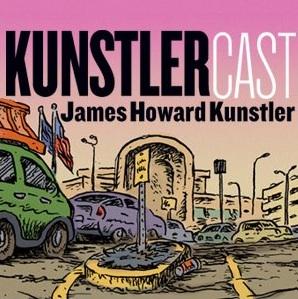
Many everyday items in our lives are made from petroleum byproducts like plastic. But James Howard Kunstler believes that the rising costs of petroleum will change our relationship to plastic products. In the future, people might actually start repairing items rather than just throwing them away. While on the topic of plastic, Kunstler takes on one of the staples of suburban life: vinyl siding. In particular, he explains why vinyl siding sucks so much.
James Howard Kunstler tells the story of how he came to learn about peak oil while writing about suburban sprawl. Topics include The Yom Kippur War, The Hubbert's Curve, the New Urbanists and the strong relationship between suburban sprawl and diminishing supplies of cheap fossil fuel. Kunstler explains the chronology and relationship between all four of his nonfiction books.
James Howard Kunstler believes the credit orgy that was the background and basis for our era is over. It will become increasingly harder to lend money into existence and Americans will probably have to pay as they go with what they have. Kunstler explores the historical relationship between credit and the creation of suburbia. But he does not know how our current credit problems will stimulate people to change the physical arrangements of their lives. He assumes, however, that Americans will be dragged kicking and screaming from the happy motoring commuter experience. Released: January 15, 2009.
A listener caller asks James Howard Kunstler about President-elect Barack Obama's massive proposed stimulus package, which will probably be used to rebuild America's highways. Along with the auto industry bailout, Kunstler thinks this major proposed investment in our highway infrastructure may be a last ditch effort to sustain the unsustainable. Americans have invested so much of their wealth and identity into their happy motoring suburban commuter system for daily life that they cannot imagine letting go of it or even substantially reforming it. Kunstler also talks about passenger rail, light rail and streetcars. He also strays into the thickets of futurology to talk about 21 century trans oceanic zeppelins. A listener caller ends the program with his thoughts on efforts to create local currencies, such as the Berkshares in the Berkshire region of Massachusetts.
In this abbreviated edition, James Howard Kunstler shares his New Year's resolutions for 2009. He also sets some personal goals for finishing the sequel to his post oil novel, World Made by Hand, and gives some details on what that book will be about. For the rest of this short show Duncan answers some listener questions about the podcast.
Info about music at KunstlerCast.com
James Howard Kunstler explains the negative effects that empty building lots have on the urban streetscape. These empty spaces or "missing teeth" are dead zones that are repellent to pedestrians. But, at the moment, our car crazy society prefers to keep those dead zones for surface parking rather than to infill them with good urban buildings. During the second half of the program Kunstler speaks face-to-face with Troy, N.Y. Mayor Harry Tutunjian about what to do with the empty space that will be left behind after the city demolishes its current City Hall. Plans for the soon-to-be empty lot include an underground parking garage with grass on top. The mayor says that the lawn will allow access to the Hudson River and provide scenic views of the River from Broadway. Kunstler argues that the building lot should be completely occupied by a good urban building, like a new city hall. Released: Dec. 18, 2008
James Howard Kunstler joins host Duncan Crary for the Victorian Stroll in downtown Troy, NY. During this annual event, the city evicts the automobile from the streets and 21st century people discover how pleasurable it is to explore this 19th century urban fabric on foot. Kunstler believes events like this are rehearsal for the times ahead when Americans will be forced to re-inhabit their small cities and classic main-street towns.
James Howard Kunstler says the notion that Americans have a long tradition of being able to do whatever they want with their land is a fallacy. This false notion is really just the result of a propaganda campaign by the promoters of suburban sprawl and the real estate industry. In reality, there is a whole corpus of responsibilities, obligations and duties that come with land ownership in America that simply can't be ignored. Kunstler compares American attitudes toward community ownership with those in Europe.
Music provided by IODA Promonet. For information, visit http://kunstlercast.com
The Future of North American Shipping
James Howard Kunstler responds to a listener question about the future of water transportation in North America. There is a fabulous inland waterway system in North America that is going to become very important again. But, if we want to remain serious about trade in this country we are going to have to rebuild the infrastructure for water and rail transportation. All of those waterfronts where we've been building theme parks, condominium clusters and picnic grounds in recent times will have to make room for the warehouses, piers and sleazy accommodations for the sailors that are required by water transit.
From the publisher's feed

63,956 Listeners
11,409 Listeners

1,083 Listeners

1,224 Listeners

937 Listeners

3,849 Listeners

2,878 Listeners
3,355 Listeners

1,540 Listeners

495 Listeners

30 Listeners
772 Listeners
8,304 Listeners

327 Listeners

405 Listeners

259 Listeners
377 Listeners

457 Listeners
44 Listeners

5,304 Listeners
1,026 Listeners
121 Listeners

72 Listeners

411 Listeners
167 Listeners