
Sign up to save your podcasts
Or


You’re not imagining it—there really is freedom on the other side of clutter. When your home isn’t ruled by stuff, you walk in and feel lighter, calmer, more in control. And that’s what you’re moving toward.
A helpful way to understand your relationship with stuff is through the “laws” that quietly shape your home. For example, the more you have, the more you need. More items lead to more storage, more furniture, and sometimes even the feeling that your house itself isn’t big enough. It’s a cycle that can sneak up on you.
You also see how excess crowds out what actually matters. When everything is kept, the meaningful things—photos, memories, keepsakes—get lost in the noise. As you reduce, the good stuff becomes visible again.
Then there’s the reality that your belongings expand to fill the space available. If there’s an empty drawer or shelf, it rarely stays empty. But this works both ways—when you reduce space, your stuff naturally reduces too.
Over time, you stop seeing what’s around you. Clutter becomes background noise. Looking at your home with fresh eyes helps you notice what no longer belongs.
And perhaps most importantly, something is only valuable if you use it. The true value isn’t what you paid—it’s what it adds to your life right now.
When you understand these patterns, you make clearer, more confident decisions—and create a home that feels free.
The Complete Idiots Guide to Organizing Your Stuff by Georgene Lockwood
10 Laws
You may also like to listen to these episodes:
Fresh Eyes
Pareto Principle
Watch on YouTube
https://youtu.be/42g76udnpOwhttps://youtu.be/NyU4mwpuuZ4
Join my community
Thank you to my sound engineer, Jarred from Four4ty Studio
Hosted on Acast. See acast.com/privacy for more information.
 View all episodes
 By Amy Revell

4.9
121121 ratings
You’re not imagining it—there really is freedom on the other side of clutter. When your home isn’t ruled by stuff, you walk in and feel lighter, calmer, more in control. And that’s what you’re moving toward.
A helpful way to understand your relationship with stuff is through the “laws” that quietly shape your home. For example, the more you have, the more you need. More items lead to more storage, more furniture, and sometimes even the feeling that your house itself isn’t big enough. It’s a cycle that can sneak up on you.
You also see how excess crowds out what actually matters. When everything is kept, the meaningful things—photos, memories, keepsakes—get lost in the noise. As you reduce, the good stuff becomes visible again.
Then there’s the reality that your belongings expand to fill the space available. If there’s an empty drawer or shelf, it rarely stays empty. But this works both ways—when you reduce space, your stuff naturally reduces too.
Over time, you stop seeing what’s around you. Clutter becomes background noise. Looking at your home with fresh eyes helps you notice what no longer belongs.
And perhaps most importantly, something is only valuable if you use it. The true value isn’t what you paid—it’s what it adds to your life right now.
When you understand these patterns, you make clearer, more confident decisions—and create a home that feels free.
The Complete Idiots Guide to Organizing Your Stuff by Georgene Lockwood
10 Laws
You may also like to listen to these episodes:
Fresh Eyes
Pareto Principle
Watch on YouTube
https://youtu.be/42g76udnpOwhttps://youtu.be/NyU4mwpuuZ4
Join my community
Thank you to my sound engineer, Jarred from Four4ty Studio
Hosted on Acast. See acast.com/privacy for more information.
404 Listeners
1,307 Listeners

2,484 Listeners

2,093 Listeners
275 Listeners
320 Listeners
1,002 Listeners
204 Listeners
929 Listeners
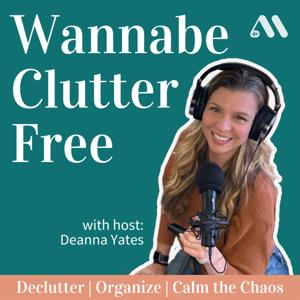
392 Listeners
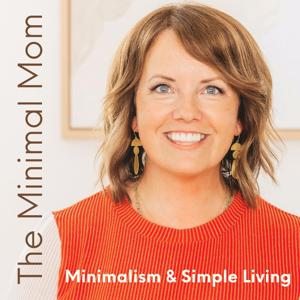
744 Listeners
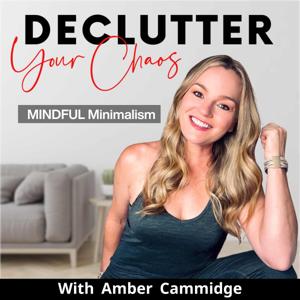
350 Listeners
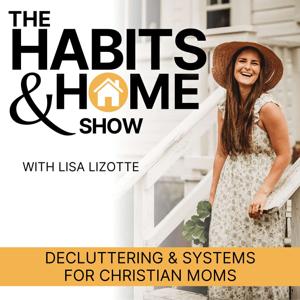
170 Listeners
294 Listeners
55 Listeners