
Sign up to save your podcasts
Or




Are you staying in a job you hate because of money?
The #1 reason I hear from people when they tell me they can't quit is finances.
Whether it is too much debt, not being able to replace their salary, or not being able to cut back, money seems to be a big block from living the life they want.
But when I push just a bit, I realize that most people have no real idea of their actual numbers.
They think that they have a general idea. But specific numbers of how much they bring in and how much goes out...not a clue.
And I get it. Finances are overwhelming. So we just bury our heads in the sands.
And whether we realize it or not, we begin to play the victims in our own lives. We come to believe, falsely, that there is nothing we can do. That this is just the way it is and that we're destined to live this way forever.
Well, I don't have to tell you that this isn't true. There are tons of resources and plans that can help you tackle any financial situation.
But, if you want to start creating a plan for how to quit your career, you have to know your numbers.
Today on the podcast, I got to talk to Rob Bertman about actionable steps you can take to get control over your situation.
Rob Bertman, CFA, CFP® helps families improve their lives and reach their financial goals by focusing on the #1 key to financial success, managing spending.
Rob is a quitter himself. He left a successful career as a partner and securities analyst at an investment management firm to found Family Budget Expert. He knows first hand the upside and challenges of leaving a stable career to start a business and he's on the podcast today to share how you can get started on your journey to financial control now.
Here is what we discuss:
- What the most important step is to gaining control of your finances
- What things you can do to tackle your massive student loan debt
- How much you should be saving for a runway before quitting
- How to start saving when you're living paycheck to paycheck
- And so much more
On this podcast, we've talked to tons of people who have quit careers that they hated in order to find something that they loved. The general premise is that this outside circumstance, namely their stressful job, is causing them to be miserable and so they make the leap in search of a circumstance that won't cause them to feel that way.
Well, on today's episode, I am honored to talk to the incredible Kara Lowentheil, Master Certified Coach, and ex-reproductive rights litigator, about why that approach is the wrong way to go about it.
Kara's own journey is not unlike a lot of our previous guests. Kara received her B.A. from Yale and J.D. from Harvard. She went on to create an impressive legal resume including a clerkship for a Federal Court of Appeals and various jobs in academia. However, when she realized that no amount of accomplishment was going to bring her inner peace and happiness, she turned to life coaching and thought work.
Thought work teaches how to bring awareness to and actively engage with your own thinking in order to help retrain your brain. Kara found that the more thought work she engaged in, the happier she became in her life regardless of the outside circumstances.
After realizing the power of thought work in her own life, Kara decided to become a life coach in order to help other women unfuck their brain from all of the patriarchal programming. As we talk about in-depth, Kara didn't leave because she hated her job. In fact, she discusses how she could have stayed and loved what she was doing. But seeing the impact that she could make on women's lives with thought work was more of an exciting opportunity.
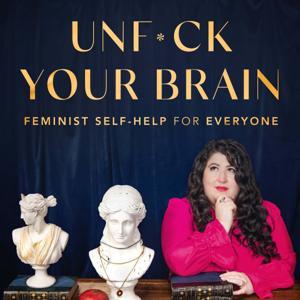
In the last three years after pivoting from a legal career, she has grown her life coaching business from 0 to 7 figures. She's the host of the iTunes top-rated self-help podcast Unf*ck Your Brain which has been downloaded over 6M times, and she has been featured in outlets like Marie Claire, Mind Body Green, MSN.com, and The Huffington Post. Kara lives in New York City. Basically, she's starting a feminist revolution.
In this episode, we discuss:
Kara's Links:
Website
The Clutch
On this podcast, we’ve talked to tons of people who have quit careers that they hated in order to find something that they loved. The general premise is that this outside circumstance, namely their stressful job, is causing them to be miserable and so they make the leap in search of a circumstance that won’t cause them to feel that way.
Well, on today’s episode, I am honored to talk to the incredible Kara Lowentheil, Master Certified Coach, and ex-reproductive rights litigator, about why that approach is the wrong way to go about it.
Kara’s own journey is not unlike a lot of our previous guests. Kara received her B.A. from Yale and J.D. from Harvard. She went on to create an impressive legal resume including a clerkship for a Federal Court of Appeals and various jobs in academia. However, when she realized that no amount of accomplishment was going to bring her inner peace and happiness, she turned to life coaching and thought work.
Thought work teaches how to bring awareness to and actively engage with your own thinking in order to help retrain your brain. Kara found that the more thought work she engaged in, the happier she became in her life regardless of the outside circumstances.
After realizing the power of thought work in her own life, Kara decided to become a life coach in order to help other women unfuck their brain from all of the patriarchal programming. As we talk about in-depth, Kara didn’t leave because she hated her job. In fact, she discusses how she could have stayed and loved what she was doing. But seeing the impact that she could make on women’s lives with thought work was more of an exciting opportunity.
In the last three years after pivoting from a legal career, she has grown her life coaching business from 0 to 7 figures. She's the host of the iTunes top-rated self-help podcast Unf*ck Your Brain which has been downloaded over 6M times, and she has been featured in outlets like Marie Claire, Mind Body Green, MSN.com, and The Huffington Post. Kara lives in New York City. Basically, she’s starting a feminist revolution.
In this episode, we discuss:
Kara’s Links:
Website
The Clutch
This week I had the opportunity to chat with Marc Allen, a strategy consultant to social impact and development funders worldwide, advising them on how to create greater human impact with their investments. We talk all about why skills are valuable. Namely how we can look at the skills we've acquired, instead of the career we've pursued, in order to help serve us in our next projects.
I love this episode because it is all about self-reinvention and seeking purpose. While those are both tricky paths to navigate, Marc's own journey shows that with some resilience and open-mindedness, it's not as impossible as we like to think.
Marc worked as an attorney for four years at one of the top law firms in the UK and Paris. But after taking two thought-provoking trips in 2014 to Iran and New Orleans, it was clear to him that he didn't want to be a lawyer. He witnessed so many people harnessing their skills to wear different hats and be useful in their communities. It was eye-opening to take note of people who were in very adverse situations making due with their circumstances. They used what they could offer the world in unorthodox and slightly creative ways to get around systems that aren't always inclusive. The inspiration to quit stemmed from these micro-case studies of progress despite the environment. Marc had to quit. In 2015, he finally did without a real plan or clear idea of what was next.
For the next two years, he tried out different careers and spent time on his passion project, a blog called The Great Everything.
By focusing on the skills he had and the various facets of his personality, Marc finally found a career that he loves. He retrained as a strategy consultant to philanthropies. He is now able to spend his days helping large funders create the biggest impact with their money.
I got to talk to Marc about how the skills he acquired as a lawyer serve him in his new role.
We dive into how he first sensed doubt when his work began to feel unimportant. He was not connected to the outcomes of his cases. But instead of spiraling and worrying that his next move absolutely needed to be in law, he opened himself to a ton of new opportunities.
First, he evaluated the skills he built over the years. As an attorney, Mark developed a strong and unwavering work ethic. He also developed a strong backbone and self-confidence. He also navigated difficult internal power dynamics to get to the opportunities he wanted with tact and patience. All of these characteristics aid him in his role as Engagement Manager at Camber Collective. Marc manages strategy and coalition design for companies, countries, funds, and philanthropies looking to outsize their social impact. He has found the perfect fit BECAUSE of all the skills he has acquired through his career.
The thought of starting over is daunting, especially if you are going into a field where you have little to no experience. It's easy to fall into the trap of self-doubt when you realize that you are starting from a novice level. But, as Marc puts it, take an honest look at your life and think about what you're going to regret when you're 75. When you're in a difficult place, think about, "Would I rather stay here and hope my situation improves? Or am I going to be brave and actually go out and do something about it?" Are you willing to be uncomfortable for a bit and set up challenges and force yourself to rise to the occasion?
When we embrace the idea that we are so much more than one job or one interest, we open ourselves up to immense personal growth. Gratitude for our skills and our gradual evolution will help us push forward and overcome negative self-talk and open ourselves up to different opportunities.
Find Marc here:
Passion Project
Employer
This week I had the opportunity to chat with Marc Allen, a strategy consultant to social impact and development funders worldwide, advising them on how to create greater human impact with their investments. We talk all about why skills are valuable. Namely how we can look at the skills we’ve acquired, instead of the career we’ve pursued, in order to help serve us in our next projects.
I love this episode because it is all about self-reinvention and seeking purpose. While those are both tricky paths to navigate, Marc’s own journey shows that with some resilience and open-mindedness, it’s not as impossible as we like to think.
Marc worked as an attorney for four years at one of the top law firms in the UK and Paris. But after taking two thought-provoking trips in 2014 to Iran and New Orleans, it was clear to him that he didn’t want to be a lawyer. He witnessed so many people harnessing their skills to wear different hats and be useful in their communities. It was eye-opening to take note of people who were in very adverse situations making due with their circumstances. They used what they could offer the world in unorthodox and slightly creative ways to get around systems that aren’t always inclusive. The inspiration to quit stemmed from these micro-case studies of progress despite the environment. Marc had to quit. In 2015, he finally did without a real plan or clear idea of what was next.
For the next two years, he tried out different careers and spent time on his passion project, a blog called The Great Everything.
By focusing on the skills he had and the various facets of his personality, Marc finally found a career that he loves. He retrained as a strategy consultant to philanthropies. He is now able to spend his days helping large funders create the biggest impact with their money.
I got to talk to Marc about how the skills he acquired as a lawyer serve him in his new role.
We dive into how he first sensed doubt when his work began to feel unimportant. He was not connected to the outcomes of his cases. But instead of spiraling and worrying that his next move absolutely needed to be in law, he opened himself to a ton of new opportunities.
First, he evaluated the skills he built over the years. As an attorney, Mark developed a strong and unwavering work ethic. He also developed a strong backbone and self-confidence. He also navigated difficult internal power dynamics to get to the opportunities he wanted with tact and patience. All of these characteristics aid him in his role as Engagement Manager at Camber Collective. Marc manages strategy and coalition design for companies, countries, funds, and philanthropies looking to outsize their social impact. He has found the perfect fit BECAUSE of all the skills he has acquired through his career.
The thought of starting over is daunting, especially if you are going into a field where you have little to no experience. It’s easy to fall into the trap of self-doubt when you realize that you are starting from a novice level. But, as Marc puts it, take an honest look at your life and think about what you’re going to regret when you’re 75. When you’re in a difficult place, think about, “Would I rather stay here and hope my situation improves? Or am I going to be brave and actually go out and do something about it?” Are you willing to be uncomfortable for a bit and set up challenges and force yourself to rise to the occasion?
When we embrace the idea that we are so much more than one job or one interest, we open ourselves up to immense personal growth. Gratitude for our skills and our gradual evolution will help us push forward and overcome negative self-talk and open ourselves up to different opportunities.
Find Marc here:
Passion Project
Employer
If you’re serious about achieving the many dreams you have for your life, you need to start getting serious about goal-setting. I know goal-setting, especially around New Year’s, gets a bad rap. But I always find it laughable that people look down on New Year's resolutions. Because think about the logic:
▪️ People use the New Year as a time to reflect and set new goals. -->
▪️ Most people don't set goals the right way and so they give up on them quickly. -->
▪️ And so everyone has now decided that the only way to solve this problem is to not set goals in the first place.
I'm sorry. WHAT?!?
Resources mentioned:
Here is what we chat about in this episode:
Where to find Maria:
Follow along for more:
From the publisher's feed

43,324 Listeners

3,568 Listeners

1,956 Listeners

2,187 Listeners

3,330 Listeners

21,054 Listeners

12,079 Listeners
5,125 Listeners

5,091 Listeners

27,835 Listeners

41,313 Listeners

1,107 Listeners

18,797 Listeners

1,782 Listeners

720 Listeners