
Sign up to save your podcasts
Or

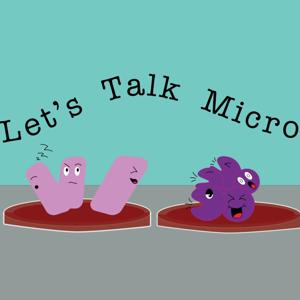


Welcome to the very first Micro Minutes, a new quick-hit series from Let's Talk Micro designed for students, techs, and anyone who wants fast, practical microbiology insights in under 10 minutes.
In this episode, we tackle a common misconception that microbiologists can make at the bench when interpreting a single plate: MacConkey agar.
Many assume:
"If it doesn't grow on MacConkey, it's not a gram-negative rod." "If it does grow on MacConkey, it must be a gram-negative rod."
Both are wrong — and today we break down why.
Stay connected with Let's Talk Micro:
Website: letstalkmicro.com
Questions or feedback? Email me at [email protected]
Interested in being a guest on Let's Talk Micro? Fill out the form here: https://forms.gle/V2fT3asjfyusmqyi8
Support the podcast:
Venmo
Buy me a Ko-fi
In the third installment of our special series in partnership with bioMérieux, Luis welcomes back Dr. Sonali Kalathiya, infectious diseases pharmacist and medical advisor at bioMérieux, to explore how innovation is accelerating antimicrobial susceptibility testing (AST).
Together they dive into FAST AST—a phenotypic susceptibility test that delivers actionable results directly from positive blood cultures in hours instead of days. They discuss how this technology works, how it complements molecular testing, and how it's transforming patient care, antimicrobial stewardship, and laboratory workflows.
From implementation and training to real-world clinical impact, this episode uncovers what it truly means to diagnose resistance at the speed of AST.
🎧 Tune in to learn how faster results are helping clinicians act sooner, optimize therapy, and improve patient outcomes.
This episode is sponsored by bioMérieux, a global innovator in infectious disease diagnostics.
Resources from this episode:
bioMérieux Sepsis Webinar
https://info.biomerieux.com/clin_us_2024_ams_handbook?utm_source=podcast&utm_medium=show-notes&utm_campaign=LetsTalkMicro
Stay connected with Let's Talk Micro:
Website: letstalkmicro.com
Questions or feedback? Email me at [email protected]
Interested in being a guest on Let's Talk Micro? Fill out the form here: https://forms.gle/V2fT3asjfyusmqyi8
Support the podcast:
Venmo
Buy me a Ko-fi
Just back from IDWeek 2025 in Atlanta, Luis shares the sessions and posters that defined this year's meeting — from next-generation sequencing and diagnostic stewardship to AI in the microbiology lab and new antimicrobials on the horizon.
Tune in for insights on:
NGS test utilization and stewardship
New β-lactamase inhibitors like nacubactam
AI's growing role in clinical microbiology
Tedizolid and the importance of optimizing existing agents
🎧 Whether you were in Atlanta or following from afar, this episode captures the energy and innovation of IDWeek — and what it means for the future of diagnostics, stewardship, and patient care.
ResourcesLearn more about ID Week : https://idweek.org/
Infectious Diseases Society of America: https://www.idsociety.org/
Stay connected with Let's Talk Micro:
Website: letstalkmicro.com
Questions or feedback? Email me at [email protected]
Support the podcast:
Venmo
Buy me a Ko-fi
En este episodio en español de Let 's Talk Micro, el Dr. Germán Esparza Sánchez , microbiólogo clínico, miembro del CLSI y consultor de la OPS/OMS, comparte las actualizaciones más recientes del documento M100 y cómo impactan la práctica microbiológica.
Desde la eliminación de puntos de corte para Burkholderia cepacia hasta los nuevos antibióticos como aztreonam-avibactam, durlobactam-sulbactam y cefiderocol, analizamos los retos de aplicar las guías del CLSI en los laboratorios latinoamericanos, las diferencias epidemiológicas regionales y la importancia de la educación continua para combatir la resistencia antimicrobiana (RAM).
Además, el Dr. Esparza comenta sobre el trabajo regional que realizan organizaciones como la Asociación Panamericana de Infectología (API) y COLABIOCLI, que promueven la colaboración científica y la mejora de los laboratorios en América Latina.
Enlaces mencionadosAsociación Panamericana de Infectología (API)
COLABIOCLI
Organización Panamericana de la Salud (OPS)
Organización Mundial de la Salud (OMS)
Conéctate con Let's Talk Micro:
Página web: letstalkmicro.com
¿Preguntas o comentarios? 📩 Escríbeme a [email protected]
Apoya el pódcast:
Venmo
Buy me a Ko-fi
Puerto Rico is entering a new era in microbiome research. In this episode, Luis speaks with Dr. Filipa Godoy-Vitorino about the newly established Microbiome Center of Puerto Rico — a hub designed to strengthen research, collaboration, and training across the Caribbean.
Dr. Godoy-Vitorino shares how the center is helping scientists access expertise in bioinformatics and data analysis, offering bilingual workshops, and expanding representation of Caribbean populations in global microbiome studies. She also discusses the center's vision to connect with international partners, support local innovation, and create opportunities for the next generation of researchers.
🎧 Tune in to learn how this center is putting Puerto Rico on the global microbiome map.
Resources and articles mentioned:
The Microbiota Vault: microbiotavault.org
ISME (International Society for Microbial Ecology): isme-microbes.org
ISALA Project (University of Antwerp): isala.be
"Solutions to expand microbiome sciences in the Caribbean Region: an insider's perspective" by Filipa Godoy-Vitorino — Trends in Microbiology, 2025. View PDF / Article: ScienceDirect link ScienceDirect
Stay connected with Let's Talk Micro:
Website: letstalkmicro.com
Questions or feedback? Email me at [email protected]
Support the podcast:
Venmo
Buy me a Ko-fi
In this second half of our discussion with Dr. Erin McCreary and Dr. Hannah Creager, we dive deeper into how microbiology and antimicrobial stewardship teams collaborate to improve patient outcomes.
They unpack how to prioritize breakpoint updates, the pros and cons of cascade reporting, and what nudges can do to guide better prescribing. Then we explore a powerful example of collaboration—the transition from MRSA agar to PCR across hospitals—and what it taught both teams about communication, resource sharing, and patient safety.
Finally, Erin and Hannah reflect on lessons learned, first steps for building collaboration, and even share their favorite microbes (spoiler: both picked viruses!).
🎧 Tune in to learn how intentional teamwork between the lab and stewardship can transform patient care and lab efficiency.
Stay connected with Let's Talk Micro:
Website: letstalkmicro.com
Questions or feedback? Email me at [email protected]
Support the podcast:
Venmo
Buy me a Ko-fi
Good communication isn't optional—it's essential for patient care. In Part 1 of this two-part series, Dr. Erin McCreary and Dr. Hannah Creager join Luis to talk about how microbiology labs and antimicrobial stewardship teams can collaborate more effectively. They share real-world examples from their system-wide work—aligning AST panels and breakpoints across multiple platforms, navigating reporting challenges like the clindamycin D-test and rifampin comments, and building consistent communication through monthly micro–stewardship meetings. It's a behind-the-scenes look at how strong collaboration turns into better patient outcomes.
Stay connected with Let's Talk Micro:
Website: letstalkmicro.com
Questions or feedback? Email me at [email protected]
Support the podcast:
Venmo
Buy me a Ko-fi
The Infectious Diseases Society of America (IDSA) has released new guidelines for the treatment of complicated urinary tract infections. In this episode, we break down the key updates:
Changes to the definition of complicated UTIs
The role of newer antibiotic agents
How and when to use antibiograms
A four-step framework for guiding therapy
When carbapenems are necessary—and when other options may be just as effective
Join Dr. Barbara Trautner, Dr. Nicolas Cortés-Penfield, and Dr. Kalpana Gupta as they discuss what these guidelines mean for clinicians, microbiologists, and patients.
👉 Stay tuned until the end for a special announcement.
Resources from this episode:
2025 cUTI IDSA guidelines
Stay connected with Let's Talk Micro:
Website: letstalkmicro.com
Questions or feedback? Email me at [email protected]
Support the podcast:
Venmo
Buy me a Ko-fi
Bloodstream infections can progress rapidly to sepsis—bringing high costs, high mortality, and lasting effects. In the second episode of this series in collaboration with bioMérieux, Luis speaks with Dr. Jeff Cies, Senior Medical Advisor at bioMérieux, about how molecular diagnostics are reshaping bloodstream infection diagnosis.
They discuss:
Limitations of traditional blood cultures
How rapid molecular tests deliver results faster than ever
The impact on outcomes, costs, and antimicrobial resistance
The role of stewardship programs in maximizing results
What the future holds: direct-from-blood testing, nanotechnology, and AI
A powerful look at how innovation in microbiology is changing the fight against sepsis and saving lives.
This episode is sponsored by bioMérieux, a global innovator in infectious disease diagnostics.
Resources from this episode:
bioMérieux Sepsis Webinar
Stay connected with Let's Talk Micro:
Website: letstalkmicro.com
Questions or feedback? Email me at [email protected]
Support the podcast:
Venmo
Buy me a Ko-fi
Brucella is a familiar name in the lab—but recent updates to the sentinel guidelines are reshaping how we approach this pathogen. In this episode, I'm joined by Dr. Laura Filkins and Dr. Paige Larkin to discuss the latest changes: updates in nomenclature, the removal of certain Brucella species from the select agent list, and the renewed emphasis on safety in the lab. We dive into taxonomy controversies, clinical features of brucellosis, and practical steps laboratorians can take to protect themselves while delivering accurate results. Whether you're a student, laboratorian, or clinician, this conversation highlights what you need to know about the evolving landscape of Brucella diagnostics and safety.
Resources from this episode:
CDC's Brucellosis Information Page
ASM Updates on Brucella
Stay connected with Let's Talk Micro:
Website: letstalkmicro.com
Questions or feedback? Email me at [email protected]
Support the podcast:
Venmo
Buy me a Ko-fi
From the publisher's feed

171,909 Listeners

317 Listeners

2,055 Listeners

498 Listeners

112,026 Listeners
16,950 Listeners

10,244 Listeners
199 Listeners
170 Listeners

6,444 Listeners

629 Listeners

374 Listeners
191 Listeners
29 Listeners
94 Listeners