
Sign up to save your podcasts
Or

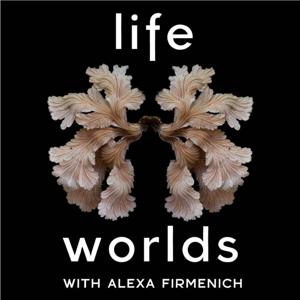


With Gavin Van Horn & John Thackara.
How can people living in urban settings engage with a teeming animal world – right on their doorsteps? Can we design cities from the perspective and the lifeworlds of other species? And by the way, where does the city even begin? How can animals disrupt our associations of what cities are?
Gavin Van Horn is the Executive Editor of the Center for Humans and Nature Press, and is the author of City Creatures: Animal Encounters in the Chicago Wilderness and The Way of Coyote. His story teaches a potent medicine for urban alienation, by honing our awareness to species like coyotes, robins, pollinators, and degraded urban forests. We talk about everyday intimacies, wild mutual gazes, the resplendence of pigeon feathers and examples of mutual healing when people repair urban lands and make nature whole.
John Thackara, writer, curator and professor, develops design agendas for ecological restoration, urban-rural reconnection, and multi-species environments. He curated the celebrated Doors of Perception conference for 20 years, and was commissioner of the UK Social Innovation Biennial and the Urban-Rural Expo in Shanghai. John’s expertise lies in the realm of futures design and next economies, and in our chat he shares compelling examples of urban rural reconnection, such as designers experimenting with microbial lives, the viral phenomenon of weed watching, celebrity farmers in china, and placefulness as a doorway into caring.
Episode Website Link
Show Links:
Look out for meditations, poems, readings, and other snippets of inspiration in between episodes.
Photo Credit: Jason Klassi via Getty Images
Music: Electric Ethnicity by Igor Dvorkin, Duncan Pittock, Ellie Kidd & The Rising by Tryad CCPL
Hosted on Acast. See acast.com/privacy for more information.
Specializing in multi-species entanglements under climate change, Dr Juniper Harrower works at the intersection of ecology, art, activism and policy.
She uses science methods and a multimedia art practice to investigate human influence on ecological systems, while seeking solutions that protect at-risk species and promote environmental justice. A founding member of the international arts collective The Algae Society Bioart Design Lab, she also founded the environmental arts production company SymbioArtlab. Harrower is the director of the art+science initiative at UC Santa Cruz where she also teaches art.
In this episode we discuss the tensions that might exist between the fields of art and science, and how Juniper manages to blend both disciplines in her research. We explore the different ways that each field asks questions, and samples (spoiler: ecology involves a lot of counting), and then move into descriptions of her art exhibitions which reveal the language of leaves, Joshua Trees, mycorrhizal networks, deep plant evolution and settler culture.
Episode Website Link
Show Links:
Look out for meditations, poems, readings, and other snippets of inspiration in between episodes.
Music: Electric Ethnicity by Igor Dvorkin, Duncan Pittock, Ellie Kidd
Hosted on Acast. See acast.com/privacy for more information.
How do bees bridge people with nature? What is it like to be seduced by the sounds and smells of the hive? To be touched by a bee?
In this conversation with two master beekeepers, we delve into the beauty of working with bees and the broken belief systems and malpractices of the beekeeping industry (spoiler: this involves things like sugar feeding, ‘honey production pressure’, prevention of the swarm, and much more…). They also illuminate why we should rephrase the saying of ‘save the bees’ to a much wider and generative narrative of co-creation.
Sandira Belia and Annelieke van der Sluijs are the co-founders of Bee Wisdom, a platform where beekeepers and bee-lovers can learn how to work synergistically with bees, design new forms for natural hives, engage in ethical practices, and join bee grids. They impart a magic and mystery around the inner lives of bees that is a delight to listen to!
Episode Website Link
Show Links:
Look out for meditations, poems, readings, and other snippets of inspiration in between episodes.
Music: Electric Ethnicity by Igor Dvorkin, Duncan Pittock, Ellie Kidd
Hosted on Acast. See acast.com/privacy for more information.
With BeeWisdom & Dr June Harrower.
Today on lifeworlds, we’re going to spend some time with the humming, buzzing, delectable nectar of the bees. Sandira Belia and Annelieke van der Sluijs are beekeepers and co-founders of Bee Wisdom, a platform where beekeepers and bee lovers can learn how to work synergistically with bees.
They’re here to unveil the mysterious, inner lives of the bee world. These days, many conversations about bees focus on their collapse, which can obscure and take us further away from the magic and mysteries of the bees. Could we instead learn to ask each other, have you ever been seduced by a bee? By the sounds and smells of the hive? Have you ever been healed by a bee? And how do beekeeping practices change when you start to see the world from the perspective and lifeworlds of the bees?
We then speak with Dr Juniper Harrower, a scientist who uses her multimedia art practice to investigate the human influence on ecological systems. Juniper is a founding member of the international arts collective The Algae Society Bioart Design Lab, founded the environmental arts production company SymbioArtlab and is the director of the art+science initiative at UC Santa Cruz. With Juniper we explore the theme of entanglement through making art and science with other species. She shows us how art and science can be complementary and yet drastically different helping answer research questions, and describes her current art exhibitions which reveal the secret language of leaves, Joshua Trees, mycorrhizal networks, deep plant evolution and settler culture.
Whether it’s through art, beekeeping, scientific study, or whatever else inspires you, ask yourself, how am I entangled in a web of other lives? How can I deepen this relationship so that it becomes a true collaboration? And have some fun with it. Hopefully today’s guests can inspire that creativity.
Episode Website Link
Show Links:
Look out for meditations, poems, readings, and other snippets of inspiration in between episodes.
Music: Electric Ethnicity by Igor Dvorkin, Duncan Pittock, Ellie Kidd & The Rising by Tryad CCPL
Hosted on Acast. See acast.com/privacy for more information.
I wrote this piece in a 6am flurry of sunrise inspiration, the words pouncing through me, stirred by a combination of books I’d been reading on plant science and deep evolutionary history (thank you, Stephen Harrod Buhner and Thomas Halliday).
All too often we read headlines about extinction or climate change, and it can be difficult to relate. Difficult for emotions to flow and process. I think we need to bring these notions intimately home, into the utterly personal, into the first-person experience of what it’s like to lose something forever. I wrote this piece from the perspective of life itself, relishing and feeling all the parts of its splendorous body.
It brings me tears and yet such sheer gratitude that we live inside of this kind of world... That we are this. There are still so many possibilities. Please sit back and enjoy this rather different bedtime story.
Find the written piece here. And pair with this song for something delicious.
Hosted on Acast. See acast.com/privacy for more information.
Today I’m joined by Abhayraj Naik, a lawyer and activist-academic who teaches interdisciplinary courses on climate, environment, justice, law, policy, and research methods in universities across India.
We discuss the trajectory of the Rights of Nature in India, and how this legal approach differentiates itself from other forms of environmental law. Abhayraj shares why the Rights of Nature can catalyse entirely new world views on the human relationship to nature, and the thrilling, often philosophical, new sets of questions they unleash (who gets to speak on behalf of nature? How might one cross examine nature?).
We engage in a fun thought experiment on who should at the table when creating representation for natural beings, the skills required to implement such laws, the Rights of the River Ganga, and how the RON movement intersects with other religious or indigenous cultural traditions.
Episode Website Link: lifeworld.earth/episodes/lawabhayraj-naik
Show Links:
Look out for meditations, poems, readings, and other snippets of inspiration in between episodes.
Music: Electric Ethnicity by Igor Dvorkin, Duncan Pittock, Ellie Kidd
Hosted on Acast. See acast.com/privacy for more information.
The wonderful father-daughter duo of Dr John Borrows and Lindsay Borrows explore questions such as: Is law a noun or a verb? How can we read the archive of the law that is written upon the Earth? What exactly is indigenous law, and how can it serve to revitalise colonial law?
John Borrows has transformed Canada’s understanding of how indigenous and non-indigenous law can co-exist and created the world's first dual Indigenous law program at the University of Victoria in British Columbia. His publications include Recovering Canada; The Resurgence of Indigenous Law and Drawing Out Law. He is the 2017 Killam Prize winner in Social Sciences and the 2019 Molson Prize Winner from the Canada Council for the Arts, the 2020 Governor General’s Innovation Award. He was appointed as an Officer of the Order of Canada in 2020. John is a members of the Chippewa First Nation in Ontario, Canada.
Lindsay Keegitah Borrows is mixed-rooted Anishinaabe and a citizen of the Chippewas of Nawash First Nation. She is a lawyer, writer and teacher, whose work aims to support Indigenous communities to revitalize their traditional laws for application in contemporary contexts. She has worked with many legal traditions including Anishinaabe, Haíɫzaqv, Mi’kmaq, nuučaan̓uł, St’át’imc, Denezhu, Tsilhqot’in and Māori. She has worked as a lawyer at the Indigenous Law Research Unit (University of Victoria Faculty of Law), and at West Coast Environmental Law. She is a new professor at Queen's University Faculty of Law.
Episode Website Link: lifeworld.earth/episodes/lawjonandlindsay
Show Links:
Look out for meditations, poems, readings, and other snippets of inspiration in between episodes.
Music: Electric Ethnicity by Igor Dvorkin, Duncan Pittock, Ellie Kidd
Hosted on Acast. See acast.com/privacy for more information.
With Dr John Borrows, Lindsay Borrows & Abhayraj Naik.
This week we’re traveling from British Columbia to Bangalore, exploring two different legal systems that are revolutionizing the very foundations of our global system of law. In transforming how we advocate and litigate on behalf of nature, these approaches require legal professionals to develop a whole new series of skills and sensibilities which revolve around translating the lifeworlds of other beings.
The wonderful daughter-father duo of Lindsay and John Borrows will talk about indigenous law systems in Canada. They are both lawyers and members of the Chippewas of the Nawash First Nation in Ontario. John created the world's first dual Indigenous law program at the University of Victoria in British Columbia, and Lindsay’s work supports Indigenous communities in revitalizing their traditional laws for contemporary contexts. What I found so astonishing about this conversation is how indigenous law is written in the land itself, as a verb, a living being. Nature is the professor. Their case laws brim with interspecies stories.
We’ll then jump into the Rights of Nature with Abhayraj Naik. The Rights of Nature is a legal tool, now present in over 15 countries and 50 cities around the world, that confers the rights usually given to human beings over to other forms of life. Why does this matter? Put quite bluntly, under the current system of law in almost every country, nature is our slave. He’ll get into some fascinating components of the RON in India and the thrilling, often philosophical, new sets of questions they open up. Abhayraj is an activist-academic legal practitioner, co-founder of the Initiative for Climate Action, and holds degrees from the National Law School of India University and the Yale Law School.
Episode Website Link: lifeworld.earth/episodes/ecocentriclaw
Show Links:
Music: Electric Ethnicity by Igor Dvorkin, Duncan Pittock, Ellie Kidd & The Rising by Tryad CCPL
Hosted on Acast. See acast.com/privacy for more information.
Herb’s career in British Columbia has centered on forestry, land based communities and natural systems. From his work as a conventional forester he went all the way to launching an embodied learning forestry school and The Silva Forest Foundation, which he ran with his wife for 30 years. They developed over 25 nature-based plans across Canada, and around the world, upending ways that large landscape management was done by communities.
In our conversation, we speak about the role of intuition and heart based thinking in developing nature-directed communities, how you get everyone on board, and the differences in indigenous thinking when it comes to forests. We also touch on the absurdity of exporting wood pellets for ‘biofuels’, how decaying wood acts as a natural sponge cleaning precious water, why “sustainable” forestry is not so sustainable, and his experience of getting the skeptical to hug a tree.
Episode Website Link: lifeworld.earth/episodes/natureplansherbhammond
Show Links:
Look out for meditations, poems, readings, and other snippets of inspiration in between episodes.
Music: Electric Ethnicity by Igor Dvorkin, Duncan Pittock, Ellie Kidd
Hosted on Acast. See acast.com/privacy for more information.
I had the delightful honor of meeting Tara Martin when I lived on Vancouver Island. We canoed out to a tiny Salish Sea sand island and shared a delicious sunset picnic among old growth forests. I love Tara because she is a rare breed of scientist that can seamlessly blend rigorous data science and ecological analysis with deep intuition and cultural insight.
In this interview, we cover the basics of conservation decision science and “priority threat management” - a field she is pioneering - and how it can help policymakers prioritise complex conservation decisions. We discuss her lab’s work in the Frasier River Estuary and with First Nations across Canada. Listen to her vivid descriptions of lost eco-cultural landscapes, how she worked to save a preserved island and returned it back to indigenous stewards, how to have a seat at the table for the salmon, the role of art and beauty in conservation and the old-growth herbaceous elders that are hiding just out of sight.
Tara is a Professor in Conservation Decision Science with the Department of Forest and Conservation Sciences at the University of British Columbia. She is also the Liber Ero Chair in Conservation at UBC and is a pioneer in the field of Conservation Decision Science. Tara was recently awarded The Nature Conservancy Professor in Practice Award and is a member of the IUCN Climate Change Specialist Group and co-leads the Climate Adaptation Theme.
Episode Website Link: lifeworld.earth/episodes/natureplanstaramartin
Show Links:
Look out for meditations, poems, readings, and other snippets of inspiration in between episodes.
Music: Electric Ethnicity by Igor Dvorkin, Duncan Pittock, Ellie Kidd
Hosted on Acast. See acast.com/privacy for more information.
From the publisher's feed
Lifeworlds is an intimate dialogue with our planet’s ecologies and with those who are translators and bridges between the human and beyond-human.
Our guests are farmers, lawyers,…
We begin to change the world when we change our ways of seeing and being. Lifeworlds points us towards a deeper reformulation of core human identities, asking who it is we share the Earth with and what our human role may be at this pivotal moment in time. It is through the doorway of inhabiting and understanding multiple perspectives that we can begin to heal a culture and psyche that is steeped in duality. We have lost our place as humans amongst all life. This is our call for healing, engagement and wonder.
www.lifeworld.earth
Hosted on Acast. See acast.com/privacy for more information.

10,763 Listeners

1,851 Listeners

10,221 Listeners
1,159 Listeners

374 Listeners

1,029 Listeners
504 Listeners

1,798 Listeners
1,028 Listeners

151 Listeners
89 Listeners

1,162 Listeners

518 Listeners

114 Listeners
115 Listeners