
Sign up to save your podcasts
Or

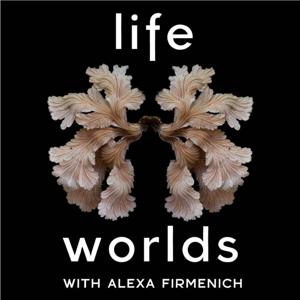


Introducing Giuliana Furci. The woman who has been chosen by the fungi. The mother who is in love with the mould that grows on lemons. The founder and CEO of the Fungi Foundation, a Harvard University Associate, Dame of the Order of the Star of Italy (!), and Co-Chair of the IUCN Fungal Conservation Committee.
We travel through the day in the life of a fungi; how moving beyond plant and animal-centric language transforms our perception of the world; what it’s like to be on a bone-chilling fungal expedition in Patagonia; what the fungi can teach us about loneliness and rot; the perils around fungal IP, and why you should always go pee behind trees.
#thefutureisfungi
Episode Website Link: lifeworld.earth/episodes/fungigiulianafurci
Show Links:
Look out for meditations, poems, readings, and other snippets of inspiration in between episodes.
Music: Electric Ethnicity by Igor Dvorkin, Duncan Pittock, Ellie Kidd
Hosted on Acast. See acast.com/privacy for more information.
With Giuliana Furci & Sophie Strand.
Oh, the fungi! Without them we’d have no plants, no trees, no chocolate, no beer, yogurt, baked bread – all the good things! Yet despite their burgeoning popularity, science has barely scratched the surface of mapping and understanding the hidden world of fungi.
The more we learn, the more these ecosystem architects warp our minds of what we think is possible. They digest toxic radiochemical waste. Their mycelium networks with plant roots are the planet’s ecological stock exchanges. They stitch together ecosystems, sequester carbon, drive global nutrient cycles and underpin the world’s biodiversity. The entire way this kingdom of life sees and lives, its experienced lifeworld, is so entirely different to anything else on this planet.
Today we hear from two very distinct voices who speak on behalf of fungi. Giuliana Furci is the founder of the Fungi Foundation, the world’s first association that works on behalf of fungi, and Chile’s first female mycologist. Giuliana is a Harvard University Associate, Dame of the Order of the Star of Italy, and Co-Chair of the IUCN Fungal Conservation Committee.
Sophie Strand is one of the most brilliant rising writers on everything ranging from ecology, myth, mycelium and animism. With Sophie we traverse the terrain of fungal fermentation, compost heaps, deviant animal sex (yes you read that correctly), living with disability, Jesus, and fungal gods. It’s a good one.
Episode Website Link: lifeworld.earth/episodes/the-inner-lives-of-fungi
Show Links:
Look out for meditations, poems, readings, and other snippets of inspiration in between episodes.
Photo Credit: Steven Axford
Music: Electric Ethnicity by Igor Dvorkin, Duncan Pittock, Ellie Kidd & The Rising by Tryad CCPL
Hosted on Acast. See acast.com/privacy for more information.
Following the episodes on rewilding, I wanted to drive the message of wildness home with this spellbinding poem by Tom Hirons. It gives me chills every time I listen to it, remembering all the animals, all the chthonic forces, that we refuse to let in, the wild madness we long and thirst for, the shuddering pact we’ve made with this world before we were born.
Read the poem on: https://www.lifeworld.earth/episodes/poemwildgod
Photo credit: Francesco Sambo
Hosted on Acast. See acast.com/privacy for more information.
Kristine Tompkins is an American conservationist who is the president and co-founder of Tompkins Conservation, and former CEO of Patagonia.
For nearly thirty years, along with her late husband Doug Tompkins, she has been protecting and restoring wild beauty and biodiversity by creating national parks, restoring wildlife, inspiring activism and economic vitality across 14.7 million acres of parklands in Chile and Argentina.
Kris is Chair of National Geographic Society’s Last Wild Places campaign, the first conservationist to be awarded the Carnegie Medal of Philanthropy and the United Nations’ Global Patron for Protected Areas.
Kris shares with us just what "wild" means to her, how she transitioned from being a high-rolling businesswoman to living in the Chilean bush, the role of beauty in her life and why macaws need to befriend robots.
Episode Website Link: lifeworld.earth/episodes/rewildingkristompkins
Show Links:
Look out for meditations, poems, readings, and other snippets of inspiration in between episodes.
Music: Electric Ethnicity by Igor Dvorkin, Duncan Pittock, Ellie Kidd
Hosted on Acast. See acast.com/privacy for more information.
With his hilariously sharp-witted, no-nonsense approach and radiating descriptions of nature’s landscapes, Derek Gow is a force to contend with.
He’s been one of the most vocal actors in the reintroduction of missing keystone species in England such as the beaver, the water vole and the white stork, butting heads with obnoxious lobbyists and government officials. He is currently rewilding his 300-acre farm on the Devon/Cornwall border where the Eurasian lynx, wild boar and harvest mice make home.
Our conversation ranges from the obstacles that prevent society in re-introducing critical species, all the way to Elizabethan fat bishops and voles that Gorgonzola river banks for other species to thrive. What is the mindset that sees all of land as "mine"? When were wolves seen as Gods, and what would it have been like to be a medieval traveller coming across one of these creatures “sodden like a Michelin man on a country path”? What barbarities have we committed against other species, and why should you think twice when buying herds of prehistoric Heck cattle?
Yep, this is a fun and brilliant one. (Listener tip: Derek packs more into a sentence that I could hope to do in a lifetime. Play at 1.5x at your own peril!)
Episode Website Link: lifeworld.earth/episodes/rewildingderekgow
Show Links:
Look out for meditations, poems, readings, and other snippets of inspiration in between episodes.
Music: Electric Ethnicity by Igor Dvorkin, Duncan Pittock, Ellie Kidd
Hosted on Acast. See acast.com/privacy for more information.
With Derek Gow & Kris Tompkins.
The rewilding movement is currently sweeping across the world’s landscapes, restoring ecologies and species, re-naturalising rivers and forests.
Our two guests are trailblazers in this space – first we hear from Kristine Tompkins, ex-CEO of Patagonia who, together with her late husband Doug Tompkins, have protected over 14 million acres of wildlands and national parks across Latin America, along with over 30 million acres of marine areas. Kristine is Chair of the National Geographic Society’s Last Wild Places campaign and was the first conservationist to be awarded the Carnegie Medal of Philanthropy.
Then we speak with Derek Gow, who is infamous amongst insider rewilding circles for his leadership in the re-introduction of the beaver back into European landscapes. Through Derek, and his delightfully funny and informative book 'Bringing back the Beaver', I’ve become somewhat obsessed with beavers. He’s been one of the most vocal actors in the reintroduction of missing keystone species in England such as the beaver, the water vole and the white stork, butting heads with obnoxious lobbyists and government officials. He is currently rewilding his 300-acre farm on the Devon/Cornwall border where the Eurasian lynx, wild boar and harvest mice make home.
This episode covers the basics of rewilding and goes into different models of restoring ecosystems into their rightful states, all the while discussing the mental impediments and frustrations that can occur in the attempt to rewild the most stubborn species of all — the human being.
Episode Website Link: lifeworld.earth/episodes/rewilding
Show Links:
Look out for meditations, poems, readings, and other snippets of inspiration in between episodes.
Music: Electric Ethnicity by Igor Dvorkin, Duncan Pittock, Ellie Kidd & The Rising by Tryad CCPL
Photo of flower: Maewenn Bourcelot @maochan.talamoni
Hosted on Acast. See acast.com/privacy for more information.
This is the first of the Lifeworlds ‘bonus’ episodes, designed to help us tune in somatically to the living world. We need to be grounding our connection to other lifeworlds into our very bodies for them to become lasting and real. Here we discover how to access these states through things like mindfulness, art, wilderness practices and poetry.
Today's exercise is about understanding the ground we stand on. The place that we call home. After a brief introduction, I present a series of prompts for you to do in your own time, over several weeks and months. It involves mapping out ecosystems, following trails of water, making a calendar of minute shifts in nature's ebbs and flows, and tuning in to the humming frequencies of what's around you.
Download the list and practice on: https://www.lifeworld.earth/episodes/practicesensingplace
A useful tool for identifying species: https://www.inaturalist.org/
Hosted on Acast. See acast.com/privacy for more information.
Michael Ableman is a farmer, author, photographer and urban food systems activist. Michael has been farming organically since the early 1970s and is considered one of the pioneers of the organic farming and urban agriculture movements.
He founded North America’s largest urban farm in downtown Vancouver, that employs people who are experiencing long term addiction and mental illness. Michael lives on his farm on Salt Spring Island, which I can only describe as the most glorious farm I have ever visited.
His story will inspire you to get dirt under your nails, to communicate and walk with the land in a whole new way, and to gain a greater understanding of how the act of farming can heal a divided society. Michael is exceptionally rare in his ability to blend the most pragmatic and captivating elements of farming with profound reflections on philosophy and life.
Enjoy this soulful and illuminating interview.
Episode Website Link: lifeworld.earth/episodes/unexpectedagriculturesmichael
Show Links:
Look out for meditations, poems, readings, and other snippets of inspiration in between episodes.
Music: Electric Ethnicity by Igor Dvorkin, Duncan Pittock, Ellie Kidd
Hosted on Acast. See acast.com/privacy for more information.
Lyla June Johnston is an Indigenous public speaker, artist, poet, scholar and community organizer of Diné (Navajo), Tsétsêhéstâhese (Cheyenne) and European lineages. She blends her studies in human ecology at Stanford University, graduate work in Native American Pedagogy at the University of New Mexico, and the indigenous worldview she grew up with.
Lyla and I got together to discuss her brilliant PhD research on Indigenous Food Systems Revitalization. In this interview we discuss what 6000-year-old clam gardens in the Pacific Northwest, buffalo prairies, kelp forests, hemlock boughs, and herring eggs all have in common; the role of reciprocity in food systems; human beings as a keystone species; the reclamation of our own food production; land fragmentation, and thinking like a watershed.
Guided by indigenous values and understandings, this conversation charts the path to how we can restore our relationship to farming and food, and how these ancient ingenious systems can help us rethink our broken food systems.
Episode Website Link: lifeworld.earth/episodes/unexpectedagricultureslylajune
Show Links:
Look out for meditations, poems, readings, and other snippets of inspiration in between episodes.
Music: Electric Ethnicity by Igor Dvorkin, Duncan Pittock, Ellie Kidd
Hosted on Acast. See acast.com/privacy for more information.
With Lyla June Johnston & Michael Ableman.
We’re going to kick off the season by getting our feet down in the soil to talk about agriculture! Our two guests present a compelling vision of how agricultural systems offer humans a deeper sense of purpose that goes beyond the provisioning of food.
This is because farmers and producers often spend their days immersed in the lifeworlds of the land — in the delicate stalks of green, the humming of pollinators, the beating of bird feathers and the pungent smells of sprouting crops. Their survival depends on them paying very close attention, seeing and interpreting the world through other eyes, and by doing so a whole other human psychology unfolds.
Lyla June Johnston is an indigenous scholar, public speaker, artist, and poet of Diné, Tsétsêhéstâhese and European lineages. Lyla studied human ecology at Stanford and is writing her PhD on Indigenous Food Systems Revitalization. She describes millennia-old methods of agriculture that were ingeniously designed to harness nature’s flows, ranging from expansive clam gardens in the Pacific Northwest to the American grasslands. You’ll hear about governance systems and worldviews required to cultivate such abundant landscapes and how we can restore our relationship to farming and food.
Michael Ableman has been an organic farmer for over 50 years and is considered one of the pioneers of the organic farming and urban agriculture movements. He founded North America’s largest urban farm located in Vancouver, that employs people who have been impacted by long term addiction and mental illness. This experience has proven to Michael how farming can support profound healing, and with us he shares his intimate approach to farming, dropping hints as to how you can also listen to the land.
Episode Website Link: lifeworld.earth/episodes/unexpectedagricultures
Show Links:
Look out for meditations, poems, readings, and other snippets of inspiration in between episodes.
Music: Electric Ethnicity by Igor Dvorkin, Duncan Pittock, Ellie Kidd & The Rising by Tryad CCPL
Photo Credit: Rob Kesseler
Hosted on Acast. See acast.com/privacy for more information.
From the publisher's feed
Lifeworlds is an intimate dialogue with our planet’s ecologies and with those who are translators and bridges between the human and beyond-human.
Our guests are farmers, lawyers,…
We begin to change the world when we change our ways of seeing and being. Lifeworlds points us towards a deeper reformulation of core human identities, asking who it is we share the Earth with and what our human role may be at this pivotal moment in time. It is through the doorway of inhabiting and understanding multiple perspectives that we can begin to heal a culture and psyche that is steeped in duality. We have lost our place as humans amongst all life. This is our call for healing, engagement and wonder.
www.lifeworld.earth
Hosted on Acast. See acast.com/privacy for more information.

10,763 Listeners

1,851 Listeners

10,221 Listeners

1,159 Listeners
374 Listeners

1,029 Listeners

504 Listeners

1,798 Listeners

1,028 Listeners
151 Listeners
89 Listeners

1,162 Listeners

518 Listeners
114 Listeners
115 Listeners