
Sign up to save your podcasts
Or

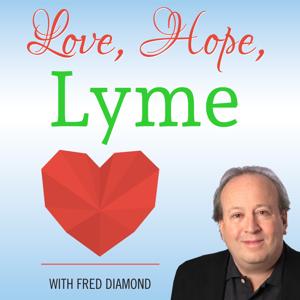


What happens when Lyme disease symptoms look like ALS, Parkinson's, epilepsy, or even a psychiatric disorder?
On Episode 092 of the Love, Hope, Lyme Podcast, Fred Diamond welcomes Dr. Pam Cipriano, an integrative medicine practitioner specializing in Lyme disease and complex chronic illness.
Dr. Cipriano shares remarkable stories from her clinical practice and personal experience, including her own son's decade-long struggle with unexplained symptoms.
In this important conversation, you'll discover:
✅ Why Lyme and Bartonella can be difficult to diagnose and how symptoms may overlap with other serious conditions.
✅ The surprising neurological and psychiatric symptoms Dr. Cipriano has encountered in patients, including seizures, anxiety, and symptoms resembling other neurological disorders.
✅ Why testing and a thorough medical evaluation matter, especially when patients continue experiencing symptoms without clear answers.
✅ How chronic Lyme may affect bladder health, including symptoms associated with interstitial cystitis.
✅ Why Dr. Cipriano emphasizes looking for underlying causes rather than focusing exclusively on managing symptoms.
One of her most important messages:
"You have an underlying condition ... and you have to figure out what that is, get to the root cause."
For Lyme survivors, caregivers, and the people who love them, this episode offers important questions to consider, a deeper understanding of complex symptoms, and encouragement to keep advocating for appropriate medical care.
🎙️ Love, Hope, Lyme Podcast — Episode 092
Guest: Dr. Pam Cipriano
Host: Fred Diamond
Learn more about Dr. Cipriano: https://thepracticeofhealthandwellness.com
Subscribe to Love, Hope, Lyme for conversations with medical professionals, Lyme survivors, advocates, and caregivers.
This episode shares a guest clinician's experiences and perspectives for educational purposes. Similar symptoms can have many causes, and Lyme disease should not be assumed to explain another diagnosis. Seek qualified medical evaluation, particularly for serious neurological symptoms.
#LymeDisease #ChronicLyme #Bartonella #TickBorneDiseases #LymeAwareness #LoveHopeLyme #PamCipriano #FredDiamond #ChronicIllness #PatientAdvocacy
💚 This is episode 091.
This show does not replace proper medical care.
If you're struggling with Lyme disease or related coinfections, please seek proper medical care.
To get your free PDF of Fred Diamond's popular book "Love, Hope, Lyme: What Family Members, Partners, and Friends Who Love a Chronic Lyme Survivor Need to Know," reach out to Fred on social media.
💚 What can 42 years of treating more than 13,000 chronically ill patients teach us about Lyme disease, persistent illness, and the path toward healing?
In this episode of the Love, Hope, Lyme Podcast, Fred Diamond welcomes back renowned Lyme-literate physician Dr. Richard Horowitz, one of the world's leading experts on Lyme and tick-borne disease. Dr. Horowitz discusses what he has learned from more than four decades of treating complex chronic illness and why so many patients continue to struggle for answers.
He explains his 16-point MSIDS model and the "six rivers of inflammation" that can keep people sick, including infections, toxins, microbiome issues, leaky gut and mast cell activation, vitamin and mineral deficiencies, and sleep disorders. The conversation also explores:
• Why Borrelia, Babesia and Bartonella remain critical pieces of the chronic Lyme puzzle
• The emerging connection between Lyme disease, chronic inflammation and Alzheimer's disease
• Why some patients see 10, 20 or even more doctors before getting answers
• Medical gaslighting and the emotional trauma experienced by chronically ill patients
• What parents of children with complex chronic illness need to understand
• What Dr. Horowitz wants physicians to know about treating these patients
• Why addressing trauma, the nervous system and emotional health can be part of recovery
• His decision to move from treating patients one-on-one to pursuing research that could potentially help millions
• Why he believes training the next generation of Lyme-literate physicians is so important
Dr. Horowitz also discusses his new book, Ending Chronic Illness, and how patients and physicians can use his MSIDS framework as a step-by-step approach to investigating the multiple factors that may be contributing to persistent illness.
After treating more than 13,000 chronic illness patients, Dr. Horowitz has a message for people who are still searching for answers: complex illness requires looking at the whole picture.
Subscribe to the Love, Hope, Lyme Podcast for conversations with leading Lyme disease physicians, researchers, advocates, survivors, and the people who love them.
#LymeDisease #ChronicLyme #RichardHorowitz #ChronicIllness #TickBorneDisease #MSIDS #LoveHopeLyme
💚 This is episode 090.
This show does not replace proper medical care. If you're struggling with Lyme disease or related coinfections, please seek proper medical care.
To get your free PDF of Fred Diamond's popular book "Love, Hope, Lyme: What Family Members, Partners, and Friends Who Love a Chronic Lyme Survivor Need to Know," reach out to Fred on social media.
What happens when chronic illness takes away the life you thought you were going to live?
On the this Love, Hope, Lyme Podcast, Fred Diamond speaks with author Brandy Schantz, whose story will resonate with many people in the Lyme community.
Brandy served in Afghanistan, was an endurance athlete and built much of her identity around being strong, capable and competitive.
Then chronic illness changed everything. Her journey included Crohn's disease, a severe medication reaction, dysautonomia, POTS, small fiber neuropathy and a long struggle to understand what was happening to her body.
At times, she couldn't walk. She experienced cognitive and speech problems. She also encountered something many Lyme survivors know all too well having serious physical symptoms attributed to stress. We talk about medical trauma, self-advocacy, grieving the person you used to be, toxic optimism and learning to trust your body again.
One of Brandy's most powerful realizations was that she had been so focused on becoming exactly who she was before her illness that she wasn't seeing who she could become next.
Today, she's running again, has written "Living Chronic," hosts a podcast and is using what she endured to help others navigating chronic illness.
Her message isn't that everything magically gets better. It's that your old life may be gone, but there can still be a new life worth forging.
This is episode 089.
This show does not replace proper medical care. If you're struggling with Lyme disease or related coinfections, please seek proper medical care.
To get your free PDF of Fred Diamond's popular book "Love, Hope, Lyme: What Family Members, Partners, and Friends Who Love a Chronic Lyme Survivor Need to Know," reach out to Fred on social media.
A question commonly asked by Lyme disease survivors is "Can people struggling with chronic Lyme disease really get better?"
For Matt Sabatello, the answer is emphatically yes.
On today's Love, Hope, Lyme Podcast, I'm joined by Matt Sabatello and Rich Johannesen, hosts of the Tick Boot Camp Podcast.
Together, they've interviewed hundreds of Lyme survivors, doctors, researchers, and advocates, and they've learned some powerful lessons about healing.
Matt was once bedbound and severely ill with Lyme disease.
Today, he says he is healthier than he has ever been. His message to anyone struggling: "Don't give up…find a mentor…and never give up."
We discuss the importance of believing healing is possible, regulating the nervous system, finding the right community, advocating for yourself, and recognizing that there is no one-size-fits-all approach to chronic Lyme.
Matt also shares why the Lyme community itself played such an important role in his recovery. Rich and Matt have devoted years to helping people understand one crucial truth: You are not alone. There is hope.
🎙️ Episode 089: Finding Hope and Healing with Tick Boot Camp's Rich Johannesen and Matt Sabatello
Please share it with someone who needs some hope today.
#LymeDisease #ChronicLyme #LymeAwareness #LymeDiseaseAwareness #TickBootCamp #LoveHopeLyme #Healing #ChronicIllness #LymeCommunity
💚 This is episode 88 of the Love, Hope, Lyme podcast.
It discusses the role of the Vagus nerve in Lyme disease recovery.
This podcast does not replace medical care. If you're struggling with Lyme symptoms, please seek proper medical care.
The pdf of Love, Hope, Lyme: What Family Members, Partners, and Friends Who Love a Chronic Lyme Survivors Need to Know is always free for chronic Lyme survivors. Reach out to Fred Diamond on social media for your copy.
🤔 What role does the Vagus nerve play in helping the body recover from Lyme disease and other chronic illnesses?
🖥️ On this episode of the Love, Hope, Lyme Podcast, Fred Diamond speaks with Dr. Leia Anderson, naturopathic doctor and author of The Vagus Nerve Solution for Holistic Wellness, about the connection between the Vagus nerve, nervous system regulation, and the body's ability to heal.
Dr. Anderson explains why chronic illness and prolonged stress can leave the body stuck in a fight-or-flight state and why supporting the parasympathetic nervous system — our "rest, digest and heal" response — may be an important part of recovery.
They discuss:
• What the Vagus nerve is and why it matters
• How Lyme disease and inflammation may affect the nervous system
• Signs that the Vagus nerve may be dysregulated
• The relationship between vagal health, sleep, digestion, inflammation and mood
• Why nervous system regulation can support the body's healing processes
• Simple practices such as breathing exercises, humming or singing, and appropriate cold exposure that may help stimulate the Vagus nerve
As Fred has heard repeatedly from guests throughout nearly 100 Love, Hope, Lyme episodes, Lyme recovery isn't only about addressing infection. It's also about helping put the body in the best possible position to heal.
If you or someone you love is navigating Lyme disease or another chronic illness, this conversation offers an accessible look at an increasingly discussed part of the healing journey.
#LymeDisease #VagusNerve #NervousSystem #ChronicIllness #LymeRecovery #LoveHopeLyme
💚 Phyllis and Scott Bedford, co-founders of the LymeLight Foundation, are being honored by Project Lyme for their extraordinary contributions to the Lyme community.
On this episode of the Love, Hope, Lyme Podcast, Fred Diamond welcomes Phyllis Bedford ahead of the Project Lyme Gala in New York City on September 14, where she and Scott will receive this special recognition.
Over the past 15 years, LymeLight has helped approximately 1,700 grant recipients across all 50 states and provided $12 million in assistance to families struggling to afford Lyme treatment. But this conversation is also deeply personal. Phyllis shares what she wishes she had known when her own daughter was diagnosed with Lyme disease 18 years ago and offers five important pieces of advice for parents whose children are battling Lyme and tick-borne illness.
Her five tips for parents begins at the 8 minute mark.
Her first message: keep pressing on. If you believe something is wrong with your child, don't allow yourself to be dismissed simply because tests come back normal or doctors don't have an immediate explanation.
Phyllis discusses becoming your child's strongest advocate, educating yourself, finding Lyme-literate medical professionals, recognizing that Lyme can present very differently from one child to another, and seeking out the community and support that families desperately need.
She also addresses congenital Lyme and why, when one family member is diagnosed, it can be important to consider what may be happening with siblings, parents and other family members.
And she offers an encouraging message to parents overwhelmed by treatment decisions: start down a path.
You don't need to have every answer today. Take the first step, remain open to changing direction, and keep searching for the next light.
This episode celebrates Phyllis and Scott Bedford's remarkable work with LymeLight Foundation while providing practical guidance, encouragement and hope to parents navigating Lyme disease with their children.
#LymeDisease #LymeLightFoundation #ProjectLyme #LoveHopeLyme #LymeAwareness #TickBorneDisease #PatientAdvocacy #LymeWarrior
💚 This is episode 86 of the Love, Hope, Lyme.
This show is about how being misdiagnosed when Lyme disease is really what the survivor is struggling with.
This podcast does not replace medical care. If you're struggling with Lyme symptoms, please seek proper medical care.
The pdf of Love, Hope, Lyme: What Family Members, Partners, and Friends Who Love a Chronic Lyme Survivors Need to Know is always free for chronic Lyme survivors. Reach out to Fred Diamond on social media for your copy.
What happens when Lyme disease and Bartonella masquerade as severe mental illness?
In one of the most emotional episodes we've ever recorded, Fred sits down with Dr. Rick Dulude and Terri McCormick, author of "Being Misdiagnosed," to share the story of Alec Dulude, a bright, athletic engineering student whose life was tragically cut short after years of misdiagnosis and devastating neuropsychiatric symptoms.
Rick courageously recounts his family's search for answers, the heartbreaking challenges they faced, and why he now dedicates his life to helping other families recognize the hidden neurological and psychiatric effects of tick-borne diseases before it's too late.
You'll learn:
💚 Why Lyme disease and Bartonella can mimic serious psychiatric illnesses
💚 How misdiagnosis delayed the care Alec desperately needed
💚 The warning signs every family should understand
💚 Why curiosity and early diagnosis can save lives
💚 How Alec's legacy lives on through Alec's Place and a mission to help others
This conversation is difficult but it is also filled with hope. Rick and his family have transformed unimaginable grief into advocacy, education, and compassion for families walking a similar path.
If you or someone you love is struggling with Lyme disease or unexplained neuropsychiatric symptoms, we hope this conversation offers understanding, encouragement, and the determination to keep searching for answers.
Please like, subscribe, and share this episode to help raise awareness about the life-changing impact of Lyme disease and tick-borne illnesses. Together, we can help more families find answers sooner.
💚 This is episode 86 of the Love, Hope, Lyme.
This show is about how being misdiagnosed when Lyme disease is really what the survivor is struggling with.
This podcast does not replace medical care. If you're struggling with Lyme symptoms, please seek proper medical care. The pdf of Love, Hope, Lyme: What Family Members, Partners, and Friends Who Love a Chronic Lyme Survivors Need to Know is always free for chronic Lyme survivors. Reach out to Fred Diamond on social media for your copy.
What happens when Lyme disease is mistaken for a psychiatric illness?
In this powerful episode of the Love, Hope, Lyme Podcast, Fred Diamond is joined by Terri McCormick, author of Being Misdiagnosed, and Alex, who shares her deeply personal journey from being a high-achieving college student to experiencing severe neurological and psychiatric symptoms after multiple doctors dismissed the classic signs of Lyme disease.
Alexandra opens up about the devastating effects of missed diagnosis, including debilitating sleep disorders, cognitive decline, mold illness, psychiatric symptoms, and a suicide attempt before finally receiving the answers she had been searching for.
Her story is a powerful reminder that Lyme disease can profoundly affect the brain and nervous system and why listening to patients matters.
In this episode, you'll learn:
💚 Why Lyme disease is known as "The Great Imitator."
💚 How Lyme disease can present with psychiatric and neurological symptoms.
💚 The connection between sleep disorders, mold exposure, and chronic illness.
💚 The emotional toll of being repeatedly misdiagnosed.
💚 Why hope, persistence, and finding the right medical team can change a life.
If you or someone you love has been told "it's all in your head" despite ongoing symptoms, this conversation offers insight, validation, and hope. If you enjoyed this episode, please subscribe, like, and share it with someone who may need to hear Alex's story.
💚 This is episode 85 of the Love, Hope, Lyme.
This show is about Morgellons and Lyme disease recovery.
This podcast does not replace medical care. If you're struggling with Lyme symptoms, please seek proper medical care.
The pdf of Love, Hope, Lyme: What Family Members, Partners, and Friends Who Love a Chronic Lyme Survivors Need to Know is always free for chronic Lyme survivors.
Reach out to Fred Diamond on social media for your copy.
What happens when a Lyme disease diagnosis isn't the end of the story?
In this episode of Love, Hope, Lyme, Fred Diamond, speaks with Britt Girvan, host of the new What The Morgs? podcast, about her experience with Morgellons, a condition that many patients associate with Lyme disease but that remains poorly understood and highly controversial.
Britt shares her personal journey through Lyme, co-infections, cognitive challenges, and the isolation that so many chronic illness patients face.
Most importantly, she explains why she launched a podcast dedicated to creating a safe space for people who often feel unheard and unseen.
Britt says hope matters. Whether you're living with Morgellons and Lyme, supporting a loved one, or simply trying to understand these complex illnesses, Britt's story is a reminder that no one should have to navigate these challenges alone.
Watch the full episode and let us know your thoughts in the comments.
If you'd like a pdf copy of "Love, Hope, Lyme: What Family Members, Partners, and Friends Who Love a Chronic Lyme Survivor Need to Know," reach out to Fred.
💚 This is episode 84 of the Love, Hope, Lyme
This podcast does not replace medical care.
If you're struggling with Lyme symptoms, please seek proper medical care.
The pdf of Love, Hope, Lyme: What Family Members, Partners, and Friends Who Love a Chronic Lyme Survivors Need to Know is always free for chronic Lyme survivors. Reach out to Fred Diamond on social media for your copy.
Did you know that it's been estimated that 3 out of 4 committed relationships may end when chronic Lyme is involved?
In this powerful episode of the Love, Hope, Lyme Podcast, Fred Diamond welcomes Sarah Krivos, author of "Silver Scars: A Memoir of Chronic Lyme Disease and Recovery," for an honest conversation about chronic Lyme disease, healing, marriage, and resilience.
Sarah shares her remarkable journey from being bitten by a tick as a child to decades of unexplained symptoms, multiple misdiagnoses, and a health crisis that nearly took her life. One of the most moving parts of this conversation is Sarah's candid discussion about how chronic Lyme affected her marriage.
She opens up about Lyme rage, brain fog, exhaustion, loss of identity, communication breakdowns, resentment, and the emotional toll that chronic illness places on both partners.
Sarah and Fred explore why so many relationships struggle when Lyme enters the picture and what couples can do to stay connected through the hardest moments. Sarah also shares the role that emotional healing, trauma work, and couples coaching played in her recovery, offering practical insights for both Lyme survivors and their spouses.
In this episode, you'll learn:
• Why chronic Lyme can be so difficult to diagnose and treat
• The emotional and neurological symptoms many Lyme patients experience
• How chronic illness impacts marriages and family relationships
• Why communication is critical for both patients and caregivers
• The connection between trauma, emotional health, and physical healing
• Practical advice for spouses supporting a loved one with Lyme disease
• How Sarah found hope, healing, and purpose through her journey
Most importantly, Sarah offers a message that every Lyme survivor needs to hear: healing is possible, remission is possible, and your story can become someone else's hope.
If you or someone you love is living with Lyme disease or another chronic illness, this episode will inspire, encourage, and remind you that you're not alone.
From the publisher's feed
371 Listeners
717 Listeners

10,455 Listeners

111,864 Listeners

9,307 Listeners
9,155 Listeners
75 Listeners

35,892 Listeners

40 Listeners
14,695 Listeners

39,394 Listeners

15,958 Listeners

1,399 Listeners

14 Listeners
4 Listeners