
Sign up to save your podcasts
Or

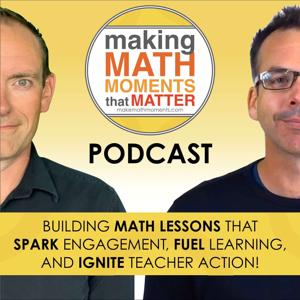
By Kyle Pearce & Jon Orr
Helping you transform your K-12 math lesson plans by building confidence in effective teaching practices, guiding you to transform your math curriculum, and inspiring classroom strategies to engage
... more

4.8
418418 ratings


The podcast currently has 497 episodes available.
The most played episodes among Podcast App listeners.
Homework has long been a part of the mathematics classroom, but opinions about its value continue to vary. Should students be completing pages of practice each night, or is there a better way to extend learning beyond the classroom? K-12 Math Leaders: Download our free Math Coherence Compass to help your teammates, system leaders, and educators create aligned instructional practices—without adding another initiative. https://makemathmoments.com/coherence-compass/ Not sure what matters most when designing math improvement plans? Take this assessment and get a free customized report: https://makemathmoments.com/grow/ K-12 Math Leaders: Ready to design your math improvement plan with guidance, support and using structure? Partner with us to follow our 4 stage process. https://growyourmathprogram.com Looking to supplement your curriculum with problem-based lessons and units? Make Math Moments Problem Based Lessons & Units Rather than asking whether homework should exist, perhaps the better question is: What purpose should it serve? In this episode, we explore what meaningful math homework could look like if it were designed to reinforce learning instead of creating stress. From fluency games and student choice to strengthening home-school partnerships and building productive routines, we discuss how homework can become a purposeful extension of classroom learning without overwhelming students or families. We also examine why homework shouldn't be used to evaluate student learning and how teachers can use classroom formative assessment to understand what students know instead. In this episode, you'll explore:The purpose of homework in mathematics educationWhy less homework can often lead to better learningHow choice and flexibility can make homework more meaningfulWays to strengthen partnerships between home and school through homeworkWhy homework shouldn't be used as evidence for gradesAlternatives to whole-class homework review that maximize instructional timeConsiderations for school and district homework policies If you're rethinking the role homework plays in your mathematics classroom or school, this episode offers practical ideas for creating homework experiences that reinforce learning, engage families, and make better use of valuable instructional time. Show Notes Page Love the show? Text us your big takeaway! Are you wondering how to create K-12 math lesson plans that leave students so engaged they don’t want to stop exploring your math curriculum when the bell rings? In their podcast, Kyle Pearce and Jon Orr—founders of MakeMathMoments.com—share over 19 years of experience inspiring K-12 math students, teachers, and district leaders with effective math activities, engaging resources, and innovative math leadership strategies. Through a 6-step framework, they guide K-12 classroom teachers and district math coordinators on building a strong, balanced math program that grows student and teacher impact. Each week, gain fresh ideas, feedback, and practical strategies to feel more confident and motivate students to see the beauty in math. Start making math moments today by listening to Episode #139: "Making Math Moments From Day 1 to 180.

Stepping into a new math leadership role can feel exciting and overwhelming at the same time—especially when your responsibility suddenly expands from supporting one school or district to supporting dozens. Where do you begin when every district is at a different place, has different needs, and may already be working toward different mathematics goals? That's exactly the challenge facing one experienced math leader as she prepares to support 30 districts in a new regional role. K-12 Math Leaders: Download our free Math Coherence Compass to help your teammates, system leaders, and educators create aligned instructional practices—without adding another initiative. https://makemathmoments.com/coherence-compass/ Not sure what matters most when designing math improvement plans? Take this assessment and get a free customized report: https://makemathmoments.com/grow/ K-12 Math Leaders: Ready to design your math improvement plan with guidance, support and using structure? Partner with us to follow our 4 stage process. https://growyourmathprogram.com Looking to supplement your curriculum with problem-based lessons and units? Make Math Moments Problem Based Lessons & Units In this coaching conversation, Jon Orr explores why the first move isn't creating more professional development or trying to support everyone at once. It's going to Gemba: getting close to the work, building relationships, asking better questions, and understanding what is actually happening across the systems you serve. From there, the conversation explores how leaders can start narrow, learn fast, and implement slowly—using the Math Coherence Compass to create shared direction, identify meaningful goals and leading indicators, and build the internal capacity needed for improvement to spread sustainably. In this episode, you'll explore:What "going to Gemba" looks like for math leadersWhy starting narrow can lead to greater system-wide impactHow to support multiple districts without spreading yourself too thinThe importance of asking, "What are you working on, and how do you know?"How the Math Coherence Compass creates shared direction around mathematics improvementWhy leading indicators provide more actionable information than test scores aloneHow to build capacity within districts instead of creating dependence on outside supportThe shift from being a reactive support provider to a proactive systems leader If you're stepping into a math leadership role—or trying to create meaningful change across multiple schools or districts—this episode offers a practical place to begin. Start by getting closer to the work, understanding the systems you're supporting, and finding one place where you can learn deeply before trying to scale broadly. Show Notes Page Love the show? Text us your big takeaway! Are you wondering how to create K-12 math lesson plans that leave students so engaged they don’t want to stop exploring your math curriculum when the bell rings? In their podcast, Kyle Pearce and Jon Orr—founders of MakeMathMoments.com—share over 19 years of experience inspiring K-12 math students, teachers, and district leaders with effective math activities, engaging resources, and innovative math leadership strategies. Through a 6-step framework, they guide K-12 classroom teachers and district math coordinators on building a strong, balanced math program that grows student and teacher impact. Each week, gain fresh ideas, feedback, and practical strategies to feel more confident and motivate students to see the beauty in math. Start making math moments today by listening to Episode #139: "Making Math Moments From Day 1 to 180.
School and district leaders often feel pressure to create widespread change as quickly as possible. But sustainable math improvement doesn't happen by trying to reach everyone at once—it starts by building the capacity of the people who will eventually lead the work. K-12 Math Leaders: Download our free Math Coherence Compass to help your teammates, system leaders, and educators create aligned instructional practices—without adding another initiative. https://makemathmoments.com/coherence-compass/ Not sure what matters most when designing math improvement plans? Take this assessment and get a free customized report: https://makemathmoments.com/grow/ K-12 Math Leaders: Ready to design your math improvement plan with guidance, support and using structure? Partner with us to follow our 4 stage process. https://growyourmathprogram.com Looking to supplement your curriculum with problem-based lessons and units? Make Math Moments Problem Based Lessons & Units In this episode, we share the first year of one district's mathematics improvement journey. Rather than launching a system-wide initiative immediately, they focused on developing a small team of instructional leaders who first deepened their own understanding of computational fluency before supporting others. Through a summer leadership boot camp, monthly "book do" sessions, classroom implementation, and facilitator practice, they created a strong foundation for long-term success. Their story illustrates how learning fast, implementing slowly, and investing in leadership capacity can create momentum that lasts well beyond a single school year. In this episode, you'll explore:How one district launched a sustainable mathematics improvement journeyWhy building leadership capacity should come before large-scale implementationThe value of a summer leadership boot camp for establishing vision and focusHow "book do" sessions moved professional learning from discussion to actionWhy facilitator development is essential for scaling improvementHow grade-band leadership structures support distributed leadershipLessons leaders can apply when planning multi-year mathematics improvement If you're leading mathematics improvement in a school or district, this episode offers a practical example of how to build leadership capacity, create momentum, and lay the foundation for sustainable change—one intentional step at a time. Show Notes Page Love the show? Text us your big takeaway! Are you wondering how to create K-12 math lesson plans that leave students so engaged they don’t want to stop exploring your math curriculum when the bell rings? In their podcast, Kyle Pearce and Jon Orr—founders of MakeMathMoments.com—share over 19 years of experience inspiring K-12 math students, teachers, and district leaders with effective math activities, engaging resources, and innovative math leadership strategies. Through a 6-step framework, they guide K-12 classroom teachers and district math coordinators on building a strong, balanced math program that grows student and teacher impact. Each week, gain fresh ideas, feedback, and practical strategies to feel more confident and motivate students to see the beauty in math. Start making math moments today by listening to Episode #139: "Making Math Moments From Day 1 to 180.
Why do so many mathematics improvement efforts begin with energy and optimism, only to lose momentum months later? Schools invest in professional learning, adopt high-quality instructional materials, launch coaching cycles, and create pacing guides—yet lasting instructional change often remains frustratingly elusive. K-12 Math Leaders: Download our free Math Coherence Compass to help your teammates, system leaders, and educators create aligned instructional practices—without adding another initiative. https://makemathmoments.com/coherence-compass/ Not sure what matters most when designing math improvement plans? Take this assessment and get a free customized report: https://makemathmoments.com/grow/ K-12 Math Leaders: Ready to design your math improvement plan with guidance, support and using structure? Partner with us to follow our 4 stage process. https://growyourmathprogram.com Looking to supplement your curriculum with problem-based lessons and units? Make Math Moments Problem Based Lessons & Units In this episode, we revisit Alan Schoenfeld's influential article, Why Are Learning and Teaching Mathematics So Difficult?, through the lens of school and district leadership. His framework reveals that improving mathematics isn't simply a classroom challenge—it's a systems challenge. We explore why teacher understanding, coherent learning environments, and organizational structures must work together to create lasting change. Along the way, we connect Schoenfeld's ideas to concepts like the Math Improvement Flywheel, leading indicators, distributed leadership, and coherent systems that continue improving even as people move through them. In this episode, you'll explore:Alan Schoenfeld's three-circle framework for mathematics educationWhy deep mathematical understanding matters more than instructional moves aloneHow systemic coherence supports stronger classroom practiceThe difference between leading and lagging indicators of improvementWhy distributed leadership creates more sustainable math improvementHow the Math Improvement Flywheel helps systems build lasting momentumQuestions every math leader should ask before launching another initiative If you're leading mathematics improvement in a school or district, this episode will help you evaluate your current improvement strategy, identify where momentum is being lost, and build the systems needed for long-term success. Show Notes Page Love the show? Text us your big takeaway! Are you wondering how to create K-12 math lesson plans that leave students so engaged they don’t want to stop exploring your math curriculum when the bell rings? In their podcast, Kyle Pearce and Jon Orr—founders of MakeMathMoments.com—share over 19 years of experience inspiring K-12 math students, teachers, and district leaders with effective math activities, engaging resources, and innovative math leadership strategies. Through a 6-step framework, they guide K-12 classroom teachers and district math coordinators on building a strong, balanced math program that grows student and teacher impact. Each week, gain fresh ideas, feedback, and practical strategies to feel more confident and motivate students to see the beauty in math. Start making math moments today by listening to Episode #139: "Making Math Moments From Day 1 to 180.
We’ve all heard it: “My students can do the math—they just struggle with word problems.” They can perform the calculation when it’s presented directly, but put that same mathematics inside a context or multi-step problem and suddenly things become much more difficult. The instinct might be to give students more word problems to practice, but what if the real challenge lies somewhere deeper? K-12 Math Leaders: Download our free Math Coherence Compass to help your teammates, system leaders, and educators create aligned instructional practices—without adding another initiative. https://makemathmoments.com/coherence-compass/ Not sure what matters most when designing math improvement plans? Take this assessment and get a free customized report: https://makemathmoments.com/grow/ K-12 Math Leaders: Ready to design your math improvement plan with guidance, support and using structure? Partner with us to follow our 4 stage process. https://growyourmathprogram.com Looking to supplement your curriculum with problem-based lessons and units? Make Math Moments Problem Based Lessons & Units In this episode, Jon Orr and Yvette Lehman dig into adaptive reasoning, one of the five interconnected strands of mathematical proficiency described in Adding It Up. They explore the important difference between having strategies in your mathematical toolkit and knowing when, why, and how to choose among them. From think-alouds and metacognition to mathematical discourse and varied problem contexts, the conversation looks at how we can help students become more flexible problem solvers. It also challenges us to look beyond “students can’t reason” and consider whether they have the background knowledge, task clarity, and familiarity with the context needed to demonstrate their reasoning in the first place. In this episode, you'll explore:What adaptive reasoning means within the five strands of mathematical proficiencyWhy knowing how to use a strategy is different from knowing when to choose itHow think-alouds can make mathematical decision-making visible to studentsWhy reflection and metacognition matter when students solve unfamiliar problemsHow mathematical discourse supports adaptive reasoningThree conditions to consider before concluding that students are struggling with reasoningWhy background knowledge and meaningful, familiar contexts matter in problem solvingHow strengthening our own mathematical proficiency can better position us to support students If your students can complete straightforward calculations but struggle when mathematics appears in unfamiliar or multi-step problems, this episode offers a different place to look. Rather than simply adding more practice, consider what opportunities students have to choose strategies, explain those choices, reflect on their thinking, and strengthen the adaptive reasoning that helps weave mathematical proficiency together. Show Notes Page Love the show? Text us your big takeaway! Are you wondering how to create K-12 math lesson plans that leave students so engaged they don’t want to stop exploring your math curriculum when the bell rings? In their podcast, Kyle Pearce and Jon Orr—founders of MakeMathMoments.com—share over 19 years of experience inspiring K-12 math students, teachers, and district leaders with effective math activities, engaging resources, and innovative math leadership strategies. Through a 6-step framework, they guide K-12 classroom teachers and district math coordinators on building a strong, balanced math program that grows student and teacher impact. Each week, gain fresh ideas, feedback, and practical strategies to feel more confident and motivate students to see the beauty in math. Start making math moments today by listening to Episode #139: "Making Math Moments From Day 1 to 180.
The podcast currently has 497 episodes available.

21,832 Listeners

32,056 Listeners

30,657 Listeners

38,695 Listeners

111,908 Listeners

56,477 Listeners

9,541 Listeners

5,080 Listeners
137 Listeners

439 Listeners

643 Listeners
257 Listeners

58,036 Listeners
23 Listeners
37 Listeners