
Sign up to save your podcasts
Or

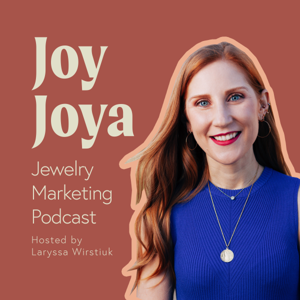


This month marks 10 years since I officially started Joy Joya. And I've been sitting with that for a while, trying to figure out what I actually want to say about it.
There's a version of this episode that writes itself - the highlight reel, the wins, the listicle wrapped up in a bow. I didn't want to do that. What I wanted to do was be honest, because that's more useful.
So that's what this episode is. It's the real version - the messy pivot, the gradual realization, the external pressures that made staying put feel untenable, and the thing I kept coming back to through all of it: email.
Not because email is glamorous - I'll be the first to admit it's not. But because it's built on something that doesn't go away. A direct relationship between a brand and a person who asked to hear from them. And after 15 years in marketing watching channels rise and fade, that staying power means everything.
In this episode, I share what actually happened over the last 10 years, why I niched into email later than I should have, what made me finally go all in, and what I still believe about where email is headed.
✨ In this episode, you'll learn:
How Joy Joya started - and why it looked nothing like what it is today
The client moment that changed how I saw email marketing entirely
Why full-service marketing was frustrating in a way I couldn't ignore
What email does that almost no other marketing channel can: show you exactly what you did and what it produced
Why I went narrower in what we offer and broader in who we serve at the exact same time
What 15 years in marketing taught me about which channels actually last
Why email compounds in a way that's genuinely rare - and why that matters more the longer you're in business
What I'm watching, what I'm curious about, and where I think email goes from here
Here's to 10 years - and to whatever comes next.
Work with Joy Joya: https://joyjoya.com
Almost every brand sends last chance emails. End of a sale, final hours of a promotion, last day before something's gone. They're a completely normal part of any email calendar.
And yet - we've all been on the receiving end of one that felt off. A little frantic. A little hollow. Like the brand was more stressed about hitting a number than genuinely trying to help you not miss something.
The difference between a last chance email that works and one that doesn't usually isn't the format. It's not the countdown timer or the headline size. It goes deeper than that - into the credibility you've built before that email ever lands, the tone you write from, and whether your subscriber actually has enough time to do something about it.
Because by the time someone opens your last chance email, they've already made a judgment call about whether they believe you. And that judgment was formed long before they read a single word.
In this episode, I break down the four things that actually determine whether a last chance email earns its place in the inbox - and a gut check you can run before you send your next one.
✨ In this episode, you'll learn:
Why last chance emails fail before they're even opened - and what builds believability over time
How a promotional calendar that never really ends trains your subscribers not to respond
The difference between urgency that feels confident and urgency that reads as panic
Why writing from brand anxiety almost always shows up in the copy - and how to write from confidence instead
The timing mistake that turns real urgency into a missed opportunity for most subscribers
Why "ends tonight" is vague in a way that costs you - and what specificity actually does for trust
How to shift from writing about what the brand needs to what the subscriber stands to miss
A four-part gut check to run before you send any last chance email
The best last chance emails don't feel like a brand sprinting to the finish line. They feel like a clear, confident reminder from someone who genuinely thinks you'd want to know.
Work with Joy Joya: https://joyjoya.com
There's a lawsuit in the news right now involving a major retailer and their email marketing. I'm not going to weigh in on the legal debate - but it did make me want to talk about something I think gets overlooked when email programs are moving fast.
Email is permission-based marketing. Someone gave you their address and said yes, you can communicate with me. That's not a small thing. And it comes with a responsibility that's easy to lose sight of when you're optimizing for clicks and conversions in the moment.
Urgency isn't the problem. A sale that genuinely ends, an item that's almost gone, a seasonal moment that isn't coming back - that's real urgency, and communicating it clearly is good marketing. The problem is when urgency became so effective, and email became such a volume game, that it started getting used as a default. Not because there was something real to communicate, but because it moves people.
And somewhere along the way, the subject line stopped reflecting reality - and started creating it.
Most brands, when they audit their own emails honestly, find more manufactured urgency than they realized. And the cost isn't just legal. It's the slow erosion of the trust your whole email program runs on.
In this episode, I break down the difference between urgency that's earned and urgency that's manufactured, why it matters more than most brands realize, and two practical things you can do right now to start thinking about your email program as a trust-building tool - not just a revenue lever.
✨ In this episode, you'll learn:
What the Ulta lawsuit is actually about - and why it's worth paying attention to even if you're a small brand
Why manufactured urgency became so common in email marketing (and why that doesn't make it okay)
The difference between urgency that's earned vs. urgency that just borrows against your audience's trust
How to think about every email you send as either a deposit or a withdrawal in your subscriber relationship
Why the trust problem isn't new - even if the legal risk is
How a promotional calendar stacked with rolling, overlapping sales is quietly training your audience not to respond
Two practical steps to audit your own urgency habits and start building a more sustainable email program
When your subscribers learn that your deadlines are real, you don't have to manufacture the pressure. The pressure's already there - because you've built a track record of meaning what you say.
Work with Joy Joya: https://joyjoya.com
Lists and segments both group people. They both show you a number. They both show up when you're sending emails. So it's easy to assume they're basically the same thing with different names - especially when you're moving fast and just trying to get a campaign out the door.
But that assumption is one of the most common structural mistakes I see inside email accounts, and the tricky part is that nothing breaks immediately. Your campaigns still send. Your flows still run. People still get your emails. The damage is quieter than that.
What actually happens is that the logic underneath your account starts to get a little off. Wrong groupings, automations firing when they shouldn't, reporting that's hard to trust - and over time, an account that technically works but is increasingly hard to navigate, delegate, or scale.
The fix isn't complicated, but it does require understanding what lists and segments are actually for — and why they were never meant to be interchangeable in the first place.
In this episode, I break down the real difference between lists and segments, why mixing them up causes problems that ripple out across your entire account, and how to start thinking about your email structure more clearly.
✨ In this episode, you'll learn:
Why lists and segments look similar inside Klaviyo - and exactly where that similarity ends
The functional difference: what lists answer vs. what segments answer
How using the wrong one for the wrong job creates logic problems that compound over time
Why the damage usually doesn't feel urgent - until the account is really hard to manage
The three shifts that help you use lists and segments the way they were actually designed to work
What to look for when auditing your own account - and the yellow flag that says it's time to simplify
Why a clean email structure leads to better targeting, more predictable flows, and reporting you can actually trust
If your email account feels hard to follow, hard to delegate, or just harder than it should be, there's a good chance this is part of why.
Work with Joy Joya: https://joyjoya.com
Plain text emails can feel almost too simple. No design, no product blocks, no polished layout. So why do they sometimes outperform emails that took way more time to build?
A lot of ecommerce brands either dismiss plain text emails as unfinished - or overcorrect and treat them like a silver bullet. The truth is more nuanced than that.
Plain text isn't a shortcut. It's a strategic format choice - and when it's used well, it can change how your audience experiences your message entirely.
But here's the catch: without design to lean on, your writing has to do all the heavy lifting. And if the copy isn't strong enough, plain text won't save it - it'll expose the problem faster.
In this episode, I break down when plain text emails actually make sense, why they sometimes outperform designed campaigns, and the biggest mistakes brands make when using them.
Because this isn't really about choosing between plain text and design. It's about choosing the format that best supports the job your email needs to do.
✨ In this episode, you'll learn:
Why plain text emails aren't automatically "better" - and what actually makes them work
How email format shapes the way subscribers perceive and engage with your message
The biggest mistake brands make when switching to plain text (hint: it's not about removing images)
Why stripping design from a campaign-style email usually makes it perform worse, not better
How plain text can be a powerful diagnostic tool for your email copywriting
The key difference between what plain text emails and designed emails do best
Three ways to use plain text more strategically in your email marketing
If your email can't perform without design, it's not a design problem - it's a messaging problem. Plain text just makes that visible.
Work with Joy Joya: https://joyjoya.com
Episode #375 – Is Your Welcome Discount Hurting Your Email Performance?
When it comes to growing your email list, most ecommerce brands are focused on one thing: more.
More subscribers. More signups. Higher pop-up conversion rates.
But what if the way you're growing your list - especially through your welcome discount - is actually making your email performance worse over time?
At first, it can feel like everything is working. Your list is growing quickly, your pop-up is converting, and new subscribers are coming in every day.
But underneath that growth, something else might be happening.
In this episode, I break down the hidden downside of optimizing for list growth without considering subscriber quality - and how your welcome offer might be shaping your results far beyond that first signup.
Because your welcome flow can only perform as well as the people entering it.
✨ You'll learn: • Why more subscribers doesn't always mean more opportunity • How optimizing for pop-up conversion can quietly weaken your list • The two types of subscribers your welcome offer attracts — and why it matters • How low-intent subscribers impact engagement, conversions, and deliverability • Why your welcome flow performance depends on the quality of your inputs • How your welcome offer shapes the long-term relationship with subscribers • Why list growth should be measured by quality, not just volume • Three simple ways to evaluate and improve your welcome offer strategy
Growing your list isn't just about getting more people in the door - it's about attracting the right people.
When your welcome offer is aligned with your brand and your messaging, you build a list of subscribers who actually want to hear from you - and that's what drives long-term performance.
Work with Joy Joya: https://joyjoya.com
Episode #374 - The Email Bottleneck That's Quietly Limiting Your Growth
When ecommerce revenue stalls, the instinct is almost always the same: we need more traffic.
More ads. More eyeballs. More list growth.
But what if the real problem isn't how many people are coming in - it's what happens after they arrive?
In this episode, I'm breaking down the email bottleneck that quietly limits growth for so many online stores - and why adding more traffic on top of a weak system only makes the problem bigger.
Because if your email ecosystem isn't built to convert, recover, and retain, you're not scaling revenue… you're scaling inefficiency.
I walk through a real client example of an ecommerce brand that thought they had a traffic problem, but what we uncovered was something much more common: a backend system that wasn't designed to carry growth.
We'll look at where the gaps typically show up, how to identify them in your own business, and what actually changes when you fix the middle of your funnel instead of just feeding the top.
You'll learn:
• Why "we need more traffic" is often the wrong conclusion • How weak email systems quietly cap your revenue potential • What a shallow welcome flow actually costs you in lost conversions • The difference between basic cart recovery and a system that consistently converts • Why checkout abandonment deserves its own strategy (and how many brands miss this) • The missed opportunity in post-purchase - and how it impacts repeat revenue • How to identify if your email ecosystem is the real bottleneck • Why growth doesn't start at the top - it compounds in the middle
Most brands don't have a traffic problem.
They have a system problem.
And until your email marketing is engineered to guide, persuade, and retain - more traffic will only amplify what's already not working.
Work with Joy Joya: https://joyjoya.com
Episode #373 – Why Your Email Campaigns Might All Sound the Same
Seasonal themes can make your email marketing feel cohesive and intentional - but lean too hard into one, and suddenly every email starts sounding the same.
If you've ever planned a month of campaigns around a theme like Spring Refresh, Holiday Sparkle, or New Year Energy, you know how helpful it can feel at first. Themes give your calendar structure and make creative planning easier.
But there's a hidden trap.
When the theme quietly becomes the strategy, your messaging can start to feel repetitive, vague, and less effective - even if everything looks perfectly on-brand.
In this episode, I'm breaking down what over-theming actually looks like in email marketing and how to keep seasonal messaging fresh without forcing every campaign to fit the same creative angle.
Instead of letting the theme lead the strategy, you'll learn how to structure campaigns around the job each email needs to do - and use themes as supporting creative elements rather than the main message.
You'll learn:
• Why seasonal themes are helpful — but shouldn't drive your entire strategy • What over-theming actually looks like inside a campaign calendar • Why cohesive messaging doesn't automatically lead to conversions • The subtle way repeated theme language reduces urgency and engagement • How customers actually experience your emails in their inbox • The types of campaigns every ecommerce brand should rotate through • How to use seasonal themes as creative seasoning — not the main ingredient • A simple self-check to know when your theme has started weakening your messaging
Themes should create momentum, not monotony.
When each email focuses on a specific job — whether that's new arrivals, merchandising, proof, or urgency — your messaging stays clear, relevant, and much more likely to convert.
Work with Joy Joya: https://joyjoya.com
Episode #372 – Why Your Abandoned Cart Flow Won't Recover Every Sale
Cart abandonment automations are powerful - but they're not a magic net that catches every abandoned cart you see in Shopify.
If you've ever opened your Shopify analytics, seen a huge list of abandoned carts, and thought "Why aren't we getting all of these sales back?" - this episode will reset your expectations fast.
Because here's the truth: an abandoned cart is not the same thing as a lost sale.
In this episode, I explain what cart abandonment actually represents, why recovery rates are naturally lower than many founders expect, and what metrics really matter when evaluating the performance of your abandoned cart flow.
Instead of obsessing over the carts you didn't recover, you'll learn how to measure success based on the revenue your automations consistently bring back over time.
You'll learn:
• Why an abandoned cart doesn't necessarily represent a guaranteed purchase • The real difference between cart abandonment and checkout abandonment • Why most shoppers add items to their cart without immediate buying intent • What normal abandoned cart recovery rates actually look like • The benchmarks high-performing brands typically achieve • The key levers that improve abandoned cart flow performance: timing, messaging, trust signals, and buyer intent alignment • Why the goal isn't eliminating cart abandonment - it's capturing the right buyers at the right moment
Abandoned cart flows aren't designed to save every sale.
They're designed to quietly recover the buyers who were already close - and when your automation is doing that consistently, it's working exactly as it should. Check out the accompanying blog post here: https://joyjoya.com/blogs/podcast/cart-abandonment-are-your-revenue-recovery-rates-healthy
Work with Joy Joya: https://joyjoya.com
Episode #371 – Is a More Expensive Email Platform Actually Worth It?
Is paying more for an email marketing platform actually worth it - or is that just industry hype?
I've seen so many ecommerce brands choose tools based on price alone… and then regret it later when their strategy outgrows the platform.
In this episode, I break down when investing more makes sense - and when it doesn't. Because your email platform isn't just a monthly subscription. It's infrastructure. And infrastructure decisions compound.
If you're serious about email and SMS becoming revenue channels (not just newsletters), this is a decision that deserves more thought than "what's the cheapest option?"
You'll learn:
Why brands rarely regret investing in a stronger platform upfront
The hidden cost of choosing a cheaper tool (it's not the subscription price)
What "infrastructure decisions compound" really means in email marketing
The real example of a brand locked into an annual deal that no longer fits
What you're actually paying for in a premium email platform
When it's perfectly fine to start with a lighter platform
The question you should ask instead of "What's the cheapest option?"
Price usually reflects capability in email marketing tools. And when your email program starts working, the last thing you want is to rebuild your foundation mid-growth.
Work with Joy Joya: https://joyjoya.com
From the publisher's feed

91,021 Listeners

334 Listeners

171,932 Listeners

460 Listeners

7,714 Listeners

111,845 Listeners

56,468 Listeners

369,640 Listeners
884 Listeners
212 Listeners
68 Listeners

29 Listeners

26 Listeners
37 Listeners
58 Listeners