
Sign up to save your podcasts
Or



Send us your feedback!
I recently enjoyed working with a small woman who was a relatively inexperienced rider with a black belt in karate. The parallels between riding skills, and her skill as a martial artist, delighted both of us. This podcast reviews the relationship between the lines of muscle and connective tissue along the front of people (the underneath of horses) and the back of the body. It adds the novel and life-changing idea of the horse’s ‘chest plate’, which I dreamed up after doing an enlightening exercise in a class with Tom Myers. This created a powerful new way to think about collection.
Send us your feedback!
The learning process, which progressively builds a pyramid out of lots of (initially) disconnected body parts and corrections dots, is like walking in hills, where you might think you are about to reach a summit with a fabulous view - only to discover that there’s another hill! As well as half- halts that slow the tempo we have half-halts that rebalance the horse.
Send us your feedback!
The biomechanics term ‘hydraulic amplification’ describes how the muscles get ‘pumped up’ in collection. WE want a half-halt to ‘go through’, but In effect, there can be disconnects between the horse’s back third, middle third and front third. The front third, for instance can (in effect) run away from the middle third. Or the back third might not connect to the middle third. The disconnects can happen in the top part of the horse, and/or in the bottom part of the horse (his abs). These issues are all ‘feelable’ and fixable in time - but the rider has to be able to sense and influence her whole body and her horse’s whole body. The learning process to get to this stage is significant - and the rider progressively learns to influence the horse’s back underneath her (his middle third), then his front third, and finally his back third behind her, which of course she can’t see.
Send us your feedback!
It isn’t riding in ‘mistake prevention mode’ and keeping the horse’s head down by whatever means. But it is the ‘human trump card’ in the ‘got it/lost it’ game that each rider learns (we hope) to play with her horse. This concept suggests a viable ‘it’ that the rider wants to get back to - but this is not a foregone conclusion. This involves water going through the horse’s hoses (from his hind legs over his top line) without being dissipated, deadened or deviated, and a rider who does not fall into the traps of leaning back, growing tall, lifting her chest, pushing in her stirrups and pulling on the reins - in short ‘water-skiing’ and encouraging the horse to be her ‘motor boat’.
Send us your feedback!
Half halts are an emergent property of good biomechanics. The rider. needs firstly to realise that she needs to intervene to ‘lead the dance’ and not just get carried away on the horse’s ‘magical mystery tour’. This won’t happen until she has a ‘reference feeling’ and makes comparisons between that and the feeling she’s actually getting. This involves the TOTE model - Test, Operation, Test, Exit. With more skills, she makes smaller interventions more often. Also, it helps to have a horse with high ‘ridability’ who agrees that his rider can influence and, effectively, interrupt him. There are different kinds of half halt, and the first one that riders learn is to slow the speed of the horse’s legs. It takes most riders a while to realise that they may well have to do this 8 times on a circle
Send us your feedback!
Let’s imagine that you and I stand opposite each other and play a game of catch with a tennis ball, allowing it to bounce once in each throw. We are doing this in a rhythm, and not trying to catch each other out. But if I (sneakily) substitute a bean bag, that would be the end of the game. Or I might (sneakily) substitute a boingy ball, and the game would speed up. This is a metaphor for rising trot, which we want to be a ‘tennis ball game’ with the rider ‘calling the shots’. This takes good biomechanics, in which she is able to to control the time she takes in each sit, and also not get deformed by the horse who has a hollow back.
Send us your feedback!
I have been accused of terminal rising trot - but time invested here is so worthwhile - it’s the ‘gold dust’ skill. I offer some strategies to help your hollow back or round back, in both the rise and sit, keeping your knee in the same place and your foot back under you. Recent research has shown that it does indeed help your horse to sit with the inside hind leg, and that it’s actually his outside hind leg that works harder on a circle, not his inside one. I also offer strategies to help you not get disorganised by the ‘pingy’ or ‘stodgy’ horse.
Send us your feedback!
We use a full length mirror to get really forensic about rising trot mechanism, showing you how to differentiate movement in your hip joint from movement in your mid back. This allows you to mimic the movements rising trot and gives you clarity about the movements you need to avoid. Type A and type B horses respond very differently to the rider who does the ’itsy bitsy rise’, but all horses respond the same way to the rider who elongates her front in the rise. There’s a quick fix for this problem if you’re brave enough to do it!
Send us your feedback!
I suggest some metaphorical MRs to reduce the ‘sting’ of your less-than-stellar rides. Realise too that thinking ‘What if?…’ is a mental rehearsal, and if the rehearsal ends with you in a ‘black hole’ you are probably more scared of the difficult emotions it generates than you are of hitting the ground. Realise that you can take sensible precautions before you get on - perhaps by doing some ground work. This doesn’t mean that you’re scared, it simply means that you’re sensible - it’s like looking both ways before crossing a road. We return to a revision of rider biomechanics, and ask, ‘why is this so important?’
From the publisher's feed
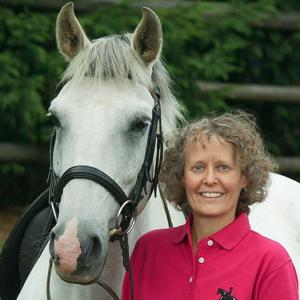
MARY WANLESS presents crucial information on how the Ride With Your Mind approach to Rider Biomechanics can transform your learning, your riding, and possibly your life.
Out…
In these podcasts, Mary talks about her journey to date, her key discoveries, and some pivotal moments. She illuminates her key points with metaphor and story, and, at times, presents insights derived from sports psychology.
Prepare to be entertained, to learn, to become curious, and to understand a little (or maybe a lot) more about your interaction with your horse. Check out these podcasts, and visit www.dressagetraining.tv for information about their vast library of online courses and webinars, presented by Mary and her Ride With Your Mind colleagues.
Ranked by our users in the last 21 days
107 Listeners

7 Listeners

6,605 Listeners
347 Listeners
448 Listeners

30 Listeners
25 Listeners
213 Listeners
48 Listeners

76 Listeners

18,838 Listeners
89 Listeners

35 Listeners

49 Listeners
70 Listeners