
Sign up to save your podcasts
Or



Send us your feedback!
Your instincts can easily lead you astray when riding, wether that’s pushing hard into the stirrups, ‘popping up’, or growing too tall. These are all symptoms of the ‘Landau Response’, which defines many rider’s instinctive reaction to a ‘Yikes!’ moment, and also to downward transitions. This podcast offers more distinctions about feeling and controlling the movement of your seat bones, and riding walk to halt transitions without falling prey to the ‘waterski/motorboat’ syndrome.
Send us your feedback!
Newton’s third law of motion (every action has an equal and opposite reaction) affects the relationship between your feet and seat bones. How to find ‘just right’ for the tone in the underneath of the box, and the appropriate clarity for your seat bones, so you neither ‘pop them up’ nor have a pair of ‘stiletto heels’. Once you find ‘just right’ you can control the speed of their movement - and this controls the speed of your horse’s legs.
Send us your feedback!
What is flow and what difference does it make to elite performance.
Send us your feedback!
How to get rid of the tyranny of the voice inside your head and create for yourself the best internal coach!
Send us your feedback!
How easy do you find this, and how much have you been encouraged to do this during your training sessions? As you’ll hear, it’s the best answer to confusion and miscommunication! Our traditional language that has been handed down through generations has been subject to deletion, distortion and generalisation, but the potential for misrepresentation and misunderstanding gets even worse than this. It’s those As and Xs again!
Send us your feedback!
The best ever story about stirrup length, and how in other sports, it’s all about angles. You cannot not influence your horse - he is constantly reading your ability to support your own body weight (or not), your asymmetry, how wibbly-wobbly you are, how ‘shovey’ you are, wether you can match the forces of his movement etc. He knows more about you than you know about yourself! The possible effects of being given the wrong map, and how communication in riding arenas goes awry.
Send us your feedback!
How is your weight distributed on your horse’s back? If it is concentrated into the area where he would hollow his back, you create or perpetuate that hollow. Your weight needs to be spread down the inside of your thigh, with your thigh bone at 45 degrees. This mirrors sitting on a ‘kneeling stool’ - which is very different to treating your horse like a mobile arm chair! The paradox of how your stirrups might look longer when they are actually shorter…
Send us your feedback!
The brain is like a manual camera lens, and all of us have to learn how to ‘tune’ our brain into a state of clear focus. As skill develops it’s as if you’re given a more powerful miscoscope lens, becoming able to observe detail that you could not have previously imagined. But all learning requires the willingness to feel weird - and here is an exercise in weirdness that I invite you to take to your riding.
Send us your feedback!
New students commonly begin by telling me what’s wrong with them, and what they know they SHOULD be doing. Their problem really is ‘premature automation’ - when they first learned their up/downs, they automated a pattern that was far from biomechanically correct. So now they face the challenge of ‘rewiring’ themselves, and they have to become ‘consciously competent’.
Will elite riders talk to you about the ABC’s of riding, or its XYZ’s? An analogy to icebergs explains the answer!
Send us your feedback!
Did the lessons you’ve taken, the lecture/demos you’ve attended, and the DVDs and webinars you’ve watched actually make a difference to your skills? They are mostly addressing the language brain, and intellectual information does not help you to ‘groove’ a new habit. This requires you to feel weird: so welcome to some of my favourite off-horse exercises!
From the publisher's feed
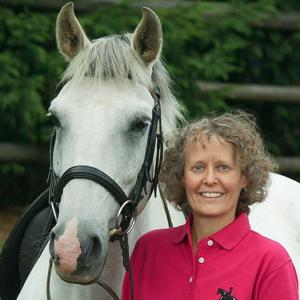
MARY WANLESS presents crucial information on how the Ride With Your Mind approach to Rider Biomechanics can transform your learning, your riding, and possibly your life.
Out…
In these podcasts, Mary talks about her journey to date, her key discoveries, and some pivotal moments. She illuminates her key points with metaphor and story, and, at times, presents insights derived from sports psychology.
Prepare to be entertained, to learn, to become curious, and to understand a little (or maybe a lot) more about your interaction with your horse. Check out these podcasts, and visit www.dressagetraining.tv for information about their vast library of online courses and webinars, presented by Mary and her Ride With Your Mind colleagues.
Ranked by our users in the last 21 days
107 Listeners

7 Listeners

6,605 Listeners
347 Listeners
448 Listeners
30 Listeners
25 Listeners
213 Listeners

48 Listeners

76 Listeners

18,838 Listeners
89 Listeners

35 Listeners

49 Listeners

70 Listeners