
Sign up to save your podcasts
Or

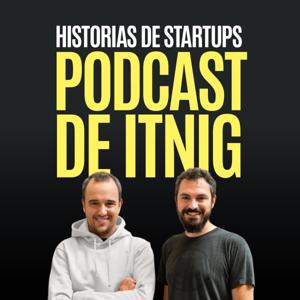

Georgiy Tarasov, AI Product Engineer at PostHog, shares what PostHog learned from seven experiments building interfaces for AI agents — and why MCP isn’t always the right answer.
As customers started asking for “all PostHog AI features in my agent,” PostHog had to rethink how its product should work outside the browser: inside Claude Code, Cursor, Codex, CLIs, MCP clients, and local agent workflows.
In this talk, Georgiy walks through PostHog’s experiments with handwritten agent tools, traditional MCP, CLI-first interfaces, MCP with a CLI-like shape, code execution, dynamic toolsets, and SQL-based retrieval. He compares the trade-offs across developer experience, context bloat, tool discovery, token efficiency, latency, eval results, and real customer usage.
The core lesson: your new user might not be a human in a browser tab — it might be your customer’s AI agent.
👉 Subscribe to Itnig for more conversations about real business, startups and brands.
🎙️ Want to join the Itnig podcast or sponsor one of our episodes?
Appear on the podcast: https://tally.so/r/wo1Poe
Sponsor the podcast: https://tally.so/r/3EERLN
ABOUT ITNIG: 🐦 X - https://x.com/itnig
💡 LinkedIn - https://linkedin.com/company/itnig
📸 Instagram - https://instagram.com/itnig
💌 Newsletter - https://itnig.net/newsletter/
🌐 Web - https://itnig.net/
LISTEN TO OUR PODCAST ON:
🔊 Spotify: http://bit.ly/itnigspotify
🎙️ Apple Podcast: http://bit.ly/itnigapple
00:00:00 Intro & welcome — AI Builders BCN first edition
00:01:04 Georgiy introduces himself & PostHog
00:02:14 The challenge: shipping AI agents on a complex product
00:04:37 First MCP experiments & why they didn't scale
00:05:26 Token optimization problems & early lessons
00:07:08 Rethinking the approach: sandboxing & unified interfaces
00:08:13 Deep dive: how MCP prompts & instructions really work
00:10:26 Optimizing MCP tools for different model providers
00:12:55 Experiment #1 — grouping tools by intent00:14:15 Switching to a resource-based approach
00:18:24 Advantages & limitations of the code execution approach
00:22:30 MCP with native code execution — Georgiy's favourite
00:25:15 How GitHub optimizes their MCP (grouping by intent)
00:25:43 Agent skills: what they are and why they matter
00:26:43 Building skills with regex, access controls & data
00:27:52 Benchmarking: testing with real vs synthetic data
00:29:38 Results & what actually worked in production
00:31:35 Key takeaways & closing thoughts
00:31:43 Q&A
00:36:29 End
Recorded at AI Builders Barcelona.
Speaker: Georgiy Tarasov, AI Product Engineer at PostHog
Topics: MCP, AI agents, Claude Code, Cursor, Codex, CLI, codegen, agent interfaces, developer tools, PostHog, AI engineering
 View all episodes
 By itnig

4.7
66 ratings
Georgiy Tarasov, AI Product Engineer at PostHog, shares what PostHog learned from seven experiments building interfaces for AI agents — and why MCP isn’t always the right answer.
As customers started asking for “all PostHog AI features in my agent,” PostHog had to rethink how its product should work outside the browser: inside Claude Code, Cursor, Codex, CLIs, MCP clients, and local agent workflows.
In this talk, Georgiy walks through PostHog’s experiments with handwritten agent tools, traditional MCP, CLI-first interfaces, MCP with a CLI-like shape, code execution, dynamic toolsets, and SQL-based retrieval. He compares the trade-offs across developer experience, context bloat, tool discovery, token efficiency, latency, eval results, and real customer usage.
The core lesson: your new user might not be a human in a browser tab — it might be your customer’s AI agent.
👉 Subscribe to Itnig for more conversations about real business, startups and brands.
🎙️ Want to join the Itnig podcast or sponsor one of our episodes?
Appear on the podcast: https://tally.so/r/wo1Poe
Sponsor the podcast: https://tally.so/r/3EERLN
ABOUT ITNIG: 🐦 X - https://x.com/itnig
💡 LinkedIn - https://linkedin.com/company/itnig
📸 Instagram - https://instagram.com/itnig
💌 Newsletter - https://itnig.net/newsletter/
🌐 Web - https://itnig.net/
LISTEN TO OUR PODCAST ON:
🔊 Spotify: http://bit.ly/itnigspotify
🎙️ Apple Podcast: http://bit.ly/itnigapple
00:00:00 Intro & welcome — AI Builders BCN first edition
00:01:04 Georgiy introduces himself & PostHog
00:02:14 The challenge: shipping AI agents on a complex product
00:04:37 First MCP experiments & why they didn't scale
00:05:26 Token optimization problems & early lessons
00:07:08 Rethinking the approach: sandboxing & unified interfaces
00:08:13 Deep dive: how MCP prompts & instructions really work
00:10:26 Optimizing MCP tools for different model providers
00:12:55 Experiment #1 — grouping tools by intent00:14:15 Switching to a resource-based approach
00:18:24 Advantages & limitations of the code execution approach
00:22:30 MCP with native code execution — Georgiy's favourite
00:25:15 How GitHub optimizes their MCP (grouping by intent)
00:25:43 Agent skills: what they are and why they matter
00:26:43 Building skills with regex, access controls & data
00:27:52 Benchmarking: testing with real vs synthetic data
00:29:38 Results & what actually worked in production
00:31:35 Key takeaways & closing thoughts
00:31:43 Q&A
00:36:29 End
Recorded at AI Builders Barcelona.
Speaker: Georgiy Tarasov, AI Product Engineer at PostHog
Topics: MCP, AI agents, Claude Code, Cursor, Codex, CLI, codegen, agent interfaces, developer tools, PostHog, AI engineering

134 Listeners
41 Listeners

8 Listeners

68 Listeners

1 Listeners

36 Listeners
19 Listeners

57 Listeners

78 Listeners

25 Listeners

26 Listeners

7 Listeners

8 Listeners

16 Listeners

4 Listeners