
Sign up to save your podcasts
Or

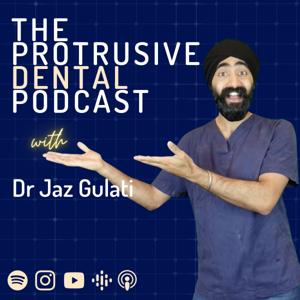

Imagine your patient is choking on a rubber dam clamp…what’s the safest way to manage choking when the patient is lying flat?
Your patient’s hands are shaking and they’re drenched in sweat – is it low blood sugar, anxiety, or a cardiac event?
Do you know exactly what to do if your patient has a seizure in the chair?
This second part of the Medical Emergencies series with Rachel King Harris dives even deeper into real-life scenarios that dental teams may face. From seizures and how (and when) to give buccal midazolam, to managing choking in a dental chair, this episode is packed with practical, clear guidance.
We also explore key steps in treating diabetic hypoglycaemia, understanding glucagon vs glucose, and how to confidently manage patients with angina or previous heart attacks—when to use GTN, when to give aspirin, and when to simply wait for the ambulance.
It’s all about staying calm, being prepared, and delivering safe, effective care when it matters most.
Protrusive Dental Pearl: Assign a clear lead to regularly check the expiry dates and supplies of emergency medications and equipment. This isn’t just about ticking regulatory boxes — it’s about saving lives. Little checks like this can make a big difference in a true emergency.
Need to Read it? Check out the Full Episode Transcript below!
Highlights of this episode:
Stay up to date by reviewing the latest guidelines from the Resuscitation Council UK.
Grab your Anaphylaxis Summary + Medical Emergency Cheatsheets from https://protrusive.co.uk/me.
And make sure you’ve listened to Part 1 of Medical Emergencies so you don’t miss any crucial information.
#PDPMainEpisodes #CareerDevelopment #BeyondDentistry
This episode is eligible for 1 CE credit via the quiz on Protrusive Guidance.
This episode meets GDC Outcomes C and D.
AGD Subject Code: 142 Medical emergency training and CPR
Aim: To equip dental professionals with the knowledge, confidence, and practical skills to recognize and effectively manage common medical emergencies in the dental setting, ensuring patient safety and optimal outcomes.
Dentists will be able to:
 View all episodes
 By Jaz Gulati

4.7
2020 ratings
Imagine your patient is choking on a rubber dam clamp…what’s the safest way to manage choking when the patient is lying flat?
Your patient’s hands are shaking and they’re drenched in sweat – is it low blood sugar, anxiety, or a cardiac event?
Do you know exactly what to do if your patient has a seizure in the chair?
This second part of the Medical Emergencies series with Rachel King Harris dives even deeper into real-life scenarios that dental teams may face. From seizures and how (and when) to give buccal midazolam, to managing choking in a dental chair, this episode is packed with practical, clear guidance.
We also explore key steps in treating diabetic hypoglycaemia, understanding glucagon vs glucose, and how to confidently manage patients with angina or previous heart attacks—when to use GTN, when to give aspirin, and when to simply wait for the ambulance.
It’s all about staying calm, being prepared, and delivering safe, effective care when it matters most.
Protrusive Dental Pearl: Assign a clear lead to regularly check the expiry dates and supplies of emergency medications and equipment. This isn’t just about ticking regulatory boxes — it’s about saving lives. Little checks like this can make a big difference in a true emergency.
Need to Read it? Check out the Full Episode Transcript below!
Highlights of this episode:
Stay up to date by reviewing the latest guidelines from the Resuscitation Council UK.
Grab your Anaphylaxis Summary + Medical Emergency Cheatsheets from https://protrusive.co.uk/me.
And make sure you’ve listened to Part 1 of Medical Emergencies so you don’t miss any crucial information.
#PDPMainEpisodes #CareerDevelopment #BeyondDentistry
This episode is eligible for 1 CE credit via the quiz on Protrusive Guidance.
This episode meets GDC Outcomes C and D.
AGD Subject Code: 142 Medical emergency training and CPR
Aim: To equip dental professionals with the knowledge, confidence, and practical skills to recognize and effectively manage common medical emergencies in the dental setting, ensuring patient safety and optimal outcomes.
Dentists will be able to:
392 Listeners

403 Listeners

8,876 Listeners

3,903 Listeners

4,025 Listeners

4 Listeners
2 Listeners
267 Listeners

262 Listeners

1 Listeners

29,272 Listeners
4 Listeners

1,314 Listeners

647 Listeners

195 Listeners