
Sign up to save your podcasts
Or

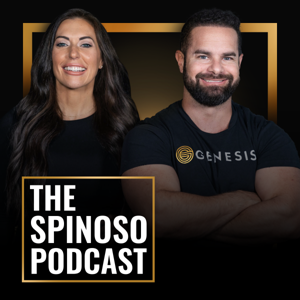


At 30 years old I had a government job a nice house in Palm Springs a view of the mountains and I wanted to walk into traffic.
Not because my life was falling apart. Because it wasn't going anywhere.
I was a doctor working at the California Department of Corrections done with my day by noon reading business books for the rest of the afternoon because there was literally nothing else to do. Everyone around me said I made it. I knew I hadn't. So I convinced my wife to move out of our house rent it on Airbnb and move into a 100 square foot dining room with plywood sheets for doors and our clothes in trash bags on the floor.
We lived like that for months. Saved everything we could. Then I found out about a mastermind run by Andy Frisella and dropped $50,000 which was half of everything we had saved on a bet that it would work.
It did.
This episode is the full origin story. From prison doctor to building Genesis Lifestyle Medicine to 80 locations. What actually pushed me to leave stability behind how I found my business partner what it really costs to build something from zero and why the most important decision I ever made was the one that scared me the most.
Michael Jackson rehearsed 6 to 8 hours a day. Not occasionally. Constantly. The same moves. The same transitions. The same runs. Over and over until they stopped being something he practiced and became something he was.
Most people look at that and think obsession. What they're missing is the deeper mechanic underneath it, repetition as identity. Not repetition as a grind you push through, but repetition as the actual construction process for who you become.
In this episode I break down what Michael Jackson's approach to performance actually teaches us about mastery in business, leadership, fitness, and every other area where people want results without putting in the invisible work that earns them.
The truth is most people overestimate intensity and underestimate consistency. They show up hard when the lights are on and disappear when nobody's watching. That's why most people stay average. Greatness doesn't get built in championship moments. It gets built in the rehearsals nobody claps for.
Motivation is going to let you down. It's not a matter of if, it's when.
I've pulled out of a PE deal that should have been the biggest win of my career, rebuilt Genesis from the ground up, had to have conversations I didn't want to have with people I cared about, and kept going anyway. Not because I was fired up. Because the systems were in place and the right people were around me.
This episode covers the five things that actually move you forward when motivation disappears. Getting crystal clear on what you actually want, not what looks good on Instagram or what your parents told you to want. Knowing what a real no sounds like and actually using it. Expecting the hard and building around it instead of waiting for it to get easier. Engineering your environment so taking action is the default, not the exception. And being ruthlessly selective about who is in your circle at home and at work, because the wrong person doesn't just fail to help you, they actively slow you down.
There was a study I came across that showed one high-functioning A-player with zero trust from the rest of the team reduces that team's efficiency by 50%. One person. That alone should make you rethink who you're keeping around.
Motivation is temporary. Clarity, systems, and the right people are not.
Most people think discipline is about motivation. It's not. Motivation is temporary. Feelings are temporary. Standards are supposed to be permanent.
In this episode I'm pulling a leadership lesson from one of the most unlikely places. The Mandalorian. And before you scroll past, hear me out. Underneath all the sci-fi, the show actually reflects timeless truths about discipline, responsibility, and what it means to show up even when you don't feel like it. There's a phrase they repeat throughout the entire series: This is the way. And that phrase carries more weight than most people realize. It means there is a code. There is a standard. And you operate by that standard regardless of how you feel that day.
We live in a world now where people treat emotions like absolute commandments. If they don't feel like doing something they assume they shouldn't have to. If they lose motivation they assume that's the universe telling them to quit. But discipline doesn't work that way. Discipline means you lead your business on the days you don't feel like it. You have difficult conversations with employees on the days you don't feel like it. You show up for your spouse and your kids on the days you don't feel like it. Because mature people understand that your mood is not your standard.
That is what real leadership looks like. Not loud. Not flashy. Not yelling from a stage. Quietly competent. Controlled strength. The ability to carry weight without constantly complaining about it.
This is the way I lead my family. This is the way I run my business. This is the way I keep my promises. And if you're serious about building something that lasts, it has to become your way too.
Motivation is not going to save you. It never was.
I sat down with Amanda May to break down why chasing motivation is exactly what keeps most people stuck. We opened with real wins from our Charismedx Q1 event in Dallas. One conversation with a clinic owner and she added $140,000 in EBITDA. Another dropped her payroll from 33% to 21% of gross earnings. That is what clarity and execution looks like when you stop chasing the feeling and start doing the work.
If you do not know exactly what you want, vividly and specifically, you are never going to get there. Most people are pursuing things because their parents told them to or because it looks good online. That is not a reason. That is a trap. And the moment it gets hard, you will quit, because you were never really in it for yourself.
Knowing what you refuse to accept is just as powerful as knowing what you want. No is a complete sentence. We also break down the Medvi telehealth collapse. A guy who went from a Forbes cover to a full federal investigation in less than 48 hours. Eight hundred fake AI doctors. Zero HIPAA protection.
That is what the easy path looks like at scale. Nothing good comes from it.
Everyone wants the fun part. The wins. The momentum. The days where it all clicks. Nobody talks about the years of boring, repetitive, unglamorous work that had to happen before any of that was even possible.
In this episode I get into something most entrepreneurs won't say out loud: business was never supposed to feel good every day. The pressure, the difficult conversations, the long hours, the delayed gratification. That is the job. And if you went into business expecting it to feel exciting most of the time, you were already set up to quit.
I've built businesses across multiple states and multiple verticals. And I can tell you without hesitation, the people who win are not the ones who found their passion. They're the ones who stopped needing it to feel good before they showed up.
We talk about why social media has created a generation of entrepreneurs addicted to stimulation, why boredom in business is almost always mistaken for the wrong path, what meaningful work actually costs, and why the shift from "is this fun" to "is it worth it" is the most important mindset upgrade you will ever make.
If you are waiting to enjoy the process before you commit to it, you are already behind.
Stop asking if it's fun. Start asking if it's worth it.
Everyone wants the exciting part. The wins. The momentum. The days that feel like you were born to do this. Nobody talks about the years of boring, repetitive work that had to happen first before any of that was even possible.
In this episode, Amanda and I get into something most entrepreneurs won't admit: they're addicted to entertainment. The highs. The lows. The rush of solving a problem. And the moment the work turns monotonous, they call it a passion problem and start looking for the exit.
I've built and rebuilt businesses across multiple states. And I can tell you without hesitation, the boring work is the only work that compounds. Passion runs out. Repetition doesn't.
We talk about why grit matters more than talent, why feeling stuck is almost always just boredom in disguise, what the hockey stick of growth actually looks like from the inside, and why the people who master the mundane are the ones who end up winning.
If you're waiting to feel passionate before you do the work, you're already behind.
Master the mundane. That's the whole game.
Most people walked into that McDonald's and saw a burger.
Ray Kroc walked in and saw a machine.
Same building. Same kitchen. Same food. Completely different outcome because of one thing. Attention.
In this episode, I break down why attention is the most underrated skill in business right now. Not intelligence. Not luck. Not connections. Attention. The ability to slow down, look past the obvious, and see the system when everyone else is focused on the surface.
We're living in a world built to destroy your focus. Endless scrolling. Constant notifications. Dopamine on demand. And the people losing aren't losing because they're not smart. They're losing because they stopped noticing.
People who don't pay attention will still pay. They'll pay in missed opportunities. They'll pay in stalled growth. They'll pay in problems they never saw coming.
This episode is about training the skill that changes everything.
Let's get into it.
Everyone wants the highlight reel. The viral moment. The overnight success story. Nobody talks about the part that actually builds it; the boring, repetitive, unglamorous work that happens every single day before any of that shows up.
In this episode, Amanda and I get into something most entrepreneurs run from: boredom. The monotony of doing the same thing over and over. The SOPs nobody wants to write. The meetings that feel pointless. The systems that seem too simple to matter. That's exactly what builds a scalable business.
I've built and rebuilt companies across multiple states. And I can tell you without hesitation, the boring work is the only work that compounds. The adrenaline runs out. The grit doesn't.
We talk about why most entrepreneurs sabotage themselves chasing the next shiny thing, what mastering the mundane actually looks like in a real business, why feeling stuck is usually just boredom in disguise, and how the hockey stick only happens after a very long boring handle.
If you're waiting to feel excited before you do the work, you're already behind.
Boring wins. It always has.
Most people spend their whole life grinding toward something.
The dream car. The dream house. The financial freedom they swore they'd have someday.
And then one day it happens. You get there. You have it all.
And it feels nothing like you thought it would.
That's what this episode is about. Not the highlight reel. Not the cars or the house or the wins. The real conversation that nobody has after they hit the goals they spent years chasing.
I bought a McLaren. A Lamborghini. A Shelby Cobra for my dad. I bought the house I used to drive past and say "someday." And I'm telling you honestly, the high faded faster than I ever expected.
That forced me to ask a question most successful people are afraid to ask. Why didn't that feel the way I thought it would?
The answer changed how I look at everything. Goals. Success. What it actually means to build something worth building.
If you're in the middle of the grind right now, watch this. If you've already hit your goals and still feel empty, watch this even more.
The object was never the point. Who you become to get there, that's everything.
From the publisher's feed

3,896 Listeners

32,762 Listeners

13,968 Listeners

4,457 Listeners
2,295 Listeners

46,062 Listeners

29,186 Listeners

183 Listeners

959 Listeners

15,943 Listeners
9 Listeners