
Sign up to save your podcasts
Or



Based on Podcast App listening data
In this episode, we’ll discuss an approach to teaching foundational skills known as speech to print. The speech to print approach consists of 4 concepts with consistent logic:
What is the difference between speech to print and a traditional print to speech approach? What does the speech to print approach look like in practice? What does the research say about this approach?
Resources
Connect with us
Looking for more literacy support and resources? Explore all of our podcast episodes, free listening guides, and classroom tools at literacypodcast.com.
Interested in bringing Melissa & Lori Love Literacy to your school or event? Email us at [email protected].
Dr. Sonia Cabell, Associate Professor at Florida State University, shares the importance of both oral language and content knowledge instruction. Why? Oral language skills underlie our ability to comprehend text. At the same time, the knowledge we bring to a text is THE key determinant on how much we understand that text. This episode speaks to the entirety of the reading rope!
Looking for more literacy support and resources? Explore all of our podcast episodes, free listening guides, and classroom tools at literacypodcast.com.
Interested in bringing Melissa & Lori Love Literacy to your school or event? Email us at [email protected].
Robert Pondiscio, Senior Fellow at the American Enterprise Institute (AEI), asserts that reading comprehension is NOT a skill. Yes, good readers use reading skills and strategies to make meaning. But good readers also have a robust knowledge base. There is strong evidence to support knowledge building ELA curriculum, but we continue to wonder about what knowledge, whose knowledge, and how much?
Resources
Connect with us
Visit our website to stay connected with Melissa and Lori!
Helping teachers learn about science of reading, knowledge building, and high quality curriculum.
Looking for more literacy support and resources? Explore all of our podcast episodes, free listening guides, and classroom tools at literacypodcast.com.
Interested in bringing Melissa & Lori Love Literacy to your school or event? Email us at [email protected].
In this episode, researcher Hugh Catts discusses his pivotal piece titled Rethinking How to Promote Reading Comprehension | American Federation of Teachers. He asserts, “Reading comprehension is thinking with a book in your hand.” There are three factors that impact reading comprehension: the reader, the text, and the activity (task or purpose). He talks with Melissa and Lori about the role knowledge plays in reading comprehension, the interaction of the knowledge the text demands vs. the knowledge a student brings to a task, and the implications of knowledge in instruction and assessment.
Resources
Connect with us!
Visit our website and subscribe to our newsletter.
Helping teachers learn about science of reading, knowledge building, and high quality curriculum
Looking for more literacy support and resources? Explore all of our podcast episodes, free listening guides, and classroom tools at literacypodcast.com.
Interested in bringing Melissa & Lori Love Literacy to your school or event? Email us at [email protected].
Pamela Snow, professor at Latrobe University in Australia, discusses the arguments that keep surfacing when educators are resistant to move away from balanced literacy. You might have heard a few:
Pam’s blog post, Balanced Literacy Bingo, debunks each idea listed above and more.
Resources
Connect with us
Visit our website to stay connected with Melissa and Lori!
Helping teachers learn about science of reading, knowledge building, and high quality curriculum.
Looking for more literacy support and resources? Explore all of our podcast episodes, free listening guides, and classroom tools at literacypodcast.com.
Interested in bringing Melissa & Lori Love Literacy to your school or event? Email us at [email protected].
In this episode, Melissa and Lori have a candid discussion about change with Kareem Weaver, co-founder of FULCRUM Oakland: Full and Complete Reading is a Universal Mandate. FULCRUM’s goal is to ensure that every Oakland child is an 'on-time' reader provided with full LITERACY: a fundamental civil right, a powerful protection from the school to prison pipeline, and the cornerstone for a life of choice and fulfillment. In this episode, Kareem discusses the change he is fighting for and the elements he believes are necessary to make it happen.
Related Episodes
Resources
Connect with us
Visit our website to stay connected with Melissa and Lori!
Looking for more literacy support and resources? Explore all of our podcast episodes, free listening guides, and classroom tools at literacypodcast.com.
Interested in bringing Melissa & Lori Love Literacy to your school or event? Email us at [email protected].
We want the shift to reading science to be permanent, not perceived as another ‘educational pendulum swing.’ To do this, it’s necessary to recognize what worked and didn’t work within balanced literacy. Today’s guests, UnboundEd’s Lacey Robinson and The Right to Read Project’s Margaret Goldberg, both shifted from teaching using balanced literacy (specifically Lucy Calkins’ Workshop Model, also known as Units of Study) to structured literacy and became powerful literacy advocates in the process.
Resources
Connect with us
Visit our website to stay connected with Melissa and Lori!
Helping teachers learn about science of reading, knowledge building, and high quality curriculum.
Looking for more literacy support and resources? Explore all of our podcast episodes, free listening guides, and classroom tools at literacypodcast.com.
Interested in bringing Melissa & Lori Love Literacy to your school or event? Email us at [email protected].
Episode 37
The article Placing Text at the Center of the Standards-Aligned ELA Classroom is a must-read — before or after you listen to this episode!
Meredith Liben and Sue Pimentel join us to unpack the true intentions behind the Common Core State Standards and how they’ve sometimes been misinterpreted in practice. They share what they’ve observed in classrooms and schools — both when high-quality instructional materials (HQIM) are in place and when they’re not.
We also ask them some tough (and important!) questions:
Meredith and Sue are smart, funny, and incredibly relatable — you’ll love this conversation. It’s truly a must-listen episode!
📖 Read the article that inspired this episode:
Placing Text at the Center of the Standards-Aligned ELA Classroom
Looking for more literacy support and resources? Explore all of our podcast episodes, free listening guides, and classroom tools at literacypodcast.com.
Interested in bringing Melissa & Lori Love Literacy to your school or event? Email us at [email protected].
Today we’ll be talking to a team of authors about a recent article they published on small group instruction, titled Maximizing Small-Group Reading Instruction. We ask and answer important questions about small group instructional time: What is the appeal of small group reading instruction? Why has it been popular? What does the research say? What do we need to know about effective small-group reading instruction? What are some best practices?
Resources
Connect with us
Visit our website to stay connected with Melissa and Lori!
Helping teachers learn about science of reading, knowledge building, and high quality curriculum.
Looking for more literacy support and resources? Explore all of our podcast episodes, free listening guides, and classroom tools at literacypodcast.com.
Interested in bringing Melissa & Lori Love Literacy to your school or event? Email us at [email protected].
In this episode, Lindsay Kemeny, 2nd grade teacher, gives a deep dive into her evidence-based, small group instruction time. Her journey to the science of reading was necessary and life altering. It led her to clarity on structured, systematic approaches to teaching reading. She discusses informal and formal assessments, how she uses data to determine small groups, and center options for practicing reading and writing. Her best advice? KEEP. IT. SIMPLE!
After reading this recent blog by Tim Shanahan, we couldn’t resist asking her about sound walls and how her students use them in her classroom. She shares, “The sound wall is not the main event in my classroom… structured literacy is the main event. The sound wall is a reflection of what’s happening in the classroom.”
We discussed the following resources:
Looking for more literacy support and resources? Explore all of our podcast episodes, free listening guides, and classroom tools at literacypodcast.com.
Interested in bringing Melissa & Lori Love Literacy to your school or event? Email us at [email protected].
From the publisher's feed
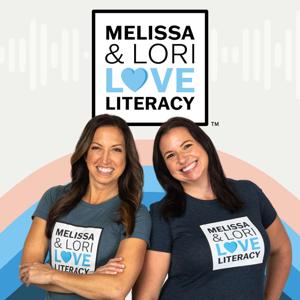
Melissa & Lori Love Literacy® is a science of reading podcast for teachers who want to understand how reading really works and what that means for classroom instruction.
Each month,…
Ranked by our users in the last 21 days
57 Listeners
640 Listeners
49 Listeners
206 Listeners
205 Listeners
132 Listeners
61 Listeners
7,716 Listeners
82 Listeners

25 Listeners
50 Listeners
176 Listeners
44 Listeners
41 Listeners

54 Listeners