
Sign up to save your podcasts
Or



Based on Podcast App listening data
What if you could unlock the secrets to fluency instruction in literacy, and transform your students into confident and skilled readers? Join us as we delve into this crucial topic with Nathaniel Swain, Senior Lecturer at La Trobe University in Australia, who shares his expertise on the three components of fluency: speed, accuracy, and prosody. Let's explore together how balancing speed with comprehension can make all the difference in today's digital age, where skimming and scrolling are the new norm.
We discuss a variety of practical strategies to help students practice fluency in the classroom, such as choral reading and paired reading. Nathaniel also sheds light on the role of technology in simplifying the process of creating engaging materials. Discover how to create an environment that fosters student engagement and understanding, and learn the differences between fluency instruction in primary and intermediate classes.
Finally, we examine the value of fluency in reading instruction and how it can be integrated into the literacy block. Nathaniel explains the self-teaching hypothesis and emphasizes the importance of exposing students to unfamiliar words and challenging texts. Don't miss this insightful episode packed with tips and strategies to help your students become fluent and confident readers!
Resources
Connect with us
Don't miss an episode! Sign up for our newsletter at LiteracyPodcast.com
Helping teachers learn about science of reading, knowledge building, and high quality curriculum.
Looking for more literacy support and resources? Explore all of our podcast episodes, free listening guides, and classroom tools at literacypodcast.com.
Interested in bringing Melissa & Lori Love Literacy to your school or event? Email us at [email protected].
Today we talk about fluency and assessment with Jan Hasbrouck. She shares tips and tricks for how to to best assess and teach fluency. She also debunks frequent fluency misunderstandings and explains the scientific evidence that underlies the Hasbrouck-Tindal Oral Reading Fluency Chart.
Note: During the podcast, we mentioned we would link Jan’s previous studies on ORF. But… we want to make sure the most recent information (Fluency Norms Chart 2017 Update) is the one that is prioritized for instructional use, so we’ve linked that to avoid confusion.
Resources
Connect with us
Visit our website to stay connected with Melissa and Lori!
Helping teachers learn about science of reading, knowledge building, and high quality curriculum.
Looking for more literacy support and resources? Explore all of our podcast episodes, free listening guides, and classroom tools at literacypodcast.com.
Interested in bringing Melissa & Lori Love Literacy to your school or event? Email us at [email protected].
What if we told you that the science of reading is just as applicable to multilingual learners as it is to monolingual English speakers? Today, we had the pleasure of discussing this topic with Claude Goldenberg, professor emeritus of education at Stanford University. Claude shared his insights on the importance of understanding the nuanced language surrounding multilingual learners.
In our conversation, we explored the essential process of teaching English learners to read by developing a bank of sight words and providing additional support alongside phonology and orthography. Claude also shed light on the research and literature available specifically for English learners, debunking the myth that the science of reading is only applicable to monolingual English speakers. Moreover, we discussed the findings of the Ehri and Vaughn studies, which explored the effectiveness of early interventions for at-risk students.
Claude also shared his advice on implementing a strengths-based approach to teaching and building student knowledge while emphasizing the importance of staying up to date with research and being transparent about what we know and don't know. By doing so, we can be effective advocates for English learners. Don't miss this insightful and informative episode to learn how you can better support multilingual learners in their reading journey!
Resources
Connect with us
Don't miss an episode! Sign up for our newsletter at LiteracyPodcast.com
Helping teachers learn about science of reading, knowledge building, and high quality curriculum.
Looking for more literacy support and resources? Explore all of our podcast episodes, free listening guides, and classroom tools at literacypodcast.com.
Interested in bringing Melissa & Lori Love Literacy to your school or event? Email us at [email protected].
In today’s episode, Julie Washington discusses how literacy learning can be supported by language variations. Reading and language are intertwined. Reading influences language and language influences reading. It’s a reciprocal process! How can we, as educators and practitioners, leverage students’ strengths in language variations to learn to read?
What if we told you that understanding language variations could significantly impact the way we approach literacy and education for African American children? Join us in this insightful conversation with Julie Washington, a professor at the University of California, Irvine, who specializes in the intersection of language and literacy. Discover how her research on language variations as a strength, rather than a weakness, can reshape our perspectives on cultural dialects, early literacy skills, and language development.
Julie brings her expertise to light by highlighting the importance of African American English in the classroom and the challenges it faces, both from the broader society and within the African American community. We explore the practical consequences of treating this dialect as low-prestige and discuss the need for students to be able to use both systems of language.
We dive into resources for educators to better understand these variations and emphasize the importance of differentiated instruction and high expectations for all students. Tune in and equip yourself with the knowledge to make a difference in the lives of your students, no matter their language background.
Resources
Connect with us
Visit our website to stay connected with Melissa and Lori!
Helping teachers learn about science of reading, knowledge building, and high quality curriculum.
Looking for more literacy support and resources? Explore all of our podcast episodes, free listening guides, and classroom tools at literacypodcast.com.
Interested in bringing Melissa & Lori Love Literacy to your school or event? Email us at [email protected].
Secondary educators have students in their classrooms who weren’t taught to read. Because of these reading deficits, students likely have a difficult time accessing secondary texts and tasks. Our guests today, Supt. Sherry Sousa and Educator Julie Brown, discuss a secondary intervention they developed that WORKS and is totally doable. The best part? Students partake in the intervention in addition to - not instead of - their regular high school English classes.
Resources
Connect with us
Visit our website to stay connected with Melissa and Lori!
Helping teachers learn about science of reading, knowledge building, and high quality curriculum.
Looking for more literacy support and resources? Explore all of our podcast episodes, free listening guides, and classroom tools at literacypodcast.com.
Interested in bringing Melissa & Lori Love Literacy to your school or event? Email us at [email protected].
We talked with the fabulously candid Tim Shanahan about his recent blog post Prior Knowledge, or He Isn't Going to Pick on the Baseball Study that garnered much attention. Should we teach reading strategies? How important is building knowledge? What are reading skills vs. strategies? How frequent should strategy instruction occur in concert with knowledge building? He also weighs in on the current crisis to share his thoughts on how families and educators can best serve students at home.
Looking for more literacy support and resources? Explore all of our podcast episodes, free listening guides, and classroom tools at literacypodcast.com.
Interested in bringing Melissa & Lori Love Literacy to your school or event? Email us at [email protected].
Our conversation today illuminates a hot topic in reading - skills and strategies. What’s the difference? Peter Afflerbach, researcher and professor, shares in the podcast that he and his colleagues surveyed educators and “ten people would give us ten different answers. They were all kind of related, but all different.”
Peter explains that with practice, strategies require less deliberate attention. When strategies become effortless and automatic, the reading strategy has become a reading skill. This is bound to change based on complexity of text and topic, so we learn that knowledge plays a critical role in strategy use and comprehension, too.
Resources
Connect with us
Visit our website to stay connected with Melissa and Lori!
Helping teachers learn about science of reading, knowledge building, and high quality curriculum.
Looking for more literacy support and resources? Explore all of our podcast episodes, free listening guides, and classroom tools at literacypodcast.com.
Interested in bringing Melissa & Lori Love Literacy to your school or event? Email us at [email protected].
We had the opportunity to talk (again!) with Natalie Wexler about tips for effective remote learning (read her full article located here), the current intersection of students' virtual learning and strategy-focused instruction (due to lack of knowledge-based, high quality curricula) and how parents are noticing! How can we teach strategies in context while building knowledge? Listen to find out!
More recently, Wexler wrote a piece titled How Reading Instruction Oppresses Black and Brown Children, located here. She ends with this quote: "If people truly understood the needless damage being done by our schools every day, they would be out in the streets demanding change." Natalie, we hear you, and WE ARE! We are shouting from the rooftops... or more accurately, shouting from the podcast apps! :)
American Educator magazine released an excerpt of The Knowledge Gap - find it here!
Looking for more literacy support and resources? Explore all of our podcast episodes, free listening guides, and classroom tools at literacypodcast.com.
Interested in bringing Melissa & Lori Love Literacy to your school or event? Email us at [email protected].
What is Phonemic Awareness? It’s one component of your literacy instruction. Phonemic awareness means understanding that spoken words are made of individual sounds called phonemes. We want students to be able to isolate, blend, segment, and more. Can it be ‘done in the dark’? Or should we teach phonemic awareness with print? Listen and learn as we explore this important question (and more) in today’s episode.
Resources
Connect with us
Visit our website to stay connected with Melissa and Lori!
Helping teachers learn about science of reading, knowledge building, and high quality curriculum.
Looking for more literacy support and resources? Explore all of our podcast episodes, free listening guides, and classroom tools at literacypodcast.com.
Interested in bringing Melissa & Lori Love Literacy to your school or event? Email us at [email protected].
Why is teaching reading so important? Melissa and Lori have a conversation with Louisa Moats grounded in this article: Teaching Reading is Rocket Science: What Expert Teachers of Reading Should Know and Be Able to Do. Moats asserts that 95% of students can learn to read when taught to do so using evidence-based practices. In this episode, listen as we discuss and define the term science of reading, while connecting decades of research and theory to classroom practice.
Looking for more literacy support and resources? Explore all of our podcast episodes, free listening guides, and classroom tools at literacypodcast.com.
Interested in bringing Melissa & Lori Love Literacy to your school or event? Email us at [email protected].
From the publisher's feed
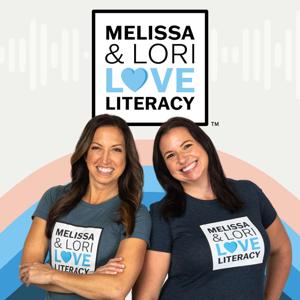
Melissa & Lori Love Literacy® is a science of reading podcast for teachers who want to understand how reading really works and what that means for classroom instruction.
Each month,…
Ranked by our users in the last 21 days
57 Listeners
640 Listeners
49 Listeners
206 Listeners
205 Listeners
132 Listeners
61 Listeners
7,716 Listeners
82 Listeners

25 Listeners

50 Listeners
176 Listeners
44 Listeners
41 Listeners

54 Listeners