
Sign up to save your podcasts
Or



Based on Podcast App listening data
Melissa and Lori received a question from a listener about classroom objectives. The listener was grappling with the idea that she has to post objectives in her classroom, but they often don't match what reading science tells us about how we teach reading. This question requires us to rethink about "meeting an objective" at the end of a reading comprehension lesson. It's about SO MUCH MORE than classroom objectives. It's about knowledge building, assessment, and evolving outcomes to align with current practice. Listen and learn as Melissa and Lori unpack this important question together!
Connect with us!
Visit our website to subscribe to our newsletter.
Helping teachers learn about science of reading, knowledge building, and high quality curriculum.
Looking for more literacy support and resources? Explore all of our podcast episodes, free listening guides, and classroom tools at literacypodcast.com.
Interested in bringing Melissa & Lori Love Literacy to your school or event? Email us at [email protected].
If you loved our recent episode with Julia Lindsey about her book, Reading Above the Fray, you won't want to miss our first episode with her last year! Check it out!
From Sept 10, 2021
What are we aiming to accomplish in early reading instruction? Dr. Julia Lindsey asks this as she tackles topics such as decoding, decodable texts, sound walls, and more.
We discuss the role of instruction and how that pushes a child to be better instead of keeping them at the same place where they might not develop skills as an independent reader. This two-part SoR series is a must-listen for educators!
Looking for more literacy support and resources? Explore all of our podcast episodes, free listening guides, and classroom tools at literacypodcast.com.
Interested in bringing Melissa & Lori Love Literacy to your school or event? Email us at [email protected].
If you loved our recent episode with Julia Lindsey about her book, Reading Above the Fray, you won't want to miss our first episode with her last year! Check it out!
From Sept 3, 2021
What are we aiming to accomplish in early reading instruction? Dr. Julia Lindsey asks this as she tackles topics such as decoding, decodable texts, sound walls, and more.
We discuss the role of instruction and how that pushes a child to be better instead of keeping them at the same place where they might not develop skills as an independent reader. This two-part SoR series is a must-listen for educators!
Looking for more literacy support and resources? Explore all of our podcast episodes, free listening guides, and classroom tools at literacypodcast.com.
Interested in bringing Melissa & Lori Love Literacy to your school or event? Email us at [email protected].
Talking with Dr. Julia Lindsey is like popping into the classroom next door to chat with your best teacher friend after school. On this podcast, Julia shares what evidence says that young readers need to know to help them decode words efficiently. We discuss foundational reading skills, starting with oral language and print concepts through multisyllabic word reading. Instructional swaps take this conversation to the classroom where Julia tells us what to swap to improve instruction. Efficient and effective instruction is critical when teaching decoding.
Resources
Reading Above the Fray by Dr. Julia B. Lindsey
Connect with us!
Visit our website to subscribe to our newsletter.
Helping teachers learn about science of reading, knowledge building, and high quality curriculum.
Looking for more literacy support and resources? Explore all of our podcast episodes, free listening guides, and classroom tools at literacypodcast.com.
Interested in bringing Melissa & Lori Love Literacy to your school or event? Email us at [email protected].
Reading Above the Fray: Reliable, Research-Based Routines for Developing Decoding Skills is a must read for all ELA educators Pre-K through 12. Dr. Julia Lindsey outlines the essentials of how children learn to read, the principles of high-quality foundational skills instruction, essential instructional "swaps" to improve reading instruction, and more.
Connect with us!
Visit our website to subscribe to our newsletter.
Helping teachers learn about science of reading, knowledge building, and high quality curriculum.
Looking for more literacy support and resources? Explore all of our podcast episodes, free listening guides, and classroom tools at literacypodcast.com.
Interested in bringing Melissa & Lori Love Literacy to your school or event? Email us at [email protected].
Dr. Elsa Cardenas-Hagan joins the podcast to share that reading science works for English Learners. What does it mean to use evidence-based instruction to teach English Learners? Dr. Cardenas-Hagan asserts that every language has its own history, its own culture, its own use. Language supports literacy, and literacy support language. With this cyclical understanding, she explains how to use effective strategies for ALL learners.
Connect with us!
Visit our website to subscribe to our newsletter.
Helping teachers learn about science of reading, knowledge building, and high quality curriculum.
Looking for more literacy support and resources? Explore all of our podcast episodes, free listening guides, and classroom tools at literacypodcast.com.
Interested in bringing Melissa & Lori Love Literacy to your school or event? Email us at [email protected].
Literacy Foundations for English Learners prepares educators to enter the classroom with a full understanding of the language and literacy development of English Learners. Remember this: What's good for English Learners is good for ALL students!
In this book talk, Melissa and Lori unpack the elements of an integrated approach to vocabulary learning in content-rich instruction. They consider how word learning strategies help English Learners move toward independence and explore how content-rich vocabulary instruction builds a strong foundation for text comprehension. They bring it together by applying evidence-based vocabulary strategies to practical examples of this approach in the classroom.
Connect with us!
Visit our website to subscribe to our newsletter.
Helping teachers learn about science of reading, knowledge building, and high quality curriculum.
Looking for more literacy support and resources? Explore all of our podcast episodes, free listening guides, and classroom tools at literacypodcast.com.
Interested in bringing Melissa & Lori Love Literacy to your school or event? Email us at [email protected].
Looking for more literacy support and resources? Explore all of our podcast episodes, free listening guides, and classroom tools at literacypodcast.com.
Interested in bringing Melissa & Lori Love Literacy to your school or event? Email us at [email protected].
The Writing Revolution authors, Judith Hochman and Natalie Wexler, share a 'revolutionary' approach to writing. The best part: It begins at the sentence level AND content knowledge drives the rigor. Moreover, there is an overlap in reading, writing, and critical thinking.
What are the principles of The Writing Revolution? There are six:
Resources
Connect with us!
Visit our website to subscribe to our newsletter.
Helping teachers learn about science of reading, knowledge building, and high quality curriculum.
Looking for more literacy support and resources? Explore all of our podcast episodes, free listening guides, and classroom tools at literacypodcast.com.
Interested in bringing Melissa & Lori Love Literacy to your school or event? Email us at [email protected].
Melissa and Lori talk about The Writing Revolution by Dr. Judith Hochman and Natalie Wexler. What distinguishes The Writing Revolution and everything else out there? There are two basic principles:
Listen and learn more about knowledge and explicit writing instruction.
Connect with us!
Visit our website to subscribe to our newsletter.
Helping teachers learn about science of reading, knowledge building, and high quality curriculum.
Looking for more literacy support and resources? Explore all of our podcast episodes, free listening guides, and classroom tools at literacypodcast.com.
Interested in bringing Melissa & Lori Love Literacy to your school or event? Email us at [email protected].
From the publisher's feed
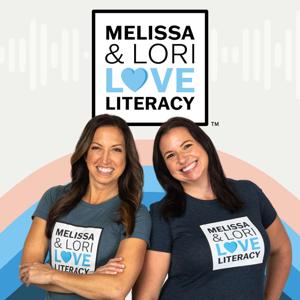
Melissa & Lori Love Literacy® is a science of reading podcast for teachers who want to understand how reading really works and what that means for classroom instruction.
Each month,…
Ranked by our users in the last 21 days
57 Listeners
640 Listeners
49 Listeners
206 Listeners
205 Listeners
132 Listeners
61 Listeners
7,716 Listeners
82 Listeners

25 Listeners
50 Listeners
176 Listeners
44 Listeners
41 Listeners

54 Listeners