
Sign up to save your podcasts
Or



Based on Podcast App listening data
Kim Lockhart, Canadian French immersion teacher and special educator in Kingston, Ontario, shares how she meets the needs of students in her classroom. As stated in a recent report, Right to Read inquiry report from Ontario Human Rights Commission, Ontario is removing the three cueing system completely from all materials and turning to reading science instead. In this episode, Kim models what an evidence-based phonics lesson might entail. In second language programs, it’s necessary for students to build language comprehension by attaching meaning to decoding.
Related Episodes
Resources
Connect with us!
Visit our website to subscribe to our weekly newsletter.
Helping teachers learn about science of reading, knowledge building, and high quality curriculum.
Looking for more literacy support and resources? Explore all of our podcast episodes, free listening guides, and classroom tools at literacypodcast.com.
Interested in bringing Melissa & Lori Love Literacy to your school or event? Email us at [email protected].
Angie Hanlin, current Superintendent in Wisconsin, led her former school from 13% to 100% reading proficiency. How? Angie shifted the focus from TEACHING to LEARNING. She worked alongside her school teams with a relentless, laser-like focus on data, asking questions such as: Who is making progress? Who’s not? What are we going to do about it? Radical acceptance of the data helped educators move forward and put aside blame and shame. Key takeaway: All means ALL!
Related Episodes
Resources
Connect with Melissa & Lori
Visit our website to subscribe to our weekly newsletter.
Helping teachers learn about science of reading, knowledge building, and high quality curriculum.
Looking for more literacy support and resources? Explore all of our podcast episodes, free listening guides, and classroom tools at literacypodcast.com.
Interested in bringing Melissa & Lori Love Literacy to your school or event? Email us at [email protected].
The authors of Thinking Reading: What Every Secondary Teacher Needs to Know About Reading, James and Dianne Murphy, join Melissa and Lori to discuss secondary struggling readers. Where do secondary educators start with struggling students? Put simply, there are two parts to intervention: learning and practice (for automaticity). Keeping those in mind, target what students need to know, explicitly teach and practice, and keep it manageable and motivating.
Related Episodes:
Resources
Connect with us!
Visit our website and subscribe to our newsletter.
Helping teachers learn about science of reading, knowledge building, and high quality curriculum.
Looking for more literacy support and resources? Explore all of our podcast episodes, free listening guides, and classroom tools at literacypodcast.com.
Interested in bringing Melissa & Lori Love Literacy to your school or event? Email us at [email protected].
Join Melissa and Lori for their first Book Club episode! In this episode, they discuss the book Thinking Reading: What Every Secondary Teacher Needs to Know About Reading. They focus their discussion on Chapter 4: Helping struggling readers in the secondary classroom, and Chapter 6: What does it take for effective reading intervention at secondary school?
Related Episodes:
Resources:
Connect with us!
Visit our website and subscribe to our newsletter.
Helping teachers learn about science of reading, knowledge building, and high quality curriculum.
Looking for more literacy support and resources? Explore all of our podcast episodes, free listening guides, and classroom tools at literacypodcast.com.
Interested in bringing Melissa & Lori Love Literacy to your school or event? Email us at [email protected].
This episode is the first in a series on a really important topic: Assessment. How can we debunk the idea of ‘standards-aligned assessments’? What about ‘standards-aligned report cards’?
Today’s guest teaches us that when we overfocus on the format of an assessment (i.e. the standards), we miss out on what matters most and lose track of the goal (i.e. comprehension). Comprehension is not a single construct.
When we think about assessment data, there are two important questions to ask:
The assessment data is a pathway back to the content. In case you’re wondering, here’s where the science of reading comes into play… knowledge building is a necessary and (very) important part of assessment!
Related Episodes
Resources (bulleted list of resources mentioned in the podcast)
Connect with us!
Visit our website and subscribe to our newsletter.
Helping educators learn about science of reading, knowledge building, and high quality curriculum.
Looking for more literacy support and resources? Explore all of our podcast episodes, free listening guides, and classroom tools at literacypodcast.com.
Interested in bringing Melissa & Lori Love Literacy to your school or event? Email us at [email protected].
In today’s episode we’re joined by two teachers from Skaneateles, NY - Seth and Kelly. Seth is a sixth grade ELA teacher and Kelly is a middle school librarian. They work together to ensure that all students have access to complex texts. With the right support, they believe that all students can engage in grade level tasks. Seth and Kelly share how their collaboration around the knowledge and tasks in Wit & Wisdom ELA enriches students' learning and teachers’ teaching. Together, they make an incredible, knowledge-rich team!
Resources (bulleted list of resources mentioned in the podcast)
Related Episodes
Follow us!
Visit our website and subscribe to our newsletter.
Helping educators learn about science of reading, knowledge building, and high quality curriculum.
Looking for more literacy support and resources? Explore all of our podcast episodes, free listening guides, and classroom tools at literacypodcast.com.
Interested in bringing Melissa & Lori Love Literacy to your school or event? Email us at [email protected].
Episode Description
Pentucket Regional School District transitioned from balanced literacy programs to teaching and learning with structured literacy and reading science. Coaches and leaders used data to support educators in understanding the purpose of the transition. They unpacked why the materials were different from what they previously used. Key takeaway: You can’t take your old practices with you and use them with the new materials. Pentucket currently utilizes Wit & Wisdom ELA, Geodes, Fundations, and Heggerty.
Related Episodes
Resources
Follow us!
For more resources, visit our website and subscribe to our newsletter.
Helping teachers learn about science of reading, knowledge building, and high quality curriculum.
Looking for more literacy support and resources? Explore all of our podcast episodes, free listening guides, and classroom tools at literacypodcast.com.
Interested in bringing Melissa & Lori Love Literacy to your school or event? Email us at [email protected].
In today’s episode, we drop some knowledge with one of our favorite teachers, Heidi Jane. You might recognize her as Droppin Knowledge With Heidi on Instagram or LearningWithHeidi on TikTok! What’s the difference between sight words and heart words? How does knowing letter sounds help students when they begin decoding? Why did Heidi choose the trademark Literacy and Justice for All? Heidi shares her journey from balanced literacy to science of reading with the goal of reaching the everyday classroom teacher. Digressions include This Is Us, Mandy Moore, and TikTok.
Related Episodes
Resources
Follow us!
Visit our website and subscribe to our newsletter.
Looking for more literacy support and resources? Explore all of our podcast episodes, free listening guides, and classroom tools at literacypodcast.com.
Interested in bringing Melissa & Lori Love Literacy to your school or event? Email us at [email protected].
This is the time when many districts are engaged in the curriculum adoption process, so we wanted to put this extremely information episode out for listeners who may have missed it. Cory Epler, CAO at Nebraska DOE, speaks about how they encourage the use of EdReports in episode 101. Visit our website and subscribe to our newsletter that follows up with more information about choosing curricula!
What goes on behind the scenes at EdReports.org? Tricia Parker and Jess Box share the gateways that EdReports uses to reviews curricula: standards alignment, quality, and usability. We ask the questions we all really want to know:
Follow us!
Looking for more literacy support and resources? Explore all of our podcast episodes, free listening guides, and classroom tools at literacypodcast.com.
Interested in bringing Melissa & Lori Love Literacy to your school or event? Email us at [email protected].
Nebraska Dept of Education CAO, Cory Epler, joins us today to share why and how Nebraska transitioned to reading science with HQM. In the course of eight years, the state formed a partnership with EdReports and The Council of Chief State School Officers (CCSSO), built transparency of HQM in Local Education Agencies (LEAs), and provided guidance around high quality materials. These key actions created coherence and agency across the state. This mantra resonates: Make the best choice the easiest choice.
Related Episodes
Resources
Follow us!
Visit our website and subscribe to our newsletter.
Looking for more literacy support and resources? Explore all of our podcast episodes, free listening guides, and classroom tools at literacypodcast.com.
Interested in bringing Melissa & Lori Love Literacy to your school or event? Email us at [email protected].
From the publisher's feed
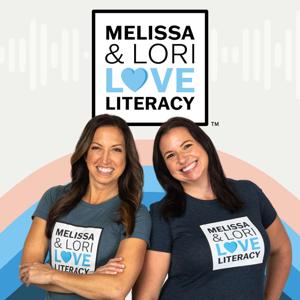
Melissa & Lori Love Literacy® is a science of reading podcast for teachers who want to understand how reading really works and what that means for classroom instruction.
Each month,…
Ranked by our users in the last 21 days
57 Listeners
640 Listeners
49 Listeners
206 Listeners
205 Listeners
132 Listeners
61 Listeners
7,716 Listeners
82 Listeners

25 Listeners
50 Listeners
176 Listeners
44 Listeners
41 Listeners

54 Listeners