
Sign up to save your podcasts
Or



Based on Podcast App listening data
Episode 233
In this episode, we sit down with speech-language pathologist Linsey Jones, who’s leading groundbreaking work in her district by delivering smart, targeted, and manageable literacy interventions to kindergarten students.
Linsey shares how her background in speech-language pathology led her to create a data-driven, highly responsive tier 2 intervention program. She walks us through how she uses assessments (think: letter-sound knowledge, early phonemic awareness, and real-time data tracking), what her 15-minute intervention sessions really look like, and how thoughtful collaboration with classroom teachers has created system-wide change.
We also talk about how her work has been influenced by literacy expert Julia Lindsey and how their entire district is now seeing almost no students falling behind by the end of kindergarten.
Resources
Looking for more literacy support and resources? Explore all of our podcast episodes, free listening guides, and classroom tools at literacypodcast.com.
Interested in bringing Melissa & Lori Love Literacy to your school or event? Email us at [email protected].
Episode 232
We know MTSS can feel like one more acronym and maybe one more thing on your plate. But what if it was the thing that helped everything else run more smoothly instead?
In this episode, we chat with Stephanie Stollar and Sarah Brown, authors of MTSS for Reading Improvement, who help us rethink what strong systems of support actually look like. Together, we explore how to move beyond one-off interventions and start building aligned, school-wide systems that support every reader.
You’ll hear:
RESOURCES
Looking for more literacy support and resources? Explore all of our podcast episodes, free listening guides, and classroom tools at literacypodcast.com.
Interested in bringing Melissa & Lori Love Literacy to your school or event? Email us at [email protected].
Episode 231
Working with students who struggle to make sense of complex texts? You’re not alone! Christina Cover, a high school special educator, interventionist, English teacher, and literacy coordinator, is here to help!
In this episode, Christina shares real-world, research-based strategies she uses to help her students break down and make sense of challenging texts. From her go-to routine Getting the Gist to building vocabulary and using morphology instruction in context, Christina walks us through what works in her classroom.
You’ll hear:
If you teach in grades 3 and up, this episode is full of tools and inspiration you can take straight back to your classroom.
Resources:
Looking for more literacy support and resources? Explore all of our podcast episodes, free listening guides, and classroom tools at literacypodcast.com.
Interested in bringing Melissa & Lori Love Literacy to your school or event? Email us at [email protected].
Bonus Episode
In this episode, Melissa and Lori sit down with Freddy Hiebert, founder of Text Project, to dive deep into the critical role texts play in reading instruction. They explore how the types of texts provided to students not only shape their reading practice but also influence their self-perception as readers.
Freddy shares her expertise on understanding text features and the vital role of repetition in vocabulary acquisition. The conversation highlights how background knowledge supports comprehension and the thoughtful development of decodable texts to support early readers.
They also discuss exciting advancements like the use of AI for generating reading materials and the importance of designing engaging, relevant texts for middle and high school students.
Freddy unpacks the significance of morphological families, polysemy, and semantic mapping, stressing how teachers must grasp these complexities to support deeper word learning and understanding. She underscores the importance of offering students a diverse “text diet” to build vocabulary and comprehension skills.
Listeners will come away with fresh insights on creating engaging texts for diverse learners and innovative strategies for vocabulary teaching that combine context, repetition, and thoughtful text design.
Visit TextProject.org for more info.
Looking for more literacy support and resources? Explore all of our podcast episodes, free listening guides, and classroom tools at literacypodcast.com.
Interested in bringing Melissa & Lori Love Literacy to your school or event? Email us at [email protected].
Episode 230
In this episode, we discuss this article and the vital role of difficult texts with three experts: Kristin Conradi-Smith, John Strong, and Steve Amendum. They explore how thoughtful scaffolding and motivation help students confidently tackle challenging materials, clarifying the difference between text complexity and text difficulty.
Listeners will hear practical strategies for assessing student needs and differentiating instruction, ensuring every learner can thrive. We also discuss key literacy components including activating prior knowledge, the importance of decodable texts in early grades, and the power of read-alouds for K-1 students.
Drawing from research, expert guests highlight ongoing developments in understanding text complexity and stress the need for strong professional learning opportunities to equip educators with effective tools. This conversation is packed with insights and actionable ideas for supporting diverse learners on their reading journeys.
Resources
Looking for more literacy support and resources? Explore all of our podcast episodes, free listening guides, and classroom tools at literacypodcast.com.
Interested in bringing Melissa & Lori Love Literacy to your school or event? Email us at [email protected].
Episode 229
In this episode, Katie Pace Miles and Molly Ness define and explain orthographic mapping as a crucial cognitive process for reading fluency and comprehension. They discuss the importance of mapping words in long-term memory, the difference between memorization and mapping, and the trifecta of phonology, orthography, and meaning that supports effective word learning.
They share a four-step protocol from their new book, Making Words, Stick, for supporting orthographic mapping. They provide insights into effective teaching strategies and resources available for educators.
Resources
Looking for more literacy support and resources? Explore all of our podcast episodes, free listening guides, and classroom tools at literacypodcast.com.
Interested in bringing Melissa & Lori Love Literacy to your school or event? Email us at [email protected].
Episode 228
If you’ve ever wondered how to help your students decode longer words, this episode is for you! We’re joined by literacy researcher and professor Devin Kearns to talk all about teaching multisyllabic words.
Many phonics programs focus on single-syllable words, but what happens when students hit big words and get stuck? Devin unpacks the research behind why that happens and what we can do instead. We talk about:
You’ll walk away with practical, research-backed ideas to help your students read longer words with confidence.
Devin M. Kearns, Ph.D., is the Goodnight Distinguished Professor in Early Literacy at NC State, where he studies early reading and collaborates with experts in psychology, cognitive science, and neuroscience to explore the brain basis of reading.
RESOURCES
Looking for more literacy support and resources? Explore all of our podcast episodes, free listening guides, and classroom tools at literacypodcast.com.
Interested in bringing Melissa & Lori Love Literacy to your school or event? Email us at [email protected].
Episode 227
In this episode, Jan Hasbrouck discusses the critical components of reading fluency, focusing on automaticity and its measurement through words correct per minute (WCPM). The discussion highlights the relationship between fluency and comprehension, the role of oral reading fluency in assessing student progress, and the importance of frequent assessments in the classroom. Jan also reflects on recent research findings from NAEP scores that challenge previous assumptions about fluency and automaticity, emphasizing the need for educators to adapt their understanding and practices based on evolving research. The discussion also touches on the debate between repeated reading and wide reading, advocating for an approach to reading instruction that incorporates both methods. Hasbrouck encourages educators to embrace continuous learning and adapt their teaching strategies based on evolving research.
Resources
Looking for more literacy support and resources? Explore all of our podcast episodes, free listening guides, and classroom tools at literacypodcast.com.
Interested in bringing Melissa & Lori Love Literacy to your school or event? Email us at [email protected].
Episode 211 from December 6, 2024
Fluency is a crucial aspect of reading. It involves automaticity and the ability to connect different aspects of word knowledge.
In this episode, Maryanne Wolf and Melissa Orkin discuss:
Big Takeaway: Fluency is essential for comprehension and has social-emotional implications for struggling readers. The POSSUM approach can help students make the needed connections to be able to read fluently.
Want to Learn More?
Looking for more literacy support and resources? Explore all of our podcast episodes, free listening guides, and classroom tools at literacypodcast.com.
Interested in bringing Melissa & Lori Love Literacy to your school or event? Email us at [email protected].
Episode 226
In this episode, Virginia discusses the importance of fluency in K-2 grades, emphasizing its role in reading comprehension. She shares strategies for teaching fluency, including within partner reading, read-alouds, and shared reading. Virginia highlights the significance of modeling fluent reading and incorporating songs and poems to enhance prosody. This conversation provides valuable insights for educators on how to effectively teach fluency to young learners.
Resources
Looking for more literacy support and resources? Explore all of our podcast episodes, free listening guides, and classroom tools at literacypodcast.com.
Interested in bringing Melissa & Lori Love Literacy to your school or event? Email us at [email protected].
From the publisher's feed
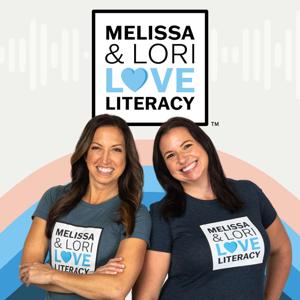
Melissa & Lori Love Literacy® is a science of reading podcast for teachers who want to understand how reading really works and what that means for classroom instruction.
Each month,…
Ranked by our users in the last 21 days
57 Listeners
639 Listeners
49 Listeners
206 Listeners
202 Listeners
132 Listeners
60 Listeners
7,793 Listeners
82 Listeners

25 Listeners

49 Listeners
176 Listeners
43 Listeners
40 Listeners

52 Listeners