
Sign up to save your podcasts
Or



Based on Podcast App listening data
Episode 251
In this episode, we’re joined by Tim Rasinski, Melissa Cheesman, and Savannah Campbell, authors of The Megabook of Vocabulary, to talk about practical, classroom-ready strategies that actually work. We dig into the biggest misconceptions about vocabulary instruction, where vocabulary words should come from, how many exposures a word truly needs, and how to move words from simple recognition to confident use in speaking and writing.
You’ll hear about:
This conversation bridges research and practice, showing how vocabulary connects to decoding, fluency, and comprehension in meaningful ways. If you’re looking for high-impact routines that support all learners. This episode will leave you with actionable ideas you can use right away.
Vocabulary doesn’t have to feel overwhelming. It can be powerful, generative, and deeply connected to everything else we teach.
Resources
Looking for more literacy support and resources? Explore all of our podcast episodes, free listening guides, and classroom tools at literacypodcast.com.
Interested in bringing Melissa & Lori Love Literacy to your school or event? Email us at [email protected].
What does the research really say about effective vocabulary instruction—and how can we translate it into daily classroom practice?
In this episode, we’re joined by literacy expert Blythe Anderson to unpack vocabulary moves grounded in research that make a measurable difference for students. From intentional word selection to meaningful student talk, Blythe shares practical, classroom-ready strategies that help educators move beyond “word of the week” and into instruction that builds deep, lasting word knowledge.
Together, we explore:
Whether you’re a classroom teacher, instructional coach, or school leader, this conversation will leave you with concrete, research-backed practices you can implement immediately.
Tune in to learn how small, intentional shifts in vocabulary instruction can lead to big gains in student word learning and comprehension.
Looking for more literacy support and resources? Explore all of our podcast episodes, free listening guides, and classroom tools at literacypodcast.com.
Interested in bringing Melissa & Lori Love Literacy to your school or event? Email us at [email protected].
Episode 250
In this episode, we’re joined by Margaret McKeown, a leading researcher in vocabulary and language development, to explore what effective vocabulary instruction really looks like in practice.
Margaret helps us unpack common misconceptions about vocabulary teaching, including the pressure to ensure students “master” every word and the belief that vocabulary instruction must always be formal and pre-planned. She explains the power of informal instruction words “running through the classroom” and why repeated exposure over time supports deep word learning.
We also dive into:
Margaret reminds us that vocabulary learning is more like climbing a ladder than crossing a finish line. Not every word requires deep instruction, but thoughtful, strategic choices can make a meaningful impact on comprehension.
If vocabulary instruction has ever felt overwhelming, this conversation offers clarity, reassurance, and practical insight for making it manageable and effective.
Looking for more literacy support and resources? Explore all of our podcast episodes, free listening guides, and classroom tools at literacypodcast.com.
Interested in bringing Melissa & Lori Love Literacy to your school or event? Email us at [email protected].
Episode 248
There’s a saying we hear often in literacy work: you don’t want to try to intervene your way out of a Tier 1 problem. Real change happens when classroom instruction and small-group support are aligned.
In this episode, we’re joined by Kerry Cusick and Erin Sharon, two reading interventionists, who share how aligning Tier 1 instruction with the small-group work they lead every day transformed both their approach and student outcomes. While their work lives in intervention, the routines and decision-making they describe are just as relevant for classroom teachers running small groups.
In this conversation, we explore:
Kerry and Erin share practical examples from their MTSS work, including how they use data to form groups, align with classroom scope and sequence, and design small-group instruction that builds accuracy, automaticity, and meaning.
RESOURCES
Looking for more literacy support and resources? Explore all of our podcast episodes, free listening guides, and classroom tools at literacypodcast.com.
Interested in bringing Melissa & Lori Love Literacy to your school or event? Email us at [email protected].
Episode 143
This conversation remains one of our most downloaded episodes and for good reason.
As we focus this month on small-group instruction, we’re revisiting this important discussion with a team of authors who published the article Maximizing Small-Group Reading Instruction.
In this episode, we explore:
• Why small-group reading instruction has been so widely adopted
• What the research actually says about its effectiveness
• Common misconceptions about small-group time
• What makes small-group instruction purposeful and impactful
If you’re rethinking how small-group time fits within strong Tier 1 instruction, or wondering how to make those minutes count, this episode offers research-informed clarity.
Resources
Looking for more literacy support and resources? Explore all of our podcast episodes, free listening guides, and classroom tools at literacypodcast.com.
Interested in bringing Melissa & Lori Love Literacy to your school or event? Email us at [email protected].
Episode 247
Small-group instruction can feel powerful and overwhelming at the same time. Questions about grouping, time, routines, and impact come up constantly.
In this episode, we’re joined by Julia Lindsey, author of Small Groups, Big Results, to talk about what actually makes small-group instruction work. Julia helps break down small groups into manageable, intentional practices that don’t require more time or complexity, just clearer purpose.
In this conversation, we discuss:
Whether you’re new to small groups or looking to refine your approach, Julia offers clarity, research, and realistic guidance.
RESOURCES
Looking for more literacy support and resources? Explore all of our podcast episodes, free listening guides, and classroom tools at literacypodcast.com.
Interested in bringing Melissa & Lori Love Literacy to your school or event? Email us at [email protected].
Episode 246
Fluency looks different across grade levels, but it always matters.
In this special mashup episode, Melissa and Lori bring together voices from seven classroom teachers, spanning first grade through eighth grade, to show how fluency comes to life in real classrooms. Each teacher shares a best practice they use to support accuracy, automaticity, and expression, always grounded in meaningful reading.
You’ll hear about a range of approaches, including:
This episode is full of practical ideas, classroom insight, and teacher wisdom, whether you’re teaching in the primary grades or supporting older readers.
Resources:
Looking for more literacy support and resources? Explore all of our podcast episodes, free listening guides, and classroom tools at literacypodcast.com.
Interested in bringing Melissa & Lori Love Literacy to your school or event? Email us at [email protected].
Episode 245
In this episode, Melissa and Lori are joined by researchers Jake Downs and Chase Young to discuss Read Like Us, a research-backed fluency routine designed to help students reread challenging texts with purpose. Jake and Chase share the findings from their recent study, explain how the routine works in real classrooms, and explore why fluency grows when students have multiple supported opportunities to read connected text.
The conversation unpacks:
You’ll also hear why the study showed especially strong results for fourth-grade readers and how teachers can think about applying this work across grade levels.
This episode offers both a clear explanation of the research and practical insights teachers can use as they plan fluency instruction that supports real reading where skills come together in text.
Resources:
Contact Chase Young at https://lfcreading.com/podcast with your questions!
Looking for more literacy support and resources? Explore all of our podcast episodes, free listening guides, and classroom tools at literacypodcast.com.
Interested in bringing Melissa & Lori Love Literacy to your school or event? Email us at [email protected].
Episode 244
Lindsay Kemeny shares her insights on effectively managing a literacy block in a primary classroom. She discusses her daily schedule, emphasizing the importance of routines in phonics instruction, close reading strategies, and writing lessons. Lindsay also highlights the importance of small group instruction for differentiation and explains how to manage center work for students! She encourages teachers to focus on progress rather than perfection, sharing practical tips and strategies for enhancing literacy instruction.
Lindsay's Book, Rock Your Literacy Block, is available now!
Looking for more literacy support and resources? Explore all of our podcast episodes, free listening guides, and classroom tools at literacypodcast.com.
Interested in bringing Melissa & Lori Love Literacy to your school or event? Email us at [email protected].
Episode 243
Jamey Peavler discusses the importance of recognizing the varied learning needs of students in all grades! She emphasizes the distinction between comprehension and word recognition skills, advocating for differentiated instruction to better support each student's unique learning journey.
Key Takeaways
Looking for more literacy support and resources? Explore all of our podcast episodes, free listening guides, and classroom tools at literacypodcast.com.
Interested in bringing Melissa & Lori Love Literacy to your school or event? Email us at [email protected].
From the publisher's feed
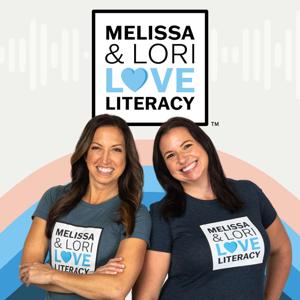
Melissa & Lori Love Literacy® is a science of reading podcast for teachers who want to understand how reading really works and what that means for classroom instruction.
Each month,…
Ranked by our users in the last 21 days
57 Listeners
639 Listeners
49 Listeners
206 Listeners
203 Listeners
132 Listeners
60 Listeners
7,760 Listeners
82 Listeners

25 Listeners

49 Listeners
176 Listeners
44 Listeners
40 Listeners

53 Listeners