
Sign up to save your podcasts
Or



Based on Podcast App listening data
Imagine transforming the way you teach reading. Picture your students not just passively consuming the written word, but actively producing meaning and taking purposeful actions inspired by what they've read. This is the promise of our conversation with Doug Fisher, professor at San Diego State University and renowned author, as he takes us on a journey into the depths of reading comprehension.
We question the effectiveness of common literacy programs and discuss the intricate ties between vocabulary, comprehension, and prior knowledge. How do you feel about the 'letter of the week' approach? Listen as we scrutinize its validity and dig deeper into other foundational reading skills, such as letter recognition and sound blending. We also expose the symbiotic relationship between vocabulary and comprehension, underscoring the pivotal role of knowledge in decoding texts.
We then traverse the landscape of oral language in reading instruction and the implications of isolating reading from writing. Can you guess the impact of these practices on student learning? Doug enlightens us on the significance of comprehension strategy instruction and the importance of developing all elements of reading literacy. To cap it off, our conversation concludes with three practical suggestions that you, as an educator, can apply in your classroom for immediate impact. Prepare to awaken a new perspective on the world of reading.
Resources
Looking for more literacy support and resources? Explore all of our podcast episodes, free listening guides, and classroom tools at literacypodcast.com.
Interested in bringing Melissa & Lori Love Literacy to your school or event? Email us at [email protected].
Imagine facing not only the struggles of growing up in a challenging environment, but also battling a learning difference that went undiagnosed for years.
Hear the inspiring story of Ameer Baraka as he discusses his book: Undiagnosed: The Ugly Side of Dyslexia.
Ameer will discuss:
By the end of this episode, you'll see how Ameer’s journey not only sheds light on the challenges of dyslexia but also highlights the incredible strength it takes to overcome adversity.
Want to Learn More?
Looking for more literacy support and resources? Explore all of our podcast episodes, free listening guides, and classroom tools at literacypodcast.com.
Interested in bringing Melissa & Lori Love Literacy to your school or event? Email us at [email protected].
From October 7, 2022
In this episode, we talk with former balanced literacy teacher and parent, Missy Purcell. She authored a blog post titled Dear Balanced Literacy Teacher.
Missy writes, “According to Nancy Young’s ladder of reading, roughly 10-15% of kids can figure out reading out with this type of instruction, but my child, who would later be diagnosed with dyslexia, would never be able to become a proficient reader with any version of balanced literacy. He, according to Young, like 85% of students, benefit from or need systematic explicit instruction that follows a scope and sequence with fidelity to become proficient readers and writers.”
We want to normalize the idea that most kids CAN learn how to read with structured literacy instruction.
Resources
Looking for more literacy support and resources? Explore all of our podcast episodes, free listening guides, and classroom tools at literacypodcast.com.
Interested in bringing Melissa & Lori Love Literacy to your school or event? Email us at [email protected].
In this conversation we explore Nancy Young's infographic, "The Ladder of Reading and Writing," unpacking the complexity of learning to read and write in English. This framework helps educators grasp the diverse factors influencing how students learn. Nancy Young and Jan Hasbrouck, editors of the new book Climbing the Ladder of Reading & Writing: Meeting the Needs of All Learners help us navigate through the four color-coded levels—ranging from those facing the most challenges to those who begin reading effortlessly—emphasizing tailored teaching methods and the nuanced nature of literacy instruction. Highlighting the pivotal roles of classroom organization and data-driven grouping, the episode underscores the necessity of flexible teaching approaches. Concluding with insights on assessment tools and collaborative strategies, they share what it takes for effective differentiated instruction.
Takeaways
Resources
Looking for more literacy support and resources? Explore all of our podcast episodes, free listening guides, and classroom tools at literacypodcast.com.
Interested in bringing Melissa & Lori Love Literacy to your school or event? Email us at [email protected].
Jul 7, 2023
Today we talk about fluency and assessment with Jan Hasbrouck. She shares tips and tricks for how to to best assess and teach fluency. She also debunks frequent fluency misunderstandings and explains the scientific evidence that underlies the Hasbrouck-Tindal Oral Reading Fluency Chart.
Note: During the podcast, we mentioned we would link Jan’s previous studies on ORF. But… we want to make sure the most recent information (Fluency Norms Chart 2017 Update) is the one that is prioritized for instructional use, so we’ve linked that to avoid confusion.
Resources
Looking for more literacy support and resources? Explore all of our podcast episodes, free listening guides, and classroom tools at literacypodcast.com.
Interested in bringing Melissa & Lori Love Literacy to your school or event? Email us at [email protected].
Nancy Hennessy and Julia Salamone discuss the importance of vocabulary and syntax in reading comprehension. They explain how vocabulary connects to reading comprehension and the different levels of word knowledge. They also emphasize the need for explicit instruction in vocabulary and the role of context in understanding word meaning. They also discuss the connection between semantics and syntax and how understanding sentence comprehension is crucial for overall comprehension. They share instructional activities such as anagrams and sentence expansion to support sentence level comprehension. The conversation explores the integration of reading and writing, the importance of language in reading proficiency, and different ways students can express their understanding through oral responses, multimedia, and written responses as tools for comprehension and expression.
Resources
Looking for more literacy support and resources? Explore all of our podcast episodes, free listening guides, and classroom tools at literacypodcast.com.
Interested in bringing Melissa & Lori Love Literacy to your school or event? Email us at [email protected].
From Aug 4, 2023
What if the key to unlocking your students' reading comprehension could be found through a deeper understanding of the intricate processes at work in their minds? Prepare to have your teaching world transformed as we journey with reading comprehension expert and acclaimed author, Nancy Hennessy. Together, we’ll map out the cognitive and linguistic processes that underpin comprehension, and navigate the complex interaction between a reader's knowledge, the text itself, and the author's intent.
As teachers, we play an integral role in shaping the reading journey of our students. Witness how the Reading Comprehension Blueprint can revolutionize your instructional design as we discuss how to thoughtfully consider the task, text, and context. Learn how to integrate prior background knowledge and foster mental models of understanding. Be part of our examination of comprehension as an essential pillar of reading and join us as we demystify the science behind this crucial skill.
Finally, imagine having a blueprint that offers a flexible framework that aligns seamlessly with the science of comprehension. Listen as we delve into the importance of planning for instruction, pinpointing the key takeaways for your students, and exploring types of texts and text sets. Learn how to identify the contributors to comprehension and teach your students to become masters of their own understanding. Buckle up and get ready to revolutionize your approach to teaching reading comprehension.
Resources
Looking for more literacy support and resources? Explore all of our podcast episodes, free listening guides, and classroom tools at literacypodcast.com.
Interested in bringing Melissa & Lori Love Literacy to your school or event? Email us at [email protected].
Lindsay Kemeny discusses her book 7 Mighty Moves and the importance of teaching literacy effectively. The conversation covers the development of the 7 moves, which focus on phonemic awareness, word recognition, fluency, vocabulary, and comprehension. Lindsay emphasizes the need for explicit and systematic instruction, the use of decodable texts, and the importance of teaching sight words with phonics skills. She also shares practical strategies for improving fluency, such as partner reading and paragraph shrinking. She explains how this routine helped improve students' reading fluency and comprehension. Lindsay also emphasizes the importance of embracing vocabulary and background knowledge in reading instruction.
Resources
Looking for more literacy support and resources? Explore all of our podcast episodes, free listening guides, and classroom tools at literacypodcast.com.
Interested in bringing Melissa & Lori Love Literacy to your school or event? Email us at [email protected].
From Mar 18, 2022
How can regular fluency practice lead to fluent readers? In today’s episode, educators Lorraine Griffith and Lindsay Kemeny discuss the impact of fluency in their classrooms. Fluency is a bridge: It connects word recognition with comprehension. We dive into whole and small group fluency instruction with simple strategies and more.
Looking for more literacy support and resources? Explore all of our podcast episodes, free listening guides, and classroom tools at literacypodcast.com.
Interested in bringing Melissa & Lori Love Literacy to your school or event? Email us at [email protected].
Our guests today, authors Tricia Zucker and Sonia Cabell, discuss the concept of Strive-For-Five Conversations, which emphasizes the importance of multi-turn conversations between teachers and students. They explain that the goal is to stretch conversations beyond the typical question-response format and aim for at least five turns. The conversation explores the importance of building relationships with parents and the impact of conversations on brain development. They also provide practical tips for implementing Strive for Five in the classroom and engaging parents in the process.
Resources
Looking for more literacy support and resources? Explore all of our podcast episodes, free listening guides, and classroom tools at literacypodcast.com.
Interested in bringing Melissa & Lori Love Literacy to your school or event? Email us at [email protected].
From the publisher's feed
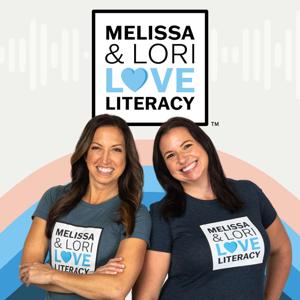
Melissa & Lori Love Literacy® is a science of reading podcast for teachers who want to understand how reading really works and what that means for classroom instruction.
Each month,…
Ranked by our users in the last 21 days
58 Listeners
642 Listeners
49 Listeners
207 Listeners
206 Listeners
132 Listeners
61 Listeners
7,706 Listeners
82 Listeners

25 Listeners

50 Listeners
176 Listeners
44 Listeners
41 Listeners

54 Listeners