
Sign up to save your podcasts
Or



Based on Podcast App listening data
Melissa & Lori discuss questions about reading comprehension from our new book, The Literacy 50: A Q&A Handbook for Teachers, and provide research-based answers and practical suggestions. We talk about the place of sustained silent reading in the school day and the best ways to assess a student's comprehension. We also discuss the concept of reading volume and how to support students in reading more.
Looking for more literacy support and resources? Explore all of our podcast episodes, free listening guides, and classroom tools at literacypodcast.com.
Interested in bringing Melissa & Lori Love Literacy to your school or event? Email us at [email protected].
Melissa & Lori discuss questions about phonemic awareness from our new book, The Literacy 50: A Q&A Handbook for Teachers. We talk about best practices for teaching phonemic awareness and whether to teach it with or without naming and showing letters. Additionally, we address the misconception that introducing letters in phonemic awareness instruction means transitioning to phonics, and they provide guidance on when and how to introduce letters in phonemic awareness instruction.
Looking for more literacy support and resources? Explore all of our podcast episodes, free listening guides, and classroom tools at literacypodcast.com.
Interested in bringing Melissa & Lori Love Literacy to your school or event? Email us at [email protected].
The tables are turned on us in today's episode! Anna Geiger interviews us about our new book, The Literacy 50. You might know Anna as The Measured Mom and host of the Triple R Teaching podcast. We loved divulging why we wrote the book, how educators can use it in classrooms and schools, and we even answer some hot topic questions!
Looking for more literacy support and resources? Explore all of our podcast episodes, free listening guides, and classroom tools at literacypodcast.com.
Interested in bringing Melissa & Lori Love Literacy to your school or event? Email us at [email protected].
Today's sneak peek episode gives you a behind the scenes look at why we wrote this book, the questions we answer, and resources we crafted just for you!
Looking for more literacy support and resources? Explore all of our podcast episodes, free listening guides, and classroom tools at literacypodcast.com.
Interested in bringing Melissa & Lori Love Literacy to your school or event? Email us at [email protected].
Unlock the potential in every multilingual learner as Claude Goldenberg, renowned professor emeritus of education at Stanford University, joins us to dispel myths and share crucial strategies in literacy education. Delve into the complexities of teaching reading to students mastering English, where educational rights meet the science of literacy. We promise a journey through the nuances of vocabulary acquisition and orthographic mapping, with Goldenberg guiding us to make academic content accessible without compromising on language development.
Ever wondered how the science of reading translates to multilingual classrooms? Look no further. We address the probabilistic nature of literacy learning, akin to the varied responses to a COVID-19 vaccine, and examine the relevance of neurolinguistics research for English learners. In a thought-provoking discussion, we challenge the notion that teaching strategies for monolingual and multilingual learners are worlds apart, instead highlighting their fundamental similarities and the necessity for a nuanced approach.
Join us as we navigate the foundations of reading development and learn how to best support emergent bilinguals. From the ARIES study to the pivotal role of phonemic awareness and fluency, we uncover the intricacies of teaching emergent bilingual children to read. Emphasizing the latest research, this episode is a clarion call for educators and advocates to embrace collaborative, well-informed practices in literacy education, ensuring that every learner's path to reading fluency is as effective and enlightened as possible.
Looking for more literacy support and resources? Explore all of our podcast episodes, free listening guides, and classroom tools at literacypodcast.com.
Interested in bringing Melissa & Lori Love Literacy to your school or event? Email us at [email protected].
We discuss various models for teaching English learners to read with Magdalena Zavalia, CEO of the PAF Reading Program. We explore different types of models, including monolingual programs, transitional bilingual education, and dual language immersion. Magdalena emphasizes the importance of understanding students' needs and goals when implementing a dual language program. She also discusses the challenges and considerations for teachers and principals, including resources, professional development, curriculum, and scheduling. Magdalena highlights the benefits of dual language instruction for both native English speakers and English learners.
Resources
Looking for more literacy support and resources? Explore all of our podcast episodes, free listening guides, and classroom tools at literacypodcast.com.
Interested in bringing Melissa & Lori Love Literacy to your school or event? Email us at [email protected].
From August 5, 2022
Dr. Elsa Cardenas-Hagan joins the podcast to share that reading science works for English Learners. What does it mean to use evidence-based instruction to teach English Learners? Dr. Cardenas-Hagan asserts that every language has its own history, its own culture, its own use. Language supports literacy, and literacy support language. With this cyclical understanding, she explains how to use effective strategies for ALL learners.
Looking for more literacy support and resources? Explore all of our podcast episodes, free listening guides, and classroom tools at literacypodcast.com.
Interested in bringing Melissa & Lori Love Literacy to your school or event? Email us at [email protected].
In this conversation, Stephanie Stollar discusses the implementation of Multi-Tiered Systems of Support (MTSS). MTSS is a framework for school improvement that helps to provide support for students with various needs. The MTSS framework focuses on using data to identify barriers to student performance and making plans to eliminate those barriers. Stollar explains that word recognition skills are more discreet and sequential, while language comprehension skills are more unconstrained and complex. Stephanie recommends that special education resources should be blended with general education resources from the beginning, and students should receive intensive support as soon as it is needed, without having to go through a series of interventions and assessments. She also emphasizes the importance of evidence-aligned instruction and the need for team-based decision-making in the MTSS model.
Takeaways
Resources
Looking for more literacy support and resources? Explore all of our podcast episodes, free listening guides, and classroom tools at literacypodcast.com.
Interested in bringing Melissa & Lori Love Literacy to your school or event? Email us at [email protected].
In this episode, Savannah Campbell, a K-5 reading specialist, shares practical spelling tips for teachers. She emphasizes the importance of having students say the sounds or syllables as they spell, as it helps develop sound-symbol correspondence. Savannah also recommends interleaving, which involves practicing both new and old spelling skills to ensure mastery. Savannah also discusses the use of dictation, word chains and sound boxes for spelling instruction. Additionally, she advises keeping the same routine but varying the methods to keep students engaged.
Takeaways
Resources
Looking for more literacy support and resources? Explore all of our podcast episodes, free listening guides, and classroom tools at literacypodcast.com.
Interested in bringing Melissa & Lori Love Literacy to your school or event? Email us at [email protected].
Pam Kastner discusses the connection between spelling and reading. She emphasizes that teaching spelling is teaching reading, as spelling is a higher linguistic skill that requires complete and accurate recall and memory for words. Spelling helps students understand the internal structure of words and improves their reading abilities. She suggests using instructional routines that integrate phonology, orthography, morphology, semantics, syntax, and pragmatics to teach spelling effectively.
Takeaways
Resources
Looking for more literacy support and resources? Explore all of our podcast episodes, free listening guides, and classroom tools at literacypodcast.com.
Interested in bringing Melissa & Lori Love Literacy to your school or event? Email us at [email protected].
From the publisher's feed
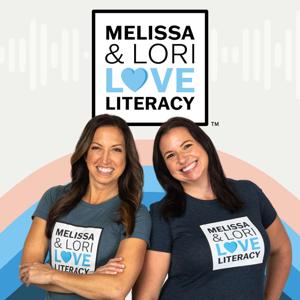
Melissa & Lori Love Literacy® is a science of reading podcast for teachers who want to understand how reading really works and what that means for classroom instruction.
Each month,…
Ranked by our users in the last 21 days
57 Listeners
643 Listeners
49 Listeners
207 Listeners
206 Listeners
132 Listeners
61 Listeners
7,712 Listeners
82 Listeners

25 Listeners

50 Listeners
176 Listeners
44 Listeners
41 Listeners

54 Listeners