
Sign up to save your podcasts
Or



Based on Podcast App listening data
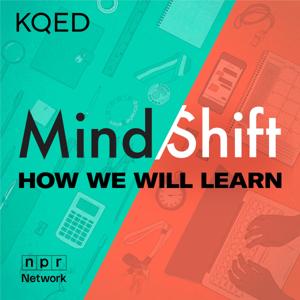
We all know how it feels to get a bad apology. “I’m sorry if,” “I’m sorry but,” and other ways people skirt real acknowledgement of wrongdoing. Effective apologies require empathy, perspective-taking, honesty and courage, and making amends is an important habit for healthy school communities. In this episode, MindShift talks with two authors who analyze apologies in the news for a website called SorryWatch. Then we meet a fifth-grade teacher who teaches her students a seven-step formula for apologies through role-playing and class discussions. Her students not only learn to recognize and enact good apologies – they also share that knowledge on the playground and with their families at the dinner table.
In recent years, dress codes have been undergoing significant shifts in many schools across the nation. With language targeting hair, visible skin, and footwear, dress codes are often touted as promoting professionalism and eliminating distractions in the classroom. However, policies around dress codes are receiving pushback from students and parents for disproportionately impacting students of color, LGBTQ+ students, and students from low-income backgrounds. In response to student-led research, one Washington DC-based school decided to center input from students to reevaluate their policies to ensure they are inclusive and respectful of all students. In this episode, MindShift investigates the reasons behind creating rules around what students wear, whether dress codes work the way adults hope they do, and one school’s process of creating a more relaxed dress code.
As educators move away from sage-on-the-stage instruction, their first step is often to foster more student discussion. A talkative classroom might be a mark of success in student-centered learning, but it doesn’t mean every student is engaged. In this episode, MindShift visits a language arts classroom where an extroverted teacher has developed creative ways of inviting introverted students to share their thinking. We also hear from an education researcher who says we should view student engagement as a continuum, and from a teacher who uses that continuum to better understand how students are driving their learning.
Age-appropriate consent education involves much more than navigating sexual activity. It can show up in situations as mundane as sharing fries, asking someone to dance at prom, or initiating a romantic relationship. By teaching students how to ask for and give enthusiastic consent, they can navigate these situations in a way that ensures both parties feel comfortable and respected. In this episode, MindShift explores how teaching consent in school empowers students to set boundaries and express their emotions.
The MindShift team includes Nimah Gobir, Kara Newhouse, Ki Sung, Marlena Jackson-Retondo, Chris Hambrick, and Seth Samuel. MindShift is supported in part by the generosity of the William & Flora Hewlett Foundation and members of KQED. Jen Chien is the director of podcasts. Katie Sprenger is Podcast Operations Manager. Audience Engagement Support from Cesar Saldaña. Holly Kernan is KQED’s Chief Content Officer.
MindShift is back with Season 8!
Hear from educators and experts creating pathways for students to flourish.
Subscribe to receive new episodes starting July 18.
Our guest, University of Virginia Professor Daniel Willingham, is the author of a new book to help us break the cycle of ineffective learning habits. In “Outsmart Your Brain,” he gives tips on how to listen when you’re sitting in a lecture, how to take notes that work for you, and how to study to retain information.
Please consider taking our audience survey! https://survey.alchemer.com/s3/7297739/b0436be7b132
Your responses will help guide us on what to cover next and how to better serve your needs.
Gholdy Muhammad is Professor of Literacy, Language and Culture at the University of Illinois and the author of Unearthing Joy: A Guide to Culturally and Historically, Responsive Teaching and Learning. She talks about joy in an educational context and how teachers can specifically incorporate joy into their work.
Running coach and author, Linda Flanagan, talks about her book, “Take Back the Game: How Money and Mania are Ruining Kids’ Sports and Why It Matters," and gives tips on how parents can tell when they've gone too far.
Caldecott and Newbery Honoree Grace Lin and bestselling author Kate Messner talk about their new book “Once Upon A Book” and share advice on how to help kids cultivate a love of reading.
Chris Emdin, is the Robert A. Naslund Endowed Chair in Curriculum & Teaching and a professor of education at the University of Southern California. He tells us how we might reimagine STEM subjects to be more inclusive and how to teach in a way that creates young people with strong STEM identities.
From the publisher's feed

21,809 Listeners

43,853 Listeners

43,361 Listeners

730 Listeners

395 Listeners

114 Listeners
10,149 Listeners

342 Listeners
14,656 Listeners

1,065 Listeners

85 Listeners
9,093 Listeners

187 Listeners

432 Listeners

133 Listeners
16,371 Listeners

431 Listeners

4,759 Listeners

30 Listeners
14,341 Listeners

321 Listeners