
Sign up to save your podcasts
Or



Based on Podcast App listening data
We should all have a legal right to nature, according to a group of more than 60 campaigning charities who say we need better access to the countryside. They have written to the government, complaining that one in three of us lives more than 15 minutes’ walk from the nearest green space. But is nature there for our enjoyment? Is the countryside just a recreational resource, to be exploited by anyone in possession of a pair of wellies? If we are entitled to delight in the landscape, don’t we also share the moral responsibility for looking after it? Maybe that means leaving it alone. Or should we be doing more to encourage our city-dwellers and minority ethnic communities to feel included there?
The UK’s countryside is about to live through enormous change, with farmers to be given taxpayer cash to ‘rewild’ some of their land. But what should rewilding mean to them and to the rest of us? Bees and butterflies are lovely, but is it worth the loss of a few lambs to see eagles back in our skies? How about a few hundred lambs? Maybe the countryside really belongs to those who for generations have worked it for a hard-earned living; and maybe they have a perfect right to sell some of it to developers who want to build much-needed housing estates. We want the countryside to be richly stocked with exciting animals and beautiful woodlands. We want badgers and beavers and some of us (not the shepherds) want wolves and wildcats. We can't have everything, so what should we do? With Dr Sue Young of The Willdlife Trusts; Farmer Gareth Wyn Jones; Director of Rewilding Britain Alistair Driver and Property Analyst Kate Faulkner.
Produced by Olive Clancy
We can add ten years to our lives if we chose, we’re told this week by scientists who have measured the effects of tweaking our lifestyles. The downside is we’ll need to give up meat and eat a lot of lentils to do it. Oh, and start very young. It won’t be easy – but is there a moral imperative to do it? Elsewhere, science is forging ahead with new, possibly less onerous ways to help us live longer. Researchers in Japan this week unveiled a serum that can halt aging, though so far only in mice. And Silicon Valley is reported to be full of start-ups working on rejuvenation techniques. But is a longer life a more moral life? If we get those extra years will they be worth the effort? Was Kingsley Amis right when he wrote: "No pleasure is worth giving up for the sake of two more years in a geriatric home" ? Or is it irresponsible to indulge in life-shortening activities that you happen to enjoy, if they increase the reliance you may (sooner than you hope) be placing on the state?
As a society we’re living longer than our parents, and much longer than our grandparents. But there are wide disparities. On average the rich make older bones than the poor, and a BMJ article this week deplored the fact that life expectancy is actually in decline in many deprived communities in the UK. Perhaps we have a collective moral duty to even that out, but it will be expensive. Who’s going to pay for the pensions and the care homes? Is the individual ambition to live to 100 intrinsically selfish and immoral when it imposes such burdens on others? With Repotting Your Life author Frances Edmonds; Longevity expert and London Business School Professor Andrew Scott; Director of the Free Market think tank IEA - Mark Littlewood and Political Economist Jeevan Sandher.
Produced by Olive Clancy
Levelling up - a brighter and fairer future is on the way according to the Government. But what is our moral responsibility to the future and how does it weigh against the needs of the present? Maybe the stars of technology, economics and politics really are now aligned to bring an end to post-code inequalities. Or is this another hotch-potch of plans that can’t be judged until a time so distant we’ll have forgotten why we dreamed them up in the first place. Are plans for the future destined to fail because we over-reach? Or do they fail because we don’t reach far enough, so preoccupied are we with the selfish here and now?
Meanwhile the UK is committed to the ambition of going carbon neutral by 2050, something that requires the sacrifice of higher energy bills today. Should we be prepared to be individually worse off, to put up with inconvenience and sacrifice our comfort for the benefit of our grandchildren? Does that remain true as gas prices rocket and new price rises are inevitable? And isn’t it true that if our forebears had made the sacrifices and adopted a forward looking energy plan 30 years ago, we wouldn’t be in this mess at all. What is our moral responsibility towards the future? And does it outweigh our responsibilities to the present and the inheritance we have from the past? With author of End State, James Plunkett; Politics Professor Rosie Campbell; Journalist Ross Clark and Politics lecturer Dr Gareth Dale.
Yielding to the big star pressure of Neil Young and Joni Mitchell, this week Spotify agreed to put a content advisory label on any podcast that includes material about Covid. Mitchell and Young removed their music in protest at Joe Rogan’s podcasts. These shows are extremely popular globally but they aired views sceptical of Covid vaccines. In an Instagram post Rogan himself said he'd aim for more impartiality in future, but Spotify’s shares are down and more artists are joining the boycott. Who is responsible for the content of Spotify or any other digital platform? Is Covid a special case or must they remove or add a warning about anything any listeners might object to? Is it enough to say sorry or offer to slap on a "contentious material" label? At what point do such safeguards become censorship?
And what about other, more traditional, intermediaries? This week the poet and teacher Kate Clanchy said she considered suicide after parting company with her publisher. She’d been accused of racism in the words she used about pupils in her memoir Some Kids I Taught and What They Taught Me. The students have defended her in print and Clanchy has apologised. And yet the debate goes on. Are publishers morally responsible for their authors ideas and beliefs? If the publisher or internet platform truly disagrees with the material, is it enough to issue an apology or label the offending material as contentious? And does intent count at all? With Journalist Brendan O'Neill, Academic Julie Posetti, Broadcaster Inaya Folarin Iman and Poet Anthony Anaxagorou.
President Putin insists that he has no intention of invading Ukraine. In amassing troops and weapons along the border, the Russians are merely ‘protecting their national interests’. Meanwhile NATO, the US-European military alliance, is busy reinforcing its eastern member states with ships and planes. Our own Prime Minister has issued dire warnings that Russia will not be allowed to harass a smaller neighbour in this way. So, who is right? Is there a moral imperative for us to protect a fledgling democracy that seems to be under threat? What, if anything, can we – or should we – do to support Ukraine? And what moral arguments do we have, to help us decide?
Perhaps this is just aggressive posing by both sides that will drift on and die down. But what if it becomes something more? What if it embroils us in a European war? And if that happens, who will be to blame? Given the record of the UK and the West in Afghanistan and Iraq, do we even have the appetite for another foreign intervention? Is the very idea morally dubious? And, in any case, doesn’t the size of Russia’s nuclear arsenal make it impossible for us to call Putin’s bluff? With Global Governance Professor Mary Kaldor; Russia Expert Keir Giles; Newspaper Columnist Simon Jenkins and Kyiv University Political Scientist Taras Kuzio.
Produced by Olive Clancy
In spite of his apology the calls continue for the Prime Minister to resign. He did not follow his own rules so he must go, says a sizeable majority in the polls. But why must he go? Sympathy, understanding and forgiveness are all virtues to celebrate - unless we happen to be talking about people we don’t like. Most of those who broke the lockdown rules (maybe you, maybe me) got away with it. Some got a caution or a fine; very few lost their jobs.
The charge against Boris Johnson is not so much that he broke the law as that he crossed a moral boundary. So, what are the moral rules he is accused of breaking? And why isn’t his very public apology deemed by some to be not good enough?
Anthropology tells us that the basic rules of morality are universal. But sociologists say that cultural norms dictate how we’re expected to behave, and Britain is culturally diverse. Given that politics is almost by definition an interplay of pragmatism and integrity, perhaps we should learn to live with our politicians’ clay feet and look elsewhere for paragons of moral virtue? With former Conservative MP Edwina Currie, Anthropologist Dr Oliver Scott Curry, Political theorist Dr Stephen de Vijze and Philosophy professor Quassim Cassam.
Produced by Olive Clancy
The so-called Colston Four did not deny pulling down a statue of the slave trader Edward Colston, but last week in Bristol they were cleared of causing criminal damage. They argued that they were protesting for racial equality, “on the right side of history”, and a jury found in their favour. The four were celebrated by crowds outside the courthouse, part of a tradition, it seemed, of activists bringing social change by whatever means necessary. Their critics, on the other hand, say this is an invitation to vandalism since it sends a message that it is OK to take whatever action you choose to promote your cause. If your right to protest allows you to march against injustice should it also extend to the right to glue yourself to a road or topple a statue?
This is the latest in a series of cases where juries have cleared protestors, despite there being no dispute about the facts. When the co-founder of Extinction Rebellion was acquitted in case with many parallels, he said it showed that “ordinary people, unlike the judiciary, are able to see the broader picture.” While a jury decision cannot legally set a precedent or influence another case, several MPs have expressed anger and concern about the implications of this verdict. They argue that the case should have been tried somewhere neutral and that the ‘expert witness’ should not have been an historian but a specialist in property rights. Who is right? Is history a legitimate defence after protestors smash up something that offends them? Are the rules being bent? And if so, is that what juries are for? With Jeremy Black, Jen Reid, Steven Barrett and Kirsty Brimelow.
Produced by Olive Clancy
The end of one year and the beginning of another can be an obvious moment for people to set goals and reset priorities. The pandemic, from which we are yet to emerge, has put much into perspective and has doubtless prompted many to ask the question: where am I going with my life? What’s it all about? While none of us can truly know the meaning of life, most of us are meaning-seeking creatures who have our own ideas about what gives life meaning – God, nature, the arts, human relationships, good food, scientific progress. Is meaning essential to a life well lived or do we put too much pressure on ourselves in trying to create it? For some, the stories we tell about ourselves are the most powerful way of addressing existential questions like the climate crisis. Yet meaning is subjective, and is often separated by national, cultural, religious and ideological borders. Can our disparate human stories be harnessed as a motivator for collective action on the climate? Or is it hubris to suggest human beings can find a solution, and the story we should be telling instead is one in which the cavalry isn’t coming?
Michael Buerk chairs this special end-of-year debate with guest panellists: Rowan Williams, Alice Roberts, Will Self and Bonnie Greer. With witnesses: Emily Esfahani-Smith, James Tartaglia, Martin Palmer and Charlotte Du Cann.
Producer: Dan Tierney.
#moralmaze
Christmas is the season of peace on earth and good will to all people. While we naturally want to endorse this sentiment, it is also a yearly reminder of how conflict and bad faith exist in our homes and in wider society. While some families will celebrate a long-anticipated and joyful reunion, others will be trying to hold their tongue about divisive issues like Brexit or Covid until the same time next year. Surely, we could all benefit from a bit more listening, understanding and compromising? But what if deeply-held principles, make compromise impossible without sacrificing one’s own integrity? Is it better to say nothing at all for short-term peace or speak forthrightly not knowing if the long-term outcome for the relationship will be one of rupture or repair? Beyond the domestic setting is the question of how we address the cultural warfare we see in the public discourse around us. What will it take for us to come out of our ideological trenches and stop our sniping? Perhaps it starts by recognising that we all have egos that are difficult to tame, and admitting we’re wrong doesn’t make us weak. We hear the calls to ‘disagree respectfully’, but how? For some, the very idea solves or advances very little, particularly for the most marginalised in society. For others, the point isn’t to solve anything but to live together in difference while upholding each other’s humanity. With Gabrielle Rifkind, Dr Becca Bland, Rev Steve Chalke and Sarah Stein Lubrano.
Producer: Dan Tierney
The Number 10 ‘party’ scandal has prompted questions not only about whether the Prime Minister is still an electoral asset but whether he and his government have the moral authority to lead us through the lingering pandemic. According to a recent YouGov poll, the level of trust in UK politicians has fallen to an historic low. Despite the scathing attacks from across the political spectrum, are today’s political leaders any morally worse than in previous generations? Some see morality as having been vacuumed out of politics over recent decades; where once politicians had principles, character and a sense of public service, there are now too many who are primarily seeking to boost their own status. Others point out, however, that we’ve always felt this way about our leaders, from whom we demand the impossible, failing to remember that they are imperfect human beings like the rest of us. Morality in politics is about more than parliamentary standards and the ethical conduct of individuals. Some blame the antics of politicians on the political and democratic system that underpins them; an electoral cycle which does not suit long-term visions for society and a disempowering voting system. Others argue that it’s not the system which is broken, but a polarised political culture which focuses too much on image-crafting, cult of personality and superficial soundbites, encouraged by both traditional and social media. Do we get the politicians we deserve?
Producer: Dan Tierney
From the publisher's feed
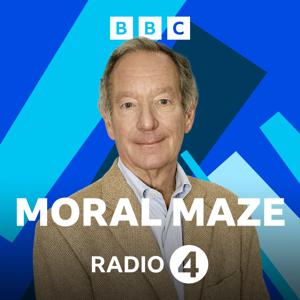
Combative, provocative and engaging live debate examining the moral issues behind one of the week's news stories. #moralmaze
Ranked by our users in the last 21 days

7,626 Listeners
874 Listeners
1,046 Listeners
157 Listeners

5,482 Listeners
1,798 Listeners
1,808 Listeners
1,031 Listeners
2,108 Listeners
1,904 Listeners
28 Listeners
35 Listeners

369 Listeners
161 Listeners
41 Listeners
59 Listeners
107 Listeners
693 Listeners
3,221 Listeners
725 Listeners
1,004 Listeners
3,021 Listeners

1,114 Listeners
773 Listeners
30 Listeners