
Sign up to save your podcasts
Or



Based on Podcast App listening data
“Neither a borrower nor a lender be,” advised Shakespeare’s Polonius. These words seem hopelessly out of touch in cost of living crisis with soaring inflation and astronomical levels of personal debt. The charity StepChange has warned that money borrowed by UK households to pay for Christmas could take years to repay. Meanwhile, a study by the Resolution Foundation suggests the British public are the worst in the developed world at saving. How did we get here?
For some, our eye-popping indebtedness begins with a failure of personal responsibility, an absence of prudence, and an inability to discern between our ‘wants’ and needs’. For others, the real problem is systemic, where borrowers are victims of a consumerist society that both pressurises and stigmatises the poorest. Pragmatists argue that debt itself is morally neutral and merely part of the furniture of modern life. Free market libertarians see debt as a democratising force, giving people greater personal agency. Whereas many religious and philosophical traditions have long believed that there is something intrinsically immoral about charging interest on lending.
Is debt inevitable? Or a moral failing? If so, whose?
Producer: Dan Tierney.
While no family is likely to have such a public falling out, anyone can surely relate the royal rift to tensions within their own family – the grudges, rivalries and feelings of betrayal. Prince Harry’s words, “I would like to get my father back, I would like to have my brother back”, reveal the depth of hurt experienced by all involved. Families are places of nurturing and wounding; moral networks where expectations of love and loyalty are tested. When the often inevitable strife ensues, are our moral obligations to our family conditional or unconditional?
It’s often argued that there is something uniquely special about family bonds; that blood is thicker than water. Family members are the only people in our lives that are permanent and unchosen, they have known us since the beginning, and that connection can be grounding and valuable in helping us understand ourselves. We might feel instinctively that adult children have obligations to their aging parents, simply by virtue of them being a parent. Alternatively, we might see the relationship as contractual, where obligations are based on the love received – or the damage done – growing up. Or, we might believe we don’t owe our families anything, regardless of how much we have benefitted from the relationships, and that our ties with family are no different to any other friendship. Moreover, many philosophers challenge the idea that we have special duties to someone just because we share their genetic material – by that logic, adopted children would have obligations to their biological parents who they’ve never met.
As the 21st century definition of ‘family’ widens, what are our ethical commitments to our family?
Producer: Dan Tierney.
Thousands of complaints have been made to the press regulator about Jeremy Clarkson’s column in the Sun newspaper, in which he expressed his hatred of Meghan Markle. His critics say he crossed a line in portraying her as someone who should be treated as less than human. He says he was making a clumsy TV reference and he’s “horrified to have caused so much hurt”.
For some, this is symptomatic of a wider culture which rewards extreme and unkind opinions, and that a right to free speech in a newspaper includes an obligation to uphold certain moral standards. Others say mainstream media commentators (and their editors) have no duty to be kind, only to tell the truth or present an honestly-held opinion.
Kindness, courtesy and respect are notable by their absence in our so-called ‘culture wars’. Kindness can be seen as twee, while rudeness can be applauded. We might appeal superficially to kindness, but it can often be secondary to values of honesty, justice and responsibility. For some, the unkindness in our culture is a systemic problem, demanding a radical change in our technological, social and political structures. For others, it is fundamentally a human problem, requiring us to draw deeply from the well of ancient wisdom.
The Christmas season approaches, when the ideal of goodwill is tested by the messy reality of human relationships. Is kindness the greatest virtue? What will it take for us all to be a little bit kinder? With Nana Akua, Alice Watkins, Edith Hall and Emily Kasriel.
Producer: Dan Tierney.
Forget the advent calendar, it’s a ‘strike calendar’ we need to prepare for Christmas this year. Behind today’s window lurks not a festive chocolate but a list of public service stoppages; not a robin on picket fence, but a postie on a picket line.
Seasonal jokes aside, perhaps the heavy flurry of industrial action is a symptom of a deeper unease about the value we place on work.
Critics of the strikes believe we have lost a sense of duty in our public services, that the public service ethos no longer means very much, and that work today is largely contractual rather than covenantal. Supporters of the strikes say there is nothing self-interested about wanting to earn a fair wage and that it’s about recognising the value of public servants, over and above symbolic gestures like doorstep clapping.
Some think we’ve placed too much emphasis on wealth as a measure of worth and that work should be about seeking to do something well, regardless of the monetary reward. Others believe that argument is laden with class-based assumptions and point to the disproportionately high salaries of bosses compared to their low-wage employees who don’t have the choice to be romantic about the idea of a vocation.
What do we work for?
Producer: Dan Tierney.
For the first time, fewer than half of people in England and Wales describe themselves as Christian. For centuries in the West, Judeo-Christian values have underpinned moral reasoning and grounded our ethics. While ticking “no religion” on the census doesn’t necessarily mean having no religious belief, should it concern us that this central story of our culture is fragmenting?
Implicit in utilitarianism is the idea that we can do ethics without metaphysics. The Enlightenment hailed the triumph of scientific rationality over sacred revelation. Whereas, the French sociologist Emile Durkheim argued that in any society in a state of ‘anomie’ – that is, lacking a shared moral code – there would be a rise in suicide.
Secularists argue that the greatest examples of social progress of the last century have come about as a result of a loss of deference to religious moral authority. Religious leaders believe that it is precisely this moral authority that makes a society cohesive. Others think it doesn’t matter where you get your moral guide from as long as you’re looking for it.
We live in an era of rapid social change, facing a new technological revolution, and all the ethical questions it poses. Does a religious-based ethics have the answers?
Can ethics survive the death of religion?
Producer: Dan Tierney.
The largescale protests in China are not just a response to Covid restrictions but about fundamental human rights, including freedom of speech. They follow weeks of demonstrations in support of women’s rights in Iran, and LGBTQ+ rights in Qatar.
We often speak about human rights as a self-evident truth – the right to life, the right to a fair trial, the right to freedom of conscience. Drafted after the Second World War, the Universal Declaration of Human Rights was a milestone document seeking to protect the dignity of all human beings.
Advocates argue that human rights are universal because the struggle for freedom can be found in every culture, despite being rooted in different philosophies and assumptions. They see a human rights-based approach to the world as the best way of identifying a shared humanity and improving human wellbeing. Sceptics, however, believe the global human rights movement can itself be a form of Western moral imperialism, or cite examples of atrocities justified with the language of human rights.
Some believe that in order to hold powerful corporations and regimes to account, there needs to be a more expansive view of human rights. Others are concerned about what they see as the ‘mission creep’ in extending the legal framework of rights to encompass areas of moral life that shouldn’t be a matter for the law courts.
What are human rights? Are they universal? Who should arbitrate when they are in competition?
Producer: Dan Tierney.
People like us... you know what I mean. Snobbery? It's everywhere, and most of us would admit to it, at least occasionally. But beyond the caricatures of snooty and disdainful types who enjoy looking down on the tastes, habits and backgrounds of others, there's the serious matter of how it affects people's life chances. The British Psychological Society has launched a campaign to make social class a legally protected characteristic, like sex, race and disability. It would force employers and others to tackle discrimination on the basis of class. The idea is to reduce the damaging effects of class-based prejudice across education, work and health, and create a fairer society.
People from working class backgrounds are less likely to get into a top university or land a highly paid job, but how much of that is down to the snobbery of others? Is a change in the law really going to shift prejudices that have been embedded over generations? Is it right to use the law in this way? More broadly, what’s wrong with expressing a preference about how other people present themselves? Isn't some behaviour that gets labelled as snobbery just an attempt to defend high standards, whether in speech, writing, taste or manners? Is there a moral case for snobbery? With Bridgette Rickett, D.J. Taylor, David Skelton and Alex Bilmes.
Producers: Jonathan Hallewell and Peter Everett
The Future of the NHS
Can the UK keep its promise of free healthcare for everyone? NHS spending is higher than ever, yet waiting lists are getting longer and patient satisfaction is falling. The worst of the pandemic may have passed, but weekly Covid admissions remain high and many services are still struggling. While many patients feel delighted with the treatment and care they receive, stories of missed targets, staff shortages and crumbling buildings are common. Whether its waiting for an operation, mental health support, getting a GP appointment or just hoping an ambulance arrives in time, our cherished and beloved NHS is letting many people down, in spite of the heroic efforts of its staff. The people vying to be our next Prime Minister have acknowledged the problems, but are not promising big improvements. Is it time for a new model?
Some believe it’s about funding, and we need to accept that the NHS we want and need will cost us much more. But in a cost of living crisis, are people really prepared to pay higher taxes to improve the NHS, and if not, why do we still expect a Rolls Royce health system? Others think it’s a bottomless pit of demand and it’s time to reduce our expectations. Can we afford the NHS to be anything more than a safety net for the sickest and poorest? Is it right to promise care to everyone, even those who can afford to go private? Or, might the public’s willingness to pay for the NHS evaporate, if it's no longer there for all of us? We may love our NHS, but how much should we expect of it, and how much are we willing to pay? With Tim Knox, Dr Jennifer Dixon, Matthew Lesh and Prof Allyson Pollock.
Producers: Jonathan Hallewell and Peter Everett
The Right to Abortion
This weekend thousands of people marched on the White House in support of a woman’s right to choose an abortion. That constitutional principle, established nearly 50 years ago in the case of “Roe v Wade” has just been overturned by the US Supreme Court and already many Republican states have banned abortions. As President Biden moves to try to protect abortion rights, campaigners in the UK have been stirred to action. There have been ‘Pro Life’ demonstrations outside clinics in Northern Ireland and ‘Pro Choice’ protests outside the US Embassy in London.
The number of abortions in England and Wales last year, more than 214,000, was the highest recorded since 1967, when a new law allowed, in most cases, terminations up to the 24th week of pregnancy. This also applied to Scotland but was only extended to Northern Ireland two years ago. Public opinion is clear: 85% of people in Britain think women should have the right to abortion. But should rights also be afforded to the unborn, and if so, at what stage of pregnancy? Has anyone the moral right to dictate whether a woman can have an abortion? For many women, “my body – my choice” is a fundamental principle. With Madeline Page, Professor Ellie Lee, Professor John Milbank and Kerry Abel.
Producers: Jonathan Hallewell and Peter Everett
“Unacceptable” Opinions
Have you ever felt that you can’t say what you really think, that your honest opinions have become somehow unacceptable? It’s a common complaint that freedom of speech is being restricted, that more and more views have become inadmissible or rejected as intolerable. On social media, people expressing thoughts that would have hardly raised an eyebrow a generation ago, are viciously attacked and branded as bigots.
If that is a problem - and opinions differ - the government may be about to make it worse. Its Online Safety Bill, going through Parliament just now, is aimed at making the UK the safest place in the world to go online, but there are concerns that it could involve more censorship and less freedom.
It is surely good to have a diverse range of views openly and freely expressed in public, important for democracy for honest discourse and a sure sign of true freedom of speech. But others feel that cleaning up the public space of unsavoury, prejudiced and hateful views makes for a more civilised society. It creates safer, more respectful places for everyone. Offensive comments that were shamelessly expressed in the past about, for example black, gay or trans people are rarer now. Is this evidence that modern values like equality are being widely embraced, or a sign that people feel muzzled and their views, far from going away, are festering into conspiracy theories, extremism and even the threat of violence? Does it matter if the range of views we can express becomes narrower? With Eric Heinze, James Bloodworth, Joe Mulhall and Jeevun Sandher.
Producers: Jonathan Hallewell and Peter Everett
From the publisher's feed
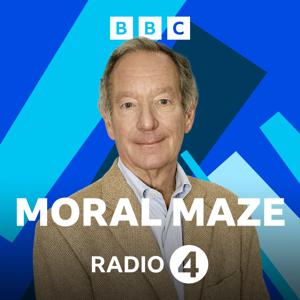
Combative, provocative and engaging live debate examining the moral issues behind one of the week's news stories. #moralmaze
Ranked by our users in the last 21 days

7,626 Listeners
874 Listeners
1,046 Listeners
157 Listeners

5,482 Listeners
1,798 Listeners
1,808 Listeners
1,031 Listeners
2,108 Listeners

1,904 Listeners
28 Listeners
35 Listeners
369 Listeners
161 Listeners
41 Listeners
59 Listeners
107 Listeners
693 Listeners
3,221 Listeners
725 Listeners
1,004 Listeners
3,021 Listeners

1,114 Listeners
773 Listeners
30 Listeners