
Sign up to save your podcasts
Or



Based on Podcast App listening data
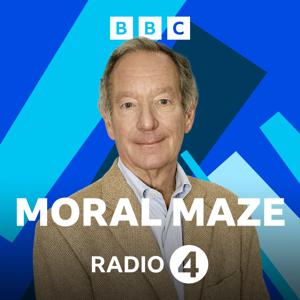
Charity in the UK is big business. There are over 165,000 charities registered with the Charity Commission, and the total annual income of the sector is more than £100 billion. But what should they be allowed to spend their money on? The government has just announced that charities which receive state grants will not be allowed to spend any of that tax payers cash on political campaigning. The National Council for Voluntary Organisations has described the change as "draconian" and will amount to "gagging" them. There is a lot at stake. Charities get £13 billion pounds a year from national or local government. Figures from the National Audit Office show that that money makes up well over a half of the annual income of many well-known charities. Being a prophetic witness has always been a key aspect of what charities do. Campaigning and political activity is a vital part of that, but should it be funded by us the taxpayer, whether by direct grants or via the tax breaks that are part of charitable status. Or do we need to rethink our definition of what is and isn't a charity? If public schools can qualify for charitable status, why not campaigning groups like "Liberty"? With headlines about aggressive fund raising tactics of some organisations, the charity halo has become somewhat tarnished in recent times. But do we have an outdated "Lady Bountiful" view of what charities are for? If we want our charities to make a difference is it time to accept that they need to apply all the modern commercial tools you'd expect from such a large industry. Or, in their rush for influence and impact, have charities lost site of the personal relationships, responsibilities and trust that lie at the heart of altruism? What should charity be for? Chaired by Michael Buerk with Michael Portillo, Anne McElvoy, Giles Fraser and Matthew Taylor. Witnesses are Andy Benson, Debra Allcock-Tyler, Christopher Snowdon and Craig Bennett.
The wobbly mobile phone footage and someone calling out "you ain't no Muslim bruv" has given us a powerful rallying cry. It was filmed by a bystander as police restrained a man who's since been arrested on suspicion of attempted murder. What it doesn't show is how one very brave man fought to try and disarm the attacker, while people stood around filming it all on their phones. Mobile phone footage has now become a staple of our news and not so private lives. Which one of us hasn't clicked on a link and experienced a vicarious thrill from watching the latest talked about clip of death, disaster or embarrassment? It is undeniably useful too, but what are the moral consequences of videoing and displaying everything in public? Does looking through the prism of a phone camera create a kind of moral distance that atrophies human capacities like empathy, compassion and self--reflection? The instinct to say 'I was there' is immensely strong, but earlier this year there were a number of cases bystanders filming distressed people as they threatened to jump to their deaths. Are we trying to give life meaning by creating a permanent record of it, instead of by thinking more deeply about it and living life in the moment? Is the craze for selfies just a harmless piece of fun or are we gradually being infected with a narcissistic personality disorder? Or is the drive to record everything and to make our lives public, part of what makes us human? And mobile phone footage is just today's equivalent of ancient cave paintings of hunting scenes? Live our life on film - the Moral Maze. Combative, provocative and engaging debate chaired by Michael Buerk with Matthew Taylor, Giles Fraser, Anne McElvoy and Claire Fox. Witnesses are Madeleine Bunting, Jane Finnis, James Temperton and Justine Hardy.
We live in a complex world where it's often hard to know what's the right thing to do - the right thought to think. But there are increasing sectors of our public discourse where any sense of moral ambivalence or doubt will not be tolerated. Race, homosexuality, child abuse are just some of the touchstones where any expression of doubt is often pounced on and hounded out, especially on social media. Our Moral Maze this week isn't about freedom of speech, or political correctness; it's about the moral value of certainty. We prize and reward moral certainty and consistency, especially in politics, but also business and even sport. Any expression of doubt is seen as weakness - even moral turpitude. Is this a good way of binding society with a set of common values? Or is the public shaming that follows the transgression of those boundaries not so much about morality, but ensuring conformity that itself is a kind of prejudice? Do we need a bit more humility about our moral certainties? Or would that mean bowing thoughtlessly to the latest fashionable cause? Bertold Brecht made the point that doubt is a good servant but a bad master. In an uncertain world if we don't stick to our values do we risk indecisive moral paralysis?
The Prime Minister, David Cameron, will make his case for bombing ISIL in Syria this week. Some commentators are predicting that, if parliament votes in favour, the raids could start as early as next week. This will mean our going into a coalition not only with France and America but also with Russia - a country that has been a long-standing ally of the Syrian leader President Assad, the man whom we wanted to bomb only two years ago. The adage "my enemy's enemy is my friend" dates back at least to the 4th century BC. It might be harsh to say that we're basing our foreign policy on an ancient proverb from a Sanskrit treatise on statecraft, but it's hard to avoid the parallels. Is it, though, a moral justification for going to war? On the Moral Maze this week we discuss what is meant by the phrase "just war" and the morality of pacifism. Has the pacifist case been heard enough? Chaired by Michael Buerk with Claire Fox, Giles Fraser, Michael Portillo and Melanie Phillips. Witnesses are Dr Alexander Moseley, Richard Norman, Helen Drewery and Richard Streatfield.
The report from the World Anti-Doping Agency couldn't have been clearer. Russian athletes were involved in state sponsored cheating and the IAAF was involved in bribery and corruption. Admittedly it's not exactly the stuff of Chariots of Fire, but what are the real moral boundaries that have been transgressed? If you think elite sport is all about individual talent and dedication you're sadly mistaken. Top athletes in all sports are supported by multi-million pound programmes that ensure they get the best of everything - including scientists who maximise their nutrition and medical treatment. If you come from a country that can't afford to pay for it, you're already handicapped. And if your son or daughter is showing some sporting promise you better get them in to a private school quickly. Half the UK gold medal winners in 2012 were educated privately and the pattern is repeated in almost every sport outside football. Sport is many things, but fair is not one of them, so why single out performance enhancing drugs in sport when we positively embrace them in other aspects of our lives? Has anyone turned down Viagra because it might give them an unfair advantage? As science progresses the possibility of human enhancement is becoming an everyday reality. Drugs to enhance memory and attention and to enable us to be smarter? Why not? If this all sounds like some kind of dystopian nightmare don't fret because there's a growing interest in the field of bio-medical moral enhancement to make us better people as well. Human enhancement - physical and moral on the Moral Maze, but beware, listening could give you an unfair advantage. Combative, provocative and engaging debate chaired by Michael Buerk with Giles Fraser, Claire Fox, Melanie Phillips and Anne McElvoy. Witnesses are Ellis Cashmore, Martin Cross, Dr Rebecca Roache and Nigel Warburton.
This week the Moral Maze asks: "is it our moral duty to have fewer children?" The question has been brought in to focus by two stories in the past week. First, that by 2027 the population of the UK is expected to top 70 million people and the second that China is to end its "one child" policy. With 238,737 births every day the world population is rapidly approaching 7 and a half billion and will be 8 billion by 2024. While many people will be campaigning for tougher policies at next month's UN climate change conference, should they also be calling for policies to control population growth? Without some technological miracle, more people will mean more unsustainable resource use, worse climate change, massive population displacement and large scale migration - something we're already seeing. If we can foresee the suffering that unrestrained population growth will cause for all those who live after us isn't it our moral duty to do something about it? Is it time to accept that having more than one child is just something that none of us has a moral right to do? Of course, if all the world's resources of food, energy, homes and knowledge were evenly distributed, the problems of population would be less urgent. So do we have a moral duty to take a less of them so that others who were born less fortunate can have more? This is global question, but also an intensely personal one. Is it reasonable to expect people to sacrifice their own family interests, in terms of size or privilege, in favour of the common good? Is our profound love for our family and our children a barrier to a more just society and equitable world? Chaired by Michael Buerk, with Matthew Taylor, Giles Fraser, Melanie Phillips and Anne McElvoy. Witnesses are Prof Sarah Conly, Hazel Healy, Frank Furedi and Dr Dernot Grenham.
When Professor Averil Macdonald, the chairwoman of UK Onshore Oil and Gas, said that women are opposed to fracking because they don't understand it, the reaction was predictable. She was accused of being sexist, patronizing, misogynistic. But in all the brouhaha what was missed was the difficult moral question at the heart of her argument. Professor Macdonald was citing research that shows only 31.5% of women are in favour of shale gas exploration compared to 58% of men. She argued that while women do accept the rational benefits of shale gas, they prefer to give more weight to their emotional fears about its possible impact. Setting aside the issue of gender, fear has been a powerful motivator in many campaigns such as GM crops, nuclear power, the MMR vaccine and numerous others. Combine that with an understandable streak of nibby-ism and you get an implacable and emotionally charged opposition to progress or developments that could benefit the majority of people in this country. It took eight years to apporve Heathrow's terminal 5; a third runway is being fought even harder and HS2 is yet to get beyond the stage of computer generated graphics. Do we rely too heavily on public opinion? Should we trust politicians more to make the correct decisions on our behalf? Or are we abdicating our powers and responsibilities to a new breed of scientific philosopher-king? Rather than a toxic blend of ignorance and self-interest are these kinds of protest the sign of a healthy and thriving democracy where the voice of the minority is not only heard, but also counts and a reminder that there are values that go beyond the bottom line? Chaired by Michael Buerk with Matthew Taylor, Giles Fraser, Michael Portillo and Anne McElvoy. Witnesses are Ross Clark, David Babbs, Peter Tatchell and Patrick Diamond.
If you're the kind of person who likes to smoke a joint and chat on your mobile while out for a relaxing Sunday afternoon drive it seems you're in luck. According to figures released this week it seems that the police are increasingly turning a blind eye to these offences and when it comes to enforcing the new law banning smoking in cars where there are children, the police have said it's not their job. If the purpose of the law is to protect public health and safety, and to set moral boundaries, can it ever be morally acceptable to ignore law breaking? Should the law be about defining what is right and wrong, good and bad in all circumstances? Or is it acceptable for a law to be a moral symbol of disapproval, with no real threat of enforcement? And if the police don't have a moral duty to enforce the law, what about us as citizens? From this week landlords will be breaking the law if they don't check their tenants have a right to live in the UK and teachers now have a legal duty to tackle extremism. In both cases it's no longer enough to define a good upright citizen as one who doesn't break the law; it's now about having a legal duty to enforce it too. The Moral Maze and the letter of the law.Combative, provocative and engaging debate chaired by Michael Buerk, with Giles Fraser, Michael Portillo, Claire Fox and Melanie Phillips. Witnesses are John Cooper, Luke Gittos, Professor John Tasioulas and Peter Garsden.
The Moral Maze returns this week to apply its nose to the grindstone and naturally the prospect of work is exercising our collective mind. Ringing, perhaps guiltily in our ears, are the words last week of the Health Secretary Jeremy Hunt. Defending the changes to tax credits he said "We want this to be one of the most successful countries in the world in 20, 30, 40 years' time. There's a pretty difficult question that we have to answer, which is essentially: are we going to be a country which is prepared to work hard in the way that Asian economies are prepared to work hard, in the way that Americans are prepared to work hard? And that is about creating a culture where work is at the heart of our success." According to one business expert he may have a point. Rohit Talwar, the chief executive of Fast Future, has said teachers should be preparing schoolchildren for a future that could see them having to work in 40 different jobs until they reach 100. For many this debate isn't just about increasing life expectancy and the cost of state pensions. It's about what kind of contribution society has the right to ask of its citizens and whether the common good demands that we try to meet it. Is work not just financially rewarding, but morally improving? Is self-reliance a virtue that is undervalued in Britain? Or are they both a moral smokescreen for a soulless, utilitarian attitude that sees us all as units of economic production and only values us while we continue to contribute? Isn't the true test of good work not whether it's 'hard' but whether it's fulfilling and productive? Whether we enjoy it? The Moral Maze chaired as ever by Michael Buerk. Michael is a man known for his love of hard work. He says he can watch it for hours.
From the publisher's feed
Combative, provocative and engaging live debate examining the moral issues behind one of the week's news stories. #moralmaze
Ranked by our users in the last 21 days

7,626 Listeners
874 Listeners
1,046 Listeners
157 Listeners

5,482 Listeners
1,798 Listeners
1,808 Listeners
1,031 Listeners
2,108 Listeners

1,904 Listeners
28 Listeners
35 Listeners
369 Listeners
161 Listeners
41 Listeners
59 Listeners
107 Listeners
693 Listeners
3,221 Listeners
725 Listeners
1,004 Listeners
3,021 Listeners

1,114 Listeners
773 Listeners
30 Listeners