
Sign up to save your podcasts
Or



Based on Podcast App listening data
Looking back at some of the stories that have been in the news during this series of Moral Maze you could be forgiven for despairing of humanity. The suspected firebombing by Jewish settlers killing a Palestinian baby, the white supremacist who shot dead nine people at a church in South Carolina and where to start with so-called IS? Public stoning, mass executions and lessons in beheading for school children are just some of their stock-in-trade. Faced with such a litany of horrors it's tempting to reach for the word "evil" - nothing else quite does justice to the enormity of this kind of barbarity. If we can comfortably categorise an action as evil, what about the people who carried them out? Are they evil too? The problem of evil has long exercised theologians and moral philosophers. As our understanding of psychology and the neurosciences has developed what role should the notion of evil have in our moral, political, and legal thinking? Is evil an out-dated, redundant superstition which should be abandoned? Are we all, given sufficient provocation or circumstance, capable of committing evil acts? And if that is the case is there no horror which cannot be explained away? If we abandon the concept of evil what does that do to the idea of free will? Without evil would we drift into moral relativism? Or is the charge of being evil an easy get out for us all? By suggesting that evil is something alien and other, something of which we are possessed, that takes us over, it conveniently absolves us of the deeply unpleasant task of recognising that these people are part of our world. On the six hundredth and sixty-sixth edition of the programme the Moral Maze looks at the problem of evil.
No one has come up with a better or pithier definition of public service broadcasting than John, later Lord Reith. The purpose of the BBC is to "inform, educate and entertain." For Reith, the son of a minister, the creation of the BBC was a public service; an unambiguous moral good and ever since Reithian has become an adjective that symbolises a kind of broadcasting that promoted virtue to the nation and one that should not be sullied by commerce. To "inform, educate and entertain" are still part of the BBC's mission today, but for how much longer? And how should we define what public service broadcasting is in a global, digital world? This week the government will publish a green paper setting out the details of a fundamental review of the BBC, examining its future size, funding and purpose. The BBC is funded by what is effectively a universal tax so making sure everyone gets something out of it has always been an issue. Advocates of public service broadcasting often talk about defending cultural quality, making programmes that no one else would about issues that would otherwise be ignored. But some of the best, most talked about programmes in recent times have been on internet, subscription only services. And there are plenty of other organisations such a museums, galleries and charities offering their own public service content free of charge. As the lines between the internet and broadcasting blur what role should the state have in regulating what we chose to watch and how we pay for it? This is not simply a debate about the future of the BBC, but about the moral and ethical tensions between what benefits the individual and what benefits society as a whole.
From the publisher's feed
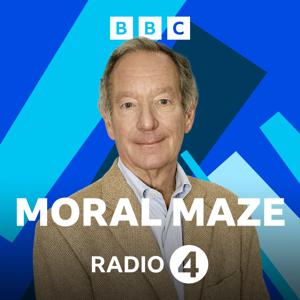
Combative, provocative and engaging live debate examining the moral issues behind one of the week's news stories. #moralmaze
Ranked by our users in the last 21 days

7,626 Listeners
874 Listeners

1,046 Listeners
157 Listeners

5,482 Listeners

1,798 Listeners
1,808 Listeners
1,031 Listeners
2,108 Listeners
1,904 Listeners
28 Listeners
35 Listeners

369 Listeners
161 Listeners
41 Listeners
59 Listeners
107 Listeners
693 Listeners

3,221 Listeners
725 Listeners
1,004 Listeners
3,021 Listeners

1,114 Listeners
773 Listeners
30 Listeners