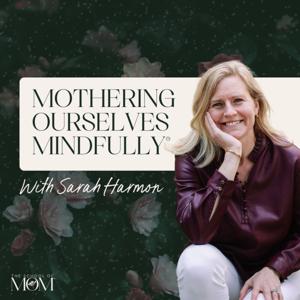
Mothering Ourselves Mindfully

Mothering Ourselves Mindfully

Download on the App Store

Mothering Ourselves Mindfully episodes

  • 71. Shedding & Becoming: Closing My Group Therapy Practice After a Nine-Year Cycle

    In this powerful final episode of 2025, I share the biggest announcement to date on the podcast: I'm closing my group therapy practice, Parent Wellness Group. This isn't a story about failure - it's about releasing an identity that no longer aligns with who I'm becoming. Join me as I walk through the woods and reflect on the profound timing of this decision, the year of the snake's invitation to shed old skins, and what it means to truly embody the next version of yourself as you step into 2026.

    Key Points

    1. Announcing the closing of Parent Wellness Group, a profitable and successful clinical therapy practice
    2. Understanding the limitations of talk therapy and why insight alone doesn't create lasting change
    3. The profound timing of closing a nine-year cycle that began in 2016 when I started my clinical practice
    4. How 2025 (the year of the snake) has been about shedding and releasing old identities
    5. Reflecting on the parallel experience of releasing yoga teaching to make space for The School of Mom
    6. Why holding onto the therapist identity was keeping me from fully stepping into my purpose
    7. The difference between being liked and being effective as a guide for mothers
    8. Moving from therapist to embodiment guide - helping women move insight into their bodies
    9. Why familiar patterns keep us stuck even when they're no longer serving us
    10. What it means to embody your values rather than just understand them intellectually

    Quotes

    "I cannot authentically be in a group where I am guiding and supporting women to do the scary thing, to step into their next version of how good can it get, if I haven't done this for myself."

    "I am no longer interested in listening to women stay stuck in the same patterns that aren't actually serving them. I am no longer available for that."

    "We'll choose a familiar hell over an unfamiliar heaven every day."

    "I'm no longer responsible for your feelings and I'm not sorry about it. I'm responsible for being a guide to help you be responsible for your feelings."

    "You are never gonna get there if you simply think and talk about it."

    "To fully embrace and embody the identity that you're becoming, you can't have these competing identities."

    Reflection Questions

    1. What was happening for you in 2016-2017, and is there something resonating with the completion of this nine-year cycle?
    2. What has 2025 asked you to shed or release this year of the snake?
    3. What identities, patterns, or ways of living have been keeping you safe but are no longer aligned with who you are becoming?
    4. What part of you is familiar and safe but actually in conflict with your next level of flourishing?

    What's Coming Next

    The podcast will return in January 2026 with a deep dive into the difference between insight (from therapy and meditation) and Mom-Site (embodied nervous system healing work).

    Mark Your Calendar

    Live Free Gathering: Wednesday, January 28th at 7:45 PM EST - A ritual and ceremonial offering to celebrate and honor our unique thresholds from the year of the snake to the year of the horse. Link coming in the new year.

    Send Sarah your voice note right here!: https://www.speakpipe.com/theschoolofmom

    Thank you for tuning in to this episode of "Mothering Ourselves Mindfully." We look forward to sharing more insights and inspiration in the upcoming episodes!


    www.theschoolofmom.com

    Instagram @the.schoolofmom

    Book a breakthrough Call

    39 min
  • 70. HappIER Holidays Part 3: Science of Being HappIER

    In the final episode of our three-part HappIER Holiday series, we dive into the science of happiness - because while feeling all your emotions and getting clear on what happiness means to you are foundational, understanding what actually makes us happier is where transformation happens. Recording outside on a 20-degree December day, I share the research-backed truth that might surprise you: only 10% of your happiness comes from circumstances, while a full 40% is within your control through daily habits and practices.

    Key Points
    • Why 50% of your happiness is genetic (your set point), but epigenetics means you can influence gene expression through environment and practices
    • The happiness trap of "I'll be happy when..." and why only 10% of happiness is circumstantial
    • Understanding affective forecasting: why humans are terrible at predicting future feelings
    • Hedonic adaptation and why we return to our baseline happiness after getting the new shiny thing (or new life circumstance)
    • The surprising research on money and happiness: there's a threshold where basic needs are met, after which spending matters more than earning
    • Why having kids doesn't boost overall happiness (even though it brings moments of joy)
    • The 40% solution: science-backed strategies proven to increase happiness that are entirely within your control
    • The gap between knowing what's good for you and actually doing it - and why fierce self-compassion is the bridge

    The 13+ Science-Backed Happiness Strategies
    1. Mindfulness - The foundation woven into all other strategies
    2. Gratitude - Expressing gratitude and having a gratitude practice
    3. Nurturing relationships - Being intentional about who you spend time with
    4. Savoring life's joys - Slowing down to really savor moments
    5. Finding meaning - Looking for opportunities for growth and learning in every experience
    6. Developing healthier coping strategies - Moving beyond scrolling and stress-eating to more nourishing practices
    7. Avoiding overthinking and social comparison - Getting curious about these parts rather than fighting them
    8. Practicing compassion and self-compassion - The road all mindfulness leads to
    9. Leaning on signature strengths - Identifying and utilizing your top strengths
    10. Forgiveness - Releasing resentment for your own wellbeing
    11. Doing activities that engage you (Flow) - Finding what makes you lose track of time
    12. Taking care of your body - In ways that honor your current season and stage
    13. Optimism - Looking on the bright side (or "holloing" it, as my dad would say!)
    14. Committing to your goals - Getting clear on what you want and working toward it
    15. Faith and spirituality - Connecting to something bigger than yourself

    Quotes

    "We don't need to feel better. We need to get better at feeling." - Gabor Maté

    "Happiness is really an inside job."

    "There is a gap between what you know is good for you, what brings you happiness, and what you're actually doing."

    "Forgiveness is the gift you give yourself."

    "Life is happening for us, not to us."

    "You're the product of the people you spend the most time with."

    "We cannot practice mindfulness authentically without practicing kindness and compassion. All roads lead to self-compassion."

    Resources Mentioned
    • Project 40 happiness initiative at Wentworth Institute of Technology: https://sites.wit.edu/witdeans/archives/311 
    • Sonja Lyubomirsky - happiness researcher: https://thehowofhappiness.com/ 
    • Martin Seligman - UPenn positive psychology researcher: https://ppc.sas.upenn.edu/people/martin-ep-seligman 
    • Kristin Neff - self-compassion.org: https://self-compassion.org/ 
    • VIA Character Strengths Assessment (free): https://www.viacharacter.org/ 
    • Mihaly Csikszentmihalyi - Flow research: https://mlpp.pressbooks.pub/mavlearn/chapter/flow-theory/ 
    • Take the Inner Voice Quiz - Discover your dominant inner voice: http://theschoolofmom.com/quiz 
    • Join The School of MOM: https://theschoolofmom.com/waitlist 
    • Send Sarah your voice note right here!: https://www.speakpipe.com/theschoolofmom

    Series Recap

    Episode 1: Feeling It All - We don't need to feel better, we need to get better at feeling. To feel happiness deeply, we must also feel sadness, grief, and all 87 emotions (not just the 3 most people can name).

    Episode 2: Getting Clear on What You Want - Before you can create happiness, you need to know what it actually looks, feels, and smells like for you. Specificity matters.

    Episode 3: The Science of Happiness - Understanding the research behind what actually makes us happier and implementing science-backed strategies that fit your life.

    Thank you for joining us for this three-part Happier Holidays series. Which happiness strategy resonates most with you? Send me a voice note and let me know!

    Thank you for tuning in to this episode of "Mothering Ourselves Mindfully." We look forward to sharing more insights and inspiration in the upcoming episodes!


    www.theschoolofmom.com

    Instagram @the.schoolofmom

    Book a breakthrough Call

    38 min
  • 69. HappIER Holidays Part 2: What's MY happier?

    In this episode of the Happier Holidays miniseries, I'm exploring a foundational question that we often skip right over: What does "happier" actually mean to you? Before we can create the holiday season we truly want, we need to get specific about what we're working toward—and that requires some intentional dreaming.

    I'll guide you through a visualization exercise to imagine your ideal holiday season, help you identify the internal parts (like "Cynical Sally") that might try to shut down your dreaming, and challenge you to get specific about what happiness actually looks, feels, and sounds like for you during this season.

    Key Points
    • Moving beyond the generic goal of "being happy" to get specific about what a happier holiday season actually means for you
    • The importance of having a clear vision—if you don't know what you want, how can you work toward it?
    • Using your imagination to dream into your ideal holiday scenario: floating through the season in your mind and noticing what makes it feel good
    • Recognizing the protective parts of yourself (like "Cynical Sally" or "Inner Beth") that try to squash your dreams with "realistic" objections
    • Learning to acknowledge these cynical parts while asking them to step aside: "Can we just dream a little bit?"
    • Understanding that these protective parts keep us in what's familiar because familiar feels safe—even when it keeps us stuck
    • Getting specific about your vision using all five senses: What does your happier holiday look, taste, sound, feel, and smell like?
    • Recognizing that happiness is a spectrum—from quiet contentment to euphoric joy—not just the big moments
    • The contentment side of the happiness spectrum is often happening around us but we're missing it, and it's much easier to create than euphoric moments
    • Asking yourself: "Who do I need to become to have this happier holiday?"
    • Becoming the person for whom a happy holiday is non-negotiable—someone who knows they deserve and are worthy of the holiday they dream of

    Quotes

    "What do you want? No, but what do you really want?"

    "Half the time we want, or we think we want to be happier and to have a happier holiday. But like what do you really want? Like what does that mean?"

    "If I don't have this awareness with her and give her an option, these parts of ourselves—they're so rooted in their protection of us—they wanna keep us in what's familiar because what's familiar is safe."

    "If you can imagine it, it is possible. If the dream is in you, it is for you."

    "You want to be the person where a happy holiday is non-negotiable for you. That's just what you do."

    "When I do this exercise and I think about happier holidays, it really doesn't have anything to do with the big, monumental, euphoric experiences. It has everything to do with the quiet moments."

    Resources Mentioned
    • Take the Inner Voice Quiz: theschoolofmom.com/quiz - Discover your dominant inner voice that gets in the way of thriving: http://theschoolofmom.com/quiz 
    • Join The School of MOM: https://theschoolofmom.com/waitlist
    • Send Sarah your voice note right here! https://www.speakpipe.com/theschoolofmom 

    What's Coming Next

    Next week, I'll be diving into the science of happiness—exploring what happiness actually is from a research perspective, and how understanding the specifics can help us create our happier holidays. I'll be sharing insights from my early work as a therapist when I developed Project 40 at Wentworth, a happiness initiative that won a college association award.

    Thank you for tuning in to this episode of "Mothering Ourselves Mindfully." We look forward to sharing more insights and inspiration in the upcoming episodes!


    www.theschoolofmom.com

    Instagram @the.schoolofmom

    Book a breakthrough Call

    27 min
  • 68. HappIER Holidays Part 1: Feeling it all

    In this episode, I'm starting our HappIER Holidays series in an unexpected place: grief. I share why allowing ourselves to feel the waves of sadness, loss, and uncomfortable emotions during the holiday season is actually the gateway to experiencing genuine joy and happiness. Drawing from my own experience with the loss of a healthy mother and the traditions that surface grief each year, I offer practical tools for riding the waves of difficult emotions so we can be more present for the moments that matter.

    Key Points

    • Why grief often surfaces during the holidays, especially when traditions and family gatherings highlight absence or loss
    • Understanding that we can't selectively numb emotions—when we shut down grief and sadness, we also lose access to joy and contentment
    • The metaphor of grief as a wave: it will pass through if we allow it, but resistance keeps us stuck
    • How emotions have a 90-second shelf life when we fully allow ourselves to feel them without resistance
    • The difference between healthy emotional release and unhealthy coping mechanisms (alcohol, sugar, shopping) that create false happiness
    • Why we need to "get better at feeling" rather than "feel better"—learning to be with all 87 human emotions
    • Creating safe spaces to feel big emotions: cars, closets, bathrooms, or with trusted people who can witness without judgment
    • How showing appropriate emotion in front of our children teaches them emotional health while maintaining safety
    • The power of connection with others who understand grief—you don't need to have experienced the exact same loss
    • Setting boundaries around triggering traditions, people, or rituals to protect your tender heart during the season

    Quotes

    "Grief is kinda like that random hair on my chest—I know it's coming, but I don't necessarily know when."

    "We don't need to feel better. We need to get better at feeling." — Gabor Maté

    "If we can't be with and feel our waves of unpleasant emotions like grief, it's gonna be really hard to be in the pleasant emotions of joy and contentment and ease."

    "You can't pick and choose. If we don't feel sad, if we don't feel angry, we're gonna struggle to feel happy."

    "Emotions are energy in motion—these neurochemical processes that when given permission to move will move through you like a train through a tunnel."

    "If we ignore, deny, and resist our feelings of anger, sadness, and grief that are inevitable around the holidays, we will not have a happier holiday—or we will numb out with really unhealthy coping skills and have the illusion of a happy holiday."

    Resources Mentioned

    • Atlas of the Heart by Brené Brown—an encyclopedia of the 87 emotions we experience as humans: https://a.co/d/800nADj 
    • The School of Mom community—holding space for women to feel emotions without shame: https://theschoolofmom.com/ 

    What's Coming Next

    More episodes in the HappIER Holidays series exploring how to bring intention and genuine happiness to the season by working with our nervous systems rather than against them.

    Thank you for tuning in to this episode of "Mothering Ourselves Mindfully." We look forward to sharing more insights and inspiration in the upcoming episodes!


    www.theschoolofmom.com

    Instagram @the.schoolofmom

    Book a breakthrough Call

    28 min
  • 67. Feeling ease and joy this holiday season (with Stacy Gooding)

    In this episode, I'm joined by Stacy Gooding from Good Order Professional Organizing to explore how we can actually feel ease and joy heading into the holiday season instead of the usual tuck-and-roll survival mode. Stacy shares practical strategies for gift shopping, wrapping, hosting, and most importantly—putting yourself first so you can be present with the people you love.

    Key Points

    • Understanding that organizing and order in your life is not about perfection—perfection is the highest form of self-abuse
    • Getting clear on who you're actually buying gifts for and having honest conversations with family about simplifying gift exchanges
    • Starting holiday shopping early by blocking one hour per week beginning in September to order gifts gradually
    • The game-changing strategy of wrapping gifts as they arrive rather than waiting for December 24th
    • Creating a mobile wrapping station (three-tier cart) with all supplies in one accessible place
    • The power of active listening throughout the year to discover meaningful gifts that make people feel seen
    • How to avoid the last-minute "I don't have enough" panic by planning stockings alongside regular gift purchases
    • Setting up your home for hosting success: preparing guest rooms thoughtfully, creating designated zones (snack station, coffee station), and clearing spaces before guests arrive
    • The importance of delegating tasks and letting go of control over things you care less about
    • Making your own well-being the non-negotiable priority on holiday mornings
    • Focusing on the feeling and experience you want to create rather than perfect execution of every detail
    • Treating December as a meditation to notice what works and what doesn't for future planning

    Quotes

    "Organizing and order in your life is not about perfection because perfection is the highest form of self-abuse."

    "We all wanna feel validated and seen. We wanna love and be loved in return. Giving a gift that says, I listen to you, I hear you—that's what matters."

    "The thing that we have absolutely no time for is the one thing we very much need, which is the time for ourselves."

    "You're always gonna remember how people make you feel. It's the feeling you're going for, not the perfection."

    "What would it be like to go into the holidays with your enjoyment and ease factor being the number one priority?"

    "It is not possible to do all of this stuff in the four weeks leading up to the holiday. I refuse to do it to myself anymore."

    Resources Mentioned

    • Good Order Professional Organizing: https://www.goodorderllc.com/ (serving North Shore and Cape Ann areas)
    • Three-tier rolling cart for wrapping supplies: https://a.co/d/hOlQvTJ 

    What's Coming Next

    Continue exploring how to create intentional, nourishing experiences during the holiday season by putting your well-being first and letting go of perfectionism.

    Thank you for tuning in to this episode of "Mothering Ourselves Mindfully." We look forward to sharing more insights and inspiration in the upcoming episodes!


    www.theschoolofmom.com

    Instagram @the.schoolofmom

    Book a breakthrough Call

    39 min
  • 66. F the morning routine. Try this instead.

    In this episode, I'm challenging the idea of the perfect morning routine and offering something much more liberating - what I call the "cyclical start." As we move into the darker months with daylight savings behind us, I share why forcing yourself into a rigid or prescriptive morning routine might actually be working against your body's natural rhythms.

    I talk about why the words "morning routine" trigger so many moms, the reality of our cyclical nature as women, and how giving yourself radical permission to listen to your body can actually be more transformative than any prescribed 5 AM wake-up call.

    Key Points

    The Morning Routine Trigger

    • Why "morning routine" feels loaded and sometimes rage-inducing for mothers
    • The unpredictability of kids, sleep, and early motherhood years
    • How non-parent providers often suggest morning routines without understanding the reality
    • The loss of freedom, spontaneity, and time that triggers us

    Why Traditional Morning Routines Don't Work

    • The expectation that every morning should look the same isn't realistic
    • Female bodies are cyclical beings - not designed for rigid daily sameness
    • How seasons affect our energy and morning capacity differently
    • The resistance that comes from trying to force the same routine in winter as summer

    Introducing the Cyclical Start

    • Honoring the rhythms of your own body, the season, and your stage of motherhood
    • Giving yourself permission for mornings to look different day to day and week to week
    • Letting your body decide what it needs rather than following a prescription
    • How this approach reduces guilt and increases self-trust

    Releasing Rigid Prescriptions

    • The journey from rigid rules about exercise, eating, and routines to body wisdom
    • The freedom of stopping alarm clocks and letting your body wake naturally (when possible)
    • Some days waking at 5 AM, other days sleeping until 7 - and both being okay
    • Connecting to natural rhythms like moon cycles and seasons

    The Bikram Yoga Parallel

    • Starting with rigid 26-posture Bikram practice as a "safe" structure
    • Getting reprimanded for drinking water and leaving early
    • The wake-up call that rigid prescriptions can harm rather than help
    • Questioning where routines you once loved are now draining you

    Radical Permission

    • What if you gave yourself permission to sleep in every time?
    • Trusting that your body knows what it needs
    • How radical rest often leads to natural energy returning
    • The difference between forcing yourself versus naturally waking with energy

    Quotes

    "Morning routine: why those two words are triggering on many levels."

    "The reality is -  every morning looking the same - I have come to find is not realistic... and it's actually not really in line with a female's body."

    "Starting cyclically means first you're honoring the rhythms of your own body, but also the season and the stage of motherhood and life that you're in."

    "What if you gave yourself radical permission to just sleep in and skip the thing that you've been forcing yourself to wake up for?"

    "When you feel the natural rhythms, you're more and more connected to your body and what it needs on a given day."

    "Where is your body saying, 'Hey, this routine isn't really working for me'?"

    Reflection Questions
    • What happens in your body when you hear the words "morning routine"?
    • Are you forcing a morning practice that's actually draining you rather than energizing you?
    • What would radical permission look like for your mornings right now?
    • Where in your life are you following prescriptions that no longer serve your body or season of life?
    • What would it feel like to let your body decide when to wake up?

    What's Next

    This concept of the cyclical start is part of the School of Mom's work around awakening the cyclical celebrator - trusting the process and honoring natural rhythms. More insights from the book coming soon!

    Thank you for tuning in to this episode of "Mothering Ourselves Mindfully." We look forward to sharing more insights and inspiration in the upcoming episodes!


    www.theschoolofmom.com

    Instagram @the.schoolofmom

    Book a breakthrough Call

    22 min
  • 65. It's coming back! An exciting update.

    In this episode, I'm sharing some exciting news that feels like coming full circle - we're bringing back the original School of MOM program! After five years of evolution, experimentation, and walking alongside amazing women in this community, I'm reintroducing our signature foundational program with a new name and updated structure: Mothering Ourselves Mindfully.

    I'm taking you behind the scenes of how the School of MOM has evolved since launching on Mother's Day 2020, why we're bringing back a cohort-based learning model, and what this means for women who have been waiting for the right entry point into this work.

    Key Points

    The Journey From Then to Now

    • How the School of Mom launched in May 2020 with the original "Mothering Oneself Mindfully" program
    • The incredible women who have been on this journey from day one and witnessed every evolution
    • How my own learning and understanding has deepened over five years - from mindfulness and self-compassion to nervous system healing and awakening the flourished mother
    • The intentional shift from "oneself" to "ourselves" and what it means for this work

    Why We're Bringing Back a Cohort Model

    • The challenge of self-paced learning: we all have the best intentions, but life happens
    • The difference between having access to content versus actually integrating it into your life
    • The power of walking through curriculum together as a cohort at the same time
    • How community bonds and accountability make the learning stick
    • Why some of us (myself included!) simply don't do programs unless there's a live component

    What Makes Learning Actually Work

    • Why watching videos on 3x speed while doing dishes doesn't create transformation
    • The magic that happens in small group reflection and integration
    • How asking "What did I learn? How am I going to walk this forward?" creates embodied change
    • The School of Mom isn't here to dump information - it's here to help you integrate and actually become the human you're thinking about being

    The Structure of Mothering Ourselves Mindfully

    • A nine-week foundational program starting February 2026
    • Live teaching from me on the core components: mindfulness, self-compassion, and nervous system foundations
    • Small groups for reflection, integration, and bringing teachings to life
    • Access to all modules plus the accountability and support to actually use them
    • Think of it as "freshman year" - your entry point with your cohort of people

    The Flourished Mother Starter Kit

    • Five nervous system practices to stop passing down stress to your kids
    • A way to start dabbling in this work before enrollment opens
    • Available now when you join the waitlist

    For Current Community Members and Alumni

    • Gratitude for the women who have been with me through every iteration
    • An invitation to share this opportunity with women in your life who've been asking "what's that thing you do?"
    • Alumni welcome to return and deepen their practice - you're different now, I'm different now, the teachings have evolved
    • The power of doing this work multiple times at different seasons of life

    Quotes

    "I've been fascinated with how the space that is the internet could create connection... I'm really passionate about the structure of our programs."

    "I've really journeyed with the women that have been with me from the beginning. But in doing that, I've left behind, on some level, the women that have been ready and waiting to begin their own journey."

    "We can all listen to things on three times speed in the background while we're doing the dishes and thinking about 17 things that we have to do, but we're not really getting that information and we're definitely not integrating it into our lives."

    "The integration happens when you actually pause and you say, what did I learn? What do I think about what I learned? How am I gonna walk forward and integrate in my body and my habits what I just learned?"

    "The School of Mom is not just here to dump more information at people. It is here to help you integrate and actually be the human that you are thinking about being."

    "It's bloody brilliant." (Yes, I said that and I'm not even British!)

    "Each time they did it, it really deepened their understanding. They were able to learn and actually receive more and they were at a different season and stage of their lives."

    Resources Mentioned

    Mothering Ourselves Mindfully Program

    • Enrollment opens January 2026
    • Program starts February 2026
    • Nine weeks of live teaching and small group integration
    • Sign up for the waitlist: https://theschoolofmom.com/waitlist

    The Flourished Mother Starter Kit

    • Five nervous system practices to stop passing down stress to your kids
    • Free when you join the waitlist
    • Download directly at: https://theschoolofmom.com/start

    What's Coming Next

    Enrollment for Mothering Ourselves Mindfully opens in January 2026, with the program beginning in February 2026. This is the first time in years we've opened doors for a cohort-based foundational program, so if you've been following along and wondering where to start - this is it. Join the waitlist at theschoolofmom.com/waitlist to be the first to know when doors open and to get immediate access to the Flourished Mother Starter Kit

    Thank you for tuning in to this episode of "Mothering Ourselves Mindfully." We look forward to sharing more insights and inspiration in the upcoming episodes!


    www.theschoolofmom.com

    Instagram @the.schoolofmom

    Book a breakthrough Call

    19 min
  • 64. Relating to Your Own 💩

    In this episode, I'm sharing an unexpectedly literal metaphor that emerged from our recent NOURISH retreat in Vermont. What started as resistance to emptying a compost toilet became a great life lesson about the inner work we're all called to do - and why we can't outsource our own transformation.

    I'm talking about what it really means to "deal with our own shit" - the uncomfortable inner work of facing our inner critic, anxiety, perfectionism, and strained relationships. And why, as much as we want shortcuts, there's no way around actually doing the work ourselves.

    Key Points

    The Compost Toilet Metaphor

    • The unexpected reality of a rustic retreat center with self-sustaining practices
    • My initial resistance and feelings of unfairness about this task
    • How one retreat participant helped shift my perspective with humor and companionship
    • The bigger metaphor hiding in an uncomfortable weekend experience

    Why We Avoid Our Own "Stuff"

    • We'd rather flush our problems away than see, smell, or relate to them
    • The inner critic, anxiety, perfectionism, and maternal relationship wounds we avoid
    • The "why do I have to be the one?" complaint we all feel
    • Wanting others to take out our metaphorical shit instead of owning it ourselves

    The Resistance IS the Invitation

    • Rumi's wisdom: "The wound is where the light enters"
    • Seeing discomfort, conflict, and pain as teachers rather than problems
    • How vulnerability in community creates powerful transformation
    • What the women at the retreat courageously faced and felt

    What Are You Avoiding?

    • The uncomfortable parts of yourself driving your life's bus
    • Inner critics, doubt, fear, resistance, resentment, and anger that need attention
    • The difference between what we can delegate vs. what we must face ourselves
    • Why curiosity and kindness are essential when relating to our difficult parts

    The Power of Not Doing It Alone

    • Community as witness and companion in difficult inner work
    • How shared experience provides perspective when you're in the thick of it
    • The importance of bringing someone in - therapist, friend, or loved one
    • Being witnessed with compassion so you can actually release what no longer serves

    The Transformation: From Waste to Nutrients

    • Understanding that nothing is truly waste - it all becomes fuel for growth
    • The humanure pile metaphor: how our "shit" feeds the ecosystem
    • Alchemy, transformation, and reclamation in real time
    • How our wounds become the nutrients that help new things flourish

    Quotes

    "You can't build the muscle if you don't go to the gym. You have to actually do the reps yourself."

    "The wound is where the light enters." - Rumi

    "When we actually see our stuff, when we put our shit out there, it can be the thing that allows us to throw it in the pile."

    "What is the uncomfortable shit that you are avoiding looking at, being in, relating to, and really taking ownership for?"

    "It is not fun ever, or effective or helpful most of the time to do this alone."

    "When we really see our shit as the wound where the light enters, we realize that it can transform into nutrients."

    "It's never waste. It is fuel and it is nutrients that helps other things to grow."

    Reflection Questions
    • What uncomfortable inner work are you trying to flush away without facing?
    • What parts of yourself are you wanting to outsource that actually need your attention?
    • Who could you invite into witness your process with compassion?
    • Where is the resistance in your life actually pointing toward your growth?

    What's Next

    More retreat reflections coming soon - stay tuned for deeper insights from this transformative weekend with courageous mothers doing the work.

    Thank you for tuning in to this episode of "Mothering Ourselves Mindfully." We look forward to sharing more insights and inspiration in the upcoming episodes!


    www.theschoolofmom.com

    Instagram @the.schoolofmom

    Book a breakthrough Call

    19 min
  • 63. You Weren't Meant to Mother Alone with Kristin Revere

    In this episode, Sarah chats with Kristin Revere, owner and founder of Gold Coast Doulas and co-author of "Supported: Your Guide to Birth and Baby." Their conversation dives deep into what it truly means to feel supported as a mother—from the early postpartum days through the carpool-managing years.

    In this episode, we explore:

    • The shift from independence to vulnerability: Why asking for help isn't weakness, it's wisdom
    • What support actually feels like (hint: it's that sigh of relief when you can just breathe)
    • Creative ways to build community when you're far from family or naturally introverted
    • Why the "veteran mom" stage can actually be harder to find support
    • The mental load conversation: dividing household tasks and knowing when to pay for help
    • Self-care as a non-negotiable: filling your own cup so you can pour into others
    • How tribal communities got it right—and what we've lost in modern American culture

    Key takeaway: We aren't meant to mother alone. Whether it's finding your people through fitness classes, baby groups, or online communities like School of Mom, or investing in paid support like doulas, housekeepers, or laundry services—building your village is essential at every stage.

    About Kristin Revere: Kristin Revere is the owner and founder of Gold Coast Doulas in Grand Rapids, Michigan. She is an elite certified birth doula, a newborn care specialist, a childbirth educator, and an elite certified postpartum doula. She is the co-author of "Supported: Your Guide to Birth and Baby" and host of Ask the Doulas. She is a mom of two and bonus mom to one. 

    Resources mentioned:

    • Book: "Supported: Your Guide to Birth and Baby" by Kristin Revere: https://a.co/d/4zLvWPN 
    • Gold Coast Doulas services and virtual classes: https://www.goldcoastdoulas.com/ 
    • School of Mom community: https://theschoolofmom.com/

    Thank you for tuning in to this episode of "Mothering Ourselves Mindfully." We look forward to sharing more insights and inspiration in the upcoming episodes!


    www.theschoolofmom.com

    Instagram @the.schoolofmom

    Book a breakthrough Call

    30 min
  • 62. 5 Nervous System Practices to Stop Handing Down Stress to Your Kids

    In this episode, I'm sharing a new resource I've been working on behind the scenes - and it feels like a big milestone in the work I'm here to lead. After five years of creating workshops, handouts, and programs, I'm finally putting down roots in what I believe is at the heart of the School of Mom: lineage healing work and the opportunity to stop passing down generational patterns of stress and survival.

    I'm introducing the Flourished Mother Starter Kit: Five Nervous System Practices to Stop Passing Down Stress to Your Kids - a resource born from listening to my community's overwhelming desire to break the cycle and do the deeper nervous system healing work.

    Key Points

    The Generational Pattern You Can't Unsee

    • That moment when you catch yourself reacting exactly like your mom (or her mom)
    • Why you're running on programming that was never really yours to begin with
    • Understanding that your current patterns aren't your fault - but they are your responsibility
    • The crack is where the light seeps through: reactivity as opportunity, not flaw

    Why Your Kids Don't Need a Perfect Mom

    • The impossible goal of perfection and what it teaches our children
    • What your kids actually need: a regulated mom who is comfortable in her own skin
    • Shifting from "what's wrong with me?" to celebrating your awareness
    • Moving from quick fixes to looking underneath the hood at the root

    Why the Nervous System Comes First

    • When your nervous system is stuck in survival mode (fight, flight, freeze, fawn), showing up as the mom you want to be is nearly impossible
    • We react in milliseconds - before we can pause, assess, or choose consciously
    • Stress, trauma, and programming live in our nervous system, not just our minds
    • The good news: once we understand how patterns are imprinted in our biology, we can rewire them

    The Problem with Mindset Work

    • Only 5-10% of our experience is conscious (where mindset work lives)
    • 90-95% is unconscious and subconscious - driven by our body and nervous system
    • The fire hose metaphor: trying to control thoughts as they spray out vs. changing the source of the water
    • Why we need to focus on "body set" not just mindset to create lasting change

    The Five Nervous System Practices Overview

    1. The Radical Mom Pause - Interrupting mindless, unconscious loops by bringing your body out of autopilot and into the present moment. Awareness through breath, softening, and meeting your needs in real-time.
    2. Two Words: "Of Course" - When you notice yourself in an unwanted pattern, saying "of course this is where I'm at - this is my biology" interrupts self-blame and invites compassion. This shifts you from defensiveness into connection and safety.
    3. Self-Compassion and Repair - After a triggered moment, offering yourself compassion first (understanding the context of why you reacted) before repairing with your child. This is cycle-breaking in real time - modeling emotional resiliency and teaching that mistakes are part of being human.
    4. Be the Compassionate Presence Your Inner Child Needs - Learning to be the resource for your younger parts that may have never had that grounding presence. Understanding co-regulation: we self-regulate through relationship, and healing happens in relationship because trauma happens in relationship.
    5. Awakening the Flourished Mother in You - Connecting to your nervous system's safety state where compassion, playfulness, joy, and curiosity live. When we tune into the grounded, connected, resourced state, the stress naturally falls away. We're training our nervous system to recognize safety as familiar.

    The Ancestor Wisdom on Fixation

    • The profound message about how we fixate on problems (anxiety, stress, perfectionism)
    • When we tap into playfulness and resourced states, the fixating dissipates on its own
    • Why focusing on stress alone misses half the equation in nervous system healing

    Quotes

    "Your kids don't need a perfect mom. They need a regulated one."

    "When you react, it's not a flaw, it's just your biology. It's not a personal weakness."

    "We can't always be conscious to try to override our programming. That's like mindset work means that we're really working hard to override our programming in the moment."

    "We cannot change what we're not aware of. So it all starts with the pause."

    "Of course, this is what I'm feeling because what I'm feeling is what I'm feeling."

    "Repair is probably the most important part of parenting, conscious parenting."

    "Healing happens in relationship because trauma happens in relationship."

    "When we tap into the playfulness, the fixating dissipates on its own."

    "When we tune into the grounded connected resource state, the stress falls away."

    Resources Mentioned
    • The Flourished Mother Starter Kit - Download at http://www.theschoolofmom.com/start 
    • The Radical Mom Pause Toolkit - A free resource within the starter kit
    • Books mentioned: Carol Dweck's Mindset and Angela Duckworth's work on growth mindset: https://a.co/d/0IhsT3Z and https://a.co/d/c4D4Z8F 
    • Yoga Tune Up therapy balls for awakening grounded states in the body

    What's Coming Next

    The School of Mom waitlist is officially open! In the new year, I'm bringing back our original program from 2020: Mothering Ourselves Mindfully - a nine-week program where you can actually integrate these five nervous system practices into your life and embody this work in community. Because getting a handout is one thing; living it, being it, and embodying it is another. Sign up at theschoolofmom.com/waitlist (or get just the starter kit at theschoolofmom.com/start).

    Thank you for tuning in to this episode of "Mothering Ourselves Mindfully." We look forward to sharing more insights and inspiration in the upcoming episodes!


    www.theschoolofmom.com

    Instagram @the.schoolofmom

    Book a breakthrough Call

    39 min

About Mothering Ourselves Mindfully

From the publisher's feed

Welcome to Mothering Ourselves Mindfully with me, Sarah Harmon. I am the founder, head teacher, and forever student at The School of MOM. I invite you to take a walk with me to hear insights,…