
Sign up to save your podcasts
Or

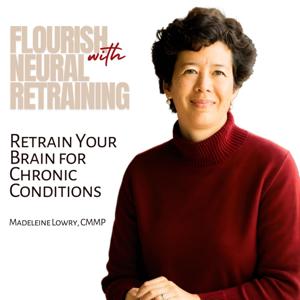


If you're living with chronic fatigue, you've probably been told to rest more, do less, or find the right supplement to boost your energy. But what if fatigue isn't primarily an energy production problem — and what if that's why so many approaches fail to resolve it?
In this episode, neural retraining specialist, Madeleine Lowry, reframes chronic fatigue entirely — not as a cellular or mitochondrial problem, but as a nervous system state. Specifically, the conservation and shutdown response of a nervous system that has been carrying too much for too long.
In this episode you'll learn:
This is Episode 1 in the Nervous System Roots of Common Symptoms series.
To learn more or schedule a free consultation, visit TCNeuralRetraining.com.
Healing Trauma From the Inside Out — What Neural Retraining Makes Possible
What would it feel like to carry your history without being controlled by it? To remember what happened — and feel the weight of it lift? In this series finale, neural retraining specialist Madeleine Lowry brings the Trauma, the Nervous System, and Chronic Illness series to its conclusion — exploring what trauma healing actually looks like, how neural retraining works as the next generation of energy psychology after EMDR and tapping, and why the real goal of this work is not symptom management but the freedom to be authentically yourself.
In this episode you'll learn:
This is the final episode of the Trauma, the Nervous System, and Chronic Illness series — a 10-episode journey from the ACEs research to the return of self.
To learn more or schedule a free consultation, visit TCNeuralRetraining.com.
Trauma, Self-Abnegation, and the Lost Self — Finding Your Way Back
Do you know what you want? Not what others need from you — but what you, underneath all of that, actually want? For many people with chronic illness, that question lands not with a clear answer but with a kind of blankness. In this episode, neural retraining specialist Madeleine Lowry explores one of trauma's deepest and least discussed effects: the disconnection from self that occurs when authentic expression has repeatedly been met with criticism, punishment, or loss of connection — and the self-abnegation patterns that grow from that disconnection.
In this episode you'll learn:
This is Episode 9 in the Trauma, the Nervous System, and Chronic Illness series.
To learn more or schedule a free consultation, visit TCNeuralRetraining.com.
Welcome to the Nervous System Healing for Chronic Illness podcast.
If you're a highly sensitive person — an HSP, empath, or intuitive — living with chronic illness, chronic fatigue, autoimmune conditions, or persistent symptoms that haven't responded to treatment, you're in the right place.
In this introduction, neural retraining specialist, Madeleine Lowry, introduces the podcast, her approach, and the specific person this show was created for — someone who has tried everything, senses that something deeper is going on, and is ready to explore what working with the subconscious nervous system can do for their health.
Every week we explore the nervous system roots of chronic illness — covering trauma, relationships, loneliness, sensitivity, and the subconscious patterns that block healing.
This isn't talk therapy. It isn't basic brain retraining. It's the next generation of mind-body healing — gentle, powerful, and working at the level where lasting change actually happens.
Follow the podcast wherever you listen — and visit TCNeuralRetraining.com to take our free quiz or schedule a free consultation.
🔗 Free quiz: TCNeuralRetraining.com
Have you ever known exactly what you needed to do — and found yourself unable to do it? Not from lack of information or motivation, but because something beneath the surface kept pulling you in a different direction? In this episode, neural retraining specialist Madeleine Lowry explores the self-defeating patterns that trauma creates — hyperindependence, perfectionism, people-pleasing, procrastination, worry loops, and self-sabotage — reframing them not as character flaws but as protective strategies that have outlived their usefulness.
In this episode you'll learn:
This is Episode 8 in the Trauma, the Nervous System, and Chronic Illness series.
To learn more or schedule a free consultation, visit TCNeuralRetraining.com.
Do you have a voice in your head that tells you you're not good enough? That you're broken, too much, or that healing is available to others but somehow not to you? In this episode, neural retraining specialist Madeleine Lowry explores one of trauma's most intimate and least visible effects: the negative core beliefs and self-perceptions it leaves behind — and the inner critic that enforces them.
In this episode you'll learn:
This is Episode 7 in the Trauma, the Nervous System, and Chronic Illness series.
To learn more or schedule a free consultation, visit TCNeuralRetraining.com.
Do you put off medical appointments you know you need? Does the smell of a hospital make your chest tighten, or the sight of a needle produce dread far beyond what the situation warrants? For people with chronic illness, the healthcare system itself is frequently a source of accumulated trauma — and that trauma shapes every medical encounter that follows. In this episode, neural retraining specialist, Madeleine Lowry, explores medical trauma in all its forms, and introduces one of the most distinctive aspects of her work: preparing people for surgeries, procedures, and treatments by clearing the stored nervous system charges that generate medical fear.
In this episode you'll learn:
This is Episode 6 in the Trauma, the Nervous System, and Chronic Illness series.
To learn more or schedule a free consultation, visit TCNeuralRetraining.com.
Were you the strong one? The one who held it together while someone you loved fell apart — who sat in the waiting room, absorbed the fear, managed the crisis, and never gave yourself permission to acknowledge how much that cost? In this episode, neural retraining specialist Madeleine Lowry explores one of the least recognized forms of trauma: the trauma of witnessing — what is absorbed by the nervous system when we watch someone we love suffer, when we spend years in caregiving roles, or when the stories of others' pain become part of our own nervous system's threat library.
In this episode you'll learn:
This is Episode 5 in the Trauma, the Nervous System, and Chronic Illness series.
To learn more or schedule a free consultation, visit TCNeuralRetraining.com.
Have you ever tried to explain why you struggle — and found yourself saying nothing that bad really happened to me? No single catastrophic event. No obvious abuse. Just a nervous system that never quite settles, patterns that repeat no matter what you try, and a chronic illness that doesn't respond the way it should. In this episode, neural retraining specialist Madeleine Lowry explores complex trauma — the cumulative impact of chronic relational and developmental adversity that leaves a profound mark on the nervous system without ever producing a single traumatic memory to point to.
In this episode you'll learn:
This is Episode 4 in the Trauma, the Nervous System, and Chronic Illness series.
To learn more, take our free quiz, or schedule a free consultation, visit TCNeuralRetraining.com.
Have you ever had a fear or a physical response that you couldn't trace to any experience you can remember? A pattern that keeps repeating with no apparent origin? In this episode, neural retraining specialist, Madeleine Lowry, explores one of the most surprising and validating dimensions of trauma: the hidden kind — experiences stored in the subconscious nervous system that the conscious mind has no access to, but that shape the body and the self in profound and lasting ways.
In this episode you'll learn:
This is Episode 3 in the Trauma, the Nervous System, and Chronic Illness series.
To learn more or schedule a free consultation, visit TCNeuralRetraining.com.
From the publisher's feed
Are you a highly sensitive person — an HSP, empath, or intuitive — living with chronic illness, chronic fatigue, autoimmune conditions, or persistent symptoms that haven't responded to treatment?
The missing piece may be your subconscious nervous system.
I'm Madeleine Lowry, a neural retraining specialist. I help sensitive people resolve the hidden layers of stress, trauma, and subconscious programming that keep the nervous system dysregulated — and the body stuck. This isn't talk therapy, and it isn't basic brain retraining. It's an advanced, practitioner-led approach that works directly with the subconscious mind — gently, efficiently, and without reliving the past.
In this podcast, we explore the nervous system roots of chronic illness — covering trauma, relationships, loneliness, sensitivity, and the subconscious patterns that block healing. If you've tried everything and still aren't healing, this podcast will give you a new framework — and a new path forward.
🔗 Free quiz: TCNeuralRetraining.com
🎙️ YouTube: @TCNeuralRetraining
📩 Free consultation: Tcneural.as.me/consultation
10,506 Listeners

21,053 Listeners

11,953 Listeners

149 Listeners

4,718 Listeners

8,307 Listeners

3,620 Listeners

1,662 Listeners
9,156 Listeners

46,902 Listeners
833 Listeners
5,457 Listeners

635 Listeners
219 Listeners
408 Listeners