
Sign up to save your podcasts
Or

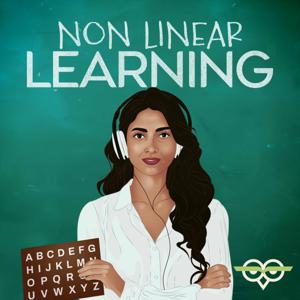


In this episode, I talk to Dawnmarie Gaivin, a powerhouse in the world of spelled communication, about her journey raising two remarkable sons with autism and their path to becoming skilled communicators. Dawnmarie, or DM as many know her, opens up about her journey in parenting—and ultimately advocating for—her sons. DM talks about presuming competence, we dive into her work with Spellers, and she reflects on the importance of recalibrating ourselves in the face of setbacks, trusting your instincts, and keeping the bigger vision in mind. She reminds us that no matter how challenging the journey may feel, staying grounded can make all the difference.
Spelled Communication, she tells us, is much more than a method; it's a path to connection for individuals who've faced incredible communication barriers. We talk about how co-regulation, staying attuned to our kids' sensory needs, and creating an environment of trust can help unlock their potential.
Key Takeaways:
How to recalibrate your expectations as a parent
What mindfulness and being present brings us
The critical importance of patience in letterboarding techniques.
What it means to presume competence
Get In Touch:
👉Learn more about the Speller Center: https://spellers.com/
👉Watch the Spellers Documentary: www.spellersthemovie.com
👉Explore more ways for your child to thrive: https://www.drvaishsarathy.com/nonlineareducation
Guest: Elizabeth Vosseller, Founder of Growing Kids Therapy Center and I-ASC
Host: Vaish Sarathy, Math and Science Teacher, Learning Strategist
This episode challenges the assumption that low cognitive skills in children with disabilities are due to a lack of intelligence. Instead, the conversation focuses on how motor skill limitations can significantly impact a child's ability to communicate and learn.
Elizabeth Vosseller is a speech therapist and founder of S2C (Spelling to Communicate). She talks to me this week about how Motor Issues Autism can seem like cognitive disorders.For more details visit here.
"What we observe often is the body. We can't really observe intelligence directly." Tune in to listen to how powerful using motor-skills appropriately can be.
Key Takeaways:
Traditional assessments of intelligence often rely on motor skills, which can be misleading for children with motor difficulties.
Speech itself is a fine motor skill, and difficulties with speech production can be a sign of underlying motor challenges.
Sensory processing issues can further complicate motor skills and communication.
Many children with disabilities, including Down syndrome and autism, experience difficulties with motor skills.
The "least dangerous assumption" is to believe a child may be capable of more than they can currently demonstrate.
Get In Touch:
👉Learn more about S2C at Growing Kids Therapy Center: https://growingkidstherapy.com/
👉Visit the I-ASC website: https://i-asc.org/advocacy-campaign/raise-expectations/
👉Explore a different way for your kid to learn: https://www.drvaishsarathy.com/non-linear-education
Follow TJ / Tiffany on social media for updates and more resources: nigh.functioning.autism
In this episode, we address a crucial and often daunting question for parents of children with disabilities:
How will my child be supported when I am no longer around?
Many of us, as parents, carry the weight of this question, wondering about our children's future in our absence. Today, my guest Sangeetha Chakrapani offers a powerful and hopeful answer.
Sangeetha is the founder trustee of Together Foundation in Mumbai and co-founder of the Together Community, a residential project for adults with disabilities located in Hosur, Greater Bengaluru. She is also a mother to two autistic adults and two neurotypical adults. With vast experience managing teaching programs, vocational training, and life skills development, Sangeetha brings a wealth of knowledge on how to create thriving, supportive environments for neurodivergent individuals. She is also the author of Autie Tales: Interactive Stories for People with Autism and has earned certifications in integrated education, counseling, and young adults' programs.
Tune in to hear more about:
- Building sustainable, supportive living communities for adults with disabilities.
- The vision behind the Together Community and how it addresses the needs of both individuals with disabilities and their families.
If you are exploring future care options for your child with disabilities or considering community-based living models, this episode will provide you with insights, hope, and a path forward.
Key Takeaways
- Focusing on building a community that ensures care and growth for your child after you are no longer there.
- How vocational training and life skills programs create independence and fulfillment for neurodivergent adults.
- The importance of parental vision and community collaboration in shaping the future for individuals with disabilities.
You can reach out to Sangeetha at [email protected]
You can find the Together Foundation at https://togetherfoundationtrust.org/
And the Together Community at https://togetherfoundationtrust.org/group-home/
If you have struggled with making a neurotypical math curriculum work for your child with disabilities, whether Down Syndrome or Autism or other disabilities that impact their sensory-motor profile,
If you have a child who communicates via AAC, or is an unreliable speaker, or a Speller - perhaps they use RPM or S2C,
you may find that either "regular" Math is not available to your child, or not accessible.
In this episode, Lisa Mihalich Quinn and I have a hard but necessary conversation on the gaps in special ed, and what needs to happen to make academics accessible for ALL STUDENTS!
Lisa has been doing this for years, and is one of the leaders in accessible academics for students with disabilities. She is also a huge advocate for non-speakers who spell / type to communicate.
Key Topics Discussed:
- Presuming competence in non-speaking and minimally speaking autistic students
- The role of assistive technology in promoting communication and learning
- Creating inclusive classrooms through collaboration between parents, educators, and students
- Communication for Education training and its impact on global educators
Connect with Lisa: You can learn more about Lisa Mihalich Quinn's work and the Communication for Education program at https://reacheveryvoice.com
You can find Lisa's Accessible Academics program HERE.
In the 50th episode of Functional Nutrition and Learning for Kids, one of my favorite thought leaders, Soma Mukhopadhyay, talks to us about:
-how learning channels determine teaching
-the 4 goals of RPM - not just information download - but cognition, sensory, tolerance and communication goals.
-the importance of a sensory map when working with a child (as opposed to a label) If you are interested in helping your child jump start their learning and sensory goals, I highly recommend checking out RPM.
Disclaimer: The information in this Podcast is for educational purposes only. Vaishnavi Sarathy, Ph.D. is an educator, not a doctor, specifically not your child's doctor. Please consult your physician before implementing any supplement or diet recommendations.
PDA (Pathological Demand Avoidance) (now being reframed as Pervasive Demand for Autonomy) is a profile on the Autism Spectrum characterized by a heightened sensitivity of the nervous system that becomes activated when a person experiences a loss of autonomy or equality.
Did you know that 70% of learners with PDA are not able to participate in traditional school settings?
In this episode, we dive into with early childhood mental health consultant and therapist Jessica Hanzo. Jessica sheds light on how PDA differs from typical demand avoidance due to its pervasive impact on the nervous system, making it challenging for individuals to access even their basic needs.
Our conversation explores:
- Why a child's demand avoidance is NOT a parental failure.
- The external manifestations of PDA and how they can be misinterpreted.
- How to support parents, educators, and caregivers when supporting children with PDA.
- Low Demand Parenting, and how it can help your child
Jessica emphasizes the importance of reframing PDA behaviors as a response to feeling unsafe and highlights the value of understanding the nervous system, cultivating curiosity, and embracing creativity when working with these children.
You can connect with Jessica Hanzo on Instagram @pda.project or find her at https://pdaproject.com/ and explore more of her insights on supporting neurodivergent children through a neurodiversity-affirming and trauma-informed approach.
Links mentioned in the podcast: https://www.pdasociety.org.uk/
https://pdaproject.com/
From the publisher's feed

39,030 Listeners
13,496 Listeners
2,018 Listeners

111,863 Listeners
203 Listeners

8,328 Listeners

334 Listeners

1,876 Listeners

57,608 Listeners

15,891 Listeners

1,424 Listeners
10 Listeners
8,805 Listeners
15 Listeners