
Sign up to save your podcasts
Or

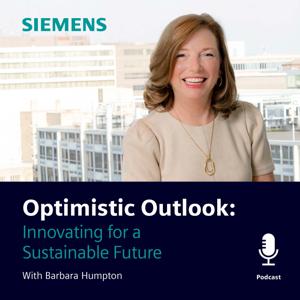


Fleet electrification is scaling right now. Here is what fleet leaders and
Key takeaways:
If you want a grounded view of fleet electrification beyond the headlines, this episode shows what scaling looks like when real fleets make the shift.
Picture this: a factory that makes its own power, stores it, and has enough left over to sell back to the grid. It may sound like a thought experiment, but Siemens is running one right now in Wendell, North Carolina, at one of its industrial factories.
Here's the gist. Solar panels on top of a carport feed a battery roughly the size of a small building, which lets the whole facility run on renewables, keep operations carbon-neutral, and yes, push excess power back into the grid for other people to use. The setup is a 1.25-megawatt microgrid paired with 3.9 megawatt-hours of battery storage, and it's one of the largest industrial solar plus storage systems on Duke Energy's distribution network in the Carolinas. When the grid goes down, the factory keeps humming. When the sun is shining and production is light, the surplus goes out the door and into the neighborhood. The carport doubles as covered parking with EV chargers tied into the same system, so EVs get charged on the factory's own solar.
This is what an industrial microgrid actually looks like in practice, a real working example of solar plus storage, distributed energy resources, and smart building controls coming together to make a single site genuinely energy independent. It's also a preview of where a lot of manufacturing is heading as companies start seizing energy resilience as a competitive advantage.
If you run a facility, work in energy, or you're just curious how the grid is quietly getting rebuilt from the edges in, give this one a listen.
Show notes
Press Release: Siemens Unveils State-of-the-Art Microgrid at Wendell Headquarters, Commemorates with Electrification Celebration: https://news.siemens.com/en-us/wendell-state-of-the-art-microgrid/
AI adoption, not innovation, is the real barrier to progress in healthcare and manufacturing. Siemens' Brittany Ng and Rad AI's Demetri Giannikopoulos share what they told the U.S. Senate about deploying AI where it matters most.
In radiology, AI is reducing missed diagnoses, extending specialist expertise to underserved hospitals, and giving physicians more time with patients. In shipyards and factories, industrial AI is automating complex processes, cutting downtime, improving quality, and strengthening domestic manufacturing capacity.
But the real AI adoption challenges aren't technical. They're about data access, governance, workforce readiness, trust, and making sure smaller hospitals and manufacturers aren't left behind.
What you'll learn:
Show notes:
Siemens VP Addresses Congress on Industrial AI: https://www.siemens.com/en-us/company/insights/us-stories/siemens-vp-addresses-congress-on-industrial-ai/
What does a $1 billion investment in American manufacturing actually look like?
In this episode of Optimistic Outlook in Five, guest host Lauren Espin explores how Siemens USA invested more than $1 billion in U.S. manufacturing between 2021 and 2026, and how those investments are reshaping industries, creating jobs, and strengthening America’s industrial future.
From new electrical infrastructure facilities in Texas, California, and the Carolinas to advanced passenger rail manufacturing in North Carolina, Siemens is expanding domestic manufacturing capacity to support critical sectors including AI, data centers, semiconductors, utilities, automotive, healthcare, and transportation.
This episode highlights the real-world impact of industrial investment — from workforce development and job creation to energy infrastructure, rail manufacturing, and the future of U.S. competitiveness.
In this episode:
If you’re interested in manufacturing, industrial technology, infrastructure, workforce development, AI, energy, or the future of American industry, this episode offers a closer look at how long-term investment can create lasting impact across communities nationwide.
Show notes:
Press release - Siemens Achieves $1 billion in U.S. Manufacturing Investments, Strengthening American Reindustrialization, Supply Chains and Workforce: https://news.siemens.com/en-us/siemens-achieves-1-billion-us-manufacturing-investments/
Episode transcript
Most of us spend up to 90% of our lives indoors—but how often
Indoor air quality plays a critical role in human health,
That’s starting to change.
In this episode of The Optimistic Outlook In Five,
Siemens is helping lead this shift, integrating digital twin technology and AI-driven building controls to create environments that can detect airborne threats and respond instantly, adjusting airflow, filtration,
The result? Buildings that don’t just monitor air quality, but
The construction worker's son who learned to build spacecraft is about to disrupt a $1.4 trillion industry that hasn't changed in 70 years.
Nick Callegari spent his childhood summers working construction sites alongside his father, a laborer who still builds walls in Florida using the exact same methods he used 30 years ago. Then Nick went to work as an engineer at SpaceX, where he watched a team challenge every assumption about what's possible and accomplish the extraordinary.
That contrast haunted him. 41% of America's construction workforce retires by 2031. We're already millions of homes short. And Nick's own family experienced the crushing pain of housing insecurity, so he understands the problem that faces millions of American families.
So he left SpaceX and rockets behind to solve it. In this deeply
Host Peng-Sang Cau— a Cambodian refugee, former founder, and now Siemens' startup ecosystem leader — brings her own story of survival and technology's promise to this conversation about who gets access to the future we're building.
You'll discover:
This isn't another startup story. It's about how we're finally applying spacecraft-level innovation to the fundamental right of shelter.
For leaders in construction tech, real estate development, automation, venture capital, or manufacturing: this is the conversation about where digital transformation meets demographic crisis.
Show notes:
More about Verustruct: https://www.verustruct.com/
At nine years old, Peng-Sang Cau was living in a Thai refugee camp with nothing but the clothes on her back.
Her family had survived Cambodia's killing fields — where 33% of the population was starved, worked, or tortured to death. They escaped with rice as currency, got mugged crossing the border, and were rescued by a Red Cross truck. Her parents had lost everything: a bicycle parts manufacturing business built from nothing, years of 3-hour sleep nights, a life constructed on handshakes because her father couldn't read or write.
The only reason her family survived the Khmer Rouge work
That lesson — how you treat people when you have power determines whether they save you when you have none — became the foundation of everything Peng built next.
In this deeply personal episode encore presentation of an episode from the Siemens Pioneers podcast, Peng shares her journey from fleeing genocide as a child to founding Transformix, one of Canada's premier automation companies, which she grew to an eight-figure acquisition. But this isn't a rags-to-riches fairy tale. This is a masterclass in resilience, leadership, and what it actually takes to build something lasting when the world tells you what you can't do.
You'll hear the painful decisions:
You'll learn Peng's leadership framework:
Integrity — "Your word is gold" (the supplier who trusted her with $150K
Respect — Debate fiercely, but honor each other
Passion — "There's the door. I'm not for everybody."
Innovation — Not just technology. Different thinking. Being "stupid" enough to challenge norms.
And you'll discover why Siemens brought her on as their
Hosts Paul Musso and Jim Gernatt welcome Peng to the Siemens family in this inspiring conversation about overcoming impossible odds, treating people like human beings in an industry that often doesn't, and using technology to create enterprises that last — not just companies that make a living.
For startup founders, manufacturing leaders, investors, and
Perfect for listeners interested in manufacturing innovation, industrial automation, startup leadership, overcoming adversity, building sustainable enterprises, diversity in tech, angel investing, and creating lasting impact in traditional industries.
Show notes
Siemens for Startups Program: https://www.siemens.com/en-us/company/innovation/startups/
Siemens Pioneers Podcast: Startups From Dreams to Reality: https://blogs.sw.siemens.com/podcasts/startups/forged-in-war-proven-in-business-the-story-of-peng-cau/
Episode transcript
When people talk about artificial intelligence, one question comes up again and again: How will we power the data centers behind it?
What people may not realize, though, is that meeting these needs can also fuel something else: major new investment in U.S. manufacturing. In this episode of The Optimistic Outlook In Five, host Lauren Espin breaks down Siemens' $165 million investment
Show notes: https://news.siemens.com/en-us/siemens-invests-165m-carolinas-supports-data-centers/
Most companies say sustainability is a priority. Far fewer are seeing it actually move the needle on their business. A new industry survey puts a number on that gap: more than 85% of executives plan to increase their sustainability investments yet only about one in four reports very high impact from those efforts. So what's going wrong, and how do the leaders get it right?
In this episode of the Optimistic Outlook, Siemens' Erica Call sits down with UL Solutions' Luca De Ferrari to explore why sustainability is shifting from a compliance checkbox to a genuine growth strategy. Drawing on conversations with manufacturers and industrial companies across the U.S., they dig into why investment keeps rising even as pressure for real ROI intensifies and what's holding most organizations back from turning ambition into measurable results.
They reveal how trusted analytics, clear data, and real-time visibility into energy costs are giving leading companies something their competitors don't have: the ability to use sustainability to reduce costs, manage risk, and strengthen long-term competitiveness. In other words, for the companies thinking about sustainability as integral to their process, it not a cost of doing business anymore - it's their competitive edge.
Show notes
AI is everywhere but can America actually use it where it
Getting AI from the data center to the factory floor, the
Now, they're taking it further. In this special 5-minute episode, Siemens Interim President & CEO Ann Fairchild discusses the impact of the U.S. Department of Energy's Genesis Mission, a landmark collaboration aimed at accelerating AI deployment across American industry. Because no one company can scale up AI alone.
Show notes:
From the publisher's feed

43,361 Listeners

36,175 Listeners

26,245 Listeners

9,619 Listeners

111,766 Listeners

56,424 Listeners

5,759 Listeners
9,069 Listeners

27,677 Listeners
14,341 Listeners
6 Listeners
5,390 Listeners

3,452 Listeners
1,450 Listeners

1,566 Listeners