
Sign up to save your podcasts
Or

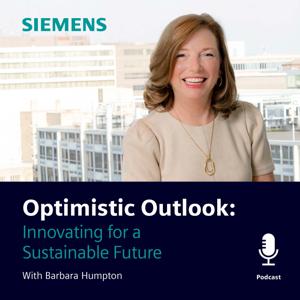


Climate resilience is no longer a distant or abstract concern for businesses. From rising heat and water stress to supply chain disruption and higher operating costs, quieter climate impacts are already shaping how companies plan, invest, and compete.
In this episode of The Optimistic Outlook, Erika Gupta, Global Head of Sustainability at Siemens Financial Services, is joined by Harry Morrison, Partner at Bain & Company, to explore what resilience really means for business today. Together, they discuss how severe weather dynamics show up in day-to-day operations, why action often lags even when risks are well understood, and how better data, analytics, and AI are helping leaders see and respond to risk more clearly.
The conversation looks beyond risk avoidance to examine how resilience can strengthen performance, support long-term growth, and help organizations make better decisions.
Show notes:
Transcript: https://assets.ctfassets.net/17si5cpawjzf/7oJC8z0fb4YhwgrsW8J3qS/26d5cd98a0e31eed2aa98fe01efdc021/022426-gupta-morrison-optimistic-outlook-transcript.pdf
The CEO Playbook for Climate Resilience: https://www.bain.com/insights/the-ceo-playbook-for-climate-resilience-ceo-sustainability-guide-2025/
Infrastructure Transition Monitor: https://www.siemens.com/en-us/company/sustainability/infrastructure-transition-monitor-report/?acz=1&gad_source=1&gad_campaignid=23448235816&gbraid=0AAAAADEuPPM0SpA6QyiRjstvf154OVNCH&gclid=CjwKCAiAs4HMBhBJEiwACrfNZZfbMu0Y94Sr06CXOu6gggqnHIgCTHIGpLEg3pq4lkJc9YT5YM_DOBoCfGgQAvD_BwE
Digital Business Optimizer: https://www.dbo.siemens.com/?utm_source=optimistic_outlook_podcast&utm_medium=podcast&utm_campaign=optimistic_outlook_podcast_with_bain_on_resilience&utm_id=E-qftC
America is electrifying at a pace we’ve never seen before – driven by AI data centers, smart grids, and modern infrastructure. But all of it depends on one critical workforce: electricians.
The problem? The U.S. faces roughly 80,000 electrical job openings every year – and the gap is growing.
In this Optimistic Outlook In Five, Lauren Espin breaks down why the electrician shortage has become a national challenge, and how a new coalition of industry, education, government, and nonprofit partners is coming together through the Siemens Foundation’s Careers Electric initiative to help close the gap.
You’ll hear how this first-of-its-kind effort is creating clear, accessible pathways into high-paying electrical careers that don’t require a four-year degree—and why the model launching in North Carolina could become a blueprint for other states.
Show notes:
Press Release - https://news.siemens.com/en-us/siemens-foundation-launches-careers-electric-national-workforce-initiative/
Episode Transcript - https://assets.ctfassets.net/17si5cpawjzf/6aLp0p8BfOHcP07o9Ea75I/ef9b42a06c9ec4598cf5ecd315efaea2/021926-optimistic-outlook-podcast-transcript.pdf
America’s rail network is at a pivotal moment, and the future is moving fast.
In this episode of The Optimistic Outlook, Siemens USA Interim CEO Ann Fairchild sits down with Tobias “Tobi” Bauer, CEO of Siemens Mobility North America, to explore what’s driving renewed momentum across passenger and freight rail in the United States. From modernizing legacy infrastructure to building state-of-the-art trains right here at home, Tobi shares why the outlook for rail has never been more positive.
The conversation dives into Siemens’ growing manufacturing footprint on both coasts, the role of industrial AI in improving safety, efficiency, and the passenger experience, and how long-term partnerships are shaping the transportation systems our cities will rely on for decades to come. Tobi also reflects on workforce development, career pathways in manufacturing and engineering, and why reindustrialization is critical to America’s future.
Looking ahead, Ann and Tobi discuss urbanization, high-speed rail, and what it will take to deliver reliable, comfortable, and sustainable mobility solutions that truly improve quality of life. The episode wraps with an optimistic vision for passenger rail in America, one built on trust, innovation, and delivering on promises.
The future of rail is being built now, and it’s bringing people, cities, and opportunity closer together.
Show notes
More about Siemens Mobility USA
In this 5-minute high-bandwidth brief, Siemens’ Lauren Espin shares new insight into how the industry can move beyond reinventing the wheel every time we build an AI data center — and start unlocking gains in efficiency, scalability, and energy usage.
If you work in infrastructure or communications — or simply follow the space — you know that today’s AI workloads demand new, purpose-built approaches to data center design. Too often, facilities are still built as one-off projects, slowing deployment and limiting scale.
In this episode, we look at a game-changing collaboration between Siemens, NVIDIA, and nVent: a new liquid cooling and power reference infrastructure framework built for operational efficiency and resilience in AI environments. Designed as a Tier III–capable, standardized blueprint for high-density AI workloads, it offers a path from experimental builds to repeatable, scalable AI infrastructure.
If you want to understand how the industry is moving toward standardized implementation for AI factories, this is an episode you won’t want to miss.
Show notes:
Artificial intelligence is no longer just a tool – it’s becoming a force in the physical world. This special episode of The Optimistic Outlook highlights how industrial AI is moving beyond software to drive real-world impact. From factories and power grids to buildings, transportation systems, and even drug discovery, industrial AI is reshaping the systems that underpin everyday life.
You’ll hear excerpts from Siemens President and CEO Roland Busch’s CES keynote, including onstage conversations with leaders such as NVIDIA CEO Jensen Huang, Microsoft CEO Satya Nadella, PepsiCo Latin America CEO Athina Kanioura, and Commonwealth Fusion Systems CEO Bob Mumgaard. Together, they explore how digital twins, AI-powered simulation, and deep industry partnerships are already delivering measurable results—and setting the foundation for an industrial AI revolution.
Throughout the episode, Siemens USA Interim President and CEO Ann Fairchild provides context and commentary on what these breakthroughs mean for customers, industries, and society – and why Siemens is uniquely positioned to help scale industrial AI responsibly and impactfully.
Show notes
Siemens CES Keynote with Roland Busch (Full video on YouTube): https://www.youtube.com/watch?v=R4Wm6YdoZSs&t=9s
Siemens at CES 2026: Official Landing Page : https://events.sw.siemens.com/en-US/siemens-at-ces/
As 2026 approaches, manufacturers are under growing pressure to move faster, operate more flexibly, and compete in an increasingly complex global landscape. At the same time, the tools to meet those challenges are finally positioned to move from promise to real-world impact.
In this year-end episode of The Optimistic Outlook, Siemens USA Interim CEO Ann Fairchild sits down with Del Costy, President and Managing Director of Siemens Digital Industries Americas, to explore what’s changing—and what’s still holding manufacturers back. Drawing on conversations with industrial leaders across the country, Del offers a clear-eyed view of today’s technology adoption curve, from the realities of deploying Industrial AI to the strategic importance of digital twins, simulation, and edge processing.
Together, they examine how technology, data, and people are converging to shape a new industrial tech sector—and what it will take for manufacturers to translate innovation into speed, resilience, and long-term competitiveness in 2026 and beyond.
America is racing to build the infrastructure for an AI-powered economy. But as this generational investment accelerates, a critical question emerges: Are organizations truly ready to deploy AI at scale?
While AI is everywhere in headlines, enterprise readiness remains uneven. Many companies are experimenting with AI, but far fewer have the data quality, governance structures, workforce skills, or sector-specific frameworks needed to adopt it responsibly and effectively. The gap between infrastructure and real-world deployment is growing — and closing it will determine whether AI strengthens competitiveness and expands opportunity across the economy.
In this episode, guest host Brie Sachse, Senior Vice President & Head of Government Affairs for Siemens USA, sits down with Victoria Espinel, President & CEO of the Business Software Alliance (BSA), to explore how AI can be responsibly integrated across every sector of the economy. Together, they discuss what it takes to accelerate AI adoption in ways that strengthen competitiveness, expand opportunity, and build public trust.
Victoria shares insights from BSA’s global work on AI and digital transformation, while Brie discusses the strong benefits of AI adoption across all sectors of industry, where AI meets the physical world. Both Brie and Victoria reflect on how policymakers, employers, and technology leaders can work together to ensure AI provides benefits to organizations of all sizes. This episode offers a practical, optimistic look at the future of AI and why readiness, not hype, is the key to unlocking America’s AI advantage.
Historic investments in manufacturing and AI data centers are creating a new wave of opportunities in skilled trades. But that opportunity isn’t always accessible, especially for workers facing barriers like childcare, housing, transportation, or financial pressures.
In this episode, David Etzwiler speaks with Rachel Korberg, Executive Director of the Families & Workers Fund, a coalition dedicated to expanding economic mobility and helping people enter high-quality, family-sustaining careers. Rachel shares how the Fund is supporting more than 1.3 million workers and learners, why wraparound services can be game-changing, and how cross-sector partnerships are reshaping workforce systems across the country.
She also discusses the Fund’s collaboration with the Siemens Foundation to expand pathways into electrical jobs — a sector poised for massive long-term growth.
Show notes
Press Release: Siemens to Train 200,000 U.S. Electricians & Manufacturers
More about the Families & Workers Fund: https://familiesandworkers.org/
Is the American Dream still Made in America? A renewed surge of interest in U.S. manufacturing has revealed a huge challenge. There are hundreds of thousands of vacant positions and a labor force that lacks the necessary skills to fill them.
While many label it a crisis, Carolyn Lee, president of The Manufacturing Institute sees an opportunity. In this episode Carolyn sits down with guest host David Etzwiler to share an upbeat, down‑to‑earth vision of a manufacturing sector that could fuel growth and generate huge new opportunities.
At the core of her mission is one thing: to remake the way talent is trained and primed for careers in industrial manufacturing. Carolyn shares some of the Manufacturing Institute’s groundbreaking initiatives built to upskill today’s employees while igniting the interest of the workers of tomorrow.
Through this conversation, you will discover a range of groundbreaking strategies that are reshaping the manufacturing workforce. Carolyn also examines how emerging technologies such as AI and automation, rather than posing threats, will actually create more jobs.
This episode is about the future of manufacturing, the future of work, and how the American Dream will be reshaped in the coming years. Whether you’re a business leader, a policymaker, an educator or simply someone with a stake in our economy’s future, this an episode you won’t want to miss.
Show notes
More about the Siemens Foundation
More about The Manufacturing Institute
Sometimes the most impactful careers are the ones we never planned. In this episode, Sidra Maryam, from Siemens Smart Infrastructure Manufacturing Hub, shares how an unexpected career pivot led her to become a leader driving innovation, digital transformation, and team culture across a large-scale manufacturing operation.
From the publisher's feed

43,361 Listeners

36,175 Listeners

26,245 Listeners

9,619 Listeners

111,766 Listeners

56,424 Listeners

5,759 Listeners
9,069 Listeners

27,677 Listeners
14,341 Listeners
6 Listeners
5,390 Listeners

3,452 Listeners
1,450 Listeners

1,566 Listeners