
Sign up to save your podcasts
Or

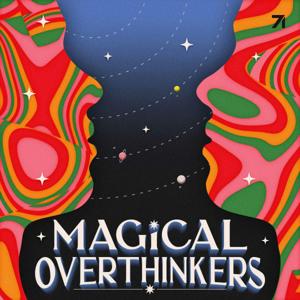

The decision to cut someone out of your life—whether a parent, a sibling, or a once-close friend—can feel both deeply necessary and impossibly fraught. But why does going no contact inspire so much shame, confusion, and second-guessing, especially when it’s often a tool for self-preservation? What does it really mean to choose absence over obligation?
In this episode, host Amanda Montell (@amanda_montell) is joined by Jeanette Tran, a professor at Drake University who explores the complexities of estrangement through an unexpected lens: Shakespeare. Drawing from centuries-old drama, Jeanette helps us parse why going no contact still feels so taboo, how literature mirrors (and sometimes distorts) our ideas of family and forgiveness, and why choosing peace can be the most radical act of all.
Further reading: Jeanette Tran’s essay “As more Americans go ‘no contact’ with their parents, they live out a dilemma at the heart of Shakespeare’s ‘King Lear’” in The Conversation.
- Join the "Magical Overthinkers Club" by following the pod on Instagram @magicaloverthinkers.
- To access early, ad-free episodes and more, subscribe to the Magical Overthinkers Substack.
- Pick up a hard copy of Amanda's book The Age of Magical Overthinking: Notes on Modern Irrationality, or listen to the audiobook.
Thanks to Our Sponsors:
Learn more about your ad choices. Visit podcastchoices.com/adchoices
 View all episodes
 By Amanda Montell & Studio71

4.3
590590 ratings
The decision to cut someone out of your life—whether a parent, a sibling, or a once-close friend—can feel both deeply necessary and impossibly fraught. But why does going no contact inspire so much shame, confusion, and second-guessing, especially when it’s often a tool for self-preservation? What does it really mean to choose absence over obligation?
In this episode, host Amanda Montell (@amanda_montell) is joined by Jeanette Tran, a professor at Drake University who explores the complexities of estrangement through an unexpected lens: Shakespeare. Drawing from centuries-old drama, Jeanette helps us parse why going no contact still feels so taboo, how literature mirrors (and sometimes distorts) our ideas of family and forgiveness, and why choosing peace can be the most radical act of all.
Further reading: Jeanette Tran’s essay “As more Americans go ‘no contact’ with their parents, they live out a dilemma at the heart of Shakespeare’s ‘King Lear’” in The Conversation.
- Join the "Magical Overthinkers Club" by following the pod on Instagram @magicaloverthinkers.
- To access early, ad-free episodes and more, subscribe to the Magical Overthinkers Substack.
- Pick up a hard copy of Amanda's book The Age of Magical Overthinking: Notes on Modern Irrationality, or listen to the audiobook.
Thanks to Our Sponsors:
Learn more about your ad choices. Visit podcastchoices.com/adchoices

90,994 Listeners
7,697 Listeners

113 Listeners
21,948 Listeners
1,249 Listeners
15,010 Listeners

3,355 Listeners

189 Listeners
1,575 Listeners

301 Listeners

6,721 Listeners
2,068 Listeners
2,737 Listeners
83 Listeners
16,913 Listeners
1,008 Listeners
61 Listeners
4,147 Listeners
1,346 Listeners

14 Listeners

126 Listeners

651 Listeners

5,751 Listeners

896 Listeners
156 Listeners
9,431 Listeners

233 Listeners

2,600 Listeners

1,064 Listeners
711 Listeners

159 Listeners

214 Listeners

195 Listeners
568 Listeners
70 Listeners