
Sign up to save your podcasts
Or

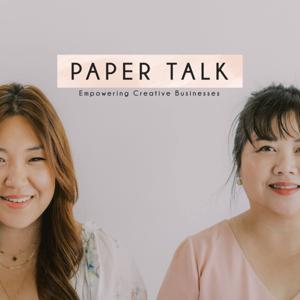


Over the weekend, our governments began to implement stricter guidelines and policies regarding social distancing in efforts to "flatten the curve" and slow down the spread of Covid-19. Many countries are now prohibiting entry of non-residents and locking down many public spaces like schools, libraries, community centres, and daycares.
Large social gatherings like weddings, workshops, and events are being cancelled and/or postponed worldwide. It's not a surprise if Covid-19 is affecting you.
In this Episode, Quynh and Jessie talk about how Covid-19 is affecting them, how the Covid-19 related policies may affect their relationships with their vendors and/or clients, and the issues that may have to be addressed as a result.
Here are a few links to some resources to help you navigate through some of these issues:
HoneyBook: https://www.honeybook.com/risingtide/coronavirus-small-businesses
Wedding Industry Institute: http://www.weddingindustryeducation.com/coronavirusinformation/
Small Business Guidance and & Loan Resources from Darice:
Paycheck Protection Program
Economic Injury Disaster Loans and Loan Advance
SBA Debt Relief
SBA Express Bridge Loans
Guidance for Businesses and Employers
SBA Products and Resources
Government Contracting
Local Assistance
If you guys recall, way back in Episode 4, we talked to Jodi Duncan of Design Master about her involvement with Design Master, her role in creating new colours, and how their colour products can help our paper florists community.
This time, we also had the chance to speak with Jodi along with Gretchen Sell, the Creative Director of Design Master, about Creativation 2020 and the new amazing colour products just released by Design Master. Gretchen also provides tips on colour shifting and how we can take advantage of the unique recipes of their products - from Colortool, Just for Flowers, to Ubermatte - to create a more sophisticated colour palette.
Above and below are some of the products mentioned in this episode that we cannot wait to try out!!
Below is an excerpt of our interview with Jodi Duncan in Episode 4:
1. We know that Design Master has been around a long time. Can you tell us the history and how you got involved with Design Master?
Mark Addison created DM. The idea was born around a kitchen table in 1961. Mark was an art-loving accountant who saw a need and an opportunity and Design Master was born. He is very much retired but he is still active and can be found around our headquarters in Boulder, Colorado from time to time. Design Master was born to serve florists who needed colors that were unavailable.
In 1961 distribution looked much different than it does today. Design Master was born as a color solution and remains so today across multiple diverse surfaces. We create color for the floral artistic community. Attributes of our products include: Multi surface. Fast drying. We work with chemists to develop our formulas and our Color Tool formula was the original. Our founder Mark was passionate about education and we are still to this day very much interested in supporting color education for artists in multiple mediums.
I started doing stage demonstrations and hands-on classes for Design Master in 2008. I was a fierce floral competition designer and won many regional, state, and national titles. That put me on their radar so they began to ask me to travel and teach and do programs for them nationwide.
I began to develop relationships with the great team at Design Master and they found out I was more than just a designer & speaker, but also could help with marketing, social media, and product development. So it was & is an evolution. Now I have a retainer contract with them and I’m on board for all kinds of creative color endeavors with the fantastic team at Design Master.
2. Can you tell us the proper way to use your spray paints?
We have basic common sense info on the can as well as our website, dmcolor.com.
Ventilation. Don’t spray around the flame. Common sense. Check the label. Non-toxic when dry. The application part needs attention. There are certain ways we use ALL tools. For instance, don’t run with scissors!
3. Any precautions we need to be aware of and how to store the spray paints?
Just avoid temperature extremes. Nothing above 120degrees. It lasts 20-30 years in the can so it does not get old...just shake vigorously.
4. You have so many beautiful colors of spray paints and tints and we want to know if you have a plan to expand your color line?
Yes, they will be released in July! We are so excited to show you the new trends in colour that we have been working on bringing to the market. Gretchen and I are very aware of the color trends and hyper-aware of what is happening with color and how it develops as well as consumer responses to color.
5. Are there any colors that you are retiring?
We have several colors that are still available but retiring. Coral Bell and Platinum are about to go away. Modern Metals is also about to disappear, as is Cherry Wood Tone. Aspen Yellow is going, to be replaced with a new yellow. Almond and Terra Cotta are also being retired and replaced with fresher versions. Fashion does not stay the same and neither does the color world!
6. Also, is there a spray that will help us preserve the colors over a long period of time?
We are looking into that with our team of chemists.
7. We love that you support the Paper Flower Community so much by highlighting so many amazing paper florists’ works via Instagram and Facebook. If a paper artist wanted to get a feature on your IG and Facebook feed - what’s the best way to tag you to get noticed?
Just tag us and give us permission to share the posts and projects. We love user-generated content! Bring it ON! Send us a DM or just tag us.
8. What other ways does Design Master support the community?
Our ways of supporting the paper community are as fresh as the community itself. We underwrite many educational endeavors and workshops for paper florists and look forward to being a part of the growth of paper florists. We are always excited to develop relationships with distributors to get our cans in your talented hands. We are always at Creativation and showed paper floral in our booth and had a tremendous response in January.
9. What are some questions that you might have for the paper florist community?
What are the avenues of growth you see for your products? Home decor? Nursery? Commercial displays? Weddings? Other directions on the horizon? Do most paper florists operate with tax license? Or as an enthusiast?
10. What are some things that you would like people to know about Design Master that we haven’t already covered?
Our emphasis is on color on surfaces. We are not just an aerosol. We are not just hardware store paint. We are of diverse color. And we are color education.
11. Finally, where can we find your products?
We have a diverse distribution channel that serves the consumer market with Michaels, AC Moore, Ben Franklin, and regional craft chains. We have on our website different options for places to purchase online. If you have a TAX id license you can buy professionally at floral wholesalers across the country.
Learn more about Gretchen, Jodi, and Design Master through social media:
WEBSITE | www.dmcolor.com
INSTAGRAM | @dmcolor
When Quynh went to Florabundance Design Days in January 2020, she met the lovely Teresa Schafer of Alexandra Farms. Alexandra Farms is the largest grower of garden roses in the world. Located in Bogotá, Colombia, the farm grows 60 varieties of those fragrant garden roses that florists (and we!) covet.
Teresa is the Communications Manager at Alexandra Farms and an expert at garden roses. We were thrilled when Teresa agreed to talk to us about all things garden roses and to learn more about her company
We are also excited to announce that we will be working with Alexandra Farms on a collaboration later this year! We cannot wait to get Alexandra Farms garden roses in our (and in our students’) hands! **After this Episode aired, we had to cancel/postpone this workshop due to Covid-19 restrictions.
Let’s first get to know Teresa and Alexandra Farms a bit:
1. Tell us about Alexandra Farms.
Alexandra Farms is a boutique grower specializing in nostalgic, romantic fresh-cut garden roses. Our farm is located in the incredibly fertile savannah of Bogotá, high in the Andes Mountains of Colombia, where the warm days and cool nights are perfect for growing roses. The company began in 2005 when our founder Jose R. Azout met David Austin and began testing his newly-launched cut rose varieties.
We worked with other long-established breeders from Europe and brought more varieties back to Colombia, where we established Alexandra Farms and began growing on a two-hectare farm. Over the next couple of years, we tested around 500 varieties to see how they performed in vases and to determine how best to ship them.
In 2008, we moved to a bigger farm and began to grow 12 varieties that made it through years of testing. Our company continues to grow each year! We test and launch new varieties and phase out others as demand and trends change. We are fortunate to be the world’s largest garden rose grower, harvesting more than 300,000 stems per week - that’s nearly 16 million stems per year!
2. What types of roses are grown at Alexandra Farms?
We grow 60 varieties of garden roses. They fall into four collections: Deluxe Garden Roses, David Austin Wedding Roses (we are the largest licensed grower of David Austin Wedding Roses), Princess Japanese Garden Roses, and Wabara Garden Roses. We collaborate with rose breeders around the world and follow meticulous production techniques. The result is garden roses with rich colors, full shapes, and long vase life. Many also have a fantastic fragrance. They are truly special flowers!
3. Where does Alexandra Farms ship their flowers?
Our garden roses are available all around the world! We ship to every major market.
4. Who purchases your flowers and how are your flowers purchased? How can one of our followers get a hold of your flowers?
Floral wholesalers and importers purchase our flowers and make them available to florists around the world. Florists can find our blooms at floral wholesalers, and the general public can purchase from their favorite florist - we recommend asking for the roses by name: "Alexandra Farms Garden Roses". They are also available through floral wholesale websites such as GardenRosesDirect.com.
5. What is your role at Alexandra Farms?
As Communications Manager, I handle marketing, advertising, partnerships, social media, education, outreach, website, and more for Alexandra Farms. I work closely with our customers, influential designers, and industry organizations around the world, supporting their business, design, and educational efforts.
6. Tell us about your organized trips to the farm in Bogotá.
Once a year, we host the first-place winners of our annual Garden Rose Design Contest (https://www.alexandrafarms.com/garden-rose-design-contest) and their guests at the farm. We tour the greenhouses and see where/how the garden roses grow; we tour the post-harvest area where our garden roses are graded, sorted, and packed by hand; and we view varieties that we're testing for possible future release. We also enjoy some time sightseeing in Bogotá before everyone returns home. Occasionally we host influential designers or educational groups, as well.
7. Is there anything else you would like to share with our listeners?
Alexandra Farms is certified under the Florverde Sustainable Flowers seal. Florverde is an environmental and social certification confirming our commitment to environmental best practices, employment protections and the responsible treatment of people, and health and safety requirements. At Alexandra Farms, we believe in the importance of quality education.
To that end, we support the efforts of groups like European Master Certification, the American Institute of Floral Designers, the Society of American Florists, and more, as well as respected floral designers around the world, in their teaching efforts. Our website is a great resource for everything from proper care and handling techniques to learning how to pronounce the names of our varieties.
Learn more about Alexandra Farms by following them on social media:
WEBSITE | www.alexandrafarms.com
INSTAGRAM | @alexandrafarms
Farren Celeste is a paper flower company that offers templates for paper goods. Farren Haygood is the artist and face behind Farren Celeste. She is currently based in The Netherlands, but she is originally from the US. After moving to a country where she had no family and did not know the language, she had to reinvent herself and establish a new form of income.
She found solace in making her own paper flower cardstock templates and began selling them on her Etsy site in August 2019. Since then, her business has grown significantly.
In this podcast, she shares with us her secrets to success, from how to use social media to your advantage to how to earn passive and evergreen income to the pros/cons of using Etsy to sell.
During the podcast, you might hear a new voice…a baby’s! That’s Cillian, our baby intern, and Jessie’s new baby. You might hear him on some of these episodes as he tries out his voice at podcasting!
First, let’s get to know a little bit about Farren:
1. Who is Farren?
I’m a registered nurse turned creative business owner while living abroad in The Netherlands with my husband and dog, Callie.
2. How did you get started making paper flowers? What drew you to this art form?
I originally made and sold custom party decor and invitations while I was working full-time as a registered nurse. A customer requested invitations and a high chair banner for a “floral” themed the first birthday.
She had a real floral high chair garland saved on her Pinterest board. I thought, “How can I make something that looks like real flowers but won’t die?”…I saw some garlands made out of felt, but I preferred working with paper.
I found some flower templates that I could use with my Cricut or Silhouette cutting machine. By tweaking the templates a bit, I was able to make the high chair banner completely out of paper greenery and paper flowers. From there, I was hooked.
I fell in love with making cardstock paper flowers, because I can use my cutting machine to cut the petals. But, I was disappointed with the templates that were available. The flowers didn’t look very realistic, and they didn’t come with instructions.
So, I learned how to make my own! I now design and sell SVG cut file paper flower templates for cutting machines.
3. Tell us about Farren Celeste.
I launched Farren Celeste, Cardstock Projects for Cutting Machines in August 2019. The name is the combination of my first and middle names.
Our move to The Netherlands allowed me to take a break from nursing to focus on my business full time, but it also required a HUGE pivot.
Prior to the move, I would design and sell paper products on the side using my Cricut cutting machine. Over several years, I taught myself how to design my own SVG files (digital cutting templates for cutting machines) so that I could offer unique products. I NEVER intended on sharing or selling the original SVG files.
I knew that shipping internationally would be expensive and potentially complicated, so I decided to transition to teaching people how to make my designs themselves!… I also, discovered, that for creative people, like myself, half the fun is in the making of something with your hands! So, I also purchased a Silhouette cutting machine and learned the software so that I can offer my SVG files to both Cricut and Silhouette users.
I currently offer paper flower, invitation, and card SVG cut file templates. I also offer a limited amount of paper flower commercial licenses, so other paper florists can use SVG templates to make physical paper flowers for sale.
4. What advice can you give to a paper florist who finds himself/herself suddenly transplanted to another country and wants to continue to be creative?
First, give yourself grace. It is quite an adjustment to move somewhere new, let alone a completely different country (especially when you don’t speak the native language). Simple things like going to the grocery store can be completely overwhelming!
Once you feel a little more settled, try to connect with other local creatives. We are so fortunate to live in a time where there are social media! Just by posting on Instagram and tagging the location, I’ve been able to talk and meet with locals. They’ve been so helpful in helping me find supplies and I’ve been able to make some friends in the process.
5. Tell us about your Etsy Shop. How have you been able to stand out in the crowd of Etsy shops?
First, my paper flower templates stand out because the flowers look realistic, but they are approachable to make. Most can be made with or without stems, which makes them perfect for adding to garlands or other decors.
Second, I am able to stand out on Etsy because of the experience I provide my customers.
Each of my SVG cut file templates is like an online workshop. Each template comes with 1. Video Tutorials for Cricut Design Space and Silhouette Studio that show customers exactly what to click in their cutting machine’s software 2. An Assembly Video Tutorial and 3. A material guide with paper recommendations. Some of my largest orders have come from repeat customers.
6. What strategies do you use to monetize on Etsy and on social media?
I think of Etsy purely as a website that allows me to sell my products online. I don’t rely on Etsy to bring me sales whatsoever. While Etsy already has an existing customer base, I don’t wait for Etsy to bring me customers through their search features. I use social media to introduce them to my store.
But, you can’t just sell, sell, sell, on social media. You have to remember that social media is meant to be social. You have to provide value to your followers other than just the products you offer, and you need to engage! I try to respond to every single comment and direct message.
I try to post a mix of content that is inspiring, educational, or entertaining more than I post about what I currently have for sale.
7. What are some of the challenges you've faced in your business and/or art?
Moving to the Netherlands has provided me with the time to focus on my business, but it has made every other aspect so much more challenging. Specifically, sourcing supplies.
Supplies are very limited here compared to the States, and one of my favorite cardstock suppliers does not even ship to The Netherlands. Even though I have a trade account with a different company, international shipping is extremely expensive. And, I also have to pay a 21% VAT tax plus import duties on anything I purchase from outside The Netherlands.
8. Tell us how you incorporate the use of a cutter like Cricut in your business.
My Cricut and Silhouette cutting machines are integral to my business. I literally cannot make my paper flowers without them. The detail on my paper flowers such as the anemones and blue thistle are so delicate, there is no way I’d be able to cut them by hand.
9. Do you have any tips (about paper flowers, social media strategy, Etsy, etc.) to share with our listeners?
Paper Flowers - First, decide what kind of paper florist you want to be. My paper flowers are intended more for the gift and party space as opposed to fine art. By choosing this path, it helps me to stay focused on the types of flowers I want to create and intentional in who I am creating them for. I currently do not offer any physical paper flowers at all. So, when I’m designing them I have to think, will my customer also be able to make this successfully?
Social Media - If you aren’t already utilizing video, you need to be. I know, video sounds completely overwhelming when it’s hard enough to come up with a variety of still photos to post. Start small by utilizing features like Instagram stories. Then, start experimenting with video content for your feed. People love seeing behind the scenes. So share, a bit of what you are working on!
Etsy - Utilize all the space that Etsy offers you. They give you 10 spots for pictures, so use them all! But, they don’t all have to be pictures of the product! I created images with information on them about the templates and upload those into the extra allotted pictures spots.
Want to learn more about Farren and Farren Celeste? Follow her on social media:
ETSY | www.etsy.com/shop/farrenceleste
INSTAGRAM | @farrenceleste
We first took notice of the minimally styled paper flowers of Yang Liu in her blue phase. This blue phase turned out to be her artistic collaboration with Anna Chedid at the VSCO studio. Influenced by her Chinese heritage, her dual Canadian-American nationalities, and her current hometown of San Francisco, Yang’s work strives to sit somewhere between dreams and reality.
Her paper flowers are showcased in a consistently clean and modern way. She does not shy away from creating various types of botanical objects, from dahlias to pear branches to dumpling boxes.
Listen to Yang as she shares her love for paper flowers.
Let’s first get to know Yang:
1. Who is Yang Liu?
I was born in Shanghai (hence my Instagram name, @shanghai.1984). I am currently a dual Canadian-American citizen residing in the San Francisco Bay Area. Besides flowers and paper art, I also love having tea with friends!
2. How did you get started making paper flowers? What drew you to this art form?
I first came across paper flowers at the De Young Museum, where I saw Tiffanie Turner’s show and was amazed by what you could achieve in paper. From there I ended up taking classes with Tiffanie Turner and Lynn Dolan, both of whom are just amazing artists and teachers. I just fell in love with the medium and found crepe paper so intuitive for the way I wanted to express myself in flowers.
3. How would you define the style of your flowers? How did you find your style? How has your creative style evolved to what it is today?
I think my style continues to evolve, but I would say that my current style is introverted, romantic, and a little moody. It’s influenced by my Chinese heritage and my desire to create work that sits somewhere between dreams and reality.
I definitely have a natural “messiness” to my artwork - it took some time for me to embrace this as part of my natural artistic style and not something that I needed to control. I like asymmetry in my petals and leaves. I also enjoy creating intentional flaws in my work like bug bites or bruising to reflect that life is not perfect.
I honestly think that I found my current style just through making a lot of art and being willing to experiment. Sometimes my experiments do not work out and I start over, but this is a natural part of the creative process and something which I have learned to embrace.
4. How have you made your paper flower voice stand out in the crowd?
Mostly by being willing to experiment. I try to choose colors, papers, and materials that not everybody is using in their work. You are forced to create your own technique this way. Naturally, that can help your final product look different from the crowd.
5. What are your ideal clients and/or ideal projects?
I’ve really enjoyed my collaborative projects with fellow paper artist Anna Chedid, also known as @floresdaannita. We shot our first project, “Botanical Impossibilities,” focused on the colour blue at VSCO Open Studios, which was just an amazing space to work in.
Our second project “Motherland Flora” focused on flora from our respective homelands and we used both Brazilian and Chinese papers in our work. I hope to do more collaborative projects as I feel it’s a great way to push yourself beyond your normal work as well as get to learn from another artist in a fun way.
More recently I’ve enjoyed working with an art gallery as my work was featured in “tiny,” a group show at STUDIO gallery in San Francisco. This is definitely an area I’d like to explore more.
6. What are some of the challenges you've faced in your business and/or art?
I think there’s always the natural feeling of disappointment when you submit your artwork to an organization and it doesn’t get chosen. However, I try to take this in stride and just continue submitting my work to as many different places as much as possible.
7. What advice would you give to a paper florist who is starting out today?
Just try to learn as much as you can and don’t be afraid to experiment with techniques, materials, composition - the sky is the limit! I think having fun is pretty key to wanting to make paper flowers are they are time-consuming - so it’s ideal for people who really enjoy the process.
8. What advice would you give to a paper florist who is about to give up?
I would say take a break and try something new, whether it be a new medium, an art class you’ve been meaning to take, or just walk around outside and explore what nature has to offer. I think we get creatively exhausted if we are doing the same thing over and over again. I also love yoga when I need to just mentally reset.
9. Do you have any paper flower tips to share with our listeners?
Take time to really observe and look at real flowers and leaves as much as possible before you start your work and while you are building out your artwork. Observation really helps me figure out things like petal placement and how to join the leaves to the main stem that mimics reality. Also, I would say try freehand cutting to get a more natural look!
10. What is your favourite tool?
I have to say once I got my own set of pink Kai scissors, it was pretty life-changing.
Want to learn more about Yang? Follow her on social media:
INSTAGRAM | @shanghai.1984
WEBSITE | https://www.shanghai1984.com/
From the publisher's feed
38,702 Listeners

36,217 Listeners
2,509 Listeners
438 Listeners
346 Listeners

1,251 Listeners

1,094 Listeners