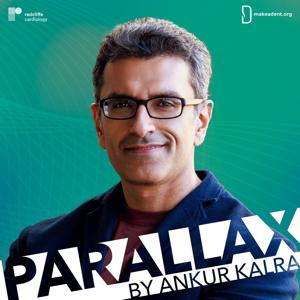
Parallax by Ankur Kalra

Parallax by Ankur Kalra

By Radcliffe CardiologyScience
Download on the App Store

Parallax by Ankur Kalra episodes

  • EP 98: Hospital of the Future: AI, Sensors & Sustainability with Dr Jag Singh
    In this week's Parallax, Dr Ankur Kalra welcomes back Dr Jag Singh to discuss Dr Singh's recently published book, "Future Care," which delves into the exciting evolution of medicine over the next 5 to 10 years.
    Dr Jagmeet Singh is a Cardiac Electrophysiologist and a Professor of Medicine at Harvard Medical School. He is also the Founding Director of the Resynchronization and Advanced Cardiac Therapeutics Program at Massachusetts General Hospital.
    "Future Care" wasn't written overnight; it had been simmering in Dr Singh's mind for nearly a decade. The catalyst for this book was a convergence of factors, including the COVID-19 pandemic and Dr Singh’s personal health journey. Drawing from his experiences across three different countries, his role in patient care and leadership and his unique perspective as a patient himself, Dr Singh explores the crucial question of how medicine can and should evolve.
    In this episode, Dr Kalra and Dr Singh delve deeply into the ideation, research, and writing process that brought "Future Care" to life. We learn more about Dr Singh's valuable tips for aspiring authors. Dr Singh unpacks the four key chapters of his book: Sensors, Virtual Care, AI, and the Establishment of a sustainable healthcare system. Looking into the future, Dr Singh paints a vivid picture of the hospital of tomorrow—a place where technology and human touch harmoniously converge. As we adapt to the changes brought about by the pandemic, Dr Singh outlines the necessary steps to foster a reality in which we can utilize these technologies to create more time for human connection.
    What advice does Dr. Singh have for our listeners? What does the future of medicine look like? How can we scale high-tech solutions effectively?
    Order Dr Singh's book today: https://mcpress.mayoclinic.org/product/future-care/
    Questions and comments can be sent to “[email protected]” and may be answered by Ankur in the next episode.
    Guest: @JagSinghMD Host: @AnkurKalraMD and produced by: @RadcliffeCARDIO.
    45 min
  • EP 97: Conversations about HCM: Differential Diagnosis, Genetic Testing & Patient-centric Therapy
    In the finale of our series "Conversations about Hypertrophic Cardiomyopathy", Dr Ankur Kalra welcomes, Dr Anjali Tiku Owens, for a dynamic and practical discussion.
    Dr Owens is Medical Director of the Center for Inherited Cardiac Disease and Associate Professor of Medicine at the Hospital of the University of Pennsylvania.
    This series is supported by an unrestricted educational grant from Bristol Myers Squibb. Please see www.camzyosrems.com for important safety information.
    In this week’s episode, Dr Kalra and Dr Owens take us on a journey through the complexities of hypertrophic cardiomyopathy (HCM), with focus on the diagnostic challenges and breakthroughs in this field.
    Emphasising with the critical importance of making accurate diagnoses, Dr Owens shares her insights into identifying the common mimickers of HCM through a structured approach starting with taking the patients history.
    As the conversation delves deeper, Dr Owens discusses the various diagnostic tools and tests used to rule out other conditions and uncover the underlying aetiology. She navigates us through the algorithm for interpreting genetic test results, differentiating pathogenic variants, benign variants and variants of uncertain significance (VUS). Dr Owens talks about the wider implications for family members and the cases in which she recommends screening.
    Dr Kalra asks Dr Owens about her approach to exercise in HCM patients. Additionally, they cover the debated topic of defibrillator therapy and the use of HCM Risk-SCD risk calculator.
    Dr Owens provides an overview of the treatment paradigms for HCM, touching on haemodynamic classifications, symptomatology and the evaluation of sudden death risk.
    What are the most common mimickers of HCM? What is Dr Owens and her heart team approach to decision making? What is the role of genetic testing in patients with HCM?
    This content is intended for US-based physicians.
    45 min
  • EP 96: Conversations about Hypertrophic Cardiomyopathy: Navigating HCM Management Paradigms
    In the second episode of our series "Conversations about Hypertrophic Cardiomyopathy", Dr Ankur Kalra sat down with Dr Ahmad Masri to have a deep-dive into the management paradigms of hypertrophic cardiomyopathy (HCM), considering the evolution of medical therapy in recent years. Dr Ahmad Masri is a Cardiologist and the Director of OHSU Hypertrophic Cardiomyopathy Center.
    This series is supported by an unrestricted educational grant from Bristol Myers Squibb. Please see www.camzyosrems.com for important safety information.
    Dr Kalra invites Dr Masri to guide us through his decision-making process in evaluating medical and surgical options in patients with obstructive hypertrophic cardiomyopathy. Dr Masri delves into first and second-line treatment strategies while exploring the significance of FDA-approved cardiac myosin inhibitors in the management of hypertrophic cardiomyopathy. Dr Kalra asks Dr Masri about the practical office-based clinical course for patients deemed suitable candidates to receive mavacamten. Dr Masri provides a clear and practical outline of what it entails to opt for this second-line medical therapy including the REMS programme required for therapy (www.camzyosrems.com). Dr Masri highlights the importance of looking at HCM patients holistically to find the treatment which best fits their circumstances and preferences in choosing surgical and medical therapy options.
    What are the available management options for patients with HCM? How does Dr Masri approach shared decision-making in the management of HCM? What are some of the practical considerations regarding the cardiac myosin inhibitor, mavacamten?
    This content is intended for US-based physicians.
    40 min
  • EP 95: Conversations about Hypertrophic Cardiomyopathy: Symptoms, Diagnosis and Management
    Join Dr Ankur Kalra in this episode of our mini-series, "Conversations about Hypertrophic Cardiomyopathy", as he engages in an in-depth discussion with Dr Carolyn Yung Ho. Together, they explore the journey from symptoms to diagnosis and management options for hypertrophic cardiomyopathy (HCM).
    This series is supported by an unrestricted educational grant from Bristol Myers Squibb. Please see www.camzyosrems.com for important safety information.
    Dr Ho is Medical Director of the Cardiovascular Genetics Center and an Associate Professor at Harvard Medical School.
    Dr Ho offers a comprehensive examination of HCM, providing valuable insights on diagnosing the condition and distinguishing it from other conditions. The discussion addresses important questions, such as when to refer patients suspected of having HCM.
    The episode explores the significance of cardiac MRI in diagnosing and distinguishing HCM, with a focus on the distinctive features that aid in assessment. The differentiation between sarcomeric and non-sarcomeric forms of HCM is examined for its clinical relevance, with an emphasis on identifying individuals at risk.
    Dr Ho sheds light on the diagnostic tools used for risk stratification in both obstructive and non-obstructive cases of HCM. The conversation delves into management strategies for non-obstructive HCM patients, including additional approaches to alleviate symptoms such as exertional dyspnoea.
    The episode concludes by discussing cardiac myosin inhibition as a potential therapy, covering important considerations and providing a comprehensive checklist for initiating treatment. Additionally, the latest evidence on exercise training in HCM patients is highlighted.
    Tune in to gain insights into the diagnosis and management of HCM as Dr Ankur Kalra and Dr Carolyn Yung Ho illuminate this intricate cardiovascular condition.
    This content is intended for US-based physicians.
    52 min
  • EP 94: IU Anesthesia Grand Rounds: Religiosity/Spirituality in Medicine
    “You should neither take the outcome personally nor fall into the trap of thinking that doing nothing better.”
    In this special episode of Parallax, we bring you Dr Ankur Kalra's thought-provoking lecture delivered at the IU School of Medicine Department of Anaesthesia Grand Rounds and introduced by Dr Nandan Anavekar.
    In this episode, Dr. Kalra explores the intersection of spirituality and healthcare, encouraging us to reflect on its significance for both patients and providers.
    Dr. Kalra begins by defining spirituality and highlighting its interconnectedness with patient care and the broader concept of life. He invites us to think about the various mechanisms behind spiritual experiences and practices, sharing his own personal journey with meditation. Examining studies on the impact of meditative practices like yoga and mindfulness on heart outcomes, he sheds light on their place in healthcare.
    Delving into his experiences as a physician, Dr. Kalra presents two patient cases, illustrating how he navigates disparate outcomes. Drawing from Eastern perspectives, Dr. Kalra offers insights from the Bhagavad Gita to encourage a re-evaluation of medicine beyond metrics and focusing on the effort invested in care. He raises important questions about leading a mindful life and the challenge of remaining unattached to outcomes in a metric-driven healthcare system.
    What does spirituality mean in the context of healthcare? How can physicians take control of their mindset? And what does the data reveal about the benefits of mindfulness in patient care?
    Questions and comments can be sent to “[email protected]” and may be answered by Ankur in the next episode.
    Guests: @nandananavekar, @AnkurKalraMD and produced by: @RadcliffeCARDIO.
    36 min
  • EP 93: Empowering Learners in Cardiovascular Education with Dr Kashou, Dr Anavekar & Dr Ellauzi
    In this week's Parallax, Dr Ankur Kalra is joined by guests, Dr Rama Ellauzi, Dr Nandan Anavekar and Dr Anthony Kashou, also known as The EKG Guy. Together, they delve into cardiovascular education and the Global Cardiology University (GCU).
    The genesis of GCU traces back to Dr Kashou's time as an intern at Mayo Clinic. Recognizing the challenges of postgraduate education, Dr Kashou embarked on a journey to enhance early-level training. Drawing inspiration from his own struggle to comprehend electrocardiograms (EKGs), he set out to build a comprehensive database. This eventually led to the birth of GCU.
    Dr Ellauzi, Dr Anavekar and Dr Kashou share their passion for education and the devotion that drew them to the GCU. They explore the vision of GCU, which revolves around creating a community space where knowledge is shared, aligning with educational trends, and empowering learners. Through scientific content evaluation and a commitment to providing premium yet affordable materials, GCU embraces community ownership. As the team has grown, teachers and students now find themselves in the same virtual room, fostering a collaborative and supportive environment.
    The conversation moves to the platforms and interactions offered by GCU. Dr Ellauzi and Dr Kashou shed light on the diverse formats available. They discuss the process of content vetting, emphasizing the importance of explanations and foundations for learners at all levels. They stress that GCU, serves as a complementary resource, enhancing traditional education methods for learners at different stages of knowledge acquisition.
    How can we empower learners in the digital age? How do we build global learning communities and cultures? When should new knowledge become part of a curriculum?
    Questions and comments can be sent to “[email protected]” and may be answered by Ankur in the next episode.
    Guests: @nandananavekar, @EllauziRama, @TheEKGGuy host: @AnkurKalraMD and produced by: @RadcliffeCARDIO.
    55 min
  • EP 92: Beyond Metrics: Redefining Success Through a Student-Centric Approach
    In this final episode of our mini-series on value in academic medicine, Dr Ankur Kalra welcomes back Dr Nandan Anavekar, a Professor of Medicine at Mayo Clinic College of Medicine and consultant for both the Cardiovascular and Radiology Departments at Mayo Clinic, who also serves as the Program Director for the Adult Cardiovascular Diseases Fellowship program.
    In this inspiring conversation, Dr Anavekar and Dr Kalra discuss the education of postgraduate medical students and reflect on Dr Anavekar’s role as a Program Director. Dr Anavekar shares his motivations and the moral framework he uses to approach his responsibility towards his students.
    The conversation then shifts towards the learning environment provided for medical students. Dr Anavekar contrasts the prevalent competitive culture and draws on Vedic philosophies to outline how we can strive for a student-centric culture that fosters a more collaborative environment and supports autonomous decision-making. Dr Anavekar asks listeners to look at medical education with fresh eyes by reframing what value means within this context.
    Finally, Dr Anavekar talks about the Global Cardiology University Project and his work on democratizing medicine on a global scale.
    How can we create a safe learning environment for medical students? What is Dr Anavekar's thoughts on the role of teachers and students in medical setting? What is Dr Anavekar's message to early-career faculty?
    Questions and comments can be sent to “[email protected]” and may be answered by Ankur in the next episode.
    Guest: @nandananavekar, host: @AnkurKalraMD and produced by: @RadcliffeCARDIO.
    42 min
  • EP 91: 2/3 Beyond Metrics: Reimagining Success in Academic Medicine with Dr Anavekar
    In the second part of our mini-series exploring the concept of value in academic medicine, Dr. Ankur Kalra once again engages in a compelling discussion with Dr. Nandan Anavekar. Dr Anavekar, a Professor of Medicine at Mayo Clinic College of Medicine and consultant for both the Cardiovascular and Radiology Departments at Mayo Clinic, also serves as the Program Director for the Adult Cardiovascular Diseases Fellowship program.
    In this stimulating and thought-provoking episode, Dr. Kalra and Dr. Anavekar delve into the topic of measuring success in medicine. Dr. Anavekar puts forward the argument that the ambiguous definition of academic achievement often results in damaging biases that have long-term repercussions on the medical field. As a program director, Dr. Anavekar believes that the number of published articles should not be the only or most crucial criterion for evaluating early-career faculty. He argues that it's important to also consider the "distance travelled" by candidates. Dr. Kalra raises pertinent questions about the practical implications of this approach, and Dr. Anavekar provides candid insights into his responsibilities.
    The conversation also sheds light on the "publish or perish" mentality and highlights the need to prioritize patient needs over the ideals of the experts treating them.
    Can we move beyond binary thinking when it comes to measuring success in medicine? How does Dr. Anavekar tackle research questions? What is the true essence of being "academic"?
    Questions and comments can be sent to “[email protected]” and may be answered by Ankur in the next episode.
    Guest: @nandananavekar, host: @AnkurKalraMD and produced by: @RadcliffeCARDIO.
    46 min
  • EP 90: Academic Bullying Unmasked: Enablers, Effects & Solutions with Dr Täuber & Dr Mahmoudi
    Bullying is a phenomenon that most of us are familiar with, whether through personal experience or through the stories of friends and colleagues. But what exactly is the impact of bullying on an individual and, in turn, on their community or field of work? In the context of medical science, the consequences can be particularly dire.
    In the latest episode of Parallax, Dr Ankur Kalra's guests are Dr Susanne Täuber and Dr Morteza Mahmoudi. Dr Täuber, an expert in organisational behaviour, was recently terminated for speaking out against discrimination at her institution. Dr Mahmoudi is a radiologist at Michigan State University and co-founder of @AcademicParity movement.
    Dr Mahmoudi and Dr Täuber teamed up to explore bullying in academic settings. Together with Dr Kalra they discuss why bullies thrive in such environments and the ways institutions enable such behaviour. Dr Täuber offers solutions and a critical overview of institutional narratives, while Dr Mahmoudi highlights the long-term effects on academic work and medicine. They call for action against toxic behaviour and for stakeholders to eliminate incentives for universities to support perpetrators.
    What prompted Dr Mahmoudi to write about academic bullying? How do we disrupt toxic behaviours? What is Dr Täuber’s and Dr Mahmoud’s message to individuals who have been targeted by perpetrators?
    Join the petition to reinstate Dr Susanne Täuber: https://openletter.earth/reinstate-susanne-tauber-protect-social-safety-and-academic-freedom-at-the-rug-ed83c085
    Support Dr Susanne Täuber: https://www.gofundme.com/f/crowdfunding-campaign-to-support-susanne-tauber
    Resources:
    Täuber S & Mahmoudi M. Disrupting targets’ dependency on bullies. Science 2022.
    https://doi.org/10.1126/science.abo3412
    Mahmoudi M. Academic bullying slows the evolution of science. Nat Rev Mater 2023.
    https://doi.org/10.1038/s41578-023-00549-x
    Mahmoudi M. Academic bullying: How to be an ally. Science 2021.
    DOI: 10.1126/science.abl7492
    Mahmoudi M. A survivor’s guide to academic bullying. Nat Hum Behave 2020.
    https://doi.org/10.1038/s41562-020
    Questions and comments can be sent to “[email protected]” and may be answered by Ankur in the next episode.
    Guests: @MoriMahmoudi and Dr Susanne Täuber, host: @AnkurKalraMD and produced by: @RadcliffeCARDIO.

    42 min
  • EP 89: 1/3 Contemplative Self-Exploration & Outcome-Focused Cardiology with Dr Nandan Anavekar
    In 2018, the loss of a friend to suicide compelled Dr Anavekar to embark on a profound journey of contemplative self-exploration. Now, he uses his experience to encourage and guide trainees to pose thought-provoking questions that challenge the status quo of the materialistic approach to medicine, ultimately leading to a more outcome-focused perspective.
    In this week's episode of Parallax, Dr Ankur Kalra sits down with guest Dr Nandan Anavekar, a Professor of Medicine at Mayo Clinic College of Medicine and Science. Dr Anavekar also serves as a consultant for both the Cardiovascular and Radiology Departments at Mayo Clinic and is the Program Director for the Adult Cardiovascular Diseases Fellowship program.
    In this episode, Dr Nandan Anavekar emphasizes the importance of inner exploration for physicians. He encourages questions such as "Who am I?" and "What is this world that I reside in?" to foster a deeper understanding of the human condition and patient care.
    Dr Anavekar also addresses the current cultural shift in cardiology toward measuring success by material possessions and procedures, advocating instead for a focus on outcomes. Dr Kalra probes further, asking how this philosophy can be applied in the Western, and particularly the US healthcare system.
    What is the Global Cardiology University project? How does Dr Anavekar encourage trainees to re-examine their role in patient care? What is his advice to our listeners?
    Questions and comments can be sent to “[email protected]” and may be answered by Ankur in the next episode.
    Guest: @nandananavekar, host: @AnkurKalraMD and produced by: @RadcliffeCARDIO.
    45 min

About Parallax by Ankur Kalra

From the publisher's feed

See cardiology differently. Join Dr. Ankur Kalra for expert conversations exploring both the science and soul of cardiovascular care. Hear from legendary cardiologists and emerging leaders on clinical excellence, innovation, and the human experience of cardiology—burnout, spirituality, what it means to lead, and what it means to heal. Discover practical insights on GDMT optimization, heart failure management, interventional advances, and emerging research. Plus conversations on patient advocacy and the future of cardiology. Published every second Monday.

More shows like Parallax by Ankur Kalra

Freakonomics Radio by Freakonomics Radio + Stitcher

Freakonomics Radio

31,921 Listeners

JAMA Clinical Reviews by JAMA Network

JAMA Clinical Reviews

500 Listeners

JACC This Week by American College of Cardiology

JACC This Week

164 Listeners

This Week in Cardiology by Medscape

This Week in Cardiology

890 Listeners

Talking Points by TCTMD

Talking Points

2 Listeners

The Curbsiders Internal Medicine Podcast by The Curbsiders Internal Medicine Podcast

The Curbsiders Internal Medicine Podcast

3,340 Listeners

Up First from NPR by NPR

Up First from NPR

56,420 Listeners

Eagle's Eye View: Your Weekly CV Update From ACC.org by American College of Cardiology

Eagle's Eye View: Your Weekly CV Update From ACC.org

135 Listeners

Core IM | Internal Medicine Podcast by Core IM Team

Core IM | Internal Medicine Podcast

1,152 Listeners

ACCEL Lite: Featured ACCEL Interviews on Exciting CV Research by American College of Cardiology

ACCEL Lite: Featured ACCEL Interviews on Exciting CV Research

64 Listeners

ACC CardiaCast by American College of Cardiology

ACC CardiaCast

39 Listeners

Harrison's PodClass: Internal Medicine Cases and Board Prep by AccessMedicine

Harrison's PodClass: Internal Medicine Cases and Board Prep

368 Listeners

Cardionerds: A Cardiology Podcast by CardioNerds

Cardionerds: A Cardiology Podcast

434 Listeners

The Prof G Pod with Scott Galloway by Vox Media Podcast Network

The Prof G Pod with Scott Galloway

5,365 Listeners

The Economics of Everyday Things by Freakonomics Network & Zachary Crockett

The Economics of Everyday Things

1,622 Listeners