
Sign up to save your podcasts
Or

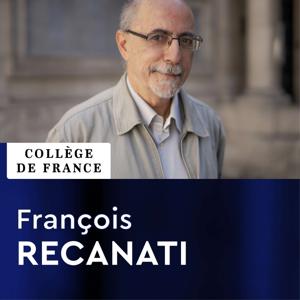


François Recanati
Philosophie du langage et de l'esprit
Collège de France
Année 2024-2025
Conférence - David Papineau - Thoughts and Things : Ecological Minds
David Papineau
Département de philosophie, King's College London
Résumé :
Humans and other animals have minds because reality is predictable. The world is full of items that behave in regular ways. Our minds lock onto these items so that we can anticipate events and act accordingly.
The central role of thoughts is thus to refer to items in the world. I shall argue on this basis that reference is the only notion of semantic content we need.
A long tradition of philosophical analysis holds we need a semantics for senses as well as referents. Frege held that we need senses to explain how subjects can erroneously disbelieve true identity claims like Hesperus = Phosphorous.
However, an alternative is simply to posit that such subjects have two distinct vehicles of thought that are semantically alike. We should view "Frege cases" (of disbelieved true identities) as no less breakdowns of rationality than "confused ideas" (that conflate two referents under a single mental name).
Not all cognition is directly relevant to practical action. Even so, the approach to semantic content that starts with action can be extended to all species of thought.
David Papineau :
David Papineau a occupé plusieurs postes académiques aux universités de Reading, Macquarie, Birkbeck London et Cambridge. Depuis 1990, il poursuit sa carrière à King's College London et, pendant la période allant de 2015 à 2020, il a enseigné un semestre de chaque année académique au Graduate Center de la City University de New York. Il a été président de la British Society for Philosophy of Science, la Mind Association et l'Aristotelian Society. Parmi ses ouvrages, on peut citer Theory and Meaning (1980), Philosophical Naturalism (1992), Thinking about Consciousness (2002), Philosophical Devices (2012), Knowing the Score (2017) et The Metaphysics of Sensory Experience (2021). À l'heure actuelle, il s'intéresse au concept de causalité.
François Recanati
Philosophie du langage et de l'esprit
Collège de France
Année 2023-2024
Colloque - Transparency, Indexicality and Consciousness : Problems with Revelation
Colloque organisé par François Recanati, Professeur du Collège de France, chaire Philosophie du langage et de l'esprit
Intervenant(s)
David Papineau, King's College, London
Various anti-physicalist arguments hinge on the idea that phenomenal concepts reveal the nature of their referents to us. I shall consider various models for this kind of phenomenal revelation and argue that none can bear the necessary argumentative weight.
François Recanati
Philosophie du langage et de l'esprit
Collège de France
Année 2023-2024
Colloque - Transparency, Indexicality and Consciousness : The Argument from Understanding for Dualism about Experiential Properties
Colloque organisé par François Recanati, Professeur du Collège de France, chaire Philosophie du langage et de l'esprit
Intervenant(s)
Martine Nida-Rümelin, Université de Fribourg
The argument from understanding defends a dualist view about experiential properties: their nature is non-physical. The premises of the argument are (a) phenomenal essentialism (that phenomenal concepts reveal the nature of certain experiential properties), (b) that physical concepts and certain phenomenal concepts are cognitively independent, (c) that two property concepts revealing the nature of the same property cannot be cognitively independent and that (d) a property having a nature which can be revealed by a phenomenal concept but by no physical concept cannot count as a physical property.
François Recanati
Philosophie du langage et de l'esprit
Collège de France
Année 2023-2024
Ideology and Propaganda
Conférence - Robert May : The Semantics of Ideological Words
Robert May
Distinguished Professor Emeritus of Philosophy and Linguistics, University of California, Davis
Résumé
In the second lecture, we turn to an application of the account of propaganda, ideological words that abstractly encapsulate core values of an ideology as their meaning. The focus will be on pejorative words – racist, sexist, homophobic, religious epithets, and so on. These words, we argue, are expressions of a type of defective ideology; they express a norm that people are morally unworthy just because they are black, female, gay, Jewish, etc, and thus tolerating oppression and discrimination. But such norms are unjustified: No one is morally unworthy solely on the basis of their race, gender, sexual orientation, religion, etc. The norms justifying racism, sexism, homophobia, anti-semitism, and the like are irrevocably morally flawed; they fail to accurately represent the moral fabric of the world, and accordingly, pejorative words are a failed form of language: Given that they express these norms as their meanings, they will, by necessity, have no reference.
François Recanati
Philosophie du langage et de l'esprit
Collège de France
Année 2023-2024
Colloque - Transparency, Indexicality and Consciousness : Externalism, Transparency, and the (In)transitivity of Coordination
Colloque organisé par François Recanati, Professeur du Collège de France, chaire Philosophie du langage et de l'esprit
Intervenant(s)
Aidan Gray, University of Illinois, Chicago
Following recent usage, I use 'coordination' to refer to the relation that Fregeans have conceived of as sameness of sense. To a first approximation, representations are coordinated when the fact they are about the same object is transparent to their subject. Coordination is the relation that must hold between representations for it to be rational to 'trade on the identity' of their referents.
In this talk, I examine the interaction between two questions:
- Is coordination transitive?
- What features of attitude states are shared between qualitative duplicates?
My focus is Boghossian's discussion of slow-switching. The crux of Boghossian's argument is that content externalism entails that we cannot attribute coordination in certain confusion cases in which a subject is intuitively rational in trading on identity. I show that this conclusion is only forced on us if coordination is transitive. If coordination is intransitive, we can describe confused subjects in a way that respects the reference of their thoughts and the rationality of their inferences.
The challenge for developing a view of this kind is to characterize the rational upshot of intransitive coordination. I develop a logical system that models this. It follows from this account that when coordination is (de facto) transitive, rational relations are classical. But when coordination is intransitive, rational relations break down in a particular way: individually valid rational transitions do not always sum to globally valid transitions.
François Recanati
Philosophie du langage et de l'esprit
Collège de France
Année 2023-2024
Colloque - Transparency, Indexicality and Consciousness : Transparency and Solipsism
Colloque organisé par François Recanati, Professeur du Collège de France, chaire Philosophie du langage et de l'esprit
Intervenant(s)
Giovanni Merlo, Université de Genève
According to Phenomenal Transparency, experiencing a phenomenal property puts one is in a position to acquire knowledge of its essence. In this paper, I will argue that Phenomenal Transparency risks forcing upon us a species of solipsism according to which one is, necessarily, the sole bearer of phenomenal properties. If Phenomenal Transparency holds, having a painful experience puts one in a position to know that pain is THIS (where 'THIS' is a phenomenal concept that captures the essence of pain). The solipsist who endorses Phenomenal Transparency claims to be entitled to a reading of 'THIS' whereby THIS does not occur unless one is pain oneself. By their lights, then, it turns out to belong to the essence of pain that pain never occurs in others. After examining some unsuccessful attempts to delegitimize the solipsist's reading of 'THIS', I will suggest that – unless we are willing to deny Phenomenal Transparency altogether – we may want to come to terms with the solipsist's conclusion in the framework of a more general rethinking of the metaphysics of the phenomenal.
François Recanati
Philosophie du langage et de l'esprit
Collège de France
Année 2023-2024
Colloque - Transparency, Indexicality and Consciousness : A Conceivability Argument for Atheism
Colloque organisé par François Recanati, Professeur du Collège de France, chaire Philosophie du langage et de l'esprit
Intervenant(s)
Philip Goff, Durham University
If God exists necessarily and is essentially conscious, then there is a conscious being in every possible world. However, it is conceivable that nothing is conscious, which perhaps gives us reason to think that it's possible that nothing is conscious and hence that there are no necessarily existent essentially conscious beings. On the other hand, God's existence seems conceivable, which perhaps gives us reason to think that God is possible, which seems to entail that God exist in all possible worlds (given that God by definition does not exist contingently). I will argue that reflection on these arguments has important lessons for modal rationalism – the view that conceivability and possibility are linked in interesting ways – in particular the form of modal rationalism which links conceivability to possibility via transparent concepts. Ultimately, I will argue there could be a necessary being, but that if there is one, then its nature is beyond human understanding, because everything we can conceive of is possibly non-existent.
François Recanati
Philosophie du langage et de l'esprit
Collège de France
Année 2023-2024
Colloque - Transparency, Indexicality and Consciousness : A Moderate Proposal for Privileged Access
Colloque organisé par François Recanati, Professeur du Collège de France, chaire Philosophie du langage et de l'esprit
Intervenant(s)
Katalin Farkas, Central European University
I argue that there is good reason to deny that first person access to our conscious states is omniscient, infallible, incorrigible, or reveals their essence. Yet first person access is still privileged compared to third person access. In this talk, I explore the sense of this moderate privilege.
François Recanati
Philosophie du langage et de l'esprit
Collège de France
Année 2023-2024
Colloque - Transparency, Indexicality and Consciousness : Transparency and Phenomenal Structure in Phenomenological Reflection
Colloque organisé par François Recanati, Professeur du Collège de France, chaire Philosophie du langage et de l'esprit
Intervenant(s)
Julien Bugnon, Université de Fribourg & LOGOS
Let a property concept be transparent if and only if a thinker who has acquired such a concept is in a position to fully understand the nature of the property it is a concept of. Proponents of phenomenal transparency contend that at least some phenomenal concepts are transparent concepts. Yet they also typically make use of an additional claim when arguing against physicalism: two distinct transparent concepts of one and the same property will not be cognitively independent – that is, a thinker possessing two such concepts should in principle be able to discover a priori that they pick out the same property. This has a straightforward implication for the phenomenal concepts we form: we should be in a position to know a priori whether two of our transparent phenomenal concepts are coextensive or not. I discuss the consequences of that last claim for the view that we can form structural transparent phenomenal concepts by understanding how a given phenomenal property is embedded into a particular phenomenal structure. Moreover, this discussion has wider implications for the nature and a priori status of phenomenological reflection, conceived as a form of reflection on our own conscious experiences in order to achieve knowledge about the structure of human consciousness in general.
François Recanati
Philosophie du langage et de l'esprit
Collège de France
Année 2023-2024
Colloque - Transparency, Indexicality and Consciousness : Inserted Thought and the Phenomenal-Concept Approach to De Se Thoughts
Colloque organisé par François Recanati, Professeur du Collège de France, chaire Philosophie du langage et de l'esprit
Intervenant(s)
Marie Guillot, Université de Nanterre
I will use the clinical phenomenon of thought insertion as a test case for a comparison between some of the available accounts of the concept of self we use in de se thoughts, namely those thoughts we would most naturally express using the word "I". According to token-reflexive accounts, which are in some respects the most straightforward approach, de se thoughts involve a certain type of descriptive concept referring to the subject as, roughly, "the thinker of this very thought" (Higginbotham 2003, Howell 2006, García-Carpintero 2016). Inserted thoughts, I claim, are evidence against this approach. Patients with thought insertion report thoughts occurring in their stream of consciousness, but which they don't recognize as their own. On the reasonable assumption that a certain kind of epistemic transparency about the content of our own thoughts applies, this phenomenon (in subjects who are otherwise rational) warrants treating "the thinker of this very thought is thinking P" and "I am thinking P" as involving different (although co-referential) semantic contents, pace the token-reflexivist. I will suggest that thought insertion might also prove a problem case for what may be called non-egological accounts, according to which (at least some) de se thoughts do not involve an explicit representation of the self at all, but stem instead from a distinctive kind of cognitive architecture (Lewis 1979, Ninan 2013, Recanati 2007, Musholt 2013). I'll go on to argue that inserted thoughts are more easily accommodated within a third type of account. According to phenomenal accounts, (at least some) de se thoughts are anchored in phenomenal experience (Grünbaum 2012; Kapitan 2015) or, more specifically, involve a dedicated phenomenal concept (Guillot 2023). This approach is better placed to explain the difference between genuine de se thinking, and accidentally reflexive thoughts associated with thought insertion, thanks to the appeal to a substantive and distinctive source of awareness of the self which there is reason to think delusional patients may lack.
From the publisher's feed
La chaire Philosophie du langage et de l'esprit héberge l'enseignement du titulaire, le Pr Recanati, ainsi que les colloques, séminaires et journées d'étude de la chaire, et les conférences des…

0 Listeners

1 Listeners
5 Listeners
0 Listeners

1 Listeners

0 Listeners

0 Listeners

0 Listeners

1 Listeners

0 Listeners

3 Listeners

0 Listeners

0 Listeners

0 Listeners
0 Listeners

0 Listeners

0 Listeners
0 Listeners

0 Listeners