
Sign up to save your podcasts
Or

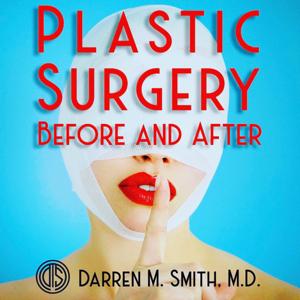


Welcome back to Plastic Surgery Before and After! After a multi-year hiatus, Dr. Darren Smith returns with one of the most exciting developments in aesthetic surgery in recent memory: AlloClae — an off-the-shelf fat graft that’s redefining what’s possible in body and breast enhancement.
💡 Episode Highlights
What is AlloClae?
A revolutionary off-the-shelf fat graft derived from purified human donor fat. It allows for natural-feeling volume restoration without the need to harvest your own fat.
Who is it for?
Fit, lean patients who lack enough donor fat for traditional fat transfer
Individuals losing weight from GLP-1 medications (like Ozempic or Mounjaro) and seeking to restore volume in areas like the breasts or buttocks
Patients with liposuction irregularities or contour deformities who need precise, natural correction
Why it matters:
AlloClae offers instant, lasting volume enhancement under local anesthesia, often completed in under an hour with minimal downtime. Early data show 80–90% retention—a major leap forward in predictable outcomes.
🧬 The Science Behind It
AlloClae is built from a 3D matrix of intact donor fat that acts as a biologic scaffold, allowing your body to repopulate it with your own fat cells. The result: natural softness, visible volume immediately, and long-term integration that feels like your own tissue.
🩺 Recovery & Experience
Performed comfortably under local anesthesia
Minimal downtime — most patients can return to remote work the same day and in-office work within 48 hours
Instant, natural-looking results visible immediately after treatment
🔗 Resources & Links
Learn more about AlloClae:
👉 https://www.darrensmithmd.com/body/alloclae-nyc/
Listen to our sister show — Plastics & Peptides: https://plastics-and-peptides.captivate.fm/s2e1
🎧 Hosted by Dr. Darren Smith and longevity specialist Dr. Amanda Kahn, Plastics & Peptides explores the intersection of regenerative aesthetics, wellness, and performance medicine for those seeking to look — and feel — their absolute best.
💬 Connect with Dr. Darren Smith
Follow along for insights on advanced aesthetic surgery, regenerative treatments, and innovations like AlloClae:
📍 www.darrensmithmd.com
📸 Instagram: @nycplasticsdoc
About the host — current biography
Darren M. Smith, MD, FACS is a board-certified plastic surgeon in Manhattan specializing in mommy makeover surgery, breast surgery, and body contouring. He was named to Newsweek’s America’s Best Plastic Surgeons 2026 and has co-authored authoritative peer-reviewed publications on combined breast surgery and abdominoplasty and the surgical care of postpartum patients.
Full transcript and related resources
Liposuction recovery includes an early period of soreness, swelling, and bruising, followed by a longer period in which the contour becomes clearer. In this brief update, New York City board-certified plastic surgeon Darren M. Smith, MD, FACS explains why returning to routine activities and seeing a final result are different milestones.
Originally published August 6, 2021. This episode describes examples from his practice at that time. Recovery varies by patient, procedure, and surgeon.
Key takeaways
🔎 Work demands matter.
Dr. Smith discusses a return to a desk job, not unrestricted exercise or physical labor.
🔎 Comfort varies.
He describes soreness that his patients often compared with a strenuous workout, alongside swelling and bruising.
🔎 The appearance changes gradually.
Early swelling can obscure the contour before improvement becomes visible.
🔎 Combined procedures can change aftercare.
He distinguishes liposuction alone from cases involving additional treatments, including BodyTite or VASER, when discussing compression.
🎧 Episode guide
00:00 — Introduction
00:47 — Desk work, soreness, and bruising
01:24 — Swelling and the final contour
01:54 — Compression and additional procedures
When will I see the final result?
In this 2021 recording, Dr. Smith describes noticeable improvement developing after the early swelling period and a final contour that may take three to six months to emerge. Those are examples rather than a guaranteed timetable. Feeling well enough for a desk job does not mean the swelling has finished settling.
How long should I wear compression?
The recording gives Dr. Smith's then-current protocol and explains that additional procedures can change it. Do not use an archival duration as a personal instruction: ask your treating team which garment, schedule, and showering plan apply to your operation.
ℹ️ Current related reading
Liposuction and recovery information | BodyTite | Request a consultation with Dr. Smith
About the host — current biography
Darren M. Smith, MD, FACS specializes in mommy makeover surgery, breast surgery, and body contouring in Manhattan. He was named to Newsweek’s America’s Best Plastic Surgeons 2026 and has co-authored authoritative peer-reviewed publications on combined breast surgery and abdominoplasty and the surgical care of postpartum patients.
Educational information; follow your surgical team's current aftercare plan and contact them about recovery concerns. Show notes updated September 30, 2026.
Full transcript and related resources
HIFEM stands for high-intensity focused electromagnetic technology, which uses a magnetic field to stimulate muscle contractions. In this episode, Darren M. Smith, MD, a plastic surgeon in New York City, discusses its use in original Emsculpt, the pelvic floor treatment Emsella and the then-new Emsculpt NEO.
The recording connects these treatments through their muscle-stimulation technology while distinguishing the body areas and goals involved. It also explains what radiofrequency adds to the NEO discussion.
Key takeaways
🔬 Original Emsculpt focuses on body muscles.
Dr. Smith describes electromagnetic stimulation in the context of muscle tone and body contour.
🔎 Emsella targets the pelvic floor.
The episode describes a clothed, chair-based treatment and discusses urinary leakage. This is a different clinical concern from changing abdominal or limb contour.
🔎 Emsculpt NEO combines technologies.
The recording explains the addition of radiofrequency heating to electromagnetic muscle stimulation, with fat reduction included among the treatment goals discussed.
🔎 The intended result depends on the area and protocol.
Dr. Smith distinguishes buttock treatment aimed at muscle and contour from protocols intended to reduce fat.
🔎 The episode introduces a combined approach.
He describes coordinating abdominal and pelvic floor treatments under the term core-to-floor. That discussion does not establish that every patient needs both.
💬 Questions answered
Are Emsculpt NEO and Emsella the same treatment?
No. In the recording, NEO is discussed for body muscles and contouring, while Emsella targets pelvic floor muscles. Shared electromagnetic technology does not make the treatments or their goals interchangeable.
Does every protocol discussed aim to reduce fat?
No. Dr. Smith specifically describes a gluteal protocol designed to emphasize muscle and buttock contour without targeting fat loss. A current consultation should identify the exact device, treatment area and intended effect.
ℹ️ Current context for this 2020 recording
The contraction comparisons, percentages and protocols in the audio are historical claims, not promised individual results. For body-contouring applications, the FDA explains that noninvasive contouring does not treat obesity or provide weight-loss health benefits and that magnetic-field treatments require screening for contraindications. Pelvic floor symptoms also need their own assessment; the episode does not diagnose the cause of leakage or guarantee continence or sexual-wellness outcomes.
🎧 Episode chapters
00:39 — Original Emsculpt and HIFEM
01:11 — How electromagnetic stimulation works
01:49 — Emsella and pelvic floor goals
03:02 — What Emsculpt NEO adds
04:37 — Gluteal protocols and core-to-floor discussion
🔗 Related information
Explore Emsculpt NEO information, Emsella information, nonsurgical treatment information, or request a consultation with Dr. Smith in New York City.
About the host — current biography
Darren M. Smith, MD, FACS is a board-certified plastic surgeon in Manhattan specializing in mommy makeover surgery, breast surgery, and body contouring. He was named to Newsweek’s America’s Best Plastic Surgeons 2026 and has co-authored authoritative peer-reviewed publications on combined breast surgery and abdominoplasty and the surgical care of postpartum patients.
Originally released December 2, 2020. Show notes updated September 30, 2026. This is general education. Current recommendations, suitability, risks and expected results require an individual assessment.
Full transcript and related resources
Preparing for plastic surgery means addressing health concerns before the procedure and arranging the support, space and time needed afterward. In this episode, Darren M. Smith, MD, a plastic surgeon in New York City, explains practical planning topics to discuss with the treating team.
He emphasizes that the recording provides general context: each patient and procedure requires its own instructions. Choosing an appropriately qualified surgeon with experience in the planned operation is the starting point, followed by a plan tailored to your circumstances.
Key takeaways
⚠️ Discuss smoking early.
Dr. Smith explains its relevance to tissue circulation, healing and anesthesia. A cessation plan should be part of preparation rather than left until the day of surgery.
🩹 Review existing health concerns.
The episode encourages addressing ongoing medical conditions before elective cosmetic surgery.
🔎 Consider nutrition and physical readiness.
Dr. Smith discusses adequate nutrition and conditioning as part of preparing for recovery, without providing an individualized diet or exercise program.
🎯 Plan the practical commitment.
Finances, time away from work and help during the early recovery period deserve attention before scheduling.
🩹 Prepare your recovery space.
Some procedures have specific positioning or pressure-related instructions. Ask how to arrange your home around the instructions for your operation.
💬 Questions answered
Does everyone need a nurse at home after plastic surgery?
No. Dr. Smith describes arranging nursing care for selected operations in his 2020 practice and support from a friend or loved one for other situations. The level of assistance depends on the procedure and the person's needs; confirm the current plan with your team.
When should I plan time off work?
Before the procedure, as part of scheduling and recovery planning. The episode encourages allowing for the necessary recovery period rather than assuming work can resume on the same timetable for every operation.
ℹ️ Current planning context
The ASPS smoking-risk guidance supports individualized planning that considers vaping and other nicotine exposure as well as cigarettes. The four-week smoking example and aftercare arrangements in this 2020 recording are historical, not personal clearance. Follow your team's current written preparation and recovery instructions.
🎧 Episode chapters
01:34 — Why instructions must be individualized
02:16 — Smoking and surgical preparation
03:07 — Health, nutrition and finances
04:23 — Preparing a recovery space
05:17 — Help at home and time off work
🔗 Related information
Explore the practice’s preparation guide, patient guides, Dr. Smith’s qualifications, or request a consultation with Dr. Smith in New York City.
About the host — current biography
Darren M. Smith, MD, FACS is a board-certified plastic surgeon in Manhattan specializing in mommy makeover surgery, breast surgery, and body contouring. He was named to Newsweek’s America’s Best Plastic Surgeons 2026 and has co-authored authoritative peer-reviewed publications on combined breast surgery and abdominoplasty and the surgical care of postpartum patients.
Originally released November 25, 2020. Show notes updated September 30, 2026. This is general education. Current recommendations, suitability, risks and expected results require an individual assessment.
Full transcript and related resources
What is an arm lift? Also called brachioplasty, it is surgery to improve upper-arm contour by addressing excess skin and, when appropriate, excess fat. Darren M. Smith, MD, a board-certified plastic surgeon in New York City, explains the central tradeoff: removing loose skin can improve shape, but creates a permanent scar.
Originally published November 18, 2020. Device examples and adjunct treatments discussed in the recording reflect practice at that time.
Key takeaways
🔎 Fat and skin concerns
Fat and loose skin are different concerns. The episode describes liposuction for fat and direct removal of excess skin as distinct parts of treatment.
📏 Arm lift incisions
A standard arm lift often involves an incision along the inner upper arm, while an extended procedure can address tissue toward the armpit and side of the chest.
🩺 Mini arm lift
A mini arm lift uses a shorter incision for selected, more limited skin concerns; it is not interchangeable with a full arm lift.
🩹 Scar planning
Scars may fade but remain permanent. The expected location and extent deserve discussion before surgery.
🧩 Laxity and treatment options
Dr. Smith discusses less invasive tightening for selected mild-to-moderate laxity and explains why greater skin excess may need excision.
🎧 Episode guide
00:00 — Introduction
00:38 — Addressing arm fat and excess skin
01:57 — Standard, extended and mini arm lifts
03:08 — The permanent scar tradeoff
03:52 — Less invasive options for selected laxity
💬 Common questions
Can liposuction replace an arm lift?
It depends on what is causing the concern. Liposuction removes fat, while an arm lift directly removes excess skin. The recording explains why skin quality and the amount of laxity matter when comparing approaches.
Will the scar disappear?
No. Dr. Smith explicitly describes the arm-lift scar as permanent, even when it heals and fades. Scar appearance varies, and the improvement in contour must be weighed against the incision required.
🔗 Related information
Compare current information about arm lift surgery, arm liposuction, and BodyTite, or schedule a consultation.
About the host — current biography
Darren M. Smith, MD, FACS specializes in mommy makeover surgery, breast surgery, and body contouring in Manhattan. He was named to Newsweek’s America’s Best Plastic Surgeons 2026 and has co-authored authoritative peer-reviewed publications on combined breast surgery and abdominoplasty and the surgical care of postpartum patients.
Educational information, not individualized medical advice. Surgical and device treatments have risks, and results and recovery vary. Show notes updated September 30, 2026.
Full transcript and related resources
A useful liposuction recovery plan should explain movement, compression, wound care, activity, and follow-up for your particular procedure. In this episode, New York City board-certified plastic surgeon Darren M. Smith, MD, FACS uses his own patients' questions to explain what to discuss with your surgeon.
Originally published November 11, 2020. These are historical practice examples, not a current personal aftercare schedule. Current context: the practice no longer offers Emtone, which is mentioned in the recording; the related page below explains its current approach.
Key takeaways
🩹 Arrange help during early recovery.
Dr. Smith describes assisted movement after the procedure and support during the first shower.
🎯 Ask about your compression plan.
He explains his then-current rationale and notes that adding skin tightening can change the instructions.
🔎 Work and exercise are different milestones.
The discussion separates desk work, gentle activity, and a full workout routine rather than treating recovery as one deadline.
🩹 Incision healing matters.
Swimming, bathing, and scar products are discussed in relation to wound closure and follow-up assessment.
⏳ The contour develops over time.
Returning to everyday activities can happen before swelling has settled and the final shape is apparent.
🎧 Episode guide
00:00 — Introduction
01:56 — The historical compression protocol
03:21 — Showering and altered sensation
04:33 — Exercise and incision follow-up
05:53 — Massage and recovery devices
07:44 — Swelling and the final contour
When can I bathe or swim?
In the episode, Dr. Smith ties submerging incisions to their being completely healed and checked at follow-up. He notes that some patients need longer. A calendar date or suture removal alone should not replace your treating team's clearance.
Is lymphatic massage required?
Dr. Smith says that he did not routinely recommend it in his 2020 practice. He presents that as his approach, rather than a rule for every patient or procedure. Ask your surgeon whether any additional recovery treatment has a specific role in your case.
When will swelling finish settling?
The recording describes changes emerging gradually and final contour sometimes taking several months. Individual recovery varies. Dr. Smith also discusses nutrition, alcohol, weight stability, and sleeping position as questions to address during postoperative care.
ℹ️ Current related reading
Liposuction and recovery | Preparing for plastic surgery | Emtone explained and the practice's current alternatives | Request a consultation
About the host — current biography
Darren M. Smith, MD, FACS specializes in mommy makeover surgery, breast surgery, and body contouring in Manhattan. He was named to Newsweek’s America’s Best Plastic Surgeons 2026 and has co-authored authoritative peer-reviewed publications on combined breast surgery and abdominoplasty and the surgical care of postpartum patients.
Educational information; follow your surgical team's current instructions and contact them with recovery concerns. Show notes updated September 30, 2026.
Full transcript and related resources
What is a BBL? A Brazilian butt lift uses liposuction to collect a person's fat, prepares that tissue and transfers it to the buttocks to change volume and shape. Darren M. Smith, MD, a board-certified plastic surgeon in New York City, explains the process, recovery questions and why safety must be part of the decision.
Originally published November 4, 2020. Recovery examples, prices and safety discussion in the recording reflect that period.
ℹ️ Updated safety context
BBL carries significant risks, including potentially fatal fat embolism. The 2022 joint statement from ASPS and partner societies supports fat placement only in the subcutaneous layer above the gluteal muscle fascia, real-time ultrasound monitoring during injection, appropriate surgical credentials and postoperative care. These measures do not eliminate risk. This later guidance supplements the original recording.
Key takeaways
📍 Donor fat planning
The amount and location of donor fat are planned around the patient's anatomy and goals.
🧩 Lipo 360 and BBL
“Lipo 360” describes torso liposuction; adding a BBL is a separate decision about transferring fat to the buttocks.
🔄 Fat graft retention
Transferred fat is living tissue. Not all of it survives, and the eventual volume cannot be predicted by applying one percentage to every patient.
🗓️ Recovery instructions
Sitting, sleeping, clothing and return to work need individualized instructions that protect healing tissues.
⏳ Swelling and final contour
Changes in swelling and retained volume mean the early appearance is not the final result.
🎧 Episode guide
00:00 — Introduction
00:51 — Fat harvest, preparation and transfer
03:29 — Healing and survival of transferred fat
07:53 — Sitting, sleeping and pressure during recovery
09:35 — The original BBL safety discussion
11:21 — How appearance changes during healing
💬 Common questions
Does every BBL include Lipo 360?
No. Dr. Smith says donor areas are chosen with the patient; the torso is a common source, but other areas may be considered. A procedure name does not define the full plan.
Can I sit normally immediately afterward?
The episode emphasizes that positioning depends on where fat was placed. Follow your surgeon's specific instructions; the recording's examples are not a universal sitting or sleeping protocol.
Will all transferred fat remain?
No. The recording describes variable survival of transferred tissue and the possibility of further treatment. Final shape and volume evolve as healing progresses.
🔗 Related information
Read current information about Brazilian butt lift surgery, liposuction, and Lipo 360, or schedule a consultation.
About the host — current biography
Darren M. Smith, MD, FACS specializes in mommy makeover surgery, breast surgery, and body contouring in Manhattan. He was named to Newsweek’s America’s Best Plastic Surgeons 2026 and has co-authored authoritative peer-reviewed publications on combined breast surgery and abdominoplasty and the surgical care of postpartum patients.
Educational information, not individualized medical advice. Suitability, risks, recovery and results vary. Show notes updated September 30, 2026.
Full transcript and related resources
Current practice update: Dr. Smith's practice does not currently offer Emtone. The current Emtone information page provides educational context. This recording describes the treatment as it was discussed in 2020.
What is Emtone, and how was it intended to address cellulite? Darren M. Smith, MD, a board-certified plastic surgeon in New York City, explains a combination of radiofrequency heating and pressure-wave treatment, and discusses why individual cellulite patterns matter when evaluating options.
Originally published October 28, 2020. Treatment availability, protocols, comparisons and invitations in the audio are historical.
Key takeaways
🧬 Cellulite texture and anatomy
The episode distinguishes dimpling and wavy skin texture and describes the role of skin, underlying fat and fibrous connective tissue.
⚙️ Radiofrequency and pressure
Emtone combines warming from radiofrequency energy with mechanical pressure or tapping.
🔎 Treatment complexity
Dr. Smith emphasizes that cellulite is difficult to treat and that different patterns may call for different approaches.
🗓️ Sessions and maintenance
The recording discusses a treatment series and possible maintenance, rather than a one-time permanent removal of cellulite.
🧩 Historical combination treatments
The historical discussion of combining treatments does not establish current availability or guarantee faster recovery from surgery.
🎧 Episode guide
00:00 — Introduction
01:05 — Cellulite appearance and contributing factors
02:47 — Radiofrequency and pressure-wave treatment
04:34 — Why assessment matters
05:30 — The treatment experience
06:14 — Historical treatment series and maintenance
💬 Common questions
Does the episode describe permanent cellulite removal?
No. Dr. Smith discusses variable response and periodic maintenance. The audio's optimistic durability statements should not be taken as a guarantee that cellulite cannot return.
What does the treatment feel like?
The recording describes warmth and a tapping sensation from the external handpiece. Comfort varies, so this description is not a promise that treatment is painless.
Can I book Emtone at this practice now?
The practice's current page says it does not offer Emtone. A consultation can instead address the underlying concern and available options.
ℹ️ Current related information
See current information about Avéli cellulite treatment and BodyTite for skin laxity, or schedule a consultation. These are current related resources, not additions to the original recording.
Qwo, also mentioned in the audio, is historical context: Endo announced the end of Qwo production and sales in December 2022.
About the host — current biography
Darren M. Smith, MD, FACS specializes in mommy makeover surgery, breast surgery, and body contouring in Manhattan. He was named to Newsweek’s America’s Best Plastic Surgeons 2026 and has co-authored authoritative peer-reviewed publications on combined breast surgery and abdominoplasty and the surgical care of postpartum patients.
Educational information, not individualized medical advice. Treatment risks, suitability and results vary. Show notes updated September 30, 2026.
Full transcript and related resources
What is Emsculpt NEO? It combines electromagnetic muscle stimulation with radiofrequency heating in a noninvasive body-contouring treatment. Darren M. Smith, MD, a board-certified plastic surgeon in New York City, explains how adding heat distinguishes NEO from original Emsculpt and why the combination interested him when it was introduced.
Originally published October 21, 2020. Performance figures, comparisons, treatment schedules and complimentary demonstration offers in the recording reflect its launch period.
Key takeaways
⚙️ Original Emsculpt and NEO
Original Emsculpt uses high-intensity focused electromagnetic energy to stimulate muscle contractions; NEO adds radiofrequency heating.
🎯 Muscle and fat goals
The recording describes the two components as addressing muscle stimulation and localized fat reduction within one treatment platform.
⚖️ Treatment comparisons
Dr. Smith compares this approach with cold-based fat reduction and other heat-based devices, drawing on early data and his personal experience.
📊 Historical study averages
The percentages cited in the audio are reported averages from that period, not promised changes in an individual's muscle or fat.
🗓️ Treatment course
The episode discusses a series of treatment sessions. Its description of one device should not be interpreted as a promise that one appointment delivers every stated result.
🎧 Episode guide
00:00 — Introduction
00:53 — How original Emsculpt led to NEO
02:03 — Launch-era performance comparisons
04:58 — A treatment series using one platform
05:54 — Adding radiofrequency heating
08:00 — Comparing heat, cooling and muscle stimulation
💬 Common questions
How does NEO differ from original Emsculpt?
The central difference discussed is the addition of radiofrequency energy to electromagnetic stimulation. Dr. Smith describes heating the treatment area while the electromagnetic component stimulates muscle contractions.
How is that different from CoolSculpting?
The episode contrasts a combination of heating and muscle stimulation with cooling-based fat reduction. Its enthusiastic launch-era comparisons are not a current finding that one device is best for every person or treatment area.
Does the episode guarantee a specific percentage change?
No individual outcome can be inferred from the quoted averages. The recording's figures and comparisons need to be interpreted in the context of the studies, device and treatment protocol being discussed.
ℹ️ Current context and related information
Noninvasive body contouring is not weight-loss treatment. The FDA explains benefits, limitations and technology-specific risks. Ask which device, applicator and treatment area are proposed and whether the plan is appropriate for you.
Read current practice information about Emsculpt NEO and, as a separate surgical approach to fat removal, liposuction, or schedule a consultation.
About the host — current biography
Darren M. Smith, MD, FACS specializes in mommy makeover surgery, breast surgery, and body contouring in Manhattan. He was named to Newsweek’s America’s Best Plastic Surgeons 2026 and has co-authored authoritative peer-reviewed publications on combined breast surgery and abdominoplasty and the surgical care of postpartum patients.
Educational information, not individualized medical advice. Risks, comfort and results vary. Show notes updated September 30, 2026.
Full transcript and related resources
What can you do to support a better plastic surgery experience? Ask questions until you understand the proposed procedure and feel that you and your surgeon share the same goals. In this short episode, Darren M. Smith, MD, a board-certified plastic surgeon in New York City, puts clear communication at the center of the process.
Originally published October 14, 2020. The episode also announces a Facebook group; that invitation is historical.
Key takeaways
💬 Questions at each stage
Questions are useful when first researching a procedure, after a consultation and during recovery.
🗒️ Understanding the plan
Understanding the plan helps clarify expectations and identify concerns to discuss with the surgeon.
🩺 Individual medical care
General education and other patients' experiences do not replace an individual doctor-patient relationship.
🎧 Episode guide
00:00 — Introduction
00:34 — Asking questions and aligning goals
02:17 — Education versus individual medical advice
💬 Common questions
What kinds of topics can I ask about?
The recording names how procedures work, preparation, recovery and which approaches may address different concerns.
Can an online group provide my personal treatment plan?
No. Dr. Smith explicitly distinguishes general discussion from advice for an individual's medical situation. Personal decisions belong with the treating clinical team.
🔗 Continue the conversation
Explore current patient guides and the preoperative preparation guide, or schedule a consultation.
About the host — current biography
Darren M. Smith, MD, FACS specializes in mommy makeover surgery, breast surgery, and body contouring in Manhattan. He was named to Newsweek’s America’s Best Plastic Surgeons 2026 and has co-authored authoritative peer-reviewed publications on combined breast surgery and abdominoplasty and the surgical care of postpartum patients.
Educational information, not individualized medical advice. Good communication supports informed decisions but cannot guarantee a result. Show notes updated September 30, 2026.
Full transcript and related resources
From the publisher's feed
68 Listeners

369,290 Listeners

23 Listeners
46 Listeners

2 Listeners

96 Listeners
35 Listeners
64 Listeners

37 Listeners
31 Listeners

6 Listeners

4 Listeners
0 Listeners