
Sign up to save your podcasts
Or

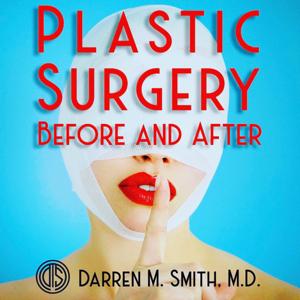


Loose skin after liposuction depends in part on how well your skin can adapt when underlying fat is removed. Good elasticity may allow the skin to settle around a smaller contour. Existing laxity can remain or become more apparent, so fat removal alone is not always the right approach.
In this July 1, 2020 episode of Plastic Surgery: Before and After, board-certified New York City plastic surgeon Darren M. Smith, MD explains why evaluating the skin is as important as evaluating the fat. He uses a balloon analogy to make the relationship between volume and the surrounding skin easier to understand.
Key takeaways
🔬 Less volume does not automatically mean tighter skin.
Liposuction reduces fat, while the skin's response depends on its condition before treatment.
🔎 An examination matters more than a blanket prediction.
The episode discusses elasticity, existing looseness and the amount of fat being considered for removal.
🔎 Some patients need an additional approach.
Dr. Smith describes radiofrequency treatment alongside liposuction for selected patients with limited skin laxity in his 2020 practice.
🔬 Substantial excess skin is a different problem.
The discussion considers a tummy tuck, arm lift or thigh lift when removing extra skin may be more appropriate.
💬 Questions answered
Will my skin automatically tighten after liposuction?
Not necessarily. The episode distinguishes skin with good elasticity from skin that is already loose and may not retract enough. A consultation helps estimate that response, but it cannot guarantee a perfectly smooth result.
Can radiofrequency replace a tummy tuck or body lift?
Dr. Smith discusses radiofrequency as an option for selected, less severe laxity. For more substantial excess skin, he describes an excisional procedure, which physically removes skin. The recording does not present these approaches as interchangeable for every patient.
Is this only an issue with abdominal liposuction?
No. Although the abdomen illustrates the explanation, the episode also discusses the arms and thighs. The relevant question in each area is whether fat removal alone addresses the anatomy or whether excess skin needs its own treatment.
🎧 Episode chapters
00:26 — Will liposuction leave loose skin?
00:46 — The balloon analogy: fat volume and the skin envelope
01:58 — Why existing skin elasticity matters
02:43 — What the consultation assesses
03:49 — Radiofrequency for selected skin-laxity concerns
04:15 — When skin-removal surgery may be considered
🔗 Related information
Read current practice information about liposuction, BodyTite and tummy tuck surgery. For an individualized discussion, request a consultation with Dr. Smith in New York City.
About the host — current biography
Darren M. Smith, MD, FACS specializes in mommy makeover surgery, breast surgery, and body contouring in Manhattan. He was named to Newsweek’s America’s Best Plastic Surgeons 2026 and has co-authored authoritative peer-reviewed publications on combined breast surgery and abdominoplasty and the surgical care of postpartum patients.
Originally released July 1, 2020. Show notes updated September 30, 2026. This is general education; current treatment options, suitability, risks and expected results require an individual assessment.
Full transcript and related resources
Liposuction removes fat surgically through small incisions; CoolSculpting uses controlled cooling to treat localized fat without incisions. They differ in how treatment is delivered, the areas and degree of change being considered, recovery, possible complications and whether repeat sessions are needed.
In this June 30, 2020 episode of Plastic Surgery: Before and After, board-certified New York City plastic surgeon Darren M. Smith, MD compares the approaches and explains his preference for surgical contouring in many patients. His opinions, numerical estimates and practice examples belong to that recording; they are not universal outcome guarantees or a current price quote.
Key takeaways
🎯 Start with the goal.
Dr. Smith describes liposuction as a shape-change procedure for localized concerns, rather than a way to lose weight.
🔎 The treatment methods differ.
He contrasts a surgeon working across an area and its transitions with fat freezing delivered through applicators.
🔎 Consider the complete treatment course.
The discussion compares one surgical procedure with potentially repeated nonsurgical sessions, including time and cost.
⚠️ Noninvasive does not mean risk-free.
The episode discusses pain, altered sensation, contour problems and paradoxical fat growth after fat freezing, alongside surgical complications of liposuction.
🎯 The bonus segment addresses a different goal.
Dr. Smith introduces Emsculpt and its muscle-focused role in his 2020 body-contouring practice.
💬 Questions answered
Is CoolSculpting the same procedure as liposuction?
No. The recording distinguishes surgical removal of fat from an applicator-based cooling treatment. The appropriate approach depends on the specific concern, anatomy, preferences and willingness to undergo surgery.
Can fat freezing cause fat to grow instead of shrink?
The episode describes paradoxical adipose hyperplasia, in which treated fat enlarges. The FDA's patient guidance notes that this complication may require surgery. See the FDA's current overview of noninvasive body-contouring risks.
Which option costs less?
A meaningful comparison includes the areas treated and the full course of sessions. Dr. Smith discusses this in the recording, but his 2020 comparison cannot establish today's price or the number of treatments an individual will need.
🎧 Episode chapters
01:00 — Candidates and the goals of body contouring
02:24 — Surgical contouring versus applicator-based treatment
05:52 — Time to results and recovery experiences
07:59 — The historical cost and session comparison
09:20 — Risks of liposuction and fat freezing
12:35 — Bonus: Dr. Smith's 2020 discussion of Emsculpt
🔗 Related information
Explore current information about liposuction, liposuction cost factors and nonsurgical care, or request a consultation with Dr. Smith in New York City.
About the host — current biography
Darren M. Smith, MD, FACS specializes in mommy makeover surgery, breast surgery, and body contouring in Manhattan. He was named to Newsweek’s America’s Best Plastic Surgeons 2026 and has co-authored authoritative peer-reviewed publications on combined breast surgery and abdominoplasty and the surgical care of postpartum patients.
Originally released June 30, 2020. Show notes updated September 30, 2026. This is general education, not a complete current risk comparison. Suitability, risks and expected results require an individual assessment.
Full transcript and related resources
A mommy makeover is an individualized combination of procedures addressing concerns after pregnancy and breastfeeding. It is not one fixed operation. The breast and abdominal procedures discussed in this episode depend on which tissues have changed and what the patient wants to address.
In this June 29, 2020 episode of Plastic Surgery: Before and After, board-certified New York City plastic surgeon Darren M. Smith, MD explains why the same procedure list will not fit everyone.
Key takeaways
🔎 Breast changes differ.
The episode distinguishes volume loss, drooping, increased volume and combinations of those changes.
🔎 The breast procedure follows the concern.
Dr. Smith discusses augmentation, a lift, augmentation with a lift, and reduction as different possibilities.
🔎 Assess three abdominal components.
He explains the roles of fat, skin laxity and separation of the rectus muscles, known as rectus diastasis.
🎯 The plan can extend beyond the breasts and abdomen.
The recording also discusses other fat deposits and changes involving the nipples, areolas and genital tissues. These are optional topics for an individualized consultation.
💬 Questions answered
Does every mommy makeover include breast implants?
No. In the episode, implants are considered when additional breast volume is desired. A lift, reduction or another plan may better match a different concern.
Does everyone need a tummy tuck?
No. Dr. Smith describes examining abdominal skin, fat and muscle separation before selecting a procedure. The discussion contrasts a tummy tuck for substantial skin or abdominal-wall concerns with less extensive options for selected patients.
Is a mommy makeover the same combination for every patient?
No. The episode's central point is that pregnancy affects people differently. The term alone does not specify which procedures are appropriate or promise a return to a previous body shape.
🎧 Episode chapters
00:00 — What the term mommy makeover means
01:06 — Breast changes and procedure choices
02:26 — Abdominal muscle, fat and skin changes
03:48 — Matching abdominal treatment to the anatomy
05:03 — Additional areas and the individualized plan
🔗 Related information
Explore mommy makeover information, breast lift surgery, tummy tuck surgery, or request a consultation with Dr. Smith in New York City.
About the host — current biography
Darren M. Smith, MD, FACS specializes in mommy makeover surgery, breast surgery, and body contouring in Manhattan. He was named to Newsweek’s America’s Best Plastic Surgeons 2026 and has co-authored authoritative peer-reviewed publications on combined breast surgery and abdominoplasty and the surgical care of postpartum patients.
Originally released June 29, 2020. Show notes updated September 30, 2026. This is general education. Current recommendations, suitability, risks and expected results require an individual assessment.
Full transcript and related resources
Breast augmentation recovery varies, and adding a breast lift can extend the early healing period. Returning to a desk job and resuming exercise are separate milestones.
In this short June 28, 2020 episode of Plastic Surgery: Before and After, board-certified New York City plastic surgeon Darren M. Smith, MD describes early recovery examples from his practice.
Key takeaways
💼 Work and leave
The discussion focuses on early time away from desk work.
🗓️ Exercise and recovery
Dr. Smith describes soreness and a period of exercise restriction.
🧩 Combined procedures
He allows more recovery time when a breast lift is combined with augmentation because more tissue is involved.
💬 Questions answered
Does everyone return to work after 48 hours?
No. The recording's short return-to-work example is a historical practice observation, not a guarantee. Your procedure, recovery and job duties determine the appropriate plan.
Does returning to work mean I can exercise?
No. The episode treats those decisions separately. Obtain your surgeon's current clearance for exercise, especially upper-body activity.
🎧 Episode chapters
00:36 — Early recovery and desk-work examples
01:21 — How adding a breast lift changes recovery
🔗 Related information
Explore breast augmentation recovery information, breast lift information, or request a consultation with Dr. Smith in New York City.
About the host — current biography
Darren M. Smith, MD, FACS specializes in mommy makeover surgery, breast surgery, and body contouring in Manhattan. He was named to Newsweek’s America’s Best Plastic Surgeons 2026 and has co-authored authoritative peer-reviewed publications on combined breast surgery and abdominoplasty and the surgical care of postpartum patients.
Originally released June 28, 2020. Show notes updated September 30, 2026. This is general education. Current recommendations, suitability, risks and expected results require an individual assessment.
Full transcript and related resources
Choose a plastic surgeon by considering qualifications, relevant work and the quality of your consultation together. A recommendation, star rating or photo gallery can help you begin your research, but none tells the whole story.
In this June 27, 2020 episode of Plastic Surgery: Before and After, board-certified New York City plastic surgeon Darren M. Smith, MD outlines five areas to examine: word of mouth, reviews, before-and-after photographs, training and credentials, and communication during a consultation.
Key takeaways
🔎 Use referrals as a starting point.
A friend or colleague's experience may identify a surgeon worth meeting.
🔎 Read reviews for context.
Dr. Smith recommends looking beyond a simple star count and discussing concerns directly during the consultation.
🔎 Explore relevant photographs.
A gallery can help you discuss the surgeon's aesthetic approach and experience with the procedure that interests you.
🔎 Check credentials.
The episode emphasizes certification by the American Board of Plastic Surgery, along with the surgeon's training.
💬 Pay attention to communication.
Dr. Smith describes surgery as a collaboration in which questions, expectations and a comfortable working relationship matter.
💬 Questions answered
Should a surgeon's limited online presence rule them out?
Not automatically. The episode explains that some experienced surgeons have few online reviews. Dr. Smith recommends considering their other qualifications and meeting them rather than judging only by digital visibility.
Can I ask to see more before-and-after photographs?
Yes. Dr. Smith notes that some patients permit their photographs to be shown privately in the office but not published online. Ask about examples relevant to the procedure you are considering; another person's result is not a guarantee of your own.
Where can I verify plastic surgery board certification?
The American Board of Plastic Surgery's official search provides certification information. Certification is one important credential to evaluate alongside the rest of the consultation and your specific needs.
🎧 Episode chapters
00:31 — Five considerations when choosing a surgeon
02:07 — Reading online reviews in context
04:17 — Using before-and-after photographs
05:33 — Communication at the consultation
06:01 — Training and board certification
🔗 Related information
Explore Dr. Smith's training and background, practice information, or request a consultation with Dr. Smith in New York City.
About the host — current biography
Darren M. Smith, MD, FACS specializes in mommy makeover surgery, breast surgery, and body contouring in Manhattan. He was named to Newsweek’s America’s Best Plastic Surgeons 2026 and has co-authored authoritative peer-reviewed publications on combined breast surgery and abdominoplasty and the surgical care of postpartum patients.
Originally released June 27, 2020. Show notes updated September 30, 2026. This is general education. Current recommendations, suitability, risks and expected results require an individual assessment.
Full transcript and related resources
Breastfeeding can remain possible after breast augmentation, but a full milk supply is not guaranteed. The episode explains why both a person's underlying ability to produce milk and the surgical route matter.
In this June 26, 2020 episode of Plastic Surgery: Before and After, board-certified New York City plastic surgeon Darren M. Smith, MD discusses the relationship between breast augmentation, milk ducts and incision choice.
Key takeaways
🔎 The baseline may be unknown.
If someone has not previously breastfed, it may be unclear how much milk they would have produced before surgery.
🔎 Ducts can be affected.
Dr. Smith explains how dissection through breast tissue can disrupt the pathways that carry milk toward the nipple.
🔎 Approaches differ.
He compares an incision under the breast fold, one at the areolar border, and an armpit approach in relation to that tissue.
💬 Questions answered
Why does the incision location matter?
The episode connects the surgical route with how much breast tissue and how many milk ducts may be crossed. Dr. Smith describes his preference for the breast-fold approach in this context.
Does an incision under the breast guarantee breastfeeding?
No. The discussion begins with uncertainty about baseline breastfeeding ability. A technique intended to limit disruption cannot promise a full supply for every person.
ℹ️ Current breastfeeding context
The CDC's current guidance notes that breast surgery can affect milk production and recommends monitoring the baby's weight gain. People who have had breast surgery may benefit from lactation support and an individualized feeding plan.
🎧 Episode chapters
00:36 — Baseline breastfeeding ability and milk ducts
01:47 — The breast-fold approach
02:14 — Areolar and armpit approaches
🔗 Related information
Explore breastfeeding after implants, breast augmentation, or request a consultation with Dr. Smith in New York City.
About the host — current biography
Darren M. Smith, MD, FACS specializes in mommy makeover surgery, breast surgery, and body contouring in Manhattan. He was named to Newsweek’s America’s Best Plastic Surgeons 2026 and has co-authored authoritative peer-reviewed publications on combined breast surgery and abdominoplasty and the surgical care of postpartum patients.
Originally released June 26, 2020. Show notes updated September 30, 2026. This is general education. Current recommendations, suitability, risks and expected results require an individual assessment.
Full transcript and related resources
Botox changes targeted muscle activity; dermal fillers add volume. This episode explains the distinction using lines that appear with facial expression and lines that remain when the face is at rest. The products serve different purposes and are not interchangeable.
In this June 25, 2020 episode of Plastic Surgery: Before and After, board-certified New York City plastic surgeon Darren M. Smith, MD introduces the concepts of dynamic and static facial lines. He uses the creases in a book's spine as an analogy for how repeated movement can leave a lasting mark.
Key takeaways
🔎 Dynamic lines relate to expression.
Examples in the episode include forehead lines when raising the eyebrows, frown lines and crow's feet with smiling or squinting.
🔎 Static lines remain at rest.
Dr. Smith explains how repeated movement can contribute to lines that no longer disappear completely.
🔬 Botox reduces targeted muscle contraction.
The discussion connects that effect with expression-related wrinkles.
🔎 Fillers occupy space.
The episode describes their role in selected folds and areas where additional facial volume is desired, including the cheeks.
💬 Questions answered
Are Botox and fillers the same type of injectable?
No. The episode groups them as cosmetic injectables but distinguishes a treatment that changes muscle activity from one that adds volume.
Are fillers only used for wrinkles?
No. Dr. Smith also discusses adding volume and shaping facial contours, particularly in the cheeks. Choosing a product and injection site requires an individual assessment.
ℹ️ Current safety context
The recording offers a broad introduction, not a treatment map for every facial line. Filler suitability is product- and site-specific. Complications can occur; accidental injection into a blood vessel can cause serious tissue injury or vision loss. Review the FDA's current filler guidance with a qualified clinician.
🎧 Episode chapters
01:00 — Dynamic facial lines and expression
02:13 — Static lines and the book-spine analogy
04:20 — How Botox changes muscle activity
05:13 — How fillers add facial volume
🔗 Related information
Explore Botox treatment information, dermal filler information, or request a consultation with Dr. Smith in New York City.
About the host — current biography
Darren M. Smith, MD, FACS specializes in mommy makeover surgery, breast surgery, and body contouring in Manhattan. He was named to Newsweek’s America’s Best Plastic Surgeons 2026 and has co-authored authoritative peer-reviewed publications on combined breast surgery and abdominoplasty and the surgical care of postpartum patients.
Originally released June 25, 2020. Show notes updated September 30, 2026. This is general education. Current recommendations, suitability, risks and expected results require an individual assessment.
Full transcript and related resources
Liposuction usually involves small incisions, numbing fluid, removal of fat with a cannula, and a recovery period with swelling and compression. Whether you are awake, sedated or under general anesthesia depends on the treatment plan and the assessment of your surgical and anesthesia teams.
In this June 23, 2020 episode of Plastic Surgery: Before and After, board-certified New York City plastic surgeon Darren M. Smith, MD walks through the experience as it was typically managed in his practice. He explicitly notes that the process can differ between surgeons and facilities.
Key takeaways
🔎 Anesthesia is individualized.
Dr. Smith discusses local anesthesia for selected limited treatment areas and IV sedation or general anesthesia for more extensive treatment.
🔎 Tumescent fluid comes before suction.
Numbing fluid is introduced through small access incisions before a cannula removes the targeted fat.
🎯 Discharge follows a clinical assessment.
The recording describes same-day discharge in his practice after an appropriate recovery-room period.
🔎 Early care and final results are different milestones.
Compression, wound care and activity guidance support recovery while swelling gradually settles.
🩹 Recovery is not identical for everyone.
Dr. Smith compares common discomfort with soreness after a hard workout, while acknowledging that some patients experience more or less discomfort.
💬 Questions answered
Do I have to be asleep for liposuction?
Not necessarily. The episode explains local anesthesia, twilight or IV sedation, and general anesthesia. The appropriate choice depends on the areas being treated, your health and the individualized plan; no anesthesia option is risk-free.
When can I return to work or exercise?
The recording gives examples from Dr. Smith's 2020 practice, rather than a timetable everyone should follow. Your procedure's extent, recovery and type of work matter. Confirm when to resume work, exercise and showering with your own clinical team.
When will I see the final result?
Dr. Smith explains that early swelling can hide changes. In the recording, he describes contour becoming easier to appreciate as swelling decreases and a three-to-six-month period for the final result to develop. This is an estimate, not a guaranteed deadline.
🎧 Episode chapters
00:26 — Dr. Smith's approach to the liposuction experience
00:43 — Local anesthesia, IV sedation and general anesthesia
02:19 — Incisions, tumescent fluid and fat removal
03:08 — Recovery-room care and going home
03:46 — Compression and the early recovery period
04:40 — Bruising, swelling, results and discomfort
🔗 Related information
Read about liposuction in Dr. Smith's practice and preparing for plastic surgery, or request a consultation in New York City.
About the host — current biography
Darren M. Smith, MD, FACS specializes in mommy makeover surgery, breast surgery, and body contouring in Manhattan. He was named to Newsweek’s America’s Best Plastic Surgeons 2026 and has co-authored authoritative peer-reviewed publications on combined breast surgery and abdominoplasty and the surgical care of postpartum patients.
Originally released June 23, 2020. Show notes updated September 30, 2026. This is general education. Current instructions, suitability, risks and expected results require an individual assessment.
Full transcript and related resources
Liposuction or tummy tuck? The choice depends on whether the abdominal contour is being shaped mainly by excess fat, loose skin, abdominal wall laxity, or a combination. Liposuction removes fat. A tummy tuck can address excess skin and separation of the abdominal muscles as part of an individualized surgical plan.
In this June 23, 2020 episode of Plastic Surgery: Before and After, board-certified New York City plastic surgeon Darren M. Smith, MD explains how he evaluates these different causes of an abdominal bulge. The discussion starts with anatomy rather than choosing a procedure by name.
Key takeaways
🔬 Look at three layers.
Dr. Smith describes the skin, the fat beneath it, and the abdominal wall of muscle and connective tissue.
🔬 Fat removal has limits.
When skin elasticity and abdominal support are favorable, liposuction may be enough to improve contour. Removing fat does not itself repair muscle separation.
🔬 Loose skin changes the plan.
Skin that does not retract well can remain loose or look rippled after fat removal.
🔬 A tummy tuck addresses additional anatomy.
Dr. Smith describes removing excess skin, sometimes combining liposuction, and using plication to address rectus diastasis.
🎯 Less invasive options require careful selection.
The recording also discusses BodyTite and Emsculpt for selected concerns. That discussion should not be read as a promise that these treatments replace a tummy tuck or surgical repair.
💬 Questions answered
Can liposuction fix rectus diastasis?
Liposuction removes fat; it does not bring separated abdominal muscles back together. Dr. Smith explains why an abdominal bulge can remain when the underlying wall is the main problem.
Does everyone with abdominal fat need a tummy tuck?
No. The episode describes patients with localized fat, good skin elasticity and a supportive abdominal wall who may be candidates for liposuction alone. An examination is needed to distinguish those findings from significant skin or wall laxity.
Can liposuction and a tummy tuck be combined?
Dr. Smith discusses combining them to address fat and skin in the same plan. Whether that is appropriate depends on the individual assessment.
🎧 Episode chapters
00:26 — What is causing the abdominal bulge?
01:03 — The three layers: skin, fat and abdominal wall
01:51 — When liposuction alone may help
02:56 — Loose skin and rectus diastasis
05:05 — What a tummy tuck addresses
05:55 — The 2020 discussion of less invasive options
🔗 Related information
Explore current information about liposuction and tummy tuck surgery, or request a consultation with Dr. Smith in New York City.
About the host — current biography
Darren M. Smith, MD, FACS specializes in mommy makeover surgery, breast surgery, and body contouring in Manhattan. He was named to Newsweek’s America’s Best Plastic Surgeons 2026 and has co-authored authoritative peer-reviewed publications on combined breast surgery and abdominoplasty and the surgical care of postpartum patients.
Originally released June 23, 2020. Show notes updated September 30, 2026. Treatment options and recommendations may have changed. General education does not replace an individual assessment; suitability, risks and expected results vary.
Full transcript and related resources
Choosing breast implants involves more than picking a size. This episode organizes the discussion around implant fill, incision location, placement relative to the chest muscle, and volume. Each decision needs to fit your anatomy, goals and understanding of the risks.
In this June 23, 2020 episode of Plastic Surgery: Before and After, board-certified New York City plastic surgeon Darren M. Smith, MD explains the choices he discussed with patients at that time, including how 3D simulation could help them compare sizes.
Key takeaways
🔎 Fill affects the conversation.
Dr. Smith compares saline and silicone gel implants, including feel and how a rupture may become apparent.
🔎 Incision location affects the surgical route.
The discussion covers the breast fold, the areolar border and the armpit.
🔎 Placement has tradeoffs.
He discusses tissue coverage and changes that may occur when the chest muscle contracts over an implant.
🔎 Size is personal and anatomical.
Body proportions, aesthetic goals and 3D simulation all feature in his explanation.
⚠️ Complications belong in the decision.
The episode explains capsular contracture, when scar tissue around an implant tightens and can cause pain or a change in shape.
💬 Questions answered
Why does silicone implant rupture require follow-up imaging?
The episode explains that rupture can be silent, without an obvious change in appearance. A normal-looking breast does not confirm that a silicone implant is intact.
Does everyone need the same implant position?
No. Dr. Smith explains his 2020 preference for placement beneath the muscle and discusses muscle-related movement as a tradeoff. That preference should not be read as the only appropriate plan for every patient.
Can 3D imaging guarantee my result?
The recording describes simulation as a way to compare possible sizes and clarify preferences. It is a planning discussion, not a guarantee of the eventual appearance.
ℹ️ Current safety context
This recording predates the FDA's 2021 labeling changes. Breast implants are not lifetime devices, additional surgery may be needed, and silicone rupture screening can involve MRI or ultrasound. Review the device-specific patient decision checklist and the FDA's current patient information with your surgeon.
🎧 Episode chapters
00:36 — Silicone, saline and the historical implant comparison
02:51 — Incision choices and the surgical route
04:45 — Placement above or below the chest muscle
06:25 — Implant size and 3D simulation
07:07 — Understanding capsular contracture
🔗 Related information
Explore breast implant options, breast augmentation, or request a consultation with Dr. Smith in New York City.
About the host — current biography
Darren M. Smith, MD, FACS specializes in mommy makeover surgery, breast surgery, and body contouring in Manhattan. He was named to Newsweek’s America’s Best Plastic Surgeons 2026 and has co-authored authoritative peer-reviewed publications on combined breast surgery and abdominoplasty and the surgical care of postpartum patients.
Originally released June 23, 2020. Show notes updated September 30, 2026. This is general education. Current recommendations, suitability, risks and expected results require an individual assessment.
Full transcript and related resources
From the publisher's feed
68 Listeners

369,252 Listeners

23 Listeners

46 Listeners

2 Listeners

96 Listeners
35 Listeners

64 Listeners

37 Listeners
31 Listeners

6 Listeners

4 Listeners
0 Listeners