
Sign up to save your podcasts
Or

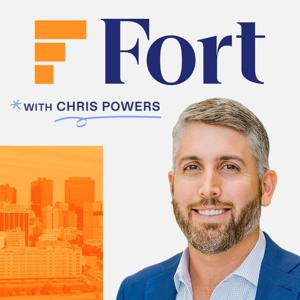


Based on Podcast App listening data
Steve Robinson is the former CMO of Chick Fil A. and is currently a consultant, author, and speaker on organizational culture design & leadership, brand strategy development, marketing planning, and distinctive advertising principles.
He is the former Executive Vice President and Chief Marketing Officer of Chick-fil-A, Inc., 1981-2015. Before joining the company, Steve was the director of marketing for Six Flags Over Georgia theme park in Atlanta, Georgia. This role was preceded by marketing positions at two other Six Flags properties and communications manager at Texas Instruments.
After beginning his career at Chick-fil-A as director of marketing, Steve went on to serve as vice president of the department before becoming chief marketing officer. In his most recent role, he was responsible for overseeing marketing, advertising, brand development, menu development, and hospitality strategies.
In addition to serving on Chick-fil-A’s board of directors from 2016-2018, Steve serves on several boards for organizations and ministries, including FamilyLife, Fellowship of Christian Athletes of Atlanta, Links Players International, and Atlanta Hall Management & College Football Hall of Fame, and the National Football Foundation.
He holds an associate degree in business administration from Faulkner State Junior College, a Bachelor of Science in marketing from Auburn University, and a master’s in advertising from Medill School of Journalism at Northwestern University.
Steve and his wife, Dianne, have two children and four grandchildren.
In this episode, Chris and Steve discuss
Purchase Steve’s Book here
Learn more about Chris Powers and Fort Capital: www.FortCapitalLP.com
Follow Fort Capital on LinkedIn: www.linkedin.com/company/fort-capital/
Follow Chris on Twitter: www.Twitter.com/FortWorthChris
Follow Chris on LinkedIn: www.linkedin.com/in/chrispowersjr/
Subscribe to The Fort on YouTube: https://www.youtube.com/channel/UCuJ32shRt8Od3MxMY-keTSQ
Follow The Fort on Instagram: www.Instagram.com/TheFortPodcast
(2:04) - How Steve got to Chick-fil-A
(8:55) - What’s your response to the fast-paced hiring processes of today’s businesses?
(11:37) - The purpose statement of Chick-Fil-A
(23:21) - Why doesn’t every company have a purpose statement?
(27:59) - What do you tell to already established companies who want to totally rebuild their culture?
(32:09) - Do you have an example of a major decision that was made or not made based on the company’s purpose statement?
(37:40) - Is there something different about today’s culture that would make a culture like Chick-Fil-A’s much harder to implement?
(40:14) - Can selflessness be taught?
(43:54) - Turnover is the #1 enemy of cultural sustainability
(46:00) - How did the cows become the mascots?
(53:41) - The CFA operator model
(1:06:06) - The origin of “My Pleasure”
The Fort is produced by Johnny Podcasts
Ryan Broderick is the Co-Founder & CEO of Darwin Homes. Darwin Homes is a real estate investment management platform focused on the single-family rental opportunity, enabling investors to invest anywhere simply with confidence. Darwin has raised just under $50m in venture capital from Khosla Ventures, Camber Creek, Fifth Wall, Canvas Ventures, Tony Xu, Ryan Graves, Ryan Roslansky, and other technology leaders.
Prior to founding Darwin Homes, Ryan was part of the founding team at DoorDash. During his tenure at DoorDash, he built and led the first Launch team, which was tasked with scaling the DoorDash operation from Silicon Valley to over 250 cities in the US. He then went on to build the Merchant Team responsible for Business Development, Sales, Merchant Products, and Merchant Operations. Before DoorDash, Ryan worked at JUMP Investors, an early-stage VC firm led by Randall Kaplan, the Co-Founder of Akamai Technologies. Ryan holds a B.S from the University of Southern California and an MBA from Pepperdine University.
In this episode, Chris and Ryan discuss:
Learn more about Chris Powers and Fort Capital: www.FortCapitalLP.com
Follow Fort Capital on LinkedIn: www.linkedin.com/company/fort-capital/
Follow Chris on Twitter: www.Twitter.com/FortWorthChris
Follow Chris on LinkedIn: www.linkedin.com/in/chrispowersjr/
Subscribe to The Fort on YouTube: https://www.youtube.com/channel/UCuJ32shRt8Od3MxMY-keTSQ
Follow The Fort on Instagram: www.Instagram.com/TheFortPodcast
(2:58) - Ryan’s early career with Doordash
(16:40) - What was the initial thesis for Darwin Homes?
(26:55) - What does scale give Darwin that the local PM will never have?
(30:55) - What do you mean by the Surface Area in Property Management?
(32:40) - What does a great engineering culture look like?
(36:13) - How does the best idea win when you’re first building a product that needs to 10x?
(38:58) - What happens from Day 0 of entering a new market?
(42:22) - How do you source vendors in a market?
(48:00) - What makes a good city for Darwin to enter?
(49:22) - Darwin’s Build-to-rent operation
(50:12) - Why do you have an acquisitions team within a property management company?
(56:38) - Ryan’s vision for Darwin
(1:01:30) - How big is the SFR & BFR market getting?
(1:04:53) - What do institutional owners care about and what do retail owners care about?
(1:08:11) - Are we moving to a world where people rent homes sight unseen?
(1:11:38) - Resident Monetization
(1:15:10) - Is there room for managing homes for homeowners?
(1:19:31) - Do you have any desire to buy property managers in other markets?
(1:21:06) - Are the people you’re hiring already in the PM industry?
(1:23:11) - Thoughts on construction
(1:27:03) - What are you seeing going on in VC given everything happening in the economy?
(1:36:29) - Thoughts on Blue Collar work
(1:47:19) - Shooting the shit and bouncing business ideas off each other
Josh Young is the Founder & CIO of Bison Interests. Josh has built his career concentrating on deep value opportunities for investors. He has over 15 years of experience in investment management, 10 of which were focused on publicly-traded oil and gas securities. Josh became Chairman of the Board of RMP Energy in 2017. After refreshing the board and management team and rebranding the company (Iron Bridge Resources), it was bought out at a 78% premium in 2018. Josh is the author of numerous articles on oil & gas investments and the guest speaker at various energy industry conferences.
He graduated with honors from the University of Chicago in economics. Josh was a management consultant to Fortune 500 companies and private equity firms, and then an investment analyst at a private equity fund.
Josh worked as an energy investment analyst for a multi-billion dollar, single-family office, which was nominated as Institutional Investor's Single Family Office of the Year in 2008
On this episode Chris and Josh discuss:
Follow Chris on Twitter: www.Twitter.com/FortWorthChris
Follow Chris on LinkedIn: www.linkedin.com/in/chrispowersjr/
Subscribe to The Fort on YouTube: https://www.youtube.com/channel/UCuJ32shRt8Od3MxMY-keTSQ
Follow Josh on Twitter: https://twitter.com/Josh_Young_1
Bison Interests: https://bisoninterests.com/
(2:11) - Josh’s career and background
(7:38) - How big is the investable universe of companies within Oil and Gas?
(9:22) - Where is your focus within the industry?
(10:54) - What was happening in the world after the crash in 2014?
(20:54) - Are the Saudis the largest producers in the world?
(21:18) - What do countries like Iran and Venezuela do with their oil when they are shut out of OPEC?
(24:53) - What started happening in the market in 2015?
(31:48) - As you think about that period of time, how much of it was driven by a lack of fracking knowledge?
(36:25) - Market overview from 2018 through the pandemic
(44:43) - How underinvested is the industry today?
(52:25) - Thoughts on the ESG movement
(1:00:39) - Is there anything on the horizon that the narrative around O&G will change either for the better or worse?
(1:03:18) - How much impact is the Russia-Ukraine conflict having on the oil markets?
(1:05:51) - What are your predictions for the next 4-5 years?
(1:19:37) - Thoughts on the current O&G market
The Fort is produced by Johnny Podcasts
Apurva Mehta is the Managing Partner of Summit Peak Investments. Apurva graduated with a B.B.A in Finance from The George Washington University. From 2001 to 2004, he was a Senior Investment Analyst for Citi Institutional Consulting in Washington D.C, where he focused on asset allocation and manager due diligence for endowments, foundation, and pension funds.
From there, Mehta went on to become a VP at Lehman Brothers in the Investment Banking and Investment Management Divisions, focusing on Global Business Planning and Strategy until 2008. For the next three years, Mehta was the Director of Portfolio Investments at the Juilliard School in New York City. For the next eight years, he was the Deputy Chief Investment Officer at Cook's Children's Health Care System in Fort Worth, Texas, where he oversaw the management of the portfolio across all asset classes, including strategic and tactical asset allocation, investment manager selection, manager performance evaluation, and operational oversight. Additionally, he led the buildout of the Private Investment portfolio and spearheaded the Venture Capital program.
Moreover, in 2012 and 2013 Mehta was named one of the "Top Forty Under Forty" by CIO Magazine and recognized as “Fresh Talent at the World’s Largest Asset Owners”. He was also named a “Rising Star” of Foundations and Endowments and a “Rising Star” of Hedge Funds by Institutional Investor in 2013. Currently, alongside being a managing partner at Summit Peak, Mehta is also on the board for Interstride.
In this episode, Chris and Apurva discuss venture capital's current market environment and analyze Summit Peak's strategy for investing in Pre-See, Seed, and Series A Managers. They also discuss what will matter for starup's going forward and how valuations will be set, Paypal Mafia stories, and more. Enjoy!
Learn more about Chris Powers and Fort Capital: www.FortCapitalLP.com
Follow Fort Capital on LinkedIn: www.linkedin.com/company/fort-capital/
Follow Chris on Twitter: www.Twitter.com/FortWorthChris
Follow Chris on LinkedIn: www.linkedin.com/in/chrispowersjr/
Subscribe to The Fort on YouTube: https://www.youtube.com/channel/UCuJ32shRt8Od3MxMY-keTSQ
Apurva on Twitter: https://twitter.com/mehtaaapurva
Summit Peak Investments: https://www.summitpeak.com/
(2:32) - What was your experience working at Lehman Brothers in 2008?
(6:06) - Apurva’s career and founding Summit Peak Investments
(7:40) - How have you chosen to approach Venture?
(16:04) - What qualities do you look for in early-stage investors?
(24:07) - What’s happening in the market & VC in your opinion?
(39:55) - How often do companies need to renegotiate capital agreements when markets become volatile?
(44:54) - Do you predict investors will only look for the most logically profitable businesses going forward?
(49:39) - What’s happening in the world of Series-A, Seed, and Pre-Seed investing?
(55:25) - What factors would determine a phenomenal seed company in this market?
(58:33) - Thoughts on the PayPal Mafia
(1:03:12) - What is your mindset heading into the next 5 years?
The Fort is produced by Johnny Podcasts
Learn more about Chris Powers and Fort Capital: www.FortCapitalLP.com
Follow Fort Capital on LinkedIn: www.linkedin.com/company/fort-capital/
Follow Chris on Twitter: www.Twitter.com/FortWorthChris
Follow Chris on LinkedIn: www.linkedin.com/in/chrispowersjr/
Subscribe to The Fort on YouTube: https://www.youtube.com/channel/UCuJ32shRt8Od3MxMY-keTSQ
Common: https://www.common.com/
Brad on Twitter: https://twitter.com/bhargreaves
(2:04) - Brad’s journey into co-living
(3:17) - When did co-living get its label and become a true asset class?
(4:33) - What does Common do & what is the definition of Co-living?
(5:48) - How do your management & lease agreements work?
(9:01) - Why are developers approaching you over traditional Property Managers?
(10:57) - - How do you think about designing to separate yourself from other MF developers?
(15:29) - What’s the trigger in these jurisdictions that gets you classified into co-living?
(17:53) - SRO: Single Room Occupancy dwelling
(19:46) - Why are jurisdictions somewhat against co-living?
(21:09) - What makes a great market for co-living & how do you decide which markets to pursue?
(25:56) - Factors that impact the viability of co-working
(30:03) - Understanding the customer
(31:38) - What’s your revenue model for a ground-up development?
(35:47) - Who is the target customer for co-living?
(41:05) - Are you furnishing the co-living units?
(43:02) - How does the dynamic of 4 strangers living together work?
(47:38) - At what point does management have to get involved in tenant disputes?
(49:43) - How much customization can a tenant take upon themselves?
(52:09) - How do leases & evictions work?
(53:59) - How Common approaches Staffing
(55:45) - How do you think about advertising?
(56:50) - What are your most common unit configuration and square footage?
(57:32) - Thoughts on retrofitting existing structures
(1:00:06) - Is there an opportunity for converting office buildings?
(1:01:13) - Are there any big needle movers that will have an impact on affordable housing & co-living happening right now?
The Fort is produced by Johnny Podcasts
If there was ever a leader to celebrate it is Will Friend. Chris and Will became good friends over the years and talked frequently about the opportunities and challenges in their business and across the real estate industry. Will was an infectious leader who cared deeply about the success of the people around him. He will be dearly missed. In 2019, we were able to record an episode together that is timeless and provides an amazing lesson for us all to learn from.
Will was the CEO of Bisnow, an online real estate publication and event firm, where he implemented an incredible culture through Bisnow’s Mission, Vision, and Values. Will and Chris discuss the journey of becoming the CEO of a company and why there's no "step-by-step" process, company structure as a family versus a team, why it is important to love what you do, and Chris reflects on this conversation and his role at Fort Capital.
Follow Chris on Twitter: www.Twitter.com/FortWorthChris
Follow Chris on LinkedIn: www.linkedin.com/in/chrispowersjr/
Subscribe to The Fort on YouTube: https://www.youtube.com/channel/UCuJ32shRt8Od3MxMY-keTSQ
(01:50) — Will’s Journey Before Bisnow, Growing Up in the UK, The Desire for the American Dream, and Moving to America
(09:23) — The Journey to Becoming a CEO at 27 Years Old
(16:50) — How do you see your experience as CEO so far?
(19:33) — What did you expect to be part of the role as CEO that actually are not?
(22:22) — Level Up Talent
(23:20) — How can you know if you’ll keep the role? How do you evaluate yourself and the organization?
(24:10) — Team vs. Family
(26:40) — Were these values already set or was it an “ah-ha!” moment?
(31:05) — Deciding on a Vision and Values for Bisnow
(40:50) — How do you make your Vision and Values a habit?
(46:15) — Are these open to be debated and changed?
(47:54) — How is a private equity buy-out a learning experience for everyone? Is this the right thing for everyone?
(52:40) — What do private equity firms do for family-owned businesses?
(53:04) — 3 Failures That Changed the Way Will Thinks
(1:00:50) — How does culture affect a company’s bottom line?
(1:04:00) — Hitting a Sales Mark
(1:08:50) — What does it take for an issue to make it to your desk?
(1:12:42) — What is it like to run a sales team? What makes a successful salesperson?
(1:16:46) — What do you say to people who are not doing what they love?
(1:19:49) — What advice would you give to your 21-year-old self? What is your favorite interview question?
(1:27:20) — How Chris Critiques Himself and What Makes a Company's Mission, Vision, and Values Work
The FORT is produced by Johnny Podcasts
Wesley Mabry is an experienced Cost Segregation Consultant with over 15 years of experience in the industry across a wide range of asset classes. Mr. Mabry founded 1245 Consulting in 2017 and services all of the United States. Wes has performed thousands of Cost Segregation Studies analyzing over 8 billion dollars of real estate improvements throughout the United States. His experience includes working closely with Accountants, CPAs, EAs, REITs, Corporations, Partnerships, and individual investors.
On this episode, Chris and Wes deep dive into cost seg and how they work, why different asset classes offer different depreciation possibilities and the implications of selling a property with accumulated depreciation through the life of ownership. They also discuss pending legislation and impacts on real estate/cost segs and much more.
Learn more about Chris Powers and Fort Capital: www.FortCapitalLP.com
Follow Fort Capital on LinkedIn: www.linkedin.com/company/fort-capital/
Follow Chris on Twitter: www.Twitter.com/FortWorthChris
Follow Chris on LinkedIn: www.linkedin.com/in/chrispowersjr/
Subscribe to The Fort on YouTube: https://www.youtube.com/channel/UCuJ32shRt8Od3MxMY-keTSQ
Follow The Fort on Instagram: www.Instagram.com/TheFortPodcast
Follow Wes on Twitter: https://twitter.com/1245consulting
1245 Consulting: https://www.1245consulting.com/
(03:59) - What is a Cost Segregation Study?
(05:20) - How is it different from straight-line depreciation?
(06:45) - Is there any reason why someone shouldn’t do a Cost Seg?
(08:42) - Can you do this on your own or do you need to hire a professional?
(09:34) - Can this be done only on investment properties?
(09:57) - Do the rules for Cost Segregation vary from state to state?
(10:48) - What happens from the day I call you to get a Cost Seg to the day you send me the report? What then do I do with what you give me?
(17:01) - An Industrial Deal example for Cost Segregation
(20:13) - Are there any materials or components of a building that fall into gray areas?
(22:26) - What are some asset types that receive the most benefit from Cost Seg?
(26:24) - Do you want to do a Study before you do improvements to the property or after?
(28:23) - What is a recapture tax?
(32:47) - What do owners who are long-term holders do once their depreciable amortization schedule expires?
(34:23) - Is there any ongoing legislation that people should be aware of?
(36:05) - The importance of Land Value
(39:39) - Is everything predicated on the year the Study is done?
(40:51) - Can you do another Cost Seg to an office building that you convert to residential?
(44:03) - Wrap up and final thoughts
The Fort is produced by Johnny Podcasts
Beth Azor is the founder and CEO of Azor Advisory Services (AAS), a leading commercial real estate advisory and investment firm based in Weston, Florida. As its principal, Beth currently owns and manages six shopping centers in Florida valued at over $100 million. She travels the U.S. consulting with, brokering deals for, and training associates in the commercial real estate industry.
On this episode, Beth discusses how to drive the most value to a leasing center through leasing best practices, Impulse vs destination tenants, and the best practices for structuring a retail lease from decades of practice. Chris and Beth also chat about what makes the best deal for landlords and a lot more!
Learn more about Chris Powers and Fort Capital: www.FortCapitalLP.com
Follow Fort Capital on LinkedIn: www.linkedin.com/company/fort-capital/
Follow Chris on Twitter: www.Twitter.com/FortWorthChris
Follow Chris on LinkedIn: www.linkedin.com/in/chrispowersjr/
Subscribe to The Fort on YouTube: https://www.youtube.com/channel/UCuJ32shRt8Od3MxMY-keTSQ
Follow The Fort on Instagram: www.Instagram.com/TheFortPodcast
Beth on Twitter: https://twitter.com/Bethazor1
Beth on Instagram: https://www.instagram.com/bethazor/
Beth on LinkedIn: https://www.linkedin.com/in/bethazor/
(03:07) - Beth’s Career in Real Estate
(14:54) - Why was it so tough to bring in talent horizontally?
(18:15) - Where did you develop this leadership style?
(19:34) - How do you define canvasing & prospecting?
(21:48) - Do most tenants already want to expand when you prospect or do you need to sell them on the idea?
(22:52) - What are the critical components of an amazing leasing agent?
(25:21) - What’s your solution to someone who is afraid to go talk to a stranger?
(28:19) - What are the main reasons a tenant is happy where they are or unhappy where they are?
(33:15) - Impulse Tenants vs. Destination Tenants
(40:53) - What is Dwell Time?
(43:14) - “Your leasing competitor across the street is your best friend”
(45:53) - What would be a reason you don’t provide TI knowing the leasing agent across the street does?
(47:29) - What is Occupancy Cost Ratio?
(49:59) - Sales Reporting in Leases
(50:58) - Percentage Rent Deals
(53:54) - Relocation Clauses
(55:51) - Grace Periods to Pay Rent
(58:24) - What else have you learned are must-haves in a lease?
(1:00:48) - Are there any lease clauses that linger post-covid?
(1:03:22) - Why would a great property be okay with a pop-up shop?
(1:08:12) - Is there ever a time when a tenant brings too much traffic?
(1:10:38) - How does the delivery economy (Uber Eats, DoorDash) impact shopping centers?
(1:14:42) - What is the Circular Economy?
(16:02) - What gets you to a quick no when you’re buying a property?
(18:17) - Do you have tenants on the hook before you develop a property?
(1:19:08) - Are you doing Triple Net leases or Gross?
(1:19:26) - What are you responsible for as the landlord that is unique to the asset class?
(1:20:48) - Is it true that grocery stores pay less rent?
(1:20:58) - Why don’t you like CoStar? Are there any online tools that you do like?
(1:22:43) - How do you conduct a market survey?
(1:24:26) - Why is traffic count so important?
(1:25:12) - How do you respond to the media accusations that retail is dead?
(1:29:15) - How can people engage with you online?
The Fort is produced by Johnny Podcasts
Mike Boyd is an Australian Entrepreneur, CEO & Investor. Mike started his entrepreneurial career at age 11 selling lost golf balls and didn’t look back, going on to cofound no less than 7 businesses before the age of 25. Mike is a relentless innovator and is always trying to find new ways to innovate and solve problems using technology. Mike now dedicates a portion of his time to managing investments in alternative assets via the family's investment vehicle, Mudbrick Capital, and running The Business of Family Podcast.
On this episode, Chris and Mike uncover best practices for building a successful multi-generational family and discuss the work that goes into planning for a successful family – it takes work! They also chat about how wealth is transferred from generation to generation without creating entitlement and deep dive into how the Founding Generation interacts with Generation 2. Enjoy!
Learn more about Chris Powers and Fort Capital: www.FortCapitalLP.com
Follow Fort Capital on LinkedIn: www.linkedin.com/company/fort-capital/
Follow Chris on Twitter: www.Twitter.com/FortWorthChris
Follow Chris on LinkedIn: www.linkedin.com/in/chrispowersjr/
Subscribe to The Fort on YouTube: https://www.youtube.com/channel/UCuJ32shRt8Od3MxMY-keTSQ
Follow The Fort on Instagram: www.Instagram.com/TheFortPodcast
(02:41) - Mike’s Background and Career
(06:15) - Living and Working Abroad
VroomVroomVroom
(07:59) - How did you get into the digital side of entrepreneurship?
Yellow sunglasses party guy
(12:22) - What are trends are you seeing in travel right now?
(15:25) - Did Australia provide some kind of governmental assistance during the pandemic?
(16:59) - Mike’s ‘The Business of Family’ Podcast
(21:21) - Why is this something your are passionate about?
(5:17) - Does 3rd generational wealth ever happen by accident?
(29:23) - If wealth usually dies in the 3rd generation of a family, how long does it typically take for the next founder generation to come along?
(30:41) - Is the loss of generational wealth solely based on an increased number of members in a family?
(34:38) - When a family gets to a size of a public company, do decisions still get made within the family, or are there outside decision-makers at play?
(36:57) - What are the mechanisms you’ve seen work or not work when a clash within the family happens?
(40:41) - Does the legacy operating business normally come from the founder wanting to pass the business down or from the 2nd generation wanting to take over?
(43:04) - What are best practices for first-generation families to do if their hope and desire are for the kids to take over the business?
Family Wealth by Jay Hughes Jr.
(51:03) - When’s the best time to start telling your children that you’re wealthy?
The Family Board Meeting by Jim Sheils
(58:16) - Do you include your parents in the family enterprise or are you resetting the culture?
(1:02:59) - How do you guarantee that the second generation will fail?
(1:06:00) - How have you seen families handle an outlier child that is suffering due to drugs or other problems?
(1:10:02) - Generational resiliency through divorce
(1:12:25) - What’s the best way to set guidelines for the next generation’s behavior that is tied to an inheritance?
(1:12:25) - How important is it that the founding patriarch and matriarch are aligned?
(1:14:11) - What are the best practices for introducing your children into your business?
(1:17:32) - In a situation with multiple kids who are qualified to be the leader of the enterprise, what do you do?
(1:20:07) - What would you recommend for people who want to do this for their own families?
(1:22:47) - How can people get in touch with you?
The Business of Family podcast
thebusinessoffamily.net
Mike on Twitter
The Fort is produced by Johnny Podcasts
Barrett is a founding partner of Savoy Equity Partners and oversees the capitalization and structuring of the company’s investments along with deal sourcing. Born and raised in Dallas, he has spent 17 years in the real estate industry crossing multiple product types and service lines. Barrett started investing in real estate in 2012 and enjoys learning about esoteric strategies which can be implemented to create excellent risk-adjusted returns. He has owned over 1,000 units and specializes in transactions with complex structures such as historic tax credits, opportunity zones, low-income restrictions, as well as the deconversion of fractured condos.
On this episode, Barret and Chris deep dive into how opportunity zones work for LPs & GPs, the Tax implications of opportunity zones, and chat about different types of opportunity zone structures. They also take a look inside a specific project they are working on in Dallas, TX, and much more!
Learn more about Chris Powers and Fort Capital: www.FortCapitalLP.com
Follow Fort Capital on LinkedIn: www.linkedin.com/company/fort-capital/
Follow Chris on Twitter: www.Twitter.com/FortWorthChris
Follow Chris on LinkedIn: www.linkedin.com/in/chrispowersjr/
Subscribe to The Fort on YouTube: https://www.youtube.com/channel/UCuJ32shRt8Od3MxMY-keTSQ
Follow The Fort on Instagram: www.Instagram.com/TheFortPodcast
CRE Models: https://www.cremodels.com/
(01:52) - Barrett’s Career in RE
(07:02) - What was the world like in ’09-’10 when we were just getting back on track?
(09:55) - Who were the folks who were still able to borrow during the ’08 crisis?
(11:10) - Barrett’s Transition into Buying Deals
(15:49) - The Lake Cliff Deal: How Complex Deals Come Together
(24:57) - What headaches were you able to avoid with Dallas’ Master Overlay Zoning?
(27:14) - How to Develop RE Without Having to be the Developer
(30:10) - Now that you own the land and partnered with a developer, what’s your role?
(34:08) - What is an opportunity zone?
(37:36) - What’s an Opportunity Zone Fund?
(43:35) - How long do you have to invest a capital gain into an OZ fund and how long do you have until the capital in the fund needs to be deployed?
(50:40) - New Proposed OZ Legislation
(53:00) - Do you know if Governors will be able to legislate new OZs in the future?
(56:47) - Is everything you’ve bought all listed under one entity?
(57:55) - What do you have to do once you’ve acquired a vacant building to get the benefits of an OZ?
(1:00:07) - What do you need to do to a piece of land to get the benefits of an OZ?
(1:02:19) - What do you have to do once you’ve acquired a decrepit building to get the benefits of an OZ?
(1:03:56) - What if you already owned property in an OZ before getting a CO, do you qualify?
(1:05:25) - What can people do if they’ve already paid their tax and decide they’d rather start an OZ fund?
(1:06:08) - What is the breakeven point from OZ Fund fees and paying the capital gains tax and investing elsewhere?
(1:09:52) - How does a GP take advantage of OZ’s?
(1:12:02) - The Disguised Sale Rule
(1:12:51) - What’s driving the value for your Lake Cliff deal?
(1:14:30) - Thoughts on the Dallas Market
The Fort is produced by Johnny Podcasts
From the publisher's feed
Ranked by our users in the last 21 days

3,328 Listeners

2,200 Listeners

802 Listeners

289 Listeners

7,954 Listeners
204 Listeners

2,643 Listeners

10,177 Listeners

158 Listeners
220 Listeners
277 Listeners
169 Listeners

657 Listeners

247 Listeners

204 Listeners