
Sign up to save your podcasts
Or

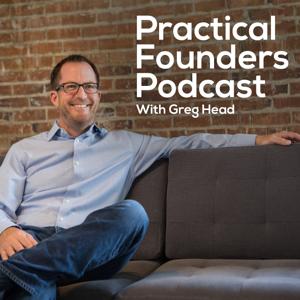


Daniel Yuabov was a 22-year-old IT manager in New York who wanted to buy a new car. He was so frustrated with the buying experience that he started a software company called Carvoy to make it easy for car buyers to find, buy, and finance a new car online. He grew the company for 5 years—without VC funding—and sold it to a giant Fortune 500 company in 2020.
Daniel quit his job in 2015 to build Carvoy's first product using developers in Ukraine. It allowed consumers to choose a new car online and then buy it easily from a dealer. Their first version was interesting to consumers but resisted by most car dealers. Their second solution had them manually arranging the car purchases behind the scenes for their growing crowd of online buyers.
It wasn't until they started automating every step in the car buying process, including choosing a car, getting a confirmed best price from dealers, pre-approved lending, and delivery that they started to sell thousands of cars. They pivoted from a marketplace with transaction revenue to selling it as a SaaS product to car dealers. They grew faster and were acquired by a major car-financing lender for an undisclosed sum in 2020.
In this episode, Daniel explains:
Melissa Kwan created her first software company in 2014 and then sold it in 2019. It was extremely difficult to start and even harder to grow, but it's how she learned what not to do in her next startup and what was really "non-negotiable" in her life. Now she's a nomadic world traveler and the founder of a growing software business.
Melissa started Spacio to provide a technology solution to high-end residential real estate agents to capture visitor names electronically at open houses. It took years to find the right features that someone would pay for while tapping out her savings--and her family support. She sold the business in frustration to find a better business idea and to stop sacrificing everything for her business.
Melissa started her second software business, eWebinar, to solve a painful problem she faced while selling and supporting software. eWebinar is an automated webinar platform that provides interactivity and real-time chat support for software companies. Her business also supports her personal priorities, including traveling around the world and working from anywhere.
In this episode, Melissa explains:
Learn more about Practical Founders at https://practicalfounders.com.
Seth Radman created, grew, and sold two music app startups in his twenties. A saxophone player in his college marching band, Seth was passionate about helping musicians and school band directors to improve how they learn music using technology.
Seth was the founder and CEO of Crescendo, an interactive music trainer that provides real-time performance assessment feedback using acoustic pitch detection and machine learning as a mobile app. With a little angel funding, Crescendo grew to over 1M users and 7,000 schools before being acquired by Ultimate Guitar in 2018.
He was also co-founder and CEO of Upbeat, a bootstrapped startup providing a virtual music collaboration platform for school music departments. When schools shut down during COVID, Upbeat allowed musicians to rehearse and perform music virtually with others in real-time without sound delays. Upbeat grew to over 200,000 users in 12 months and was purchased by 5,000 schools before being acquired in 2021 by MakeMusic.
"Having a company acquired seemed like this big elusive goal that every founder wants to achieve. And then I did it. And then I wasn't sure what to do next at all, I was completely shocked on the first day," Seth says.
"I say it was one of the happiest days of my life when I saw the money hit the bank. And then the day after, that was probably one of the most depressing days of my life, because I was like, whoa, what do I do now? I definitely thought there was a little bit of loss of identity for me going through that.
"And I spent the next several months kind of doing nothing. I was honestly just depressed. I just felt super lost and was not sure what to do. And that was a really tough period. "
In this episode, Seth explains:
Dougal Cameron created Golden Section to provide support and practical funding to SaaS founders with deep experience in select vertical markets. Their founder-first approach is different than the traditional VC or private equity investment model which often doesn't work out well for founders in the end.
Dougal's family had been investing in software companies for over 20 years through their Houston-based family office. Now Golden Section includes a founders studio for venture development, a world-class software product development service, and optional equity funding for B2B SaaS founders with deep domain experience in their industries.
This is an example of one of many possible ways that funding can be practical and helpful for founders who want to accelerate growth but don't want to play the unicorn-hunting grow-or-die game required by most venture capital investors.
"Our capital needs to look very different than the traditional venture capital side, where 66% of the time venture-backed founders make nothing when their company sells. And that's companies that get to an exit," says Dougal.
"I think that's a horrible statistic that really reveals some of the problems in the venture capital industry. It doesn't make a ton of sense for founders who see a clear problem that they know very well and they know people are going to buy their solution."
In this episode, Dougal explains:
Find the show notes for this episode at practicalfounders.com.
Sean Meister was a sales professional and leader with a successful career selling hospital and medical supplies before he left to join his long-time friend who had a vision for a new software company serving smaller trucking fleets with simple GPS-tracking fleet management software.
Sean was a co-founder and COO of M2M in Motion, a self-funded software company based in the Chicago area. Sean wasn't the trucking industry expert, the crazy entrepreneur, or the visionary salesperson. He provided the savvy help to get the company started and the operational leadership to build a scalable sales team, reliable product development, and quality customer operations.
M2M in Motion was bootstrapped with founder funding, then customer funding (revenue), to grow to over $5M in revenues before being acquired in 2021 by a larger vehicle telematics company, AAMP Global. M2M in Motion allowed small and mid-sized fleets to track their vehicles with a simple software solution and GPS-tracking devices.
"I think another reason we were successful is that we identified our ideal customer profile early, and we owned it, and then we really targeted that. In the beginning, you're just so desperate for anything, that you don't realize you're actually hurting yourself," Sean says.
"I think that was a big lesson for us. When you can start saying NO is when your trajectory starts taking off."
In this episode, Sean explains:
Check out the show notes and links for this episode at practicalfounders.com.
Thomas Brown creatively bootstrapped his software company and ran it as a very small "lifestyle" business before committing to growing his SaaS business with a larger team.
Thomas was an independent insurance claims adjuster in the 1990s in New Orleans, Louisiana before quitting his job to start one of the first insurance claims management software companies called ClickClaims. It grew slowly and profitably as a very small company for over 10 years before Thomas sought help from advisors to see how he could grow to the next level and learn to be a real CEO of a bigger SaaS company.
E-Claim is now a steadily growing vertical SaaS business with 18 employees and over $4 million in ARR. They have helped independent insurance adjusters and insurance carriers process over 2 million claims with their ClickClaims product since he started the company in 1999.
"I know this sounds cliche, but I didn't get into this for the money. I got into it because I'm a guy from South Louisiana who's been through a bunch of hurricanes and knows the horrors that people go through. And I wanted to make it better. So you reach a point in the business where you start to think about not what it means for you, but what it means for others. What can you do for your employees and their careers? What other charities can I go and support with this money someday? And then you think about it, and you say, you know, hell, I want to double it, because I could do a lot of good with a lot more money."
In this episode, Thomas explains:
Nick Santora bootstrapped Curricula for 4 years with his co-founders before raising $3M in practical funding and then getting acquired in 2022 for $22 million.
Nick and his co-founders quit their jobs to build innovative story-based education courses and a single-purpose learning platform for cybersecurity security awareness training. Nick had found a big hole in the cybersecurity market while working as a cybersecurity trainer in the electric utility industry.
Curricula features fun and engaging training content, which was the opposite of the typical "death by Powerpoint" training that users ignored. Now Curricula is a powerful platform that allows companies to create their own engaging content and then measure custom training results.
When they almost ran out of cash before revenues grew, Nick says. "I would do anything I could do to keep this heartbeat going instead of getting an investor to run our future. Once that starts happening, I knew it was going to start cascading into desperation. And I wanted to hold the cards in our hands as long as we could."
In this episode, Nick explains:
Check out all our podcast episodes at https://practicalfounders.com.
Jeremy Clarke created, grew, and sold his software company in a most unusual and successful way:
He grew WebMerge to $4M revenue by just himself in 6 years before hiring his first and only employee, a strategic sales rep. It's an incredible "bootstrapped unicorn" success story that ultimately was worth $100M when he sold WebMerge in 2019.
WebMerge was an online service that automates document creation to automatically fill in any documents with merged data from any source. WebMerge automatically generates PDF and Microsoft Word documents. Think of it as "mail merge for the web."
Jeremy's first employer, Formstack, ultimately acquired WebMerge to bring Jeremy back to the Formstack team and renamed the product to Formstack Documents.
In this episode, Jeremy explains:
Check out all our episodes and articles at https://practicalfounders.com.
Luke Hohmann was an engineering and product management leader at Silicon Valley startups before he became an acclaimed author and speaker in the enterprise software development world. He used funding from his consulting business—plus revenue from his first big customers—to build a new software product called Conteneo.
Conteneo was enterprise collaboration software that enabled the biggest companies to engage their leaders in new ways to make much better decisions about product portfolio investments. Started in 2010, this idea came out of several of the gamified collaboration exercises Luke used in his consulting business. Conteneo software customers include Adobe Systems, Cisco, Emerson, HP, Rackspace, and Reed Elsevier.
As the Conteneo software business grew, their consulting business shrank. Eventually, Conteneo was acquired by a strategic partner who was also a leader in enterprise software development and innovation, Scaled Agile. Conteneo was rebranded as SAFe Collaborate.
"One of the important lessons for any practical founder is this: Instead of thinking of investors as your first source of funding, look to your first customers," Luke says.
In this episode, Luke explains:
Check out all our episodes and articles at https://practicalfounders.com.
Steve Gelley created two successful businesses and learned important lessons before he and a cofounder self-funded a third startup that was acquired in only 18 months for a big prize.
Steve started his entrepreneurial journey by buying, improving, and then selling CPA accounting services firms in the Eastern U.S. Then he grew his first VC-funded tech startup, Xendoo, to innovate in the small business accounting services space.
He exited Xendoo and worked with a partner to fund and create a new startup called wemlo to automate the manual process of processing mortgage loans for mortgage brokers. Only 18 months from starting, including four strategic pivots, Steve and his cofounder, David Rogove, sold wemlo to a strategic buyer owned by RE/MAX.
Steve says, "Nobody tells you that founders end up spending so much time on funding and the optics of the dog and pony show that no one's running the business. It's actually counterproductive."
In this episode, Steve explains:
Check out all our episodes and articles at https://practicalfounders.com.
From the publisher's feed

16,055 Listeners

541 Listeners
2,698 Listeners

698 Listeners

1,087 Listeners
2,343 Listeners
2,208 Listeners

225 Listeners

2,647 Listeners

10,186 Listeners

510 Listeners

278 Listeners

290 Listeners

658 Listeners

93 Listeners